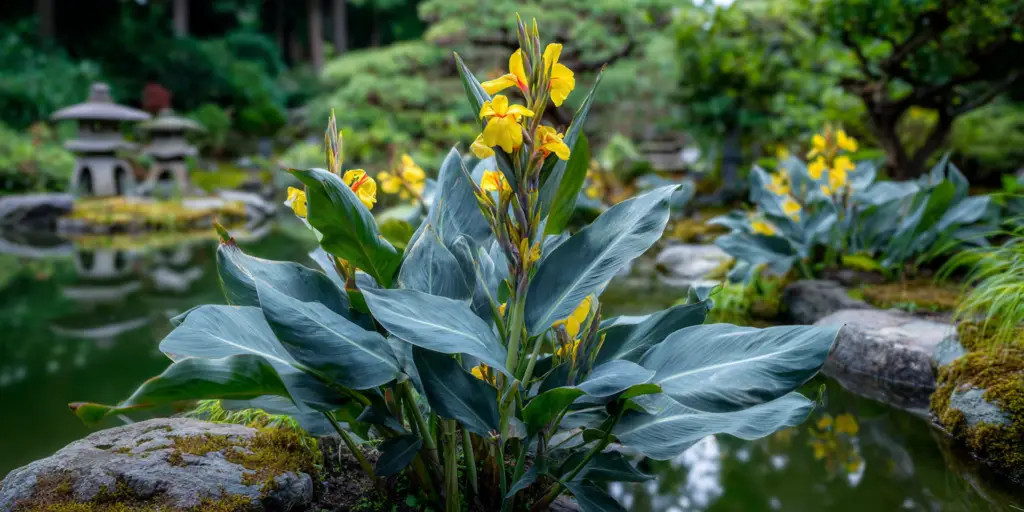
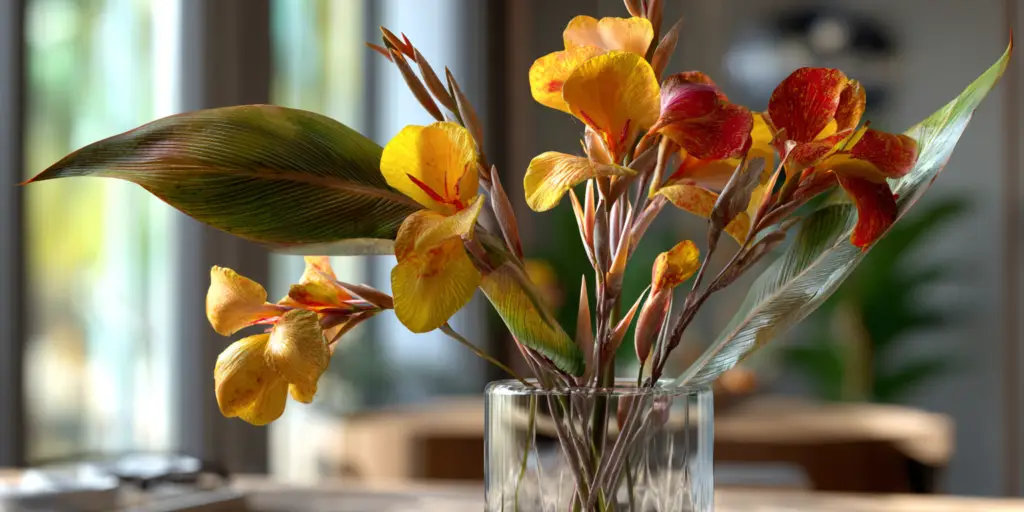
Often called banana canna, this plant is grown mainly for its huge, banana-like leaves. Flowering can be sparse in cool climates and is secondary to the foliage display. It thrives in full sun, rich soil, and steady summer moisture. Names vary in the trade; POWO treats Canna musifolia as a synonym related to Canna paniculata, while RHS lists the cultivar ‘Musifolia’. Provide shelter from strong winds to prevent leaf tearing.
At‑a‑glance
Group/Class: Foliage cultivar in trade; taxonomy varies
Height × spread: 8 to 12 ft (2.4 to 3.7 m) × 3 to 5 ft (0.9 to 1.5 m) (varies by climate)
Bloom window: summer; sparse in cool climates
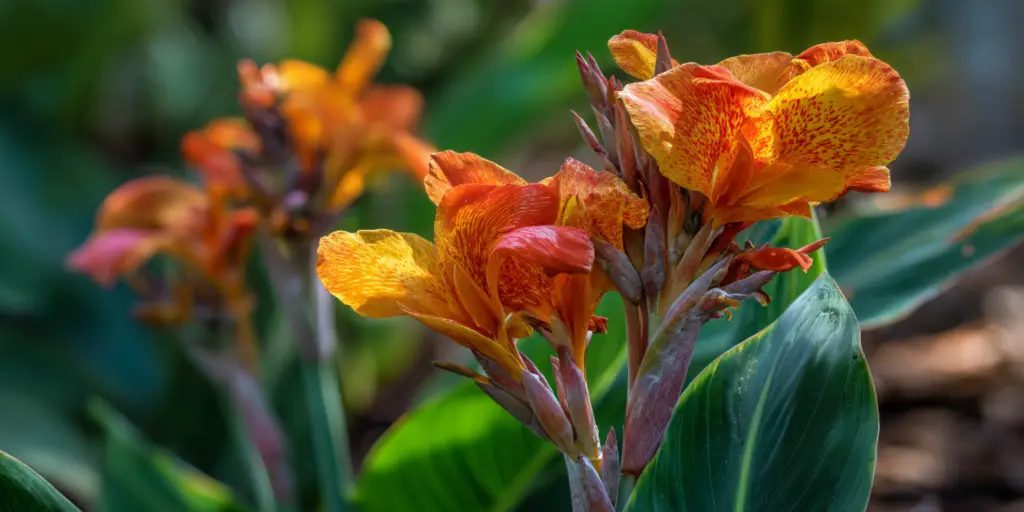
Color & flower form: small orange to red; foliage is the main feature
Fragrance: 0 none
USDA hardiness: zones 8 to 11; grown as annual in colder regions
Breeder / Year / Origin: unknown
Pet safety: safe
How it differs
Massive, banana-like leaves create a bold, architectural effect.
Taller and leafier than many garden hybrids.
Often listed as ‘Musifolia’ in catalogs; taxonomy varies by source.
Strengths
Outstanding foliar impact and rapid summer growth.
Useful near water features and as a seasonal screen.
Performs well with heat and moisture.
Care in one minute
Site: full sun; bright open shade in the hottest climates.
Soil: deep, fertile, moisture-retentive soil with good drainage.
Water: regular deep watering in summer.
Feed: balanced fertilizer monthly in summer; mulch with compost in spring.
Overwinter: in zones 7 or colder, lift and store rhizomes around 40 to 50°F.
Watch‑outs
Needs space and fertility to reach full size.
Leaves may shred in high winds; site with wind protection.
Late start in cool springs can delay size and flowering.
Best uses (tags)
tropical backdrop, screens, borders, pond margins
Provenance note
Name dates to the 19th century; POWO treats Canna musifolia as a synonym, while RHS lists the cultivar ‘Musifolia’ with AGM.
Written by: Your Flowers Guide editorial team We are a small independent group of flower lovers who research and review each guide using trusted horticultural and educational sources. Learn more about us