in bloom
now
through Oct
Bloom calendar
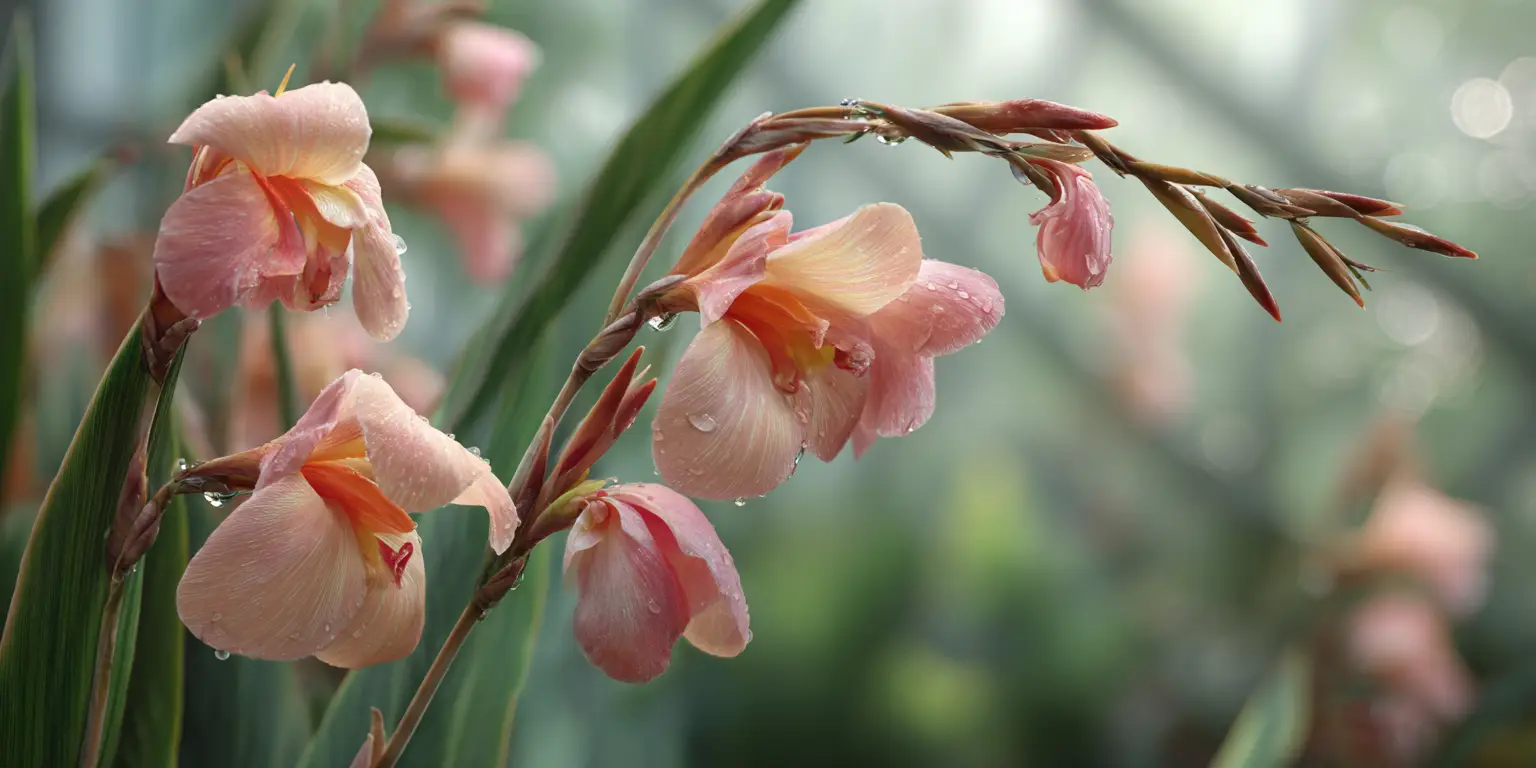
Canna iridiflora
Species
At‑a‑glance
- Group/Class: Species
- Height × spread: 8 to 13 ft (2.5 to 4 m) × 1.5 to 3 ft (0.5 to 1 m)
- Bloom window: midsummer to early fall
- Color & flower form: bright pink; large pendant tubular flowers
- Fragrance: 0 none
- USDA hardiness: zones 10 to 11; grown as annual or lifted in colder regions
- Breeder / Year / Origin: unknown
- Pet safety: safe
How it differs
- Much taller than typical garden cannas.
- Pendulous flowers rather than the usual erect blooms.
- Needs a longer, warmer season to flower well.
Strengths
- Striking height and architecture.
- Heat-loving in fertile, moist soils.
- Attracts hummingbirds in warm regions.
Care in one minute
Site: full sun; light shade in hottest inland sites.
Soil: rich, moisture-retentive but well-drained; neutral to slightly acid.
Water: keep evenly moist through summer.
Feed: monthly balanced fertilizer during active growth.
Overwinter: lift and store rhizomes above 40°F in colder zones.
Watch‑outs
- Not frost tolerant; lift rhizomes in cold zones.
- Sparse bloom in cool or short seasons.
- Tall stems can suffer wind damage if exposed.
Best uses (tags)
Provenance note
Native to Peru and recorded by Kew; long used as a tall ornamental.
References
- RHS: Canna iridiflora
- Kew POWO: Canna iridiflora
- Naturalis Repository (Maas 2008): The Cannaceae of the World
- ASPCA: Canna Lily
Similar Flowers

Enjoying our flower guides? Add YourFlowersGuide as a preferred source on Google. It helps more readers find us.
Add to Preferred Sources