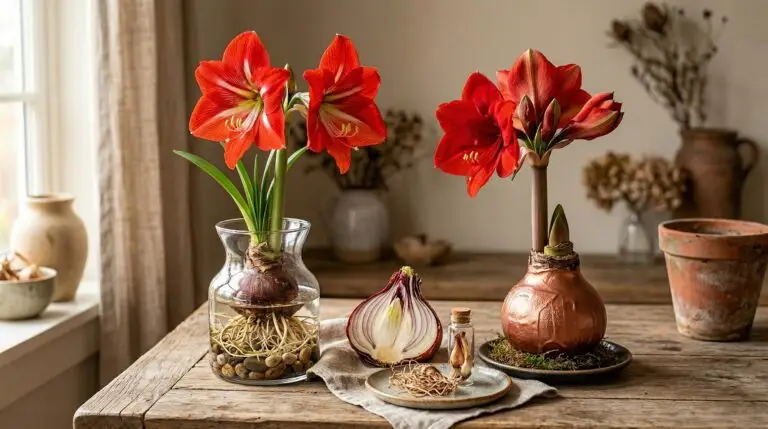
Start with the faded flower. Most people buy amaryllis in December, and by February, the winter show is over. The massive blossoms shrivel and dry, hanging heavily from the thick stalk. The natural impulse is to throw the plant away, but the real relationship with the bulb begins now. Figuring out what to do with amaryllis after flowering requires understanding its natural rhythm. The bulb has exhausted its stored energy to produce those early flowers, and it needs time to restock its pantry. Outside the window, the ground is still frozen, but the days are noticeably longer, casting a sharper angle of light across the windowsill.
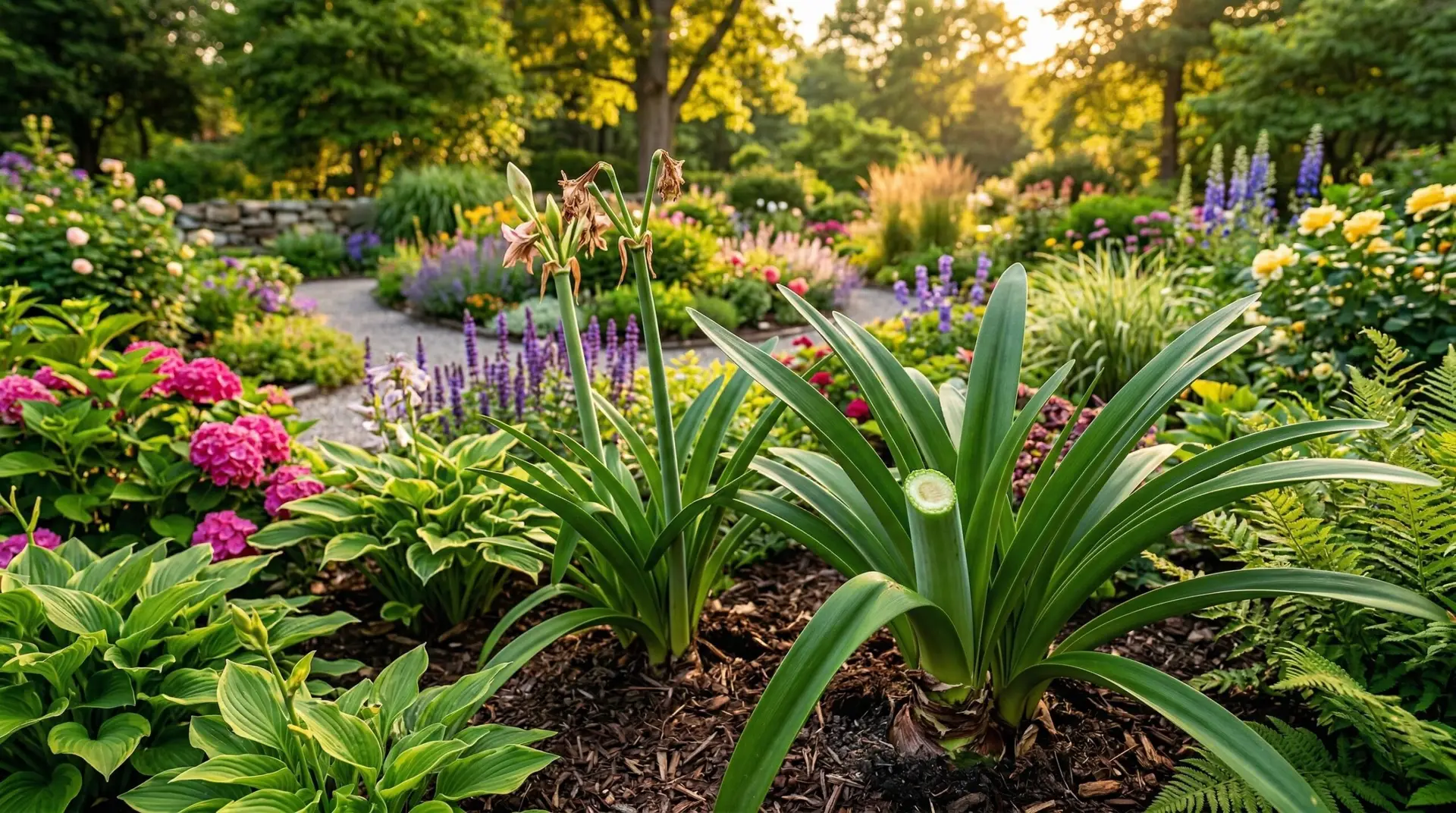
The first task is a simple pruning. Take a sharp knife or scissors and cut the thick, hollow flower stalk about an inch above the bulb. Do not cut the leaves under any circumstances. The green, strappy foliage is the engine that will drive the growth for the coming year. When the stalk is gone, the plant looks entirely different, resembling a messy fountain of green ribbons rather than a formal holiday centerpiece. Keep it in a bright, sunny window where it can soak up the late winter sun. Water it whenever the top inch of soil feels dry to the touch, just as you would any ordinary houseplant waiting out the cold.
Spring arrives and the leaves take over
As the snow melts and the soil outside begins to smell like mud and thawing roots, the amaryllis enters a period of quiet, steady work. This is the vegetative stage, the active window for an amaryllis after blooming when it rebuilds its strength. You will notice the leaves growing longer, sometimes arching awkwardly and requiring a small wooden stake to keep the pot from tipping over. Begin feeding the plant with a standard liquid houseplant fertilizer every few weeks. The bulb is drinking in nutrients, swelling slightly in its pot as it replaces the mass it lost during the winter bloom. You might see the first daffodils pushing through the garden soil outside, signaling that the earth is waking up. Your indoor amaryllis is on a similar schedule, responding to the lengthening days with vigorous green growth.
The transition from indoor houseplant to outdoor resident happens slowly. You must wait until all danger of frost has passed and the nighttime temperatures stay reliably above fifty degrees. When you hear the spring peepers calling at night and the evening air loses its sharp bite, it is time to start hardening off your amaryllis. Move the pot to a shaded spot on the porch or under a tree for a few hours a day. Gradually increase its exposure to the outside world over a week until it is used to the wind and the unfiltered light.
Summer days in the garden
By midsummer, the amaryllis has settled into its outdoor home. You can keep it in its pot on a patio table or bury the pot up to its rim in a garden bed to help regulate soil moisture. The plant needs dappled sunlight, perhaps receiving gentle morning sun and protection from the harsh afternoon heat. The leaves will look thick and deeply green, a clear sign that photosynthesis is working hard to pack the bulb with starches. Water the plant deeply during dry spells, letting the excess run freely through the drainage holes. The summer garden is busy with insects and heat, and the amaryllis quietly participates in this season of abundance. Every drop of water and ray of sunlight gathered now directly influences the amaryllis rebloom that you hope to see in the winter.
Continue fertilizing the bulb through July and August to support its heavy feeding habits. The thick leaves might get battered by summer storms or chewed by a passing caterpillar, but minor damage is nothing to worry about. The true life of the plant is underground, hidden inside the papery tunic of the bulb. Just as the spring-blooming tulip bulbs are resting quietly beneath the hot summer soil, your amaryllis is preparing for its own eventual rest. You are simply acting as the caretaker during these long, hot months. Make sure the soil does not dry out completely while the sun beats down on the garden, keeping the roots plump and healthy.
The autumn trigger for dormancy
The air changes in September, bringing cooler nights and a different quality of light that slants lower through the trees. This shift in the season is your signal to begin the next phase of care. To get an amaryllis to flower again, you must force it into a period of dormancy. In its native habitat, this dry, resting period is triggered by a distinct dry season that forces the plant to shut down. In your garden, you control the weather and must mimic this drought. Stop watering the plant entirely in early autumn to initiate the resting phase. Bring the pot inside before the first frost hits, as freezing temperatures will turn the water-filled bulb to mush and destroy your year of careful work.
Place the pot in a cool, dry, and dark place like a basement, a closet, or an unheated spare room. The temperature should ideally hover around fifty-five degrees to keep the bulb completely dormant. Over the next few weeks, the long green leaves will begin to yellow, wither, and collapse over the edge of the pot. This is exactly what should happen, as the plant is pulling the last bit of moisture and energy from the leaves down into the bulb. Leave the foliage alone until it is completely brown and crisp to the touch. Once the leaves are entirely dry, you can gently pull them away or snip them off at the neck of the bulb. The bulb now looks exactly as it did when you first bought it, sitting silently in the dry soil.
Waking the bulb for winter
The bulb requires eight to ten weeks of total darkness and quiet rest to reset its internal clock. During this time, you do nothing at all to the plant. The soil remains bone dry, and the bulb sleeps undisturbed in the cool dark. As November turns into December, the garden outside is stripped bare and the trees are skeletal against the gray sky. This quiet, cold period is the exact moment to wake your amaryllis and start the cycle anew. Bring the pot out of the dark storage and place it in a bright, warm window in your living space. Give the soil a thorough watering to signal to the waiting roots that the dry season has finally ended.
Within a week or two, a thick green tip will emerge from the neck of the bulb. Sometimes the flower stalk appears first, looking like a blunt, rounded bud pushing upward toward the glass. Other times, the leaves emerge first, splitting the papery brown skin at the top of the bulb. Keep the soil barely moist as the stalk shoots up, growing an inch or more a day in the warmth of the house. Soon, the tight green buds will swell and burst open into those familiar, massive blossoms. And then, just as the snow begins to fall heavily outside, the amaryllis opens its petals, completing its long cycle through the seasons.
More About Amaryllis
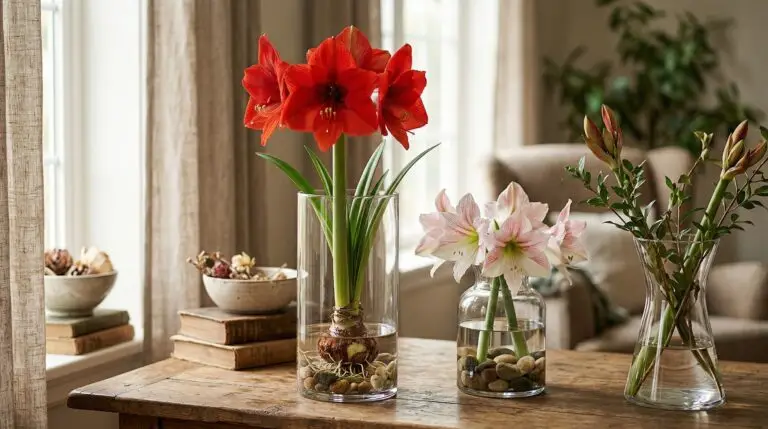
Creative ways to display amaryllis bulbs as winter home decor
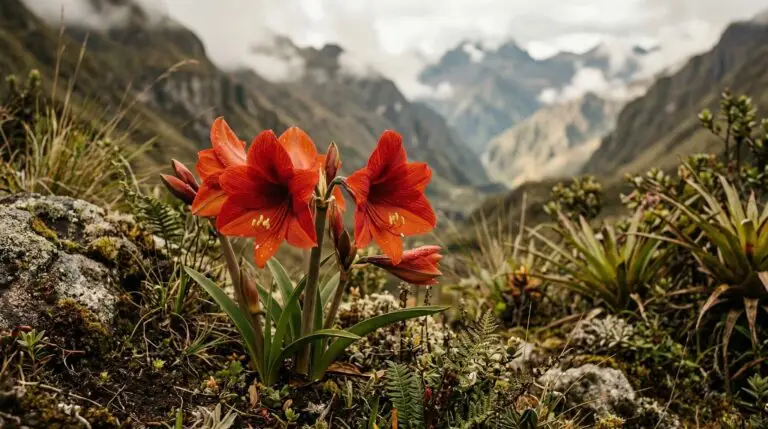
The fascinating history of amaryllis from South American wildflower to holiday tradition
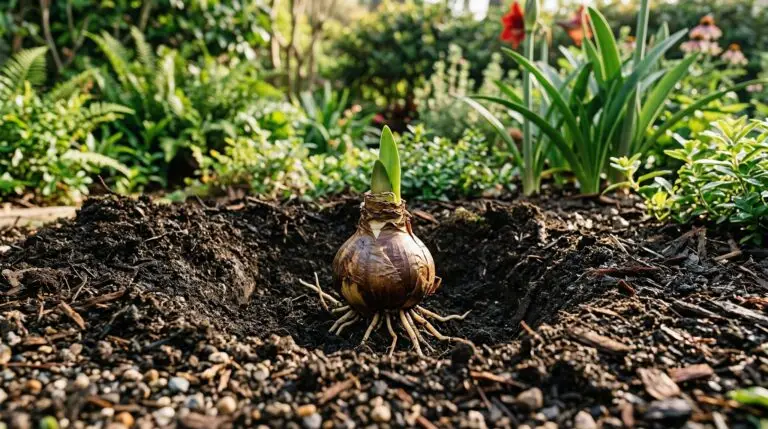
How to grow amaryllis outdoors in warm climates for year-round garden color
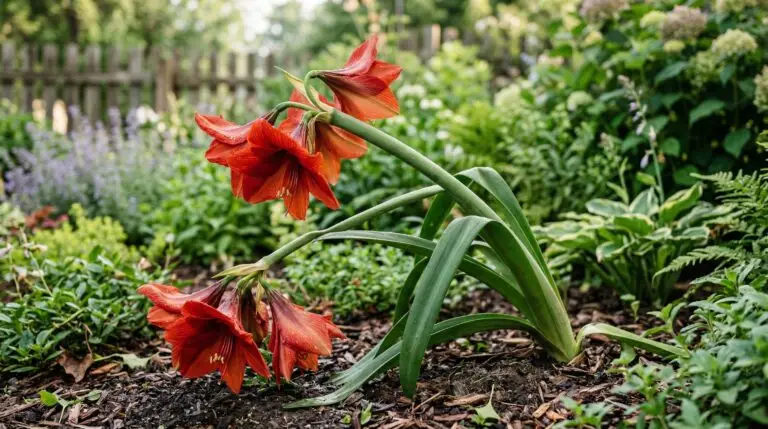
Common amaryllis problems including leaning stalks and split bulbs
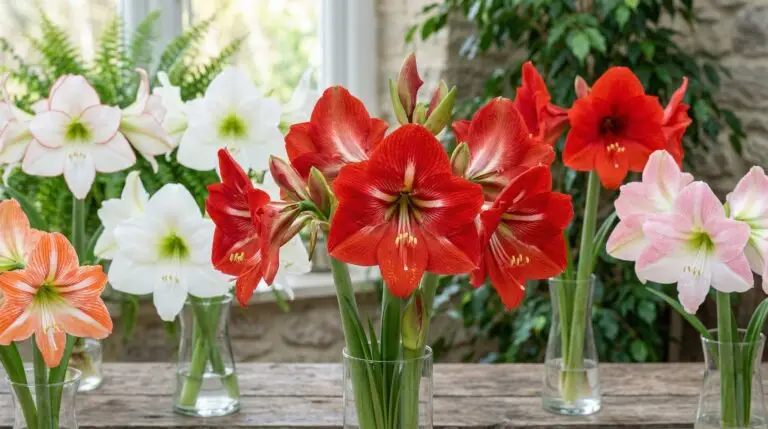
Amaryllis color guide and the most striking varieties to grow at home
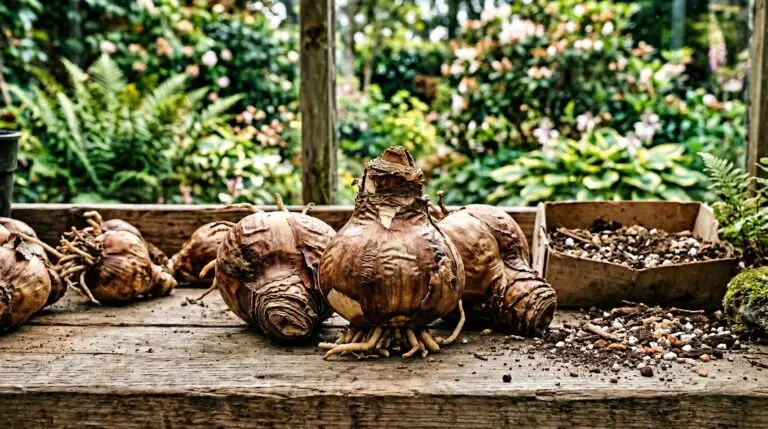
How to force amaryllis bulbs to bloom indoors for the holidays
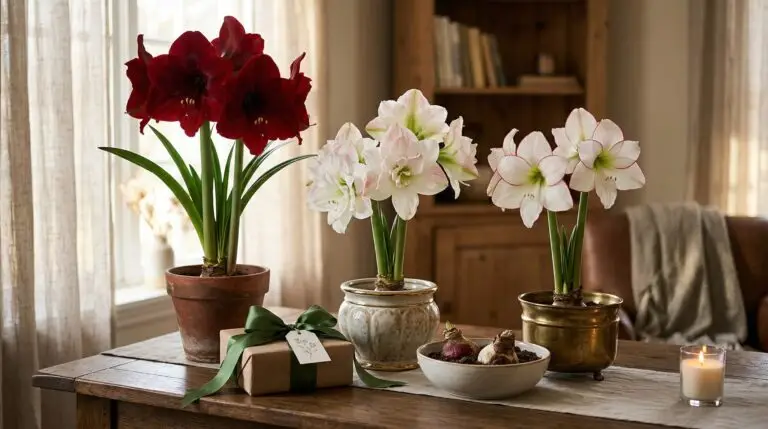
Amaryllis gift ideas and how to choose the perfect bulb for someone special
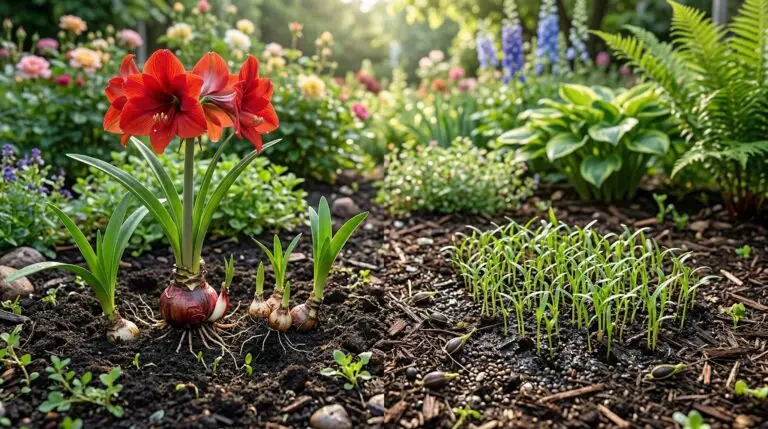
How to propagate amaryllis from offsets and seeds for a growing collection