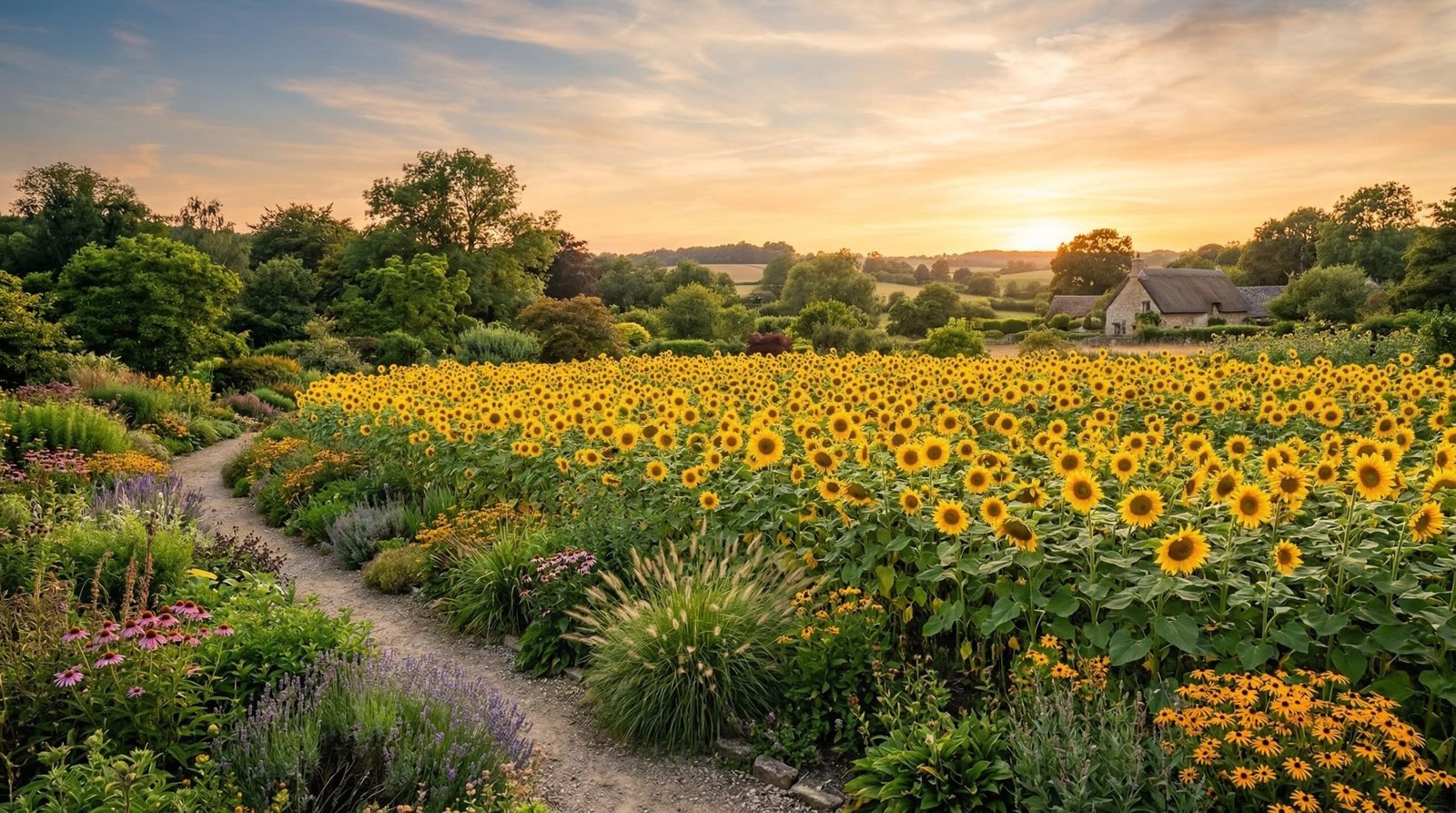
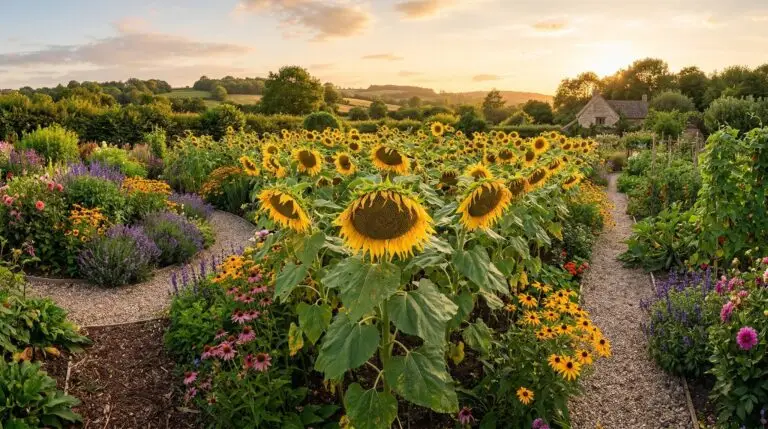
The late afternoon sun catches the edges of the sunflower petals, turning them from a flat yellow into a luminous, saturated ochre that seems to generate its own heat. If you could stand here beside me, you would feel the thick, dusty warmth radiating from the soil and smell the sharp, resinous scent of green sap that clings to the air. A sunflower field planted in the backyard is an entirely different experience than a single stalk grown in a mixed border. The sheer mass of broad, rough leaves creates a dense wall of foliage that blocks out the rest of the world and traps the summer heat. Standing at the edge of the patch, the stalks rise above eye level, covered in stiff white hairs that feel like coarse sandpaper against your bare arms. The heavy flower heads nod in the slight breeze, their petals brushing against one another with a dry, papery whisper. When you plant these seeds closely together, you create an immersive environment that catches the golden hour light and holds it close to the earth.
Selecting varieties for a unified canopy
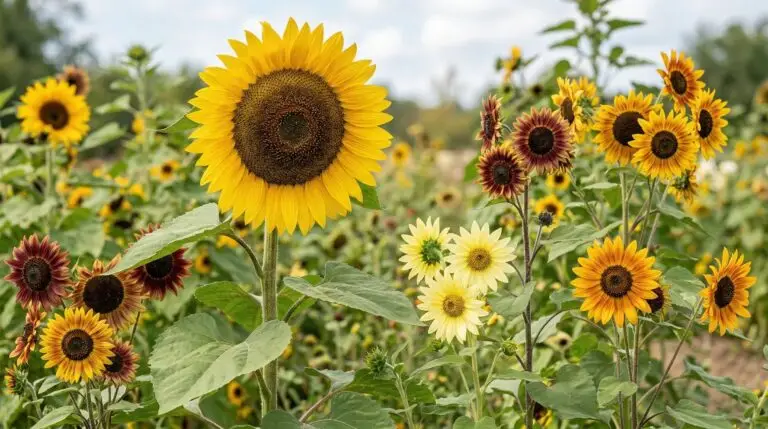
Creating a solid wall of color requires careful attention to the seeds you press into the ground. Single-stem varieties are the secret to achieving that unbroken horizon line of yellow blooms that photographers seek out in late summer. These plants push all their energy into one massive terminal bud, resulting in a uniform height that builds a perfect, seamless backdrop. You can choose the classic golden yellow with a dark, velvety center, or you can drift into softer tones like the pale blush of a lemon chiffon variety that photographs almost white in the midday sun. The deep rust and mahogany types offer petals that look like crushed velvet, absorbing the light rather than reflecting it back into the camera lens. Mixing heights and branching types will create a ragged skyline, so you must select a single cultivar for the main block if you want that classic agricultural field effect. The dark green, heart-shaped leaves will eventually lock together as they grow, shading out the soil below and forming a solid green foundation beneath the bright canopy.
The visual weight of the flower centers matters just as much as the petals when you are planning for close-up photography and cut flower arrangements. Some varieties have pollenless centers that open as tight, fuzzy disks of lime green before maturing into a deep, chocolate brown. These pollenless types keep your indoor tables clean and maintain a crisp, sharp appearance in photographs without dropping yellow dust onto the lower leaves. The texture of the central disk is firm and slightly sticky to the touch, composed of hundreds of tiny, unopened florets packed tightly together in a perfect spiral pattern. When you run your thumb across the mature center, it feels like a stiff brush, offering a heavy contrast to the delicate, translucent ray petals that ring the outside. You can plant a companion border of zinnia along the front edge of the patch, matching their stiff, papery blooms to the rich, warm tones of the taller sunflowers behind them. The contrasting heights and similar textures create a layered edge that invites the eye to travel upward into the dense canopy of yellow.
Preparing the soil for mass planting
The foundation of a dense flower patch begins in the earth, long before the first green shoot breaks the surface. You will know the soil is ready for planting when you grab a handful and it feels exactly like a wrung-out sponge, holding its shape when squeezed but crumbling easily when poked. Sunflowers are heavy feeders that pull an enormous amount of moisture and nutrients from the ground to build their thick, woody stalks. You must work organic matter deep into the bed, turning the dark, crumbly compost until the earth smells rich and slightly sweet, like a forest floor after a spring rain. To force the plants into a field effect, you will drop the smooth, striped seeds into shallow trenches spaced only six inches apart. This tight spacing forces the plants to compete for sunlight, driving them straight up into the air rather than allowing them to spread their lower branches. You push each seed into the dark earth up to your first knuckle, covering them lightly and patting the soil flat with the palm of your hand to ensure good contact.
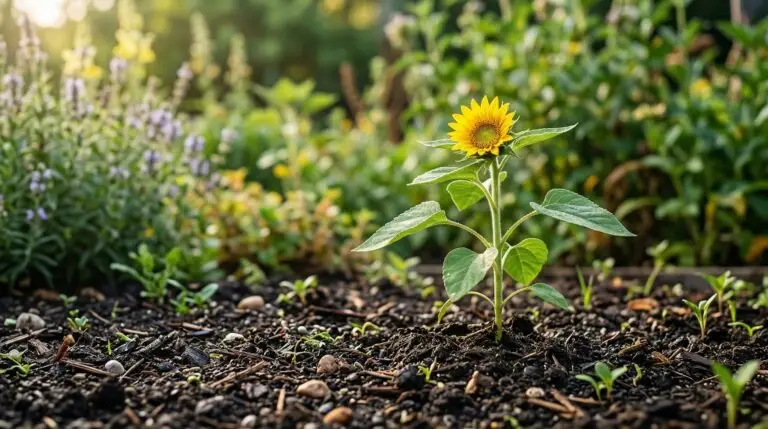
The waiting period ends abruptly when the pale, tender green cotyledons push their way through the dark crust of the soil. These first leaves are smooth and fleshy, entirely different from the rough, dusty emerald foliage that will soon follow. As you water the young patch in the early morning, the droplets catch in the tiny hairs along the new stems, sparkling like scattered glass in the slanting light. The scent of wet earth rises up around you, mixing with the sharp, clean smell of new growth. You must keep the ground consistently damp during these first few weeks, watching as the stems thicken and the true leaves begin to unfurl with their deeply veined, jagged edges. If a morning fog rolls through the garden, the broad leaves cup the moisture, holding small pools of water that slowly evaporate as the sun burns through the haze. The canopy closes quickly, and soon the soil is completely hidden beneath a tangled roof of overlapping green foliage.
Timing the bloom for late summer light
Capturing the perfect photograph requires the flowers to reach their peak just as the late summer light takes on its heavy, golden quality. If you sow all your seeds on a single Saturday in May, the entire field will burst into color at once and then fade just as quickly. You can extend this window by planting a new block of seeds every ten days, creating a rolling wave of blooms that marches slowly across the yard. As the August heat builds, you will notice the massive green buds swelling at the top of each stalk, enclosed in tough, pointed bracts that look like armored scales. The plants respond visibly to the intense afternoon heat, their broad leaves drooping heavily toward the earth by three o’clock, only to stiffen and recover their posture under the cool, damp cover of the evening dew. When the first petals finally break free from the bud, they emerge crumpled and damp, slowly ironing themselves out into a perfect, flat ring of color. The tall stalks sway together in the wind, creating a soft, rhythmic rustling sound that fills the garden.
Walking into the center of the mature patch feels like stepping into a room with yellow stained glass windows. The sunlight filters through the overlapping petals, casting a warm, amber glow over the dusty green leaves and the rough, hairy stalks. This is the moment to bring out the camera, waiting for the hour just before sunset when the light softens and the harsh shadows disappear beneath the canopy. You can cut armfuls of the thick stems to bring the harvest indoors, using heavy shears to slice through the fibrous stalks with a satisfying crunch. The cut stems weep a clear, sticky sap that coats your fingers and smells sharply of the wild prairie. A few paces away, a loose planting of cosmos might nod their delicate, fern-like foliage in the breeze, providing an airy, weightless contrast to the heavy, architectural presence of the sunflowers. The sheer volume of blooms in a mass planting means you can fill every vase in the house without making a visible dent in the solid wall of yellow outside.
The garden shifts as the season turns toward autumn, and the bright yellow petals eventually shrivel and fall away, leaving behind the massive, heavy seed heads. The stalks turn brittle and pale, losing their wet green sap and fading to the color of dried straw. The heads bow deeply toward the earth under the weight of thousands of maturing seeds, their fuzzy green centers transforming into a hard, geometric mosaic of black and grey stripes. In the early morning frost, the dried leaves rattle against each other with a hollow, papery sound that signals the end of the growing year. Small finches cling upside down to the drooping heads, their sharp beaks pulling the oily seeds from the tight matrix while they scatter empty hulls across the cold soil. Even as the stalks dry and crack in the autumn wind, the memory of that saturated, golden warmth remains anchored in the garden. You can close your eyes and still feel the heavy summer heat radiating from the thick green leaves, the bright yellow petals catching the last light of the fading day.
More About Sunflower
Why sunflowers follow the sun and the fascinating science of heliotropism

Sunflower flower meaning and why this golden bloom represents adoration and loyalty

Dwarf sunflowers for containers and small gardens that still bring big sunshine energy
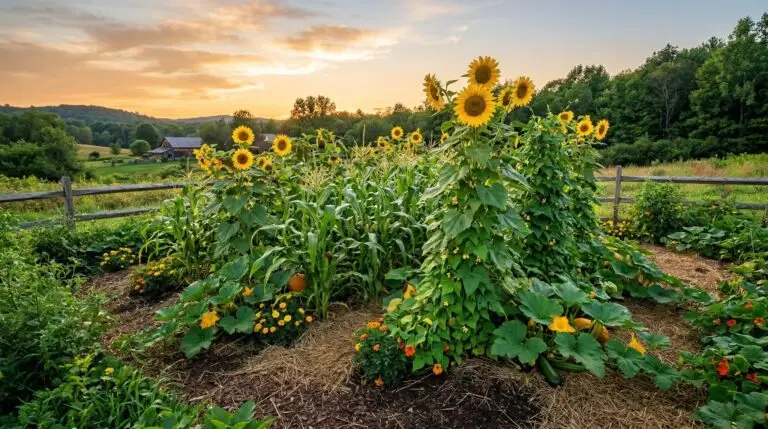
Sunflower companion plants: what to grow and what to avoid
Best sunflower varieties from single-stem giants to branching bouquet types
Growing sunflowers with children for the easiest and most exciting garden project ever
Harvesting sunflower seeds for roasting eating and saving for next year’s garden

Pollen-free sunflowers for cutting gardens and allergy-friendly bouquet arrangements