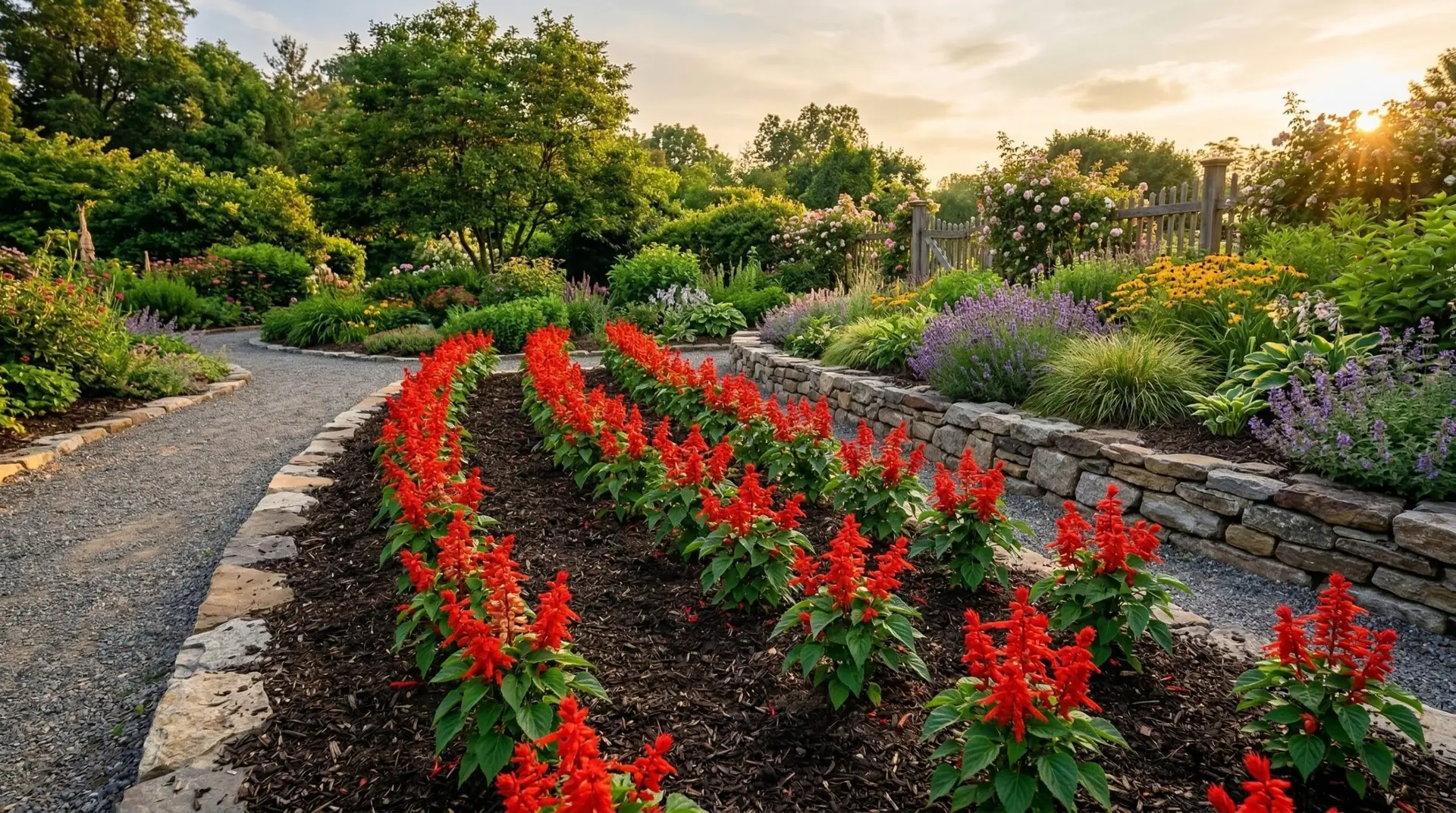
I wish you could stand beside me right now at the edge of the municipal park, just as the late afternoon sun dips below the tree line. The ground ahead of us is completely consumed by a solid, unbroken sweep of scarlet sage. The color is a piercing, saturated crimson that seems to generate its own heat in the cooling autumn air. When the slanting light hits these dense plantings, the individual flowers blur into a single, glowing mass that pulls the eye from hundreds of yards away. You can feel the visual weight of it, a heavy blanket of color laid deliberately across the earth. The air above the bed hums with a faint, dry heat rising off the dark soil, carrying a sharp, slightly medicinal scent from the crushed leaves. It is a masterclass in the sheer power of single-color impact, dominating the green lawns and gray concrete paths around it.
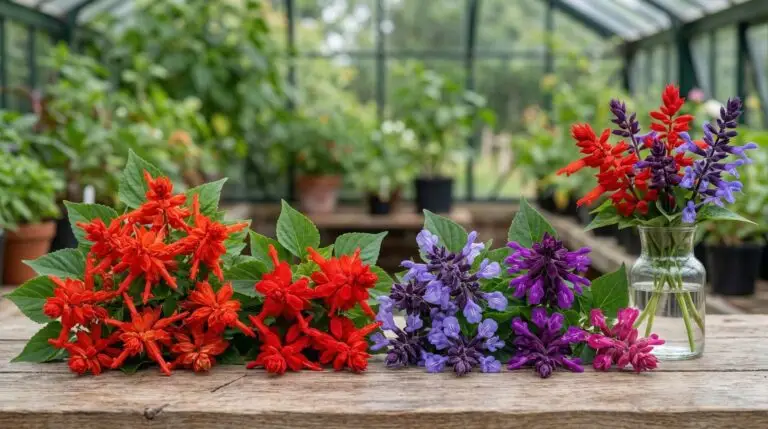
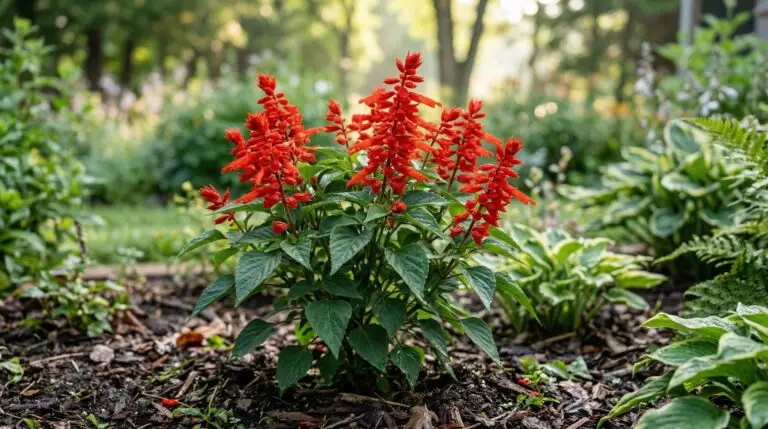
If you step closer and single out just one plant from this red salvia landscape, you will notice the precise architecture that makes such a dense display possible. The stems are strictly square beneath your fingertips, covered in tiny, stiff hairs that give them a rough, almost raspy texture. Deep emerald leaves grow in opposite pairs along these rigid stalks, their surfaces heavily veined and edged with sharp little teeth. Rising above this dark, textured foliage are the flowering spikes, tightly packed with papery red bracts. From these protective sheaths emerge the true flowers, which are smooth, elongated tubes with a slightly waxy sheen. The contrast between the matte, dark green leaves and the glossy, blood-red tubular blooms creates a visual tension that makes the entire bed seem alive. When a heavy rain falls, the water beads up on the waxy petals and rolls quickly down the coarse stems, leaving the red blooms looking freshly washed and even more intense against the gray skies.
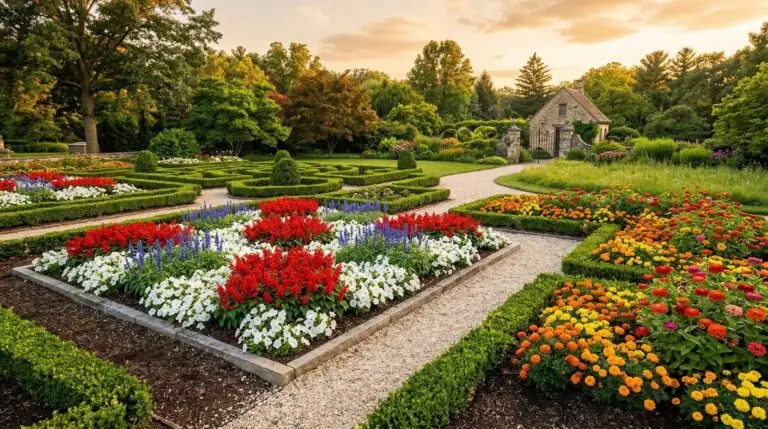
City gardeners and professional designers rely on this specific salvia bedding plant because it refuses to fade into the background. Unlike the softer, more diffuse colors of spring, this particular shade of red advances toward the viewer, making large, open public spaces feel more intimate and intentionally designed. A scarlet sage mass planting is a visual anchor in a sprawling park, holding the eye steady amidst the chaotic movement of people and traffic. The effect is entirely different from the cheerful, scattered warmth you might see in a bed of marigolds, which often feel rustic and casual. Here, the strict, upright habit of the sage creates a formal, almost architectural block of color that feels highly disciplined. Gardeners use this plant to draw sharp, clean lines across the earth, defining borders and filling massive geometric beds with an uncompromising flood of crimson. The sheer volume of red tricks the eye, turning thousands of individual stems into a single, unified object resting on the grass.
Creating the continuous sweep of crimson
Achieving this seamless red carpet effect requires a deliberate approach to spacing during the cool, damp days of early spring planting. When you set the young transplants into the ground, the soil should feel heavy and rich, clinging to your fingers like dark, moist coffee grounds. You must space the root balls exactly eight to ten inches apart, a distance that looks awkwardly sparse when the plants are small and vulnerable. As the days lengthen and the soil warms, the plants push outward and upward, their rough leaves reaching across the empty dirt to touch their neighbors. Within a few weeks, the individual canopies interlock completely, shading the ground below and smothering any opportunistic weeds. This tight spacing forces the flowering spikes to push straight up into the sun, creating a dense thicket of red that hides the soil entirely. The resulting mass is thick enough to resist the strong winds that often sweep across open municipal gardens, the intertwined stems supporting each other against the gusts.
The character of the red shifts dramatically as the sun tracks across the sky from dawn to dusk. In the early morning, heavy dew settles over the fuzzy stems and waxy petals, turning the bed into a frosted, cool burgundy that feels quiet and subdued. By midday, under the harsh, direct overhead sun, the red ignites into a blinding, fiery scarlet that demands your full attention. The color becomes so intense that it almost hurts the eyes, holding its own against the glaring white concrete of city sidewalks and the dark, heat-absorbing asphalt of nearby streets. While a bed of begonias might scorch and curl in this relentless, baking exposure, the scarlet sage absorbs the heat and thrives. As evening approaches and the light turns golden, the red deepens once more, taking on the rich, velvety tones of a dying ember in a campfire. You could stand there for an hour just watching the shadows stretch across the blooms, changing their hue minute by minute.
Tending the summer display
Keeping this massive block of color pristine through the long, humid months of summer requires a specific kind of physical engagement with the plants. When the lowest flowers on a spike begin to dry out and turn the color of rust, you must reach in and snap the stem off just above the next set of leaves. Your fingers will quickly become coated in a sticky, fragrant resin that smells sharply of mint and warm earth, a scent that lingers on your skin long after you leave the garden. This regular deadheading prevents the plants from diverting their energy into forming small, hard black seeds, pushing them instead to produce a constant flush of fresh red tubes. You will know the bed needs water when the dark soil turns a pale, dusty gray and the normally rigid, serrated leaves lose their crispness, drooping slightly toward the earth. Unlike a planting of impatiens that wilts dramatically at the first sign of thirst, the sage is remarkably resilient, bouncing back completely after a deep, slow soaking. The water must be applied directly to the soil level, soaking in slowly until the ground feels like a heavy, wet sponge, keeping the thick canopy of leaves dry to prevent powdery mildew.
The static, solid appearance of the red bed is an illusion, broken the moment you stand still and observe the constant motion humming just above the petals. The elongated, tubular shape of the flowers is perfectly engineered to attract hummingbirds, and you will often hear the low, thrumming vibration of their wings before you see them. They dart nervously from spike to spike, their iridescent green feathers flashing in sharp contrast against the sea of red as they probe deep into the blossoms for nectar. Large bumblebees also work the bed heavily, their weight pulling the slender red tubes downward as they clumsily force their way inside. This constant visitation gives the entire planting a restless, kinetic energy, the stems bobbing and swaying slightly even when there is absolutely no breeze. The sharp scent of the crushed foliage mixes with the dry dust kicked up by the wind, creating a sensory environment that is uniquely tied to the peak heat of late summer. The garden feels intensely alive, entirely dependent on this massive, glowing food source anchored in the soil.
As the nights finally begin to cool and the heavy frost approaches, the scarlet sage puts on one last, defiant show of color. The deep green leaves start to take on a purplish, bruised tint at their edges, reacting to the chill in the air, but the red bracts remain stubbornly bright. The low, slanting autumn light catches the fuzzy stems, illuminating the tiny hairs so they look like spun glass holding up the crimson spikes. Eventually, a hard freeze will turn the waxy flowers translucent and soft, melting the red carpet down into the dark earth. Until that morning comes, the solid mass of red stands unbroken, a heavy, warm blanket of color pushed hard against the fading autumn world. I hope you can close your eyes and picture that glowing expanse of scarlet, holding onto the heat of the sun long after the season has turned.
More About Scarlet Sage
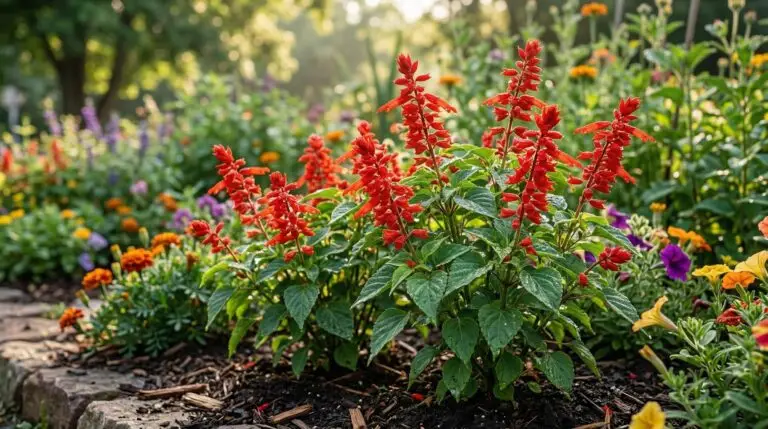
How to grow scarlet sage for blazing red spikes that hummingbirds fight over
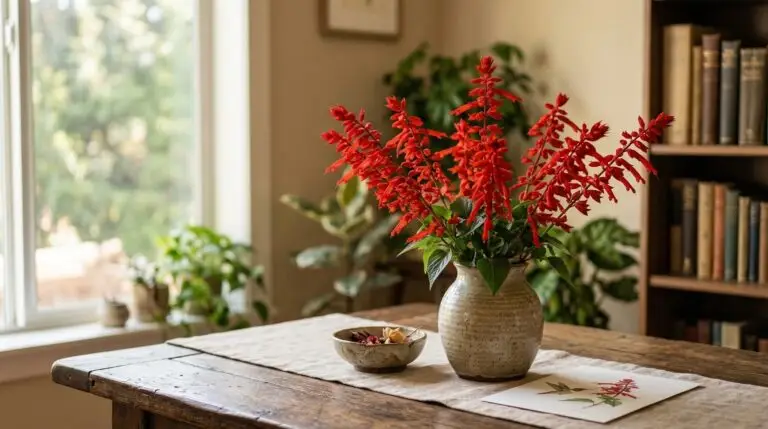
Scarlet sage as a hummingbird garden essential for non-stop feeder-free attraction
Growing scarlet sage from seed versus buying transplants and which saves money
Companion plants for scarlet sage: what to grow and avoid
Best scarlet sage varieties beyond basic red including salmon coral and burgundy
Scarlet sage flower meaning and the fiery passion this red bloom represents
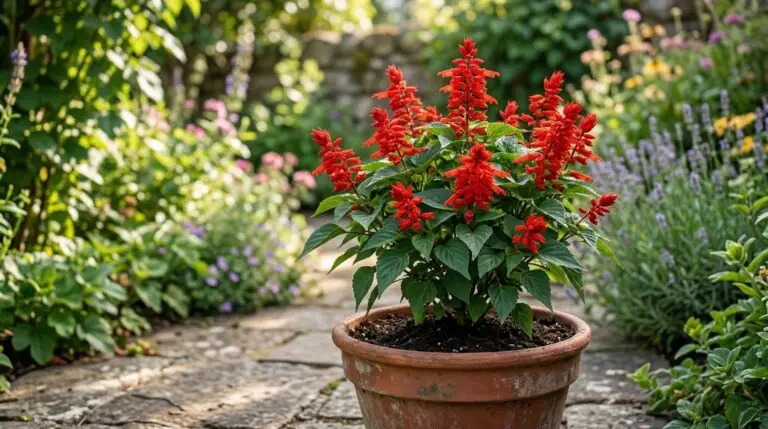
Growing scarlet sage in containers for fiery patio displays and front door drama
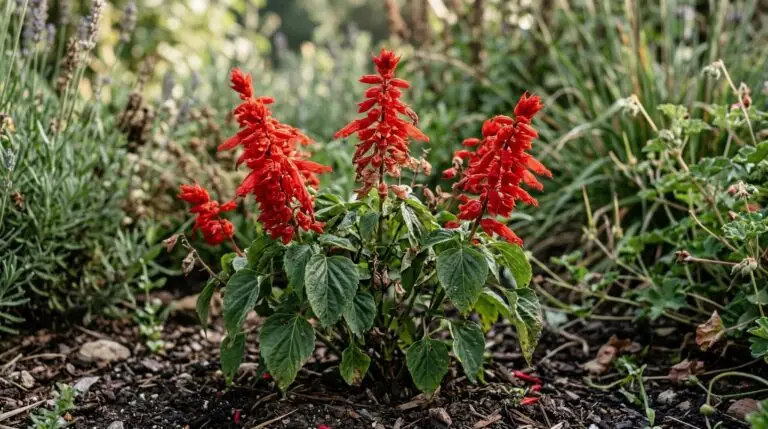
Why scarlet sage gets leggy in midsummer and the pinch-back method for bushy plants