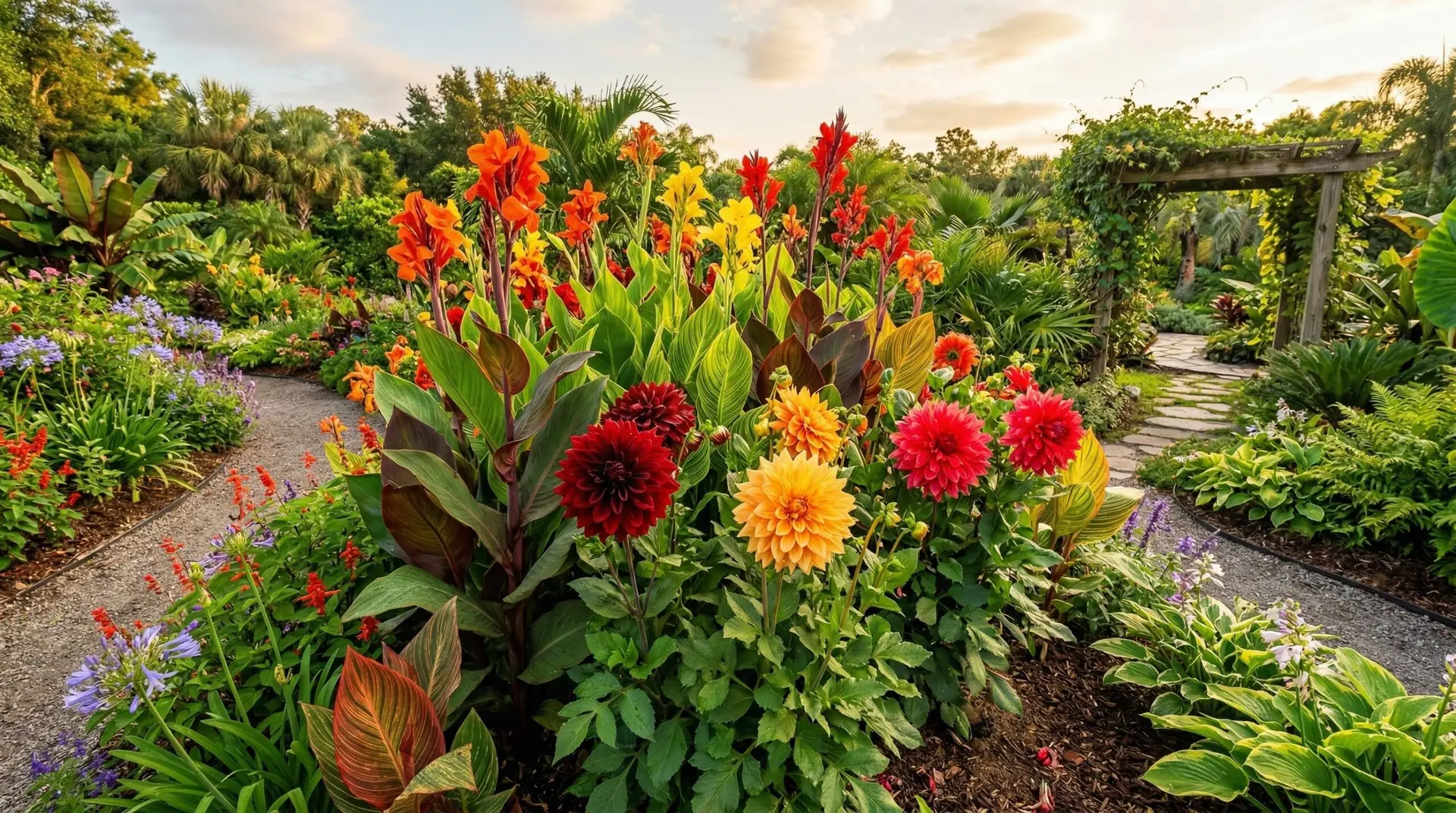
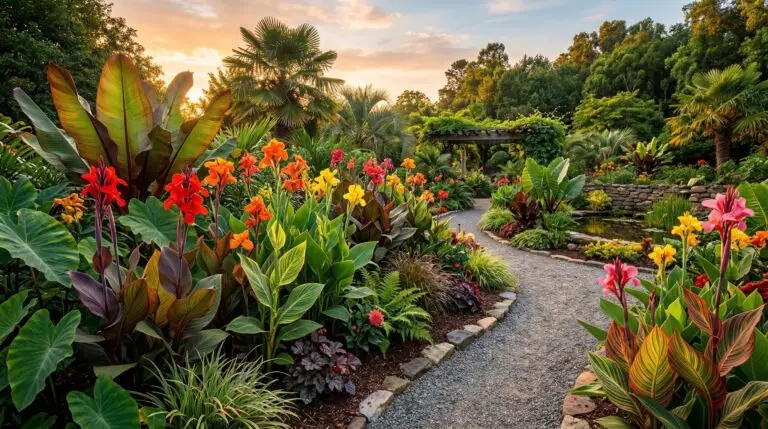
I wish you could stand beside me at the edge of the south border right now, just as the late August sun begins to dip behind the tree line. The heat of the day still radiates from the brick path, carrying the sharp, dusty scent of dry earth mixing with the faint sweetness of ripening seed heads. This is the exact moment when the garden sheds its delicate spring pastels and adopts a heavier, more saturated character. Towering above the rest of the beds, the cannas and dahlias are catching the low, golden light, turning the back of the border into a wall of saturated color. The combination feels almost tropical in its intensity, a defiance against the approaching autumn cold. You would love the way the heavy flower heads nod in the slight evening breeze, their stalks thick and sturdy under the weight of so many petals. It is a bold late summer garden scene that demands attention, pulling the eye upward and holding it there until the light finally fades.
Orchestrating height and foliage texture
When you plant these two giants together, the visual experience begins long before the first bud opens, starting entirely with the leaves. The canna foliage emerges first as tight, spear-like rolls that unfurl into massive, waxy paddles. Some are a deep, bruised burgundy that looks almost black in the rain, while others are striped with yellow and lime green, feeling smooth and cool to the touch. Against these broad architectural sweeps, the dahlia leaves offer a completely different tactile experience. Their foliage is deeply serrated, matte, and slightly rough, forming dense, bushy mounds that hide the bare lower stems of the taller plants behind them. The contrast makes you want to reach out and run your hands over the different surfaces, feeling the thick, rubbery ribs of the canna leaves and the thinner, papery edges of the dahlia greens. Together, they build a solid, impenetrable wall of vegetation that anchors the entire garden design.
Walking further down the path, you can really see how their varying heights play off one another in the late afternoon shadows. The cannas are the pillars of this living architecture, often reaching six or seven feet into the air, their leaves catching the sunlight like stained glass. Below them, the dinner-plate dahlias fill the middle ground, their thick, hollow stems supporting blooms the size of dinner plates at perfect eye level. I often tuck a tall sunflower or two into the very back of this arrangement, letting their rough, bristly stalks and heavy seed heads lean into the smooth canna leaves. The eye naturally steps down from the towering yellow discs to the fiery red canna spikes, and finally rests on the dense, geometric spheres of the dahlias. It creates a feeling of being completely surrounded by the garden, enclosed in a thicket of stems and leaves that blocks out the rest of the world. Every breeze creates a different sound here, from the dry rustle of the rougher stalks to the heavy, rhythmic clapping of the broad canna leaves.
Designing with color echoes and contrasts
The real reward of this canna dahlia combination arrives when the blooms finally open in the heavy heat of August. Right now, I am looking at a pairing that matches a saturated crimson dahlia with a bronze-leaved canna bearing bright scarlet flowers. The dahlia petals are arranged in perfect, mathematical spirals, their surface feeling like crushed velvet under a fingertip, absorbing the light into their dark centers. In contrast, the canna flowers are loose, asymmetrical, and papery, looking almost like crumpled silk caught at the top of the stalk. The reds do not match perfectly, but rather echo each other, creating a depth of color that a single plant could never achieve alone. When the morning dew settles on them, the water beads up and rolls off the waxy canna petals but clings to the velvety dahlia blooms, making them look dusted with tiny diamonds. It is a heavy, rich color palette that feels exactly right for the end of the growing season.
Just a few feet away, the mood shifts entirely in a softer, more luminous pairing that catches the morning light. Here, a canna with pale apricot flowers and sea-green leaves stands behind a dahlia in the soft blush pink of early morning clouds. The light filters through the translucent canna leaves, casting a warm, greenish glow over the heavy pink blooms below. The scent of the warm soil rises up around them, a rich, earthy smell that mixes with the faint, clean fragrance of the surrounding foliage. The bees are drawn to this softer corner, their low, constant buzzing adding a layer of sound to the visual softness of the pastel petals. The dahlia blooms are so heavy with petals that they nod slightly on their stems, resting their faces against the smooth, upright stalks of the cannas. It is a quiet, gentle corner of the bold flower border, proving that these massive plants can whisper just as effectively as they shout.
Preparing the earth for heavy feeders
To get these massive plants to reach their full potential, the work begins in the soil long before the spring air warms up. You will know the soil is right when you dig your trowel in and it feels heavy but crumbles easily, much like a dark, moist chocolate cake. Both of these plants are incredibly hungry, demanding a rich base of well-rotted compost and aged manure to fuel their rapid summer growth. When you work the compost into the planting hole, the smell of rich, fertile earth fills the air, promising a season of heavy growth. The ground needs to hold moisture without turning into a muddy swamp, feeling like a wrung-out sponge when you squeeze a handful in your palm. If the soil is too thin or sandy, the plants will tell you immediately, their lower leaves turning a papery yellow and dropping off. Creating this deep, nutrient-dense bed is the only way to support the thick stalks and massive flower heads that will emerge months later.
Once the heat of summer sets in, the watering routine becomes a daily meditation in this part of the garden. Standing with the hose, you can hear the distinct, loud smacks of water drops hitting the broad canna leaves, pooling in the center veins before spilling over the edges. The water darkens the dry earth instantly, sinking down deep to reach the fleshy tubers and rhizomes buried below. I like to plant a low border of a bright zinnia at the very front of the bed to shade the soil and keep those demanding roots cool. The zinnias provide a living mulch, their rough, hairy stems and bright, daisy-like faces offering a visual stepping stone up to the giant dahlias. You can smell the wet dust rising from the path as the water hits the dry edges of the bed, a classic scent of summer afternoons. Keeping the ground consistently moist ensures that the dahlia buds do not dry out and abort, allowing them to swell into those massive, perfect spheres.
The autumn ritual of lifting the tubers
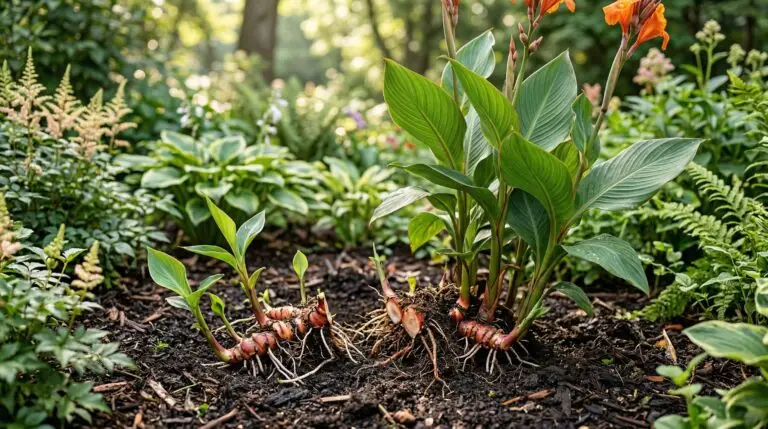
Eventually, the heavy heat breaks, and the first sharp frost of autumn arrives to change the garden overnight. You step outside on a crisp morning to find the proud, waxy canna leaves blackened and drooping, smelling faintly of cold, wet vegetation. The dahlia foliage turns a dark, limp green, signaling that the energy has retreated deep underground into the roots. This is when the heavy physical work begins, digging into the chilled earth to rescue the tender roots from the approaching freeze. The garden fork slides into the cold soil, lifting up the massive, knobby clusters of dahlia tubers, which look and feel like rough, elongated potatoes. Next to them, the canna rhizomes emerge thick and fleshy, covered in a network of pale, stringy roots that cling to the wet soil. The smell of the garden shifts from floral and dusty to the sharp, mineral scent of exposed, freezing earth.
Sitting on the edge of the stone wall, you brush the heavy, wet soil away from the lifted roots, preparing them for their long winter sleep. The tubers and rhizomes are laid out in wooden crates, packed carefully in dry wood shavings that smell of pine and dust. You carry the heavy crates down into the cool, dark cellar, where the air is still and smells faintly of apples and old masonry. The garden outside is suddenly empty, the towering green walls replaced by flat, bare earth covered in a layer of brown leaves. But inside the crates, the thick, fleshy roots hold all the potential of the next summer, waiting quietly in the dark. It is a comforting thought to leave you with, picturing those sleeping giants resting in the cellar, ready to build their bright, towering walls of color all over again when the warm light returns.
More About Canna Lily
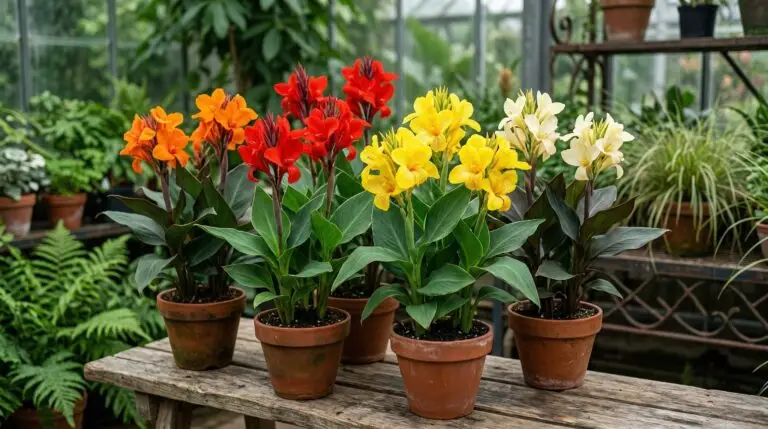
Dwarf canna varieties perfect for small gardens and front-of-border planting
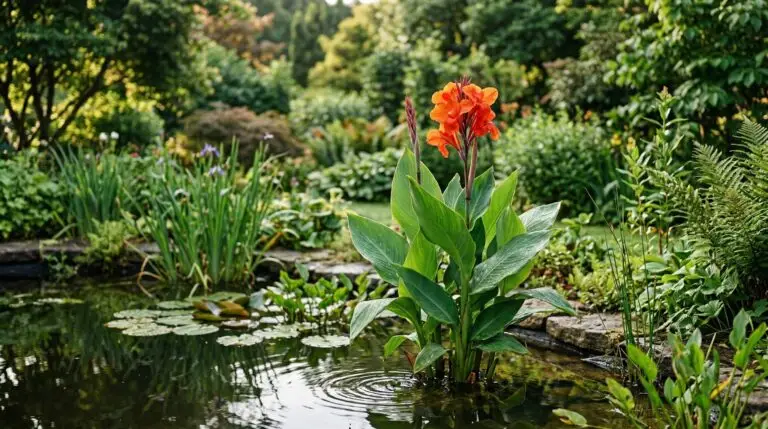
Growing cannas in water gardens and bog conditions for a lush waterside display
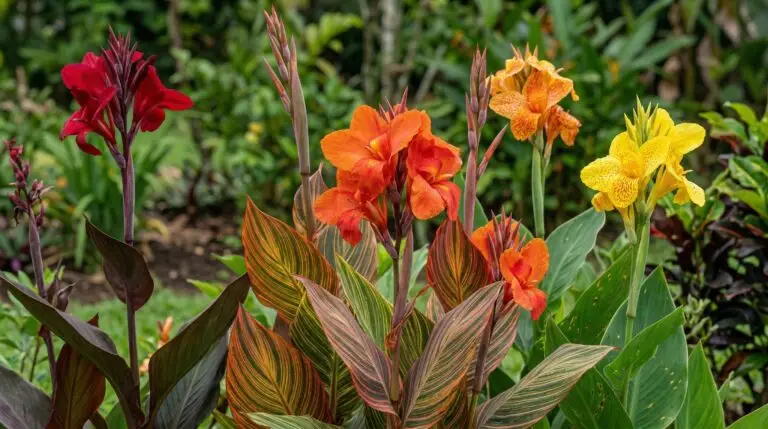
Best canna lily varieties for stunning foliage including dark-leaved and striped types
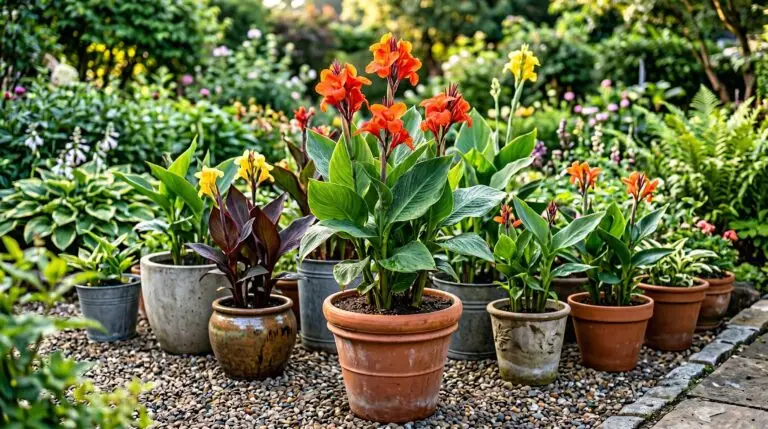
Growing cannas in containers for instant tropical impact on decks and patios
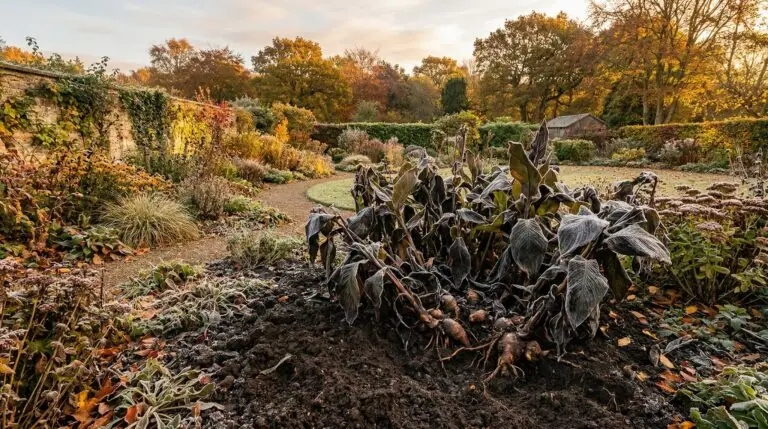
How to overwinter canna lily bulbs in cold climates and replant them in spring
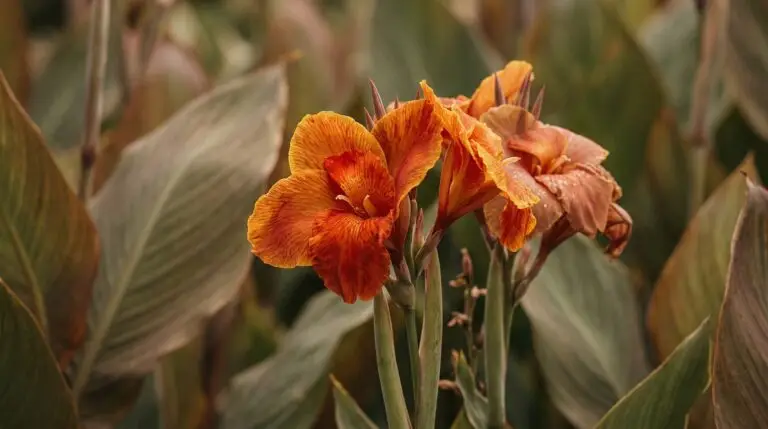
Canna lily flower meaning and its tropical symbolism of beauty and confidence
How to create a tropical garden look with cannas as the dramatic centerpiece
How to divide canna rhizomes in spring for more plants and bigger clumps