What to plant with gentian
The pairing · pick a flower
All gentian companions
What not to plant near gentian
The best companions for gentian, explained
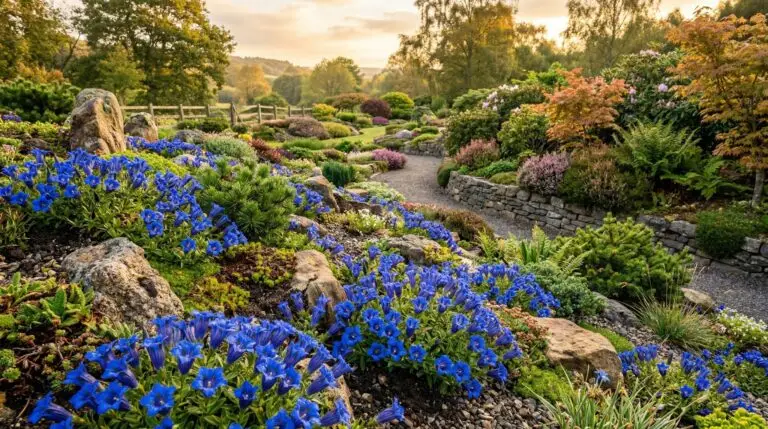
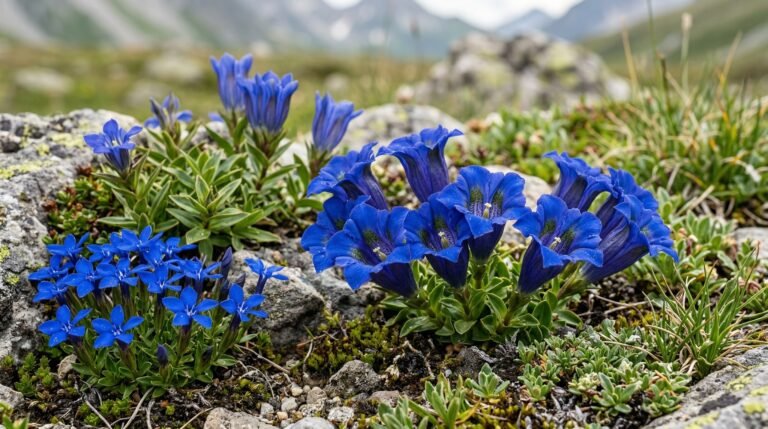
Gentian asks for something narrower than most rock garden plants: soil that stays moist and drains sharply at the same time, roots that stay cool through summer, and a companion that will not simply outgrow it. That last part is the piece most companion lists miss. Gentian tops out at 3 to 6 inches and spreads to 3 to 9 inches wide for its entire life, so a plant can match the light, the water, and the soil perfectly and still be the wrong choice if it towers over the gentian by midsummer. The strongest partners are other true alpines built to the same tiny scale: encrusted saxifrage, sempervivum, dianthus, and moss phlox all sit low, take the same gritty footing, and never crowd the gentian’s mat. The RHS names Gentiana acaulis directly in its own list of plants suited to sink and trough gardening, alongside sempervivum, dianthus, and encrusted saxifrage, which is about as direct a confirmation as this pairing gets.
A second, equally valid planting exists at a different scale: the acid-leaning woodland edge, where dwarf azaleas, a genuinely dwarf fern, and hardy cyclamen share gentian’s preference for cool, moist, humus-rich soil under light shade. This is not a lesser option, it is a different room in the same house. The mistake is blending the two scales in one small bed, tucking a standard landscape azalea or a full-size hosta clump next to a plant that will never top 6 inches. Pick a rock garden or trough planting and keep it consistently alpine-scaled, or pick a woodland-edge planting and keep it consistently shade-and-moisture-scaled. Either way, gentian rewards a companion chosen for its footprint first and its flower color second.
What not to plant near gentian
The plant most people should worry about is not a specific enemy so much as anything that grows faster or taller than a 3 to 6 inch mat. Aggressive spreaders and self-seeders, creeping speedwell, invasive stonecrop types, self-seeding alpine campanulas, can physically overrun gentian within a season or two, simply by covering more ground faster. This is not a disease risk or a chemical conflict, it is a straightforward competition for space that a slow-growing alpine cannot win on its own. Give any runner a firm edge, a container, or its own separate pocket, and keep gentian’s immediate neighbors to plants with the same clumping, non-invasive habit.
Large, thirsty trees and surface-rooted shrubs are the other clear avoid. Gentian genuinely dislikes growing under the drip line of trees and prefers lime-free, well-drained ground, and even easy-going gentian relatives bred for tolerating almost any soil and situation are specifically flagged as struggling in parched soil beneath trees. The mechanism is straightforward: deep, greedy roots dry out exactly the cool, evenly moist zone gentian’s own shallow roots depend on, and rain shadow under a canopy compounds the problem. Site gentian in open ground, a rock garden, or a trough well clear of tree canopies. On the soil-pH question, treat the old "gentians hate lime" warning with real nuance rather than a blanket ban: this spring-flowering species tolerates mild alkalinity noticeably better than that reputation suggests, and the strict lime-intolerant rule actually belongs to a different group, the autumn-flowering Asiatic gentians. A companion that specifically demands strongly alkaline soil is still a mismatch, but one that merely prefers neutral-to-slightly-alkaline ground, alpine dianthus among them, is a far softer tension than folklore implies. Slugs and snails are gentian’s main reported pest, so a known slug magnet like hosta planted right beside it can concentrate that pressure rather than spread it thin, worth a caveat rather than a hard rule.
Do they like the same conditions?
Gentian’s own profile is genuinely narrow, and stating it plainly is what makes the matches above honest rather than decorative. Light runs full sun to part shade, with afternoon shade specifically recommended in hot-summer climates to stop the leaves bleaching; cooler, higher-altitude gardens can give it more direct sun. Water has to do two contradictory-sounding things at once, staying constantly moist while never sitting wet, which is why a gritty, sharply draining mix over a moisture-holding layer of compost or peat is the standard prescription rather than a compromise. Soil pH leans acid to neutral as the safe default, but this species genuinely tolerates mild alkalinity, a real point of flexibility that most acid-soil companion advice glosses over. Texture wants to be loam or sand, gritty and humus-rich, never heavy clay. Hardiness spans USDA zones 3a through 7a, but gentian is defined as much by summer climate as by zone number: it struggles in hot, humid conditions regardless of what the zone map says, which is why cool-summer companions matter more than matching the hardiness rating alone.
Testing a candidate against that list is what separates a genuine companion from a plant that merely looks nice in the same photo. Sempervivum, for instance, checks every box on grit and sun but wants to dry out completely between waterings once established, a real caveat worth carrying forward rather than ignoring, so it belongs at the higher, drier edge of a shared trough rather than directly over gentian’s own root zone. Creeping thyme follows the same pattern: correctly scaled, tolerant of the gritty soil, but its own drought tolerance means it drifts toward the drier margin of the bed instead of gentian’s constantly damp center. Alpine pinks run the ruler the other way, matching gentian’s scale and grit tolerance but leaning slightly toward neutral-to-alkaline soil themselves, a soft tension worth naming rather than hiding. None of this makes any of these plants a bad match, it just means the shared-conditions ruler has to be applied honestly, plant by plant, rather than assumed from a shared "likes rock gardens" label.
How to plant them together
Space true alpine companions 4 to 10 inches from gentian’s crown, close enough to read as one planting but far enough that neither mat climbs over the other before either is established. Moss phlox is the one exception worth watching, since it spreads faster than gentian and can drift over a slower neighbor within a couple of seasons if planted too close. Woodland-edge companions need more room, 10 to 24 inches depending on the plant’s eventual size, since a dwarf rhododendron or a fern clump will fill out considerably more than a saxifrage rosette ever will. Plant gentian and its companions at the same time if possible, so root systems establish together rather than one crowding an already-settled other. In a trough or alpine pan, build the gritty substrate first, work in a band of compost or moisture-holding material specifically under the gentian’s own root zone, then plant sempervivum and other drought-tolerant types toward the container’s higher, faster-draining side. In an open rock garden, layer by height even at this tiny scale: gentian and saxifrage low and central, dianthus and moss phlox just beside them, and any dwarf shrub kept to the planting’s back edge so it never shades the alpines in front. For the woodland-edge version, plant dwarf rhododendron and ferns first to establish the light and moisture pattern, then tuck gentian and hardy cyclamen into the gaps once the canopy’s shade level is settled.
Does companion planting actually work for gentian?
Some of this is genuinely proven, and some of it is closer to a well-reasoned design choice than hard horticultural fact, and keeping those two categories separate matters more than blurring them together for a nicer-sounding page. The RHS naming Gentiana acaulis directly in its trough-plant list alongside sempervivum, dianthus, and encrusted saxifrage is about as solid as evidence gets for a specific pairing: an authoritative source recommending these plants for the same container, for the same reasons of scale and drainage. The tree-root avoidance is similarly well documented, both in gentian’s own dislike of growing under tree drip lines and in a related, easier-going gentian’s flagged struggle with parched soil beneath trees. The Alpine Garden Society’s cyclamen pairing sits in a slightly softer place: it is a named, deliberate recommendation with an explicit rationale (the color echo, the moisture-balancing caveat), but the source material addresses the autumn-flowering gentian group specifically, so the transfer to this spring species is reasonable rather than airtight. What is closer to folklore is any claim that a particular companion actively improves gentian’s bloom or vigor beyond simply not competing with it for light, water, or root space; no evidence supports a companion "helping" gentian flower in a direct sense, only that the wrong neighbor can genuinely hurt it. If your gentian has stopped flowering, a crowding companion stealing its light or drying its root zone is a real, plausible cause worth checking before assuming the plant itself is simply difficult.
FAQ
What can I plant in front of gentian?
Something lower or the same height that will not shade the crown, saxifrage and creeping thyme both work at 2 to 4 inches, kept slightly forward so gentian’s own low mat still catches full light. For the shadier woodland-edge version of the bed, browse other types of flowers that grow in shade for more companions at that same light level.
What should you not plant near gentian?
Fast-spreading runners like creeping speedwell, anything under a tree canopy, and full-size (non-dwarf) shrubs are the three clearest mismatches, the first two on competition and moisture, the third on scale alone.
Does gentian need acidic soil?
It prefers acid-to-neutral soil, but this spring-flowering species tolerates mild alkalinity better than the old "gentians hate lime" reputation suggests; the strict lime-intolerant rule belongs to the autumn-flowering Asiatic gentians instead.
Can I grow gentian in a trough with other alpines?
Yes, and it is specifically recommended for this: the RHS lists Gentiana acaulis in its own sink-and-trough plant guide alongside sempervivum, dianthus, and saxifrage, all of which share the gritty, sharply drained conditions a trough naturally provides.
Why won’t my gentian flower?
Several possibilities exist, including winter-summer humidity and simple plant age, but a crowding neighbor is a genuine and checkable cause: a companion stealing direct light, competing for the cool moist root zone, or forcing a strongly alkaline soil compromise can all suppress bloom without killing the plant outright.
Sources
North Carolina Extension Gardener Plant Toolbox: Gentiana acaulis · Missouri Botanical Garden Plant Finder: Gentiana acaulis · Plants For A Future: Gentiana acaulis · RHS: Sink and trough gardening, plants for · Alpine Garden Society: Autumn-flowering gentians
More About Gentian
How to grow gentians for the most intensely blue flowers in the entire plant world
Gentian flower meaning and the alpine legend behind this intensely blue bloom
Growing gentians in rock gardens and alpine troughs where they truly shine
Best gentian species for gardens from alpine Gentiana acaulis to autumn-blooming types
Why gentians are difficult to grow and the secrets to keeping them alive
Growing gentians from seed and the cold stratification they demand for germination
Willow gentian as the easiest gentian for beginners and shady woodland gardens
Gentian root in herbal medicine and the bitter that has healed for centuries