Building a massive cascading petunia hanging basket requires more than just buying a plastic pot at the garden center and hoping for the best. Before you purchase any plants, you need to evaluate the time and resources you are willing to commit to this project. A fully mature petunia basket is a high-maintenance garden feature that demands daily attention during the peak summer months. You have to decide if you have the schedule to support frequent watering and weekly feeding. If you travel often during the summer without a reliable plant sitter, a large trailing petunia display will likely dry out and fail before July ends. Assess your growing location first to ensure it receives at least six to eight hours of direct sunlight each day. Baskets hung in shaded porches will produce long spindly stems with very few flowers.
Assessing your site and selecting containers
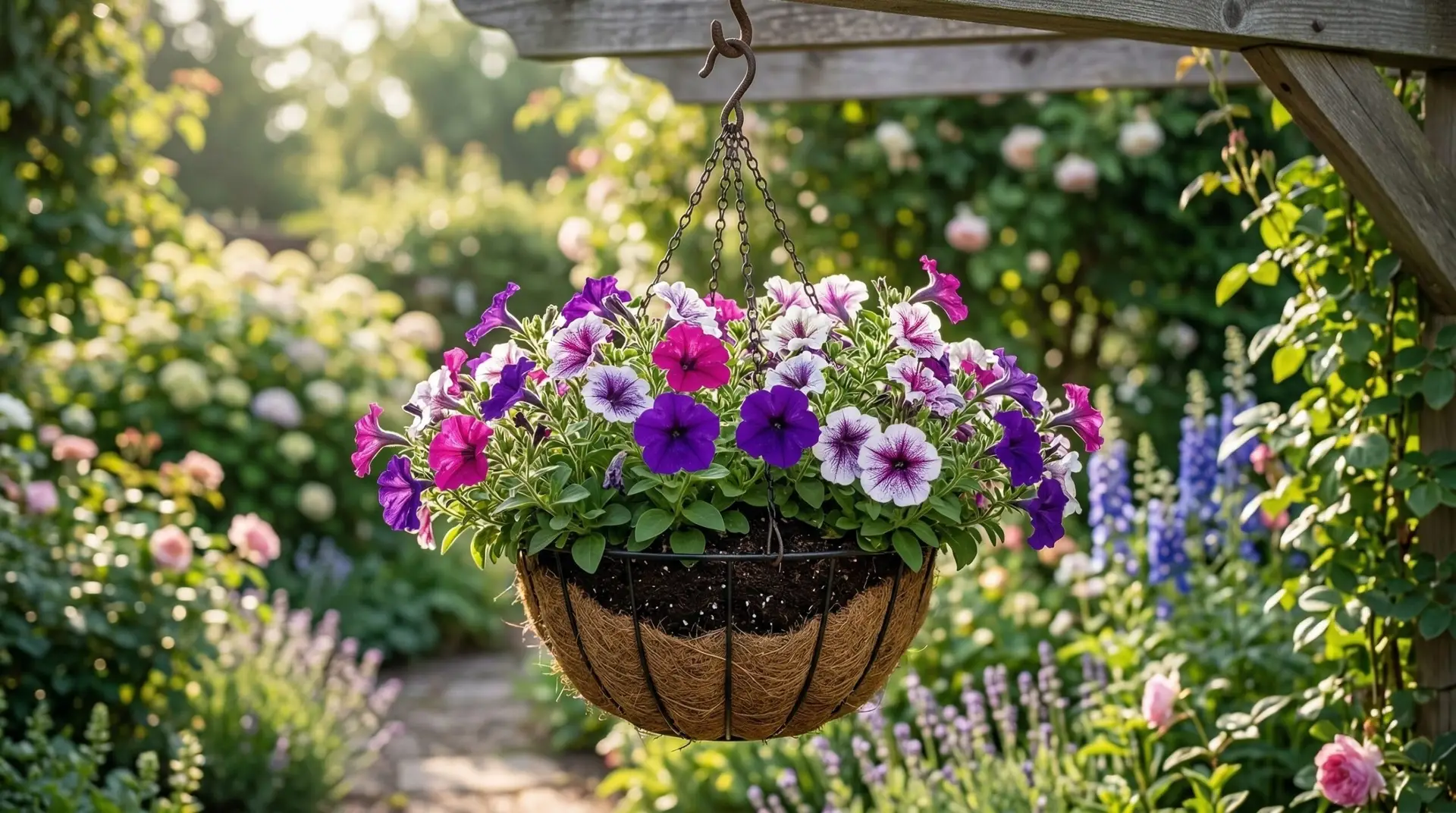
The foundation of your petunia hanging basket begins with the container itself. Most beginners make the mistake of buying baskets that are entirely too small for the root systems these aggressive growers develop. You should source baskets that are at least fourteen to sixteen inches in diameter to provide adequate soil volume. A larger soil volume holds moisture longer, which becomes critical when July temperatures peak and the plants are fully grown. Wire baskets lined with sphagnum moss or coco coir offer excellent drainage and allow you to plant into the sides of the basket for a faster cascading effect. Solid plastic containers retain water slightly better but restrict your planting strictly to the top surface. You will also need a high-quality lightweight potting mix formulated specifically for containers. Heavy garden soil or raised bed dirt will compact in a hanging basket and suffocate the roots.
Preparation and planting strategy
Once you secure your large baskets and potting mix, you need to calculate your planting density. A fourteen-inch basket typically requires three to five trailing petunia plugs planted near the edges to create a full cascading effect. You should look specifically for trailing or spreading varieties rather than upright mounding types. The Wave or Supertunia series are bred specifically for this aggressive horizontal growth and will spill over the edges of your container within a few weeks. If you want a mixed arrangement, you can pair your petunias with other sun-loving trailing plants that have similar water requirements. Adding verbena provides a nice textural contrast with its clustered flower heads and rougher foliage. You might also weave in some sweet alyssum around the edges to fill small gaps and add a honey scent to the arrangement. Allow four to six weeks from your initial planting date for the basket to look completely full and begin its downward spill.
Establishing a water management routine
Water management is the single most demanding aspect of petunia basket care. Because the container is suspended in the air, the wind and sun evaporate moisture from all sides simultaneously. You must establish a strict daily watering routine from the moment you hang the basket outside. In the mild weather of late spring, watering once a day in the early morning is usually sufficient to keep the soil evenly moist. By the time mid-summer arrives and the plant mass doubles in size, you will likely need to water the basket twice a day. You should water until liquid flows freely from the drainage holes at the bottom of the container. If the soil pulls away from the edges of the basket, the water might run down the inside walls without actually saturating the root zone. When this happens, you need to soak the entire basket in a large tub of water for an hour to rehydrate the potting mix completely.
Executing a strict feeding schedule
The secret to achieving those massive professional displays lies entirely in the feeding schedule. Trailing petunias are notoriously heavy feeders that quickly exhaust the nutrients present in standard potting soil. You must implement a dual-approach fertilizing plan before the plants begin to yellow and slow their growth. At planting time, mix a slow-release granular fertilizer into the potting soil to provide a baseline of nutrition for the first month. Once the plants begin actively growing and cascading over the sides, you need to start applying a water-soluble fertilizer every week. Many professional growers use a diluted liquid fertilizer every single time they water, a practice known as constant liquid feeding. If you choose the weekly route, pick a specific day of the week to feed your baskets and stick to that schedule religiously. Skipping just two weeks of fertilizer in July can cause the vines to become woody and stop producing new flower buds at the top of the basket.
Ongoing maintenance and late summer renewal
Your maintenance strategy must account for the natural life cycle of the trailing petunia as the season progresses. While many modern trailing varieties are self-cleaning and drop their spent blooms naturally, older varieties require manual deadheading to prevent seed production. Even with self-cleaning types, you will notice the plants start to look tired and leggy by early August. The vines become long and stringy, with flowers only appearing at the very tips while the top of the basket looks bare. You can prevent this by performing a hard structural prune in mid-summer. Cut the trailing stems back by about one third of their length to force new branching closer to the soil surface. The basket will look slightly bare for about two weeks, but it will quickly flush out with fresh green growth and a dense new crop of flowers. If you pair this pruning with a heavy dose of fertilizer, your basket will easily last until the first autumn frost.
To get started this week, take a walk around your property to identify the best locations for your hanging baskets. Find the spots that offer the required six to eight hours of direct sun and have sturdy structures capable of holding a heavy water-logged container. Measure the height of the hanging hooks to ensure you can reach them comfortably with your watering can or hose wand. Make a list of the supplies you need to purchase, focusing first on the large wire baskets, coco coir liners, and a premium container potting mix. If your chosen location gets slightly less sun than required, you might want to consider alternative shade-tolerant plants like impatiens instead of forcing petunias to grow in the wrong environment. Once you have your hardware and soil secured, you can visit the nursery to select strong, healthy trailing petunia plugs. Preparing your infrastructure before buying the plants ensures your cascading display has the best possible start.
More About Petunia
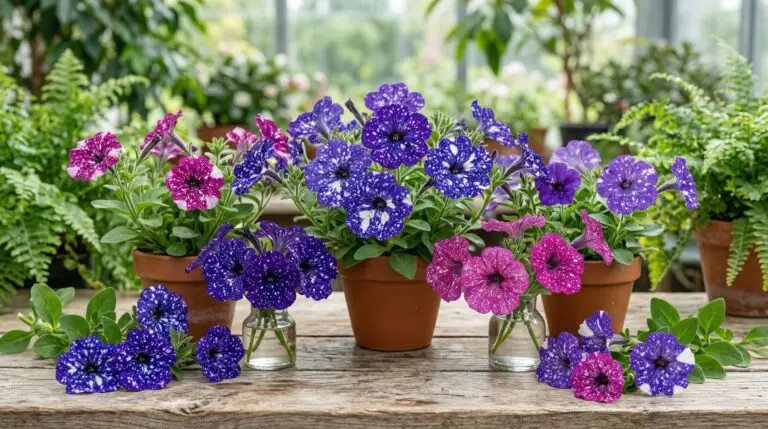
Night Sky petunia and the novelty varieties that look like galaxy flowers
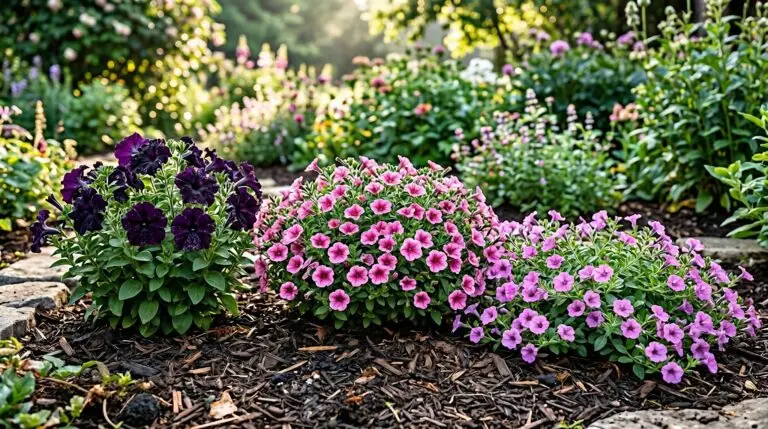
How to grow petunias for explosive color in hanging baskets containers and garden beds
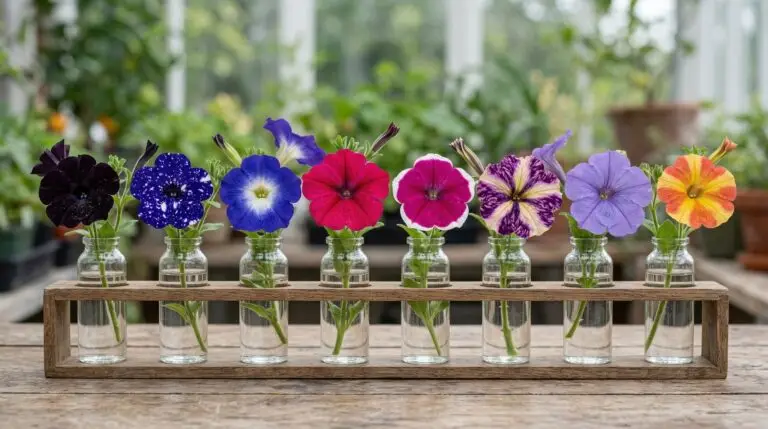
Supertunia and Surfinia versus regular petunias and why branded varieties outperform
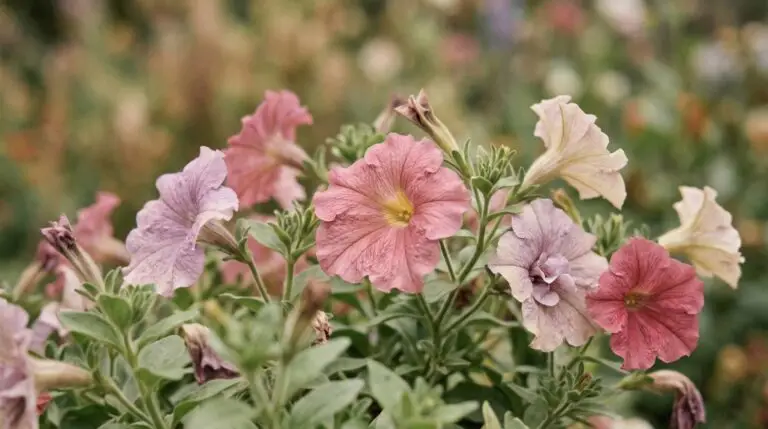
Petunia flower meaning and why this humble bloom represents desire and comfort
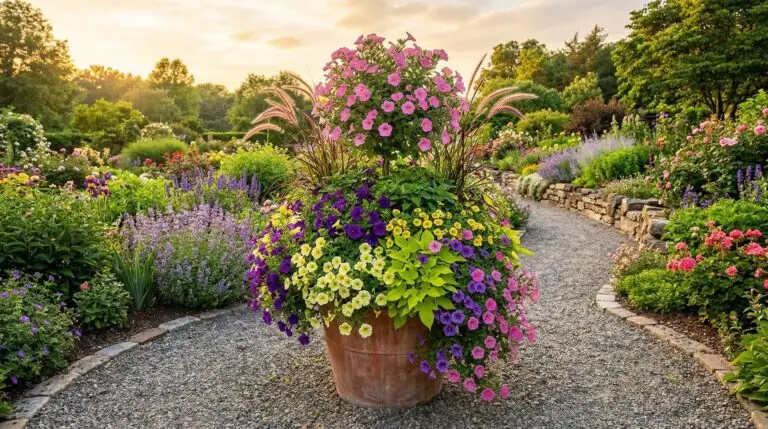
Companion plants for petunias in containers and beds for non-stop summer displays
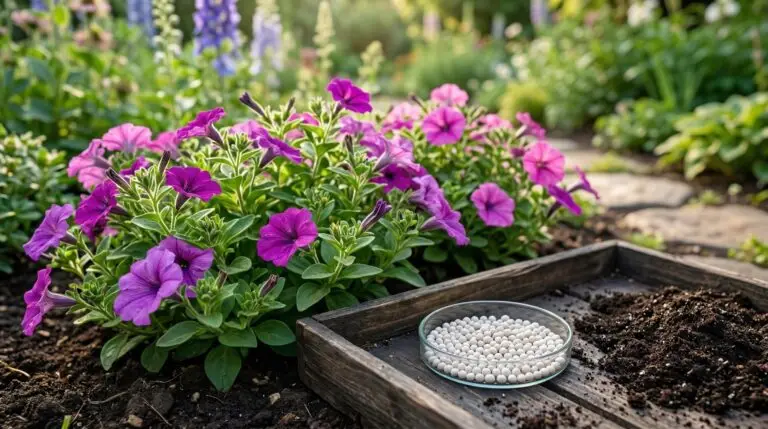
Growing petunias from seed and the tiny seeds that need light and patience to germinate
Why petunias get leggy and scraggly by midsummer and the hard cutback that saves them