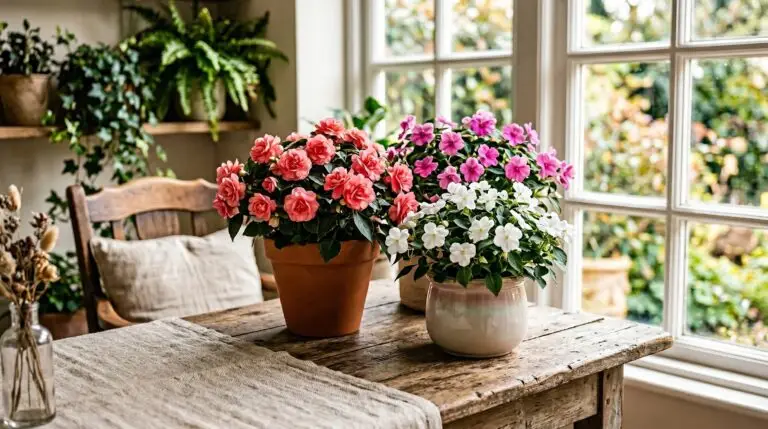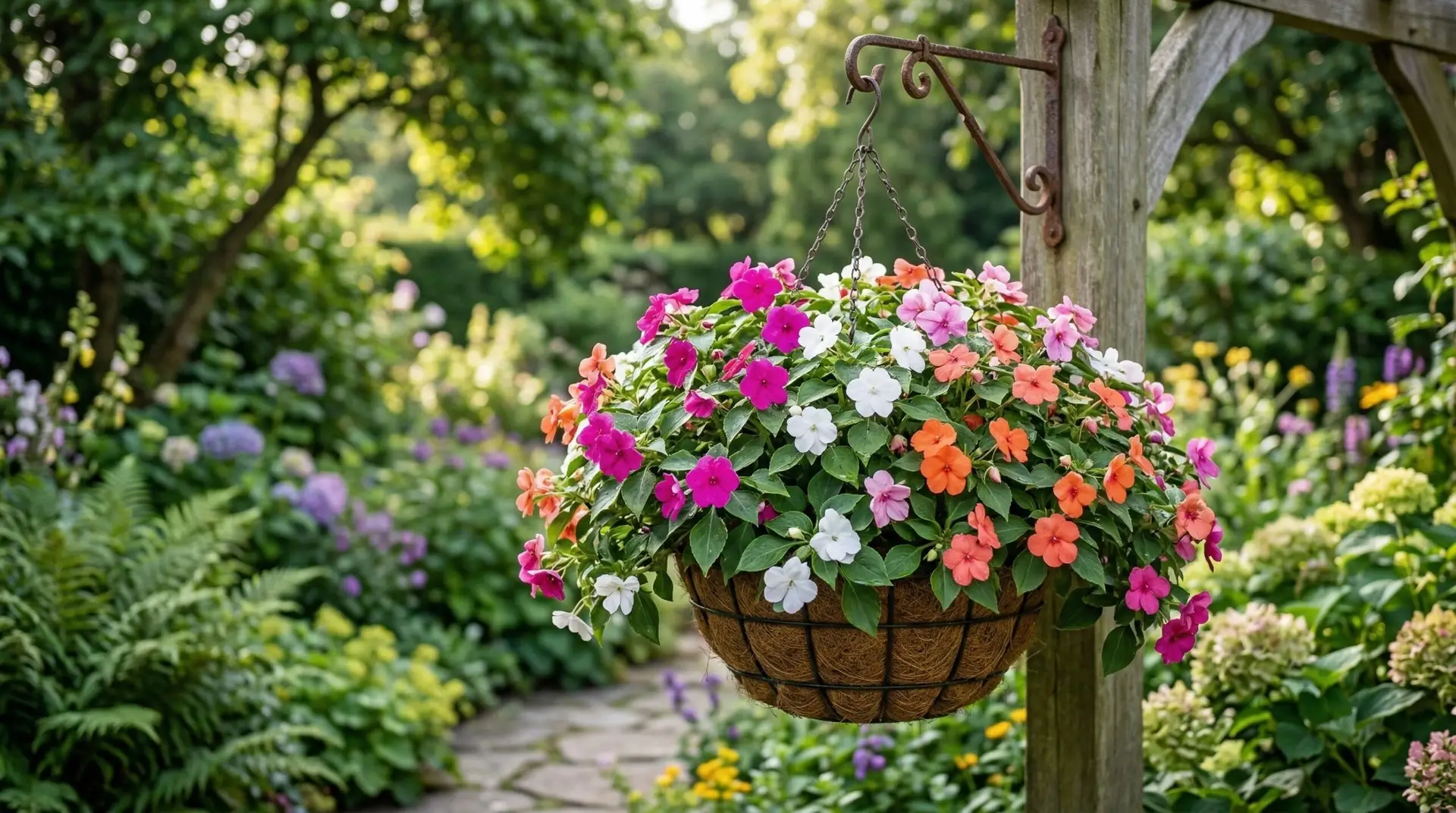
Creating a successful impatiens hanging basket requires thoughtful preparation long before you visit the garden center. The most common mistake gardeners make is buying flats of young plants without considering the specific microclimate of their porch or patio. Before you begin this project, you need to evaluate your available light, your budget for materials, and your daily schedule. Impatiens thrive in shady environments, making them ideal for a covered patio or a north-facing porch, but they demand consistent moisture to look their best. If your outdoor space bakes in the afternoon sun, you might need to reconsider your plant choice and look at sun-loving options like a trailing petunia instead. By assessing your site accurately right now, you set the foundation for a container display that will last the entire season without constant struggle.
Assessing your site and structural requirements
The first step in your planning process is a realistic assessment of the light your chosen location receives throughout the day. An impatiens porch display performs best with morning light and complete protection from the harsh afternoon sun. Once you confirm your site provides the right conditions, you must evaluate the structural integrity of your hanging locations. A fully watered hanging basket can weigh twenty pounds or more, requiring heavy-duty hooks driven securely into solid wood framing or ceiling joists. You should never rely on adhesive hooks or thin wire hangers that might fail under the weight of wet soil and mature plants. Consider the height of your hooks as well, ensuring they are low enough for you to reach comfortably with a watering wand but high enough to clear the heads of anyone walking on your porch. Planning your hardware installation now prevents frustrating delays on planting day.
Selecting containers and appropriate soil mixtures
After securing your hardware, you need to allocate your budget toward high-quality containers and planting media. A large wire basket lined with sphagnum moss or coconut coir provides excellent drainage, but it will dry out much faster than a solid plastic hanging pot. You should select an impatiens container that is at least twelve to sixteen inches in diameter to provide enough root space for multiple plants to thrive. Fill your chosen container with a premium, lightweight potting mix that contains perlite or vermiculite to retain moisture without becoming waterlogged. Reusing old potting soil from previous years is a false economy that often introduces soil-borne diseases and lacks the necessary structure for proper drainage. You can also mix a slow-release granular fertilizer into the fresh potting soil before planting to provide a steady baseline of nutrients for the first few weeks of growth. Taking the time to build a proper soil foundation saves you from battling nutrient deficiencies later in the season.
Calculating plant density and choosing varieties
With your materials ready, you must calculate exactly how many plants you need to achieve a full, cascading look. A standard fourteen-inch impatiens hanging basket generally requires five to seven individual plants placed tightly together to create an immediate visual impact. You should plant one impatiens in the center and space the remaining plants evenly around the perimeter, angling the outer plants slightly outward so they grow over the edge. When selecting your plants at the nursery, you have to choose between traditional walleriana varieties, which require deep shade, and New Guinea types, which tolerate slightly more light and produce larger blooms. Timing your planting is just as important as your spacing and variety strategy. You must wait until all danger of frost has passed in your local area and nighttime temperatures remain consistently above fifty degrees Fahrenheit. If you plant too early, the cold soil will stunt the root development and delay the flowering process by several weeks. Expect the first two weeks after planting to be entirely about root establishment, with the plants putting on significant vegetative growth before they begin their full flowering cycle.
Establishing a reliable watering and feeding schedule
You must be honest with yourself about the maintenance commitment required for hanging containers before you finalize your garden plan. Unlike a drought-tolerant wax begonia, an impatiens basket requires daily attention during the peak of summer. Hanging baskets are exposed to air circulation on all sides, causing the soil moisture to evaporate much faster than it would in a traditional garden bed. You will likely need to water your baskets every single day, and possibly twice a day during periods of extreme heat or high wind. When you water, you must apply moisture until it runs freely from the drainage holes to ensure the entire root ball is saturated. Because this frequent watering washes nutrients out of the soil quickly, you need to implement a strict feeding schedule to maintain continuous flower production. Plan to apply a water-soluble fertilizer diluted to half-strength every week or every ten days throughout the entire growing season. Setting an alarm on your phone for a specific feeding day helps ensure you never miss an application.
Managing growth and seasonal transitions
As the season progresses, your carefully planned baskets will require structural maintenance to prevent them from becoming overgrown and messy. By mid-summer, impatiens stems can become elongated and sparse near the soil line if they are not actively managed. You should plan to pinch back the longest stems by about one-third of their length in late July or early August to encourage new growth. This pruning process forces the plant to branch out from the center, creating a denser habit and generating a fresh flush of blooms for the late summer and early fall. If you notice the foliage yellowing despite regular feeding, you may need to check the root system to ensure the plants have not completely exhausted the available soil space. Similar to the maintenance required for a vigorous trailing verbena, keeping the plants compact and well-fed extends their useful life in the container. To get started this week, measure the exact dimensions of the space where you want to hang your baskets and track the sun exposure in that specific spot for two consecutive days.
More About Impatiens
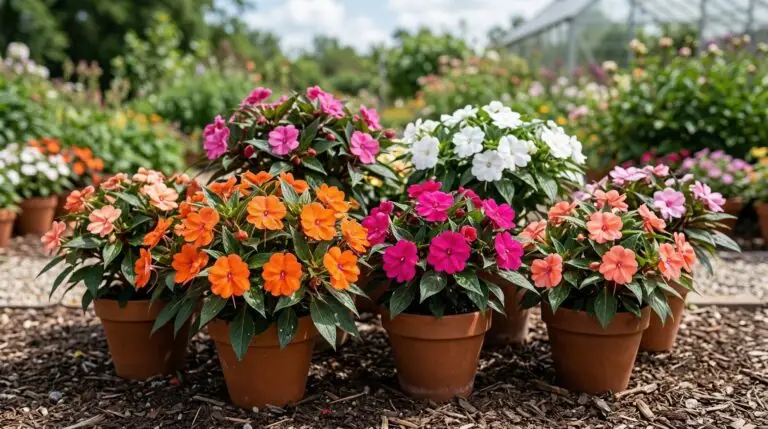
SunPatiens versus regular impatiens and which one handles sun and heat
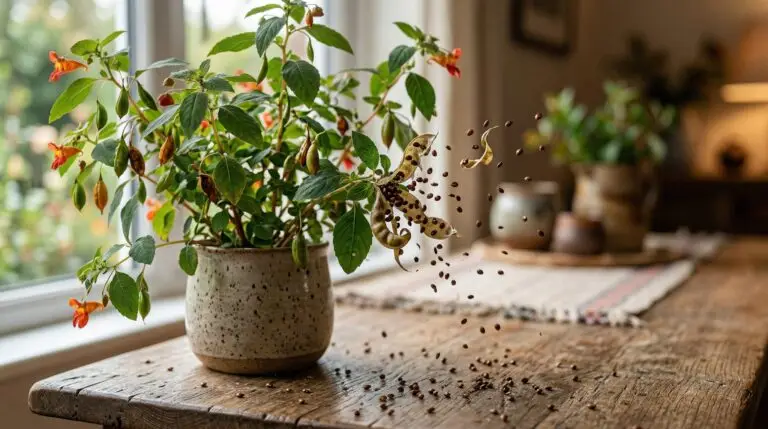
How impatiens seed pods explode and the fun of growing touch-me-nots from seed
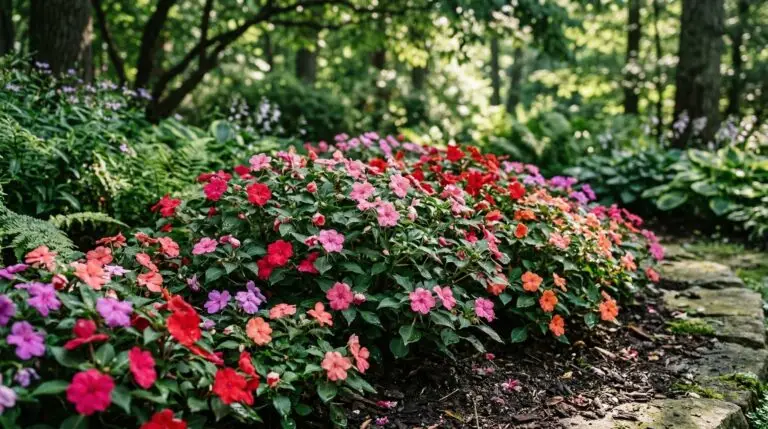
How to grow impatiens for non-stop color in shady spots where nothing else blooms
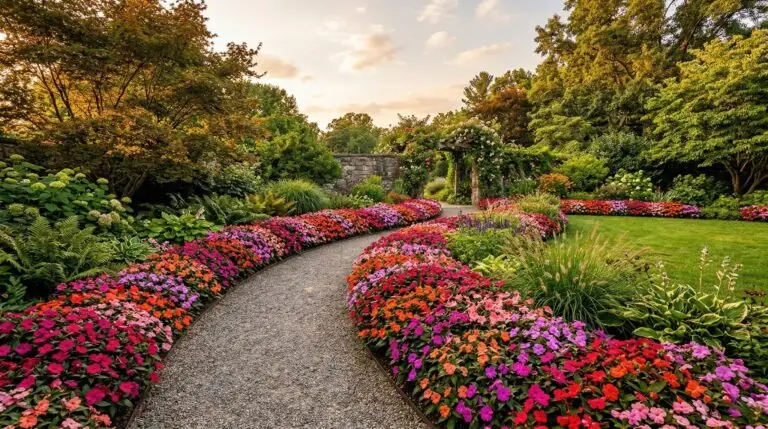
Mass planting impatiens for dramatic sweeps of color under trees and along walkways
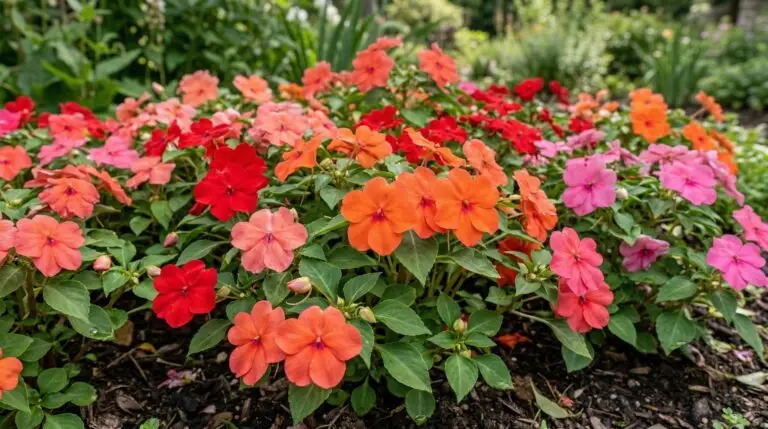
Best impatiens varieties from classic walleriana to exotic New Guinea hybrids
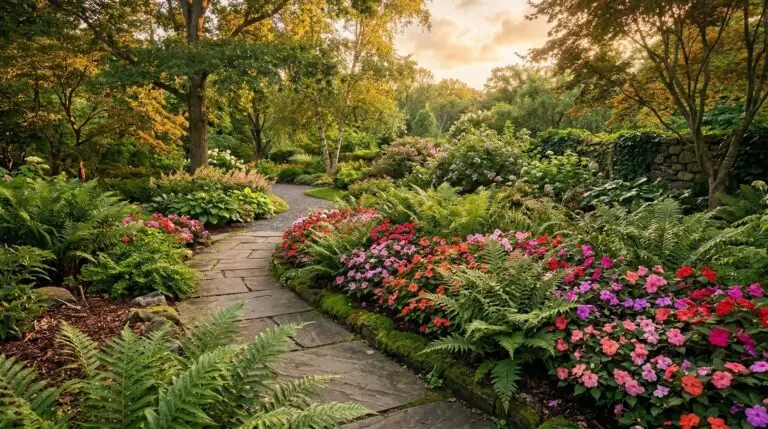
Companion plants for impatiens in shade gardens and woodland borders
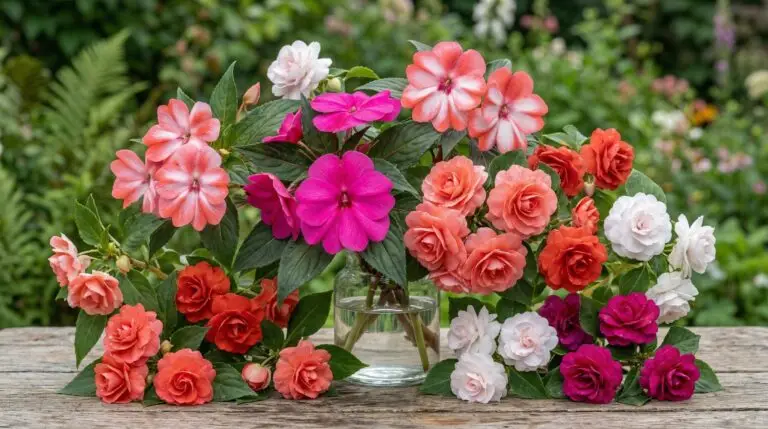
New Guinea impatiens for bigger bolder flowers with colorful foliage in partial shade
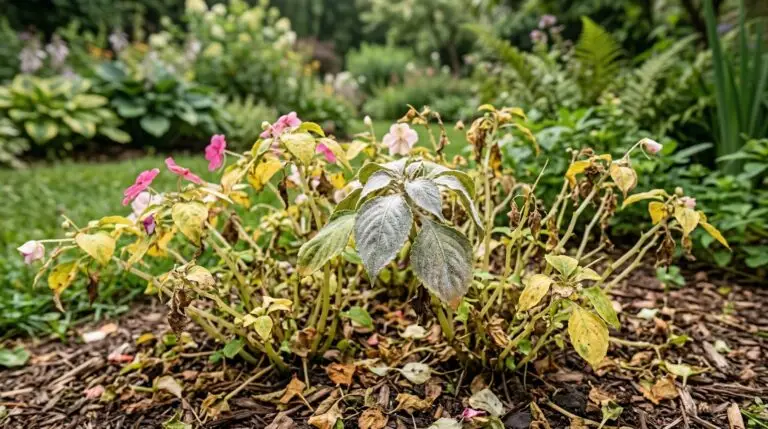
Impatiens downy mildew disease and the new resistant varieties that saved this flower