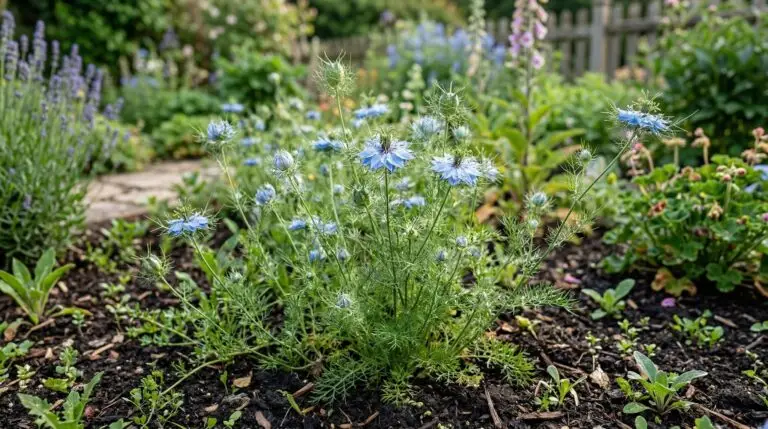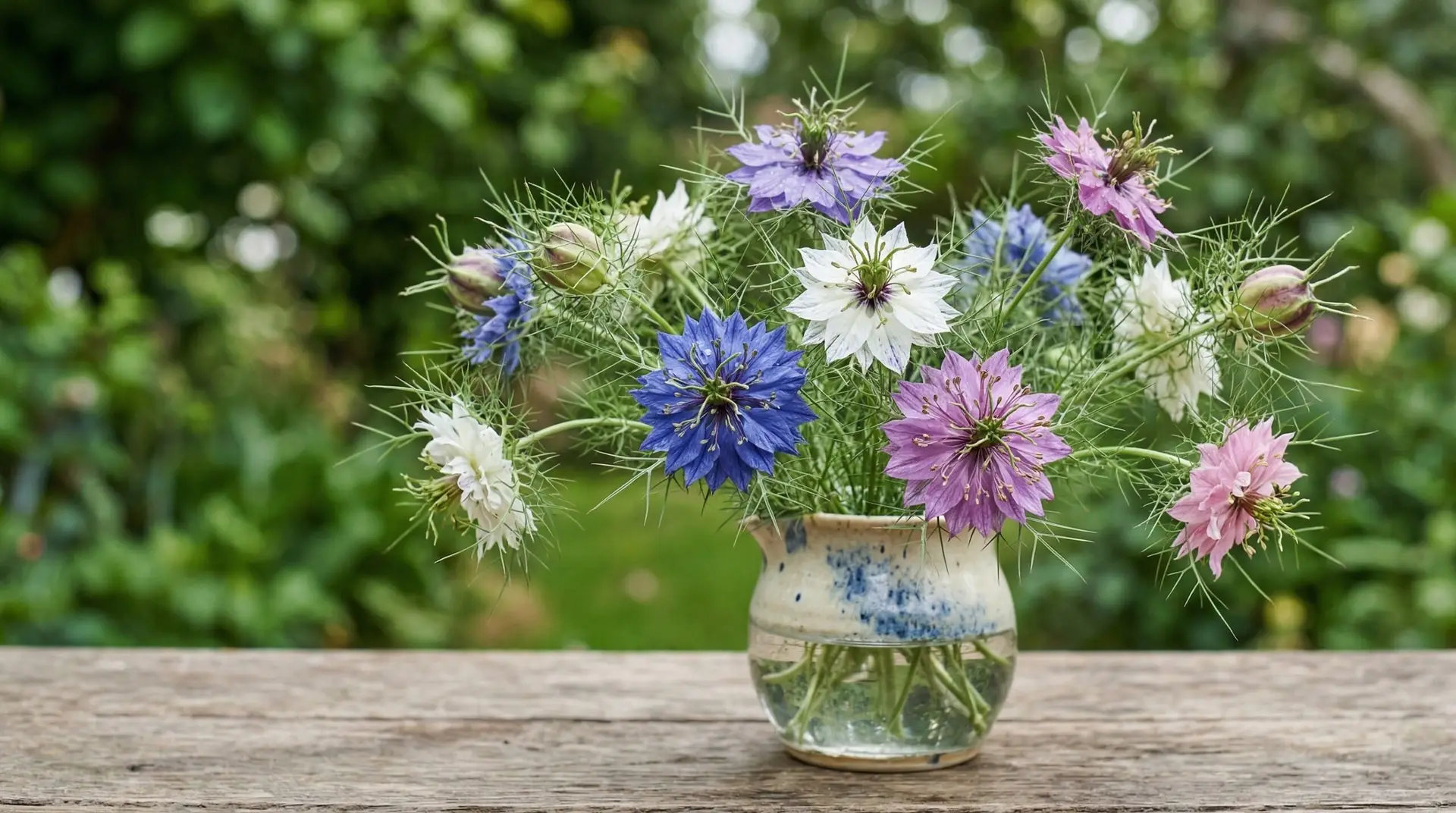
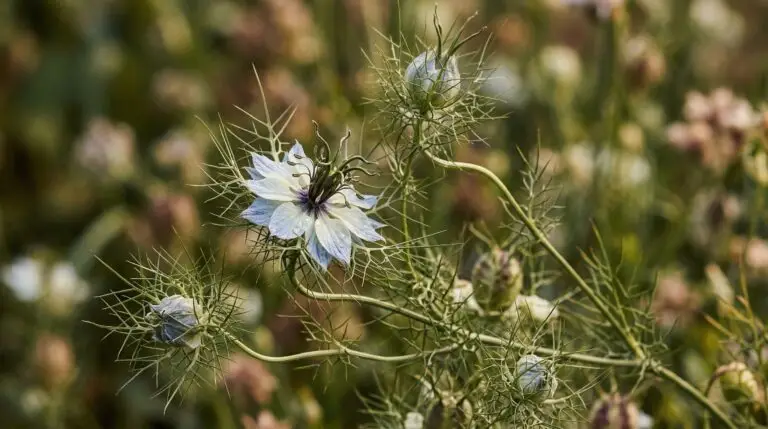
There is a specific moment in late spring when the garden shifts from bulbs to annuals, and that is exactly when love-in-a-mist makes its appearance. I remember the very first time I grew Nigella damascena from a cheap packet of seeds scattered over bare dirt. The foliage emerged looking like fine dill or fennel, creating a soft green haze near the front of the border. Then the buds swelled, wrapped in a cage of thread-like bracts, before finally breaking open into complex, star-shaped flowers. You get completely drawn into the details of the petals, the prominent stamens, and the horned seed capsule forming right in the middle. The plant does not demand attention with massive blooms, but it rewards anyone willing to look closely at its structure. I have grown it every year since that first packet, experimenting with different nigella varieties to see how they perform in my own garden soil.
The classic blues and mixed pastels
When most gardeners think of love-in-a-mist, they picture the clear, crisp blue of the Miss Jekyll variety. This specific type has been a garden standard for generations because the color is incredibly pure, mimicking a cloudless early summer sky. I always make sure to scatter a generous handful of Miss Jekyll blue seeds along the edges of my raised beds. The plants reach about eighteen to twenty-four inches tall, producing semi-double flowers that seem to float above the feathery leaves. If you prefer a bit more variation, the Persian Jewels mix is the perfect alternative for a cottage garden feel. This mix produces a completely unpredictable assortment of pale pink, rose, white, light blue, and deep violet flowers. Waiting for the Persian Jewels to open is one of my favorite early summer pastimes, as you never know exactly which shade will dominate a particular patch of soil.
Striking contrasts and dark centers
While the pastel tones are lovely, some of the newer love-in-a-mist types bring a completely different mood to the planting beds. African Bride is a variety that completely changed how I use this plant in floral arrangements. The petals are a stark, brilliant white, but the center seed capsule and the stamens are a deep, moody purple that registers almost as black. This high contrast makes the flowers pop against the soft green foliage, creating a focal point that the lighter pastels cannot match. On the opposite end of the color spectrum is a variety called Midnight, which produces flowers in a very dark, velvety purple-blue. The real magic of Midnight happens after the petals drop, because the seed pods themselves mature into a rich plum color rather than the usual pale green or burgundy-striped maroon. I love planting Midnight near silver-leaved plants or late spring whites to let those dark pods really stand out as they ripen.
Varieties prized for their seed pods
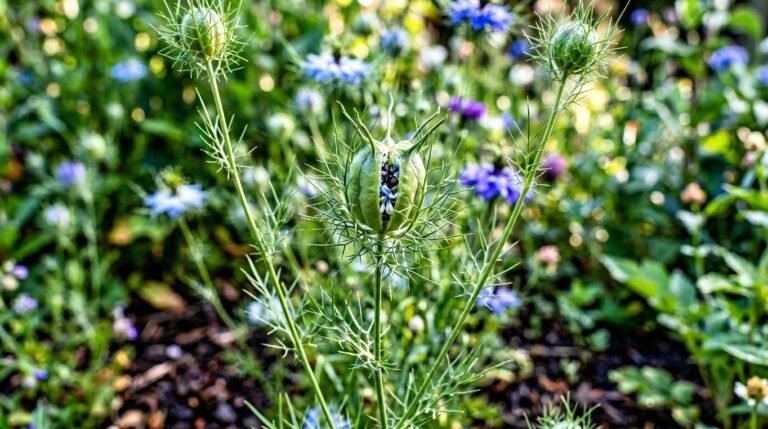
The flowers of love-in-a-mist are only half the reason I dedicate space to this plant every single year. The inflated seed pods are just as valuable for cutting, and some varieties are specifically bred for their structural qualities. Albion Green Pod is a fascinating selection that produces large, double white flowers that look quite elegant in the garden. However, the true appeal of Albion Green Pod is the seed capsule, which develops into a smooth, solid green balloon without any of the reddish-purple striping found on standard varieties. These pure green pods look incredibly fresh in mixed bouquets, and they dry perfectly for winter arrangements if you harvest them before they turn brown and split. I often hang bundles of these pods upside down in my garage, preserving that papery texture for months. It is highly satisfying to bring a handful of dried nigella pods indoors in January, a physical reminder of the summer garden when everything outside is frozen.
The realities of growing love-in-a-mist
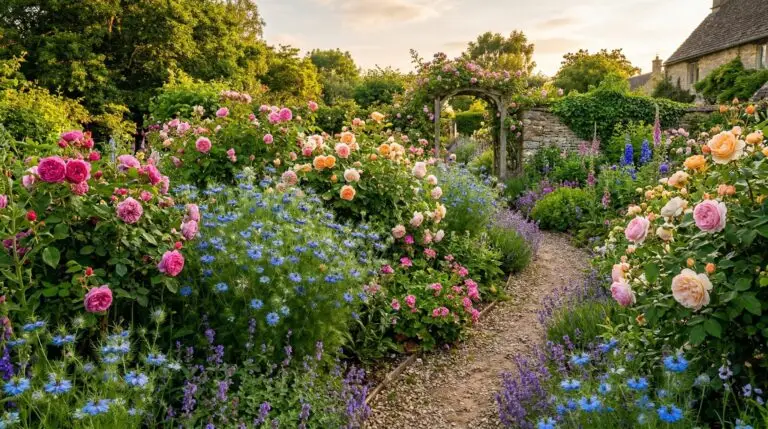
Enthusiasm for a plant does not mean ignoring its flaws, and nigella definitely has a few quirks that take some getting used to. The biggest disappointment for new growers is usually the short bloom window, as a single planting will flower and go to seed in just a few weeks. To keep the color going, you have to remember to sow fresh seed every three weeks through the spring, which is easy to forget when the rest of the garden is demanding attention. The plants also have weak root systems and a tendency to flop over after a heavy rain, especially if they are growing in rich soil. I find they stay much more upright when grown in lean, unamended soil alongside other sturdy annuals like cornflowers, which provide a bit of physical support. Later in the season, the fading nigella plants can be easily pulled out to make room for heat-loving cosmos, keeping the garden productive through early autumn.
The rhythm of scattering seeds
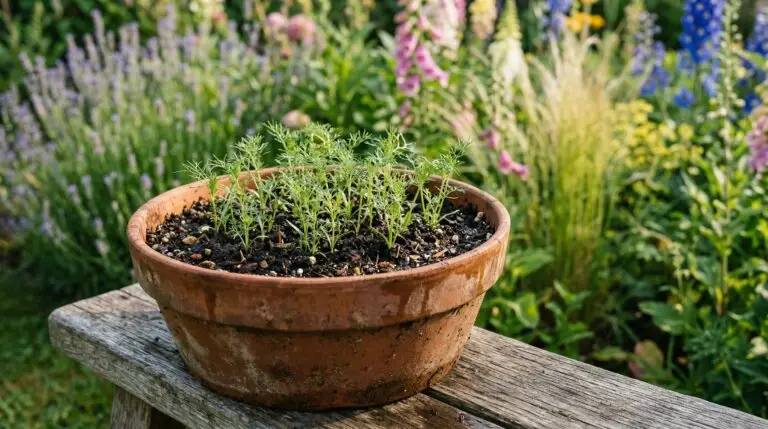
Despite the short bloom time and the occasional flopping, I cannot imagine a spring without these distinctive flowers. The absolute best part of growing the best nigella varieties is how willing they are to self-sow if you leave a few pods to shatter in the garden. Every spring, I find tiny, ferny seedlings emerging in the gravel pathways, between paving stones, and at the base of established shrubs. These volunteers always seem to grow stronger and bloom earlier than the seeds I intentionally plant, feeling like a completely free gift from the garden. You just pull up the ones that are in the way and leave the rest to weave their delicate foliage through the borders. The entire process of growing love-in-a-mist is remarkably low effort, requiring no special fertilizers, no indoor seed starting, and very little supplemental water. It is a plant that asks for almost nothing but gives back beautiful flowers, fascinating seed pods, and the promise of more plants the following year.
More About Love in a Mist

Nigella seeds in the spice world and the culinary history of black cumin
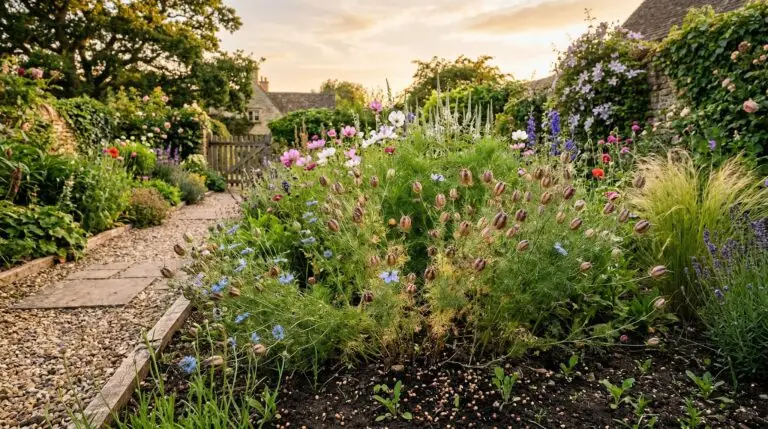
Love-in-a-mist as a self-sowing annual that creates a cottage garden on autopilot
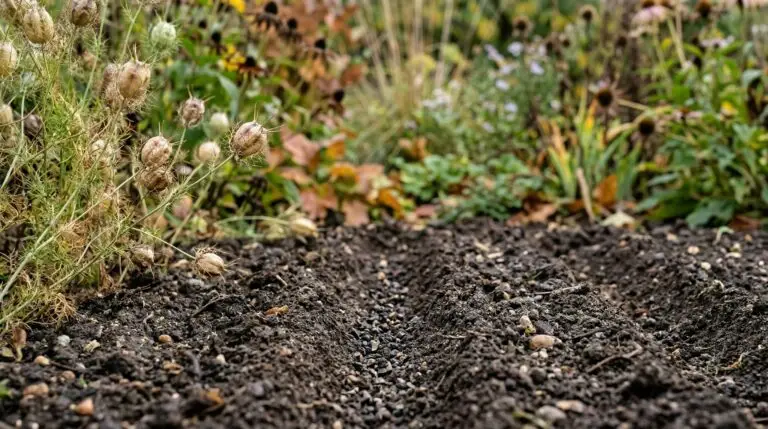
Growing love-in-a-mist from seed with the simple scatter and forget method
Love-in-a-mist in containers for a feathery cottage feel on balconies and windowsills
Companion plants for love-in-a-mist: what to grow and avoid
Love-in-a-mist flower meaning and the romantic mystery behind this enchanting bloom
Love-in-a-mist as a delicate cut flower for wildflower-style bouquets and arrangements
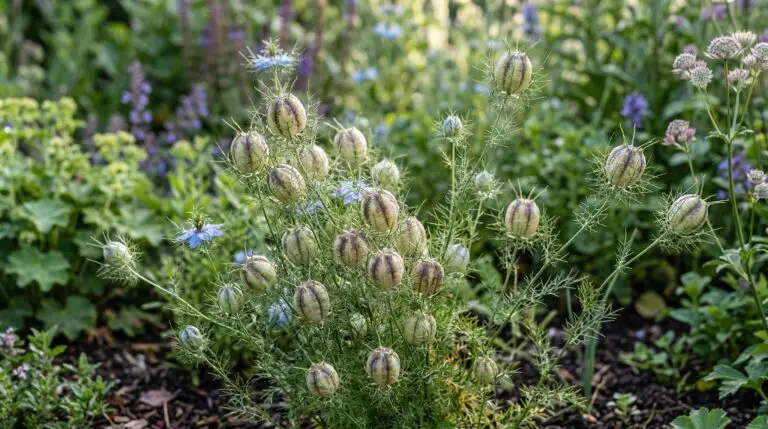
Love-in-a-mist seed pods that are as beautiful as the flowers and perfect for drying