Why Valentine's Day roses triple in price (and when to actually buy them)
Roses really do cost about three times more this week than they did back in the fall, and the math behind that jump is not a mystery once someone walk
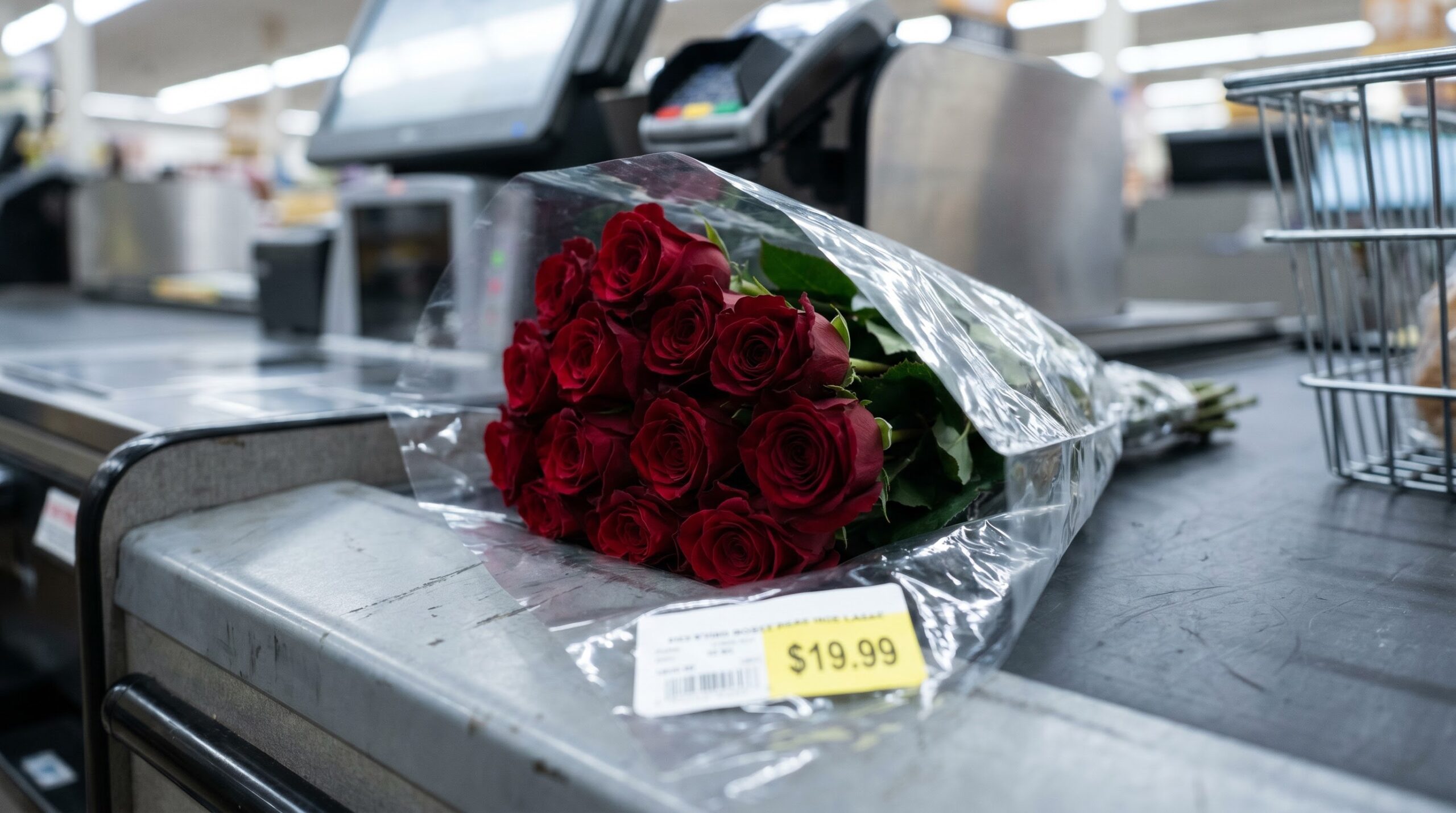
Roses really do cost about three times more this week than they did back in the fall, and the math behind that jump is not a mystery once someone walks the chain. A rose bought for February has already gone through a cold chain, a cross-continent flight, and a wholesale price that has roughly doubled, all before a shop adds its own margin. One flower shop manager on Reddit's r/LifeProTips summed up what shoppers are really paying for as "a tax on last-minute shoppers," and the numbers back that description better than they back an outright scam. Colombia and Ecuador push their entire December bloom cycle back so hundreds of millions of roses open on schedule for February 14, and the price starts climbing at the farm gate, weeks before anyone stands at a register. There is also a specific window for buying smarter, one most shoppers miss entirely.
This page covers the price and the timing. For the full breakdown of what to actually give this year, by recipient, that lives on our main Valentine's Day guide; everything below assumes roses are already the plan, or close to it.
The price ladder: from a Colombian greenhouse to a US register
Colombia supplies almost 60 percent of the roses sold in the United States and Ecuador supplies almost 40 percent, according to Boston University economist Jay L. Zagorsky's analysis published in The Conversation. Domestic rose farming has all but disappeared over the same stretch: from close to 800 commercial US farms growing cut roses in 1970 down to roughly 110 by 2017, per the same analysis, which is a big part of why almost every stem sold this week arrived by plane rather than by truck. The Society of American Florists puts total February production at more than 250 million roses grown specifically for the holiday, forced into bloom across a six-week window that starts well before most shoppers are thinking about Valentine's Day at all.
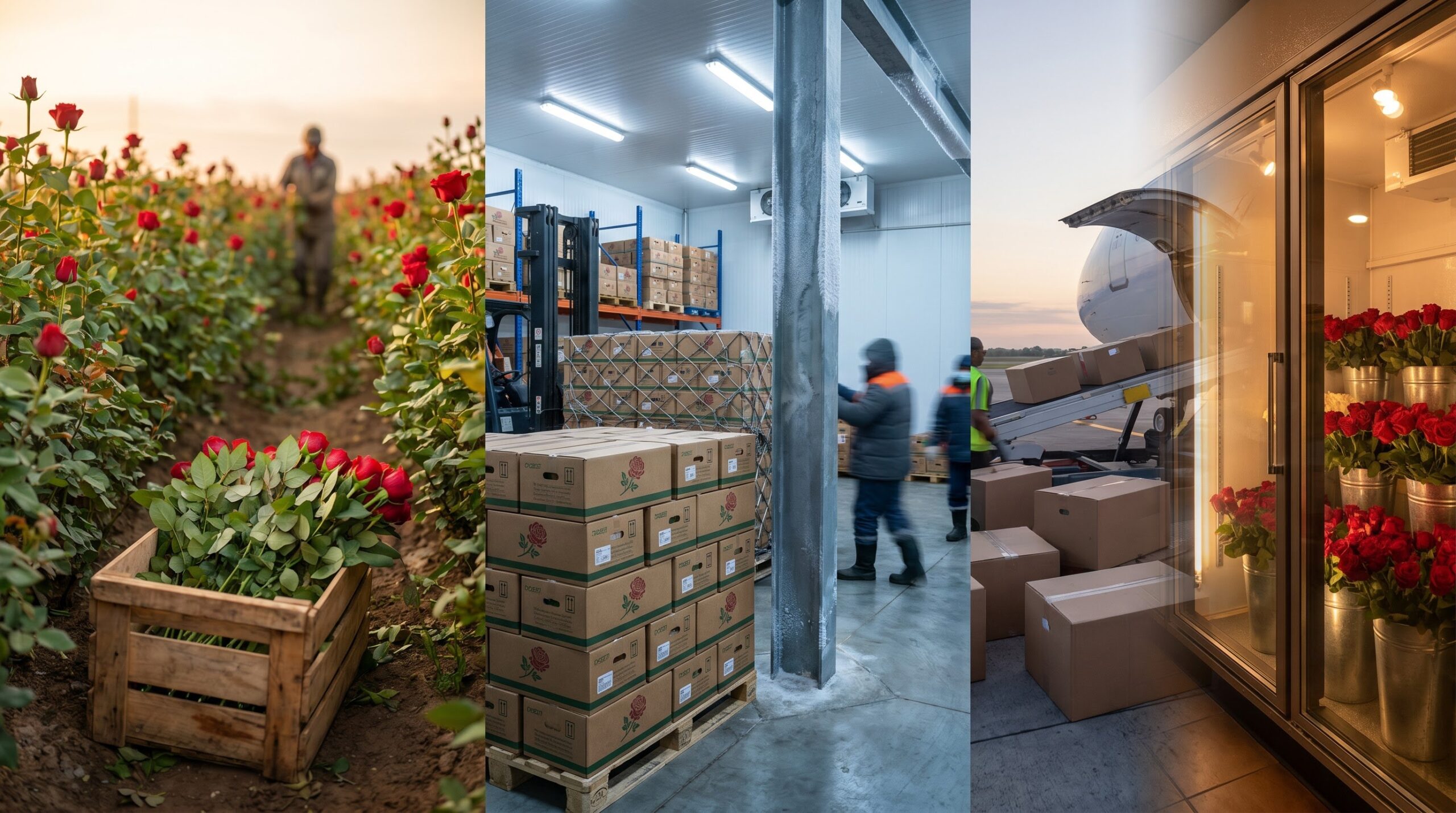
Once cut, usually 10 to 14 days before the expected sale date, roses move through a refrigerated cold chain running at roughly 33 to 35 degrees Fahrenheit, the same standard AccuWeather cites for keeping any cut flower fresh. CNN's reporting on a major grocery chain's supply operation found roses inspected for pests and bacteria, loaded onto trucks held at that same temperature range, and flown north from Bogota and Quito on cargo routes booked out weeks in advance. None of that machinery is optional if the flowers are going to survive the trip in sellable condition, and none of it runs cheap.
At the port, Zagorsky's numbers show the average import price for a rose stem climbing from about 25 cents in the off season to about 40 cents right before Valentine's Day, on the large supermarket contracts. Smaller shops buying through traditional wholesale channels see a steeper curve. NPR's reporting on a Manhattan florist found wholesale prices running $1 to $3 a stem the week of the holiday, well above their off-season level, and shoppers on New York focused threads have described single premium stems running anywhere from $4 to $16 apiece once demand peaks.
| Stage | What happens | Typical price |
|---|---|---|
| Farm (Colombia, Ecuador) | Bloom cycle pushed back so stems open on schedule; cut 10 to 14 days before sale | Not sold directly to shoppers |
| Cold chain and flight | Held at 33 to 35°F, inspected, flown north from Bogota and Quito on booked cargo routes | Cost folded into wholesale price |
| Wholesale, supermarket contract | Import price cleared at the port | $0.25 to $0.40 a stem |
| Wholesale, independent florist | Smaller volume market buying | $1 to $3 a stem |
| Supermarket dozen | Chain grocery shelf price | About $8 in late summer, up to almost $23 before February 14 |
| Florist dozen, delivered | Full arrangement with greenery, vase and delivery fee | Roughly $95 to $200 or more |
Swipe →
Some financial commentary, including a 2025 Forbes piece on the hidden costs of Valentine's Day, frames the whole markup as retailers and florists exploiting customers who feel pressured to buy no matter the price. That read is not wrong so much as incomplete. Retail does add its own increase on top of everything above, but the ladder itself, from a farm outside Bogota to a refrigerated case in a US store, accounts for most of the jump long before any single florist sets a price. Roses take this harder than almost any other flower; anyone who would rather sidestep the surge than pay through it can see flowers that skip the rose surge entirely for what fills the same role without the same markup.
When you should actually buy
Buying early to beat the rush does not actually save money, and florists on Reddit's r/florists forum are blunt about why. Wholesale prices move for the whole industry starting around February 1, well before the day itself, so a rose bought two weeks ahead is priced off the same rising curve as one bought the week of, and it will be closer to wilted by the 14th than a stem cut specifically for that delivery window. The move that actually works is different: pre-ordering.
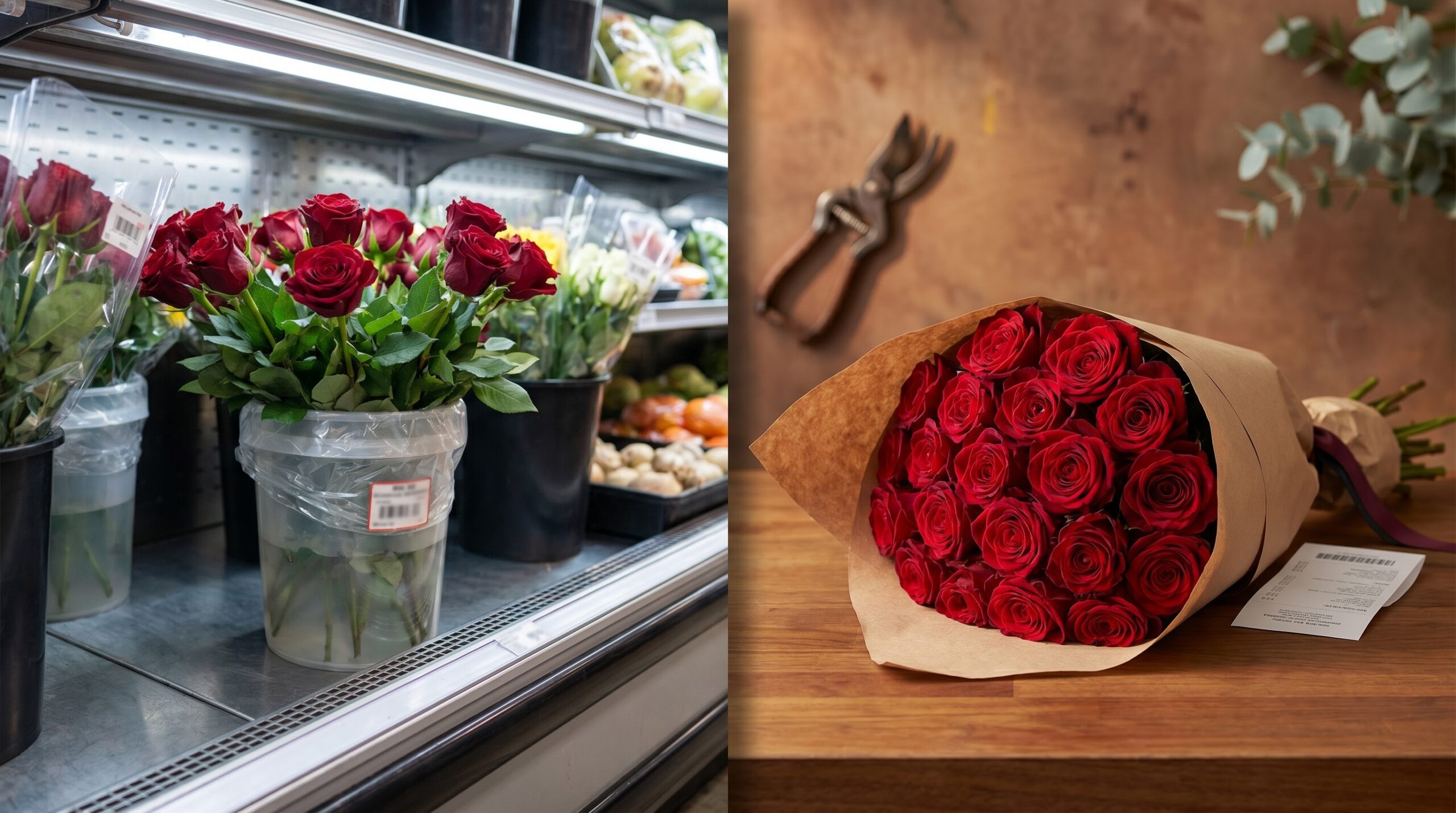
Independent shops commonly lock in the price a customer pays at the moment of ordering, even if wholesale costs keep climbing between then and delivery day. Calling a local florist two or three weeks out and placing the order does the job an early purchase was supposed to do, without a rose sitting in a vase losing freshness for two extra weeks. For anyone buying in person instead of having flowers delivered, the practical window is two to three days before February 14, picked up and held in a home refrigerator overnight, a step several florists describe as making a real difference to how long the stems last past the holiday.
Waiting past midday on the 14th itself carries a separate risk, and it is specific to color. Red is the variety every shop over-orders for and the variety that sells out first; shops in past seasons have reported running out of red stems by early afternoon on the day itself, while pink, white and mixed arrangements typically last longer on the shelf. Anyone committed to red specifically should lock in the pre-order or plan the two-to-three-day pickup well ahead of the 14th.
Grocery store or florist: what the price difference actually buys
A dozen roses from a chain grocery store is almost always cheaper than the same dozen from a florist, though it is not automatically the smarter choice. Shoppers on Reddit's r/Costco and similar threads have described paying around $35 to $37 for two dozen roses at Costco in recent seasons, about $13 for a dozen at Trader Joe's, under $10 for a dozen at Aldi, and around $25 for two dozen at Whole Foods. A full delivered arrangement from an independent florist commonly runs $95 to $200 or more once greenery, a vase and a delivery fee are added; NPR's reporting on a well known New York shop found a dozen roses there priced at $135 the week of the holiday. Before settling on a dozen or two dozen at either price point, what a dozen versus two dozen roses signals is worth a quick look, since the count itself carries its own message.
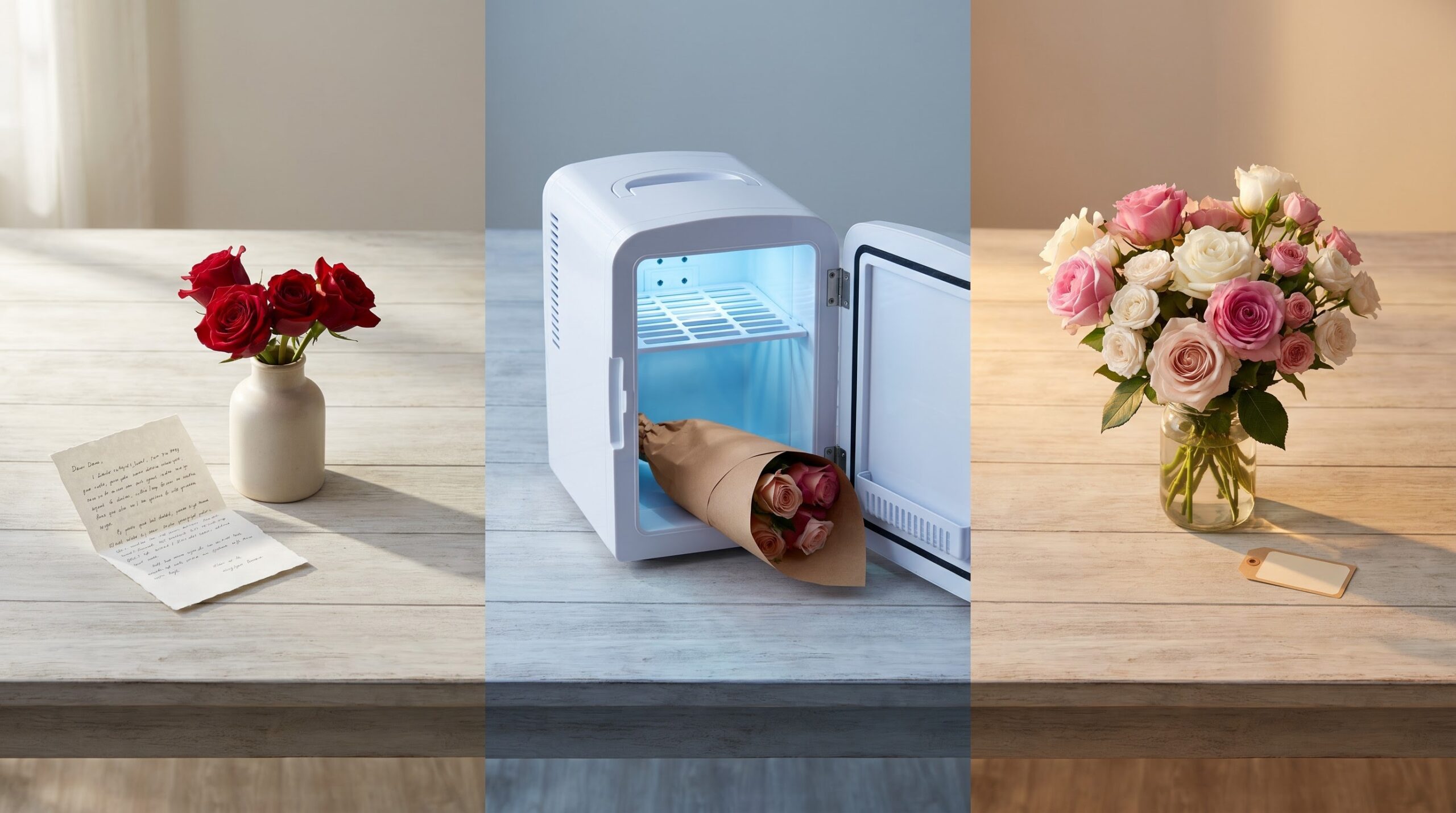
That price gap buys something specific. Florists interviewed on Reddit's r/florists forum describe grocery chains selling flowers at a loss to draw shoppers in for other purchases, which is a large part of why the grocery price looks so good. Independent shops, in turn, commonly offer a replacement guarantee, often about a week, if stems wilt early, and the same florists note that Costco and Trader Joe's tend to handle flowers noticeably better than most other grocery chains. Whether that guarantee is worth the markup depends on the gift and the relationship.
One choice worth avoiding regardless of budget is ordering through a national order-gathering service like 1-800-Flowers, FTD or Teleflora instead of a local shop directly. Florists on Reddit describe these services keeping roughly 30 percent of what a customer spends before the money reaches the shop that actually assembles and delivers the bouquet, and buyers on Reddit's r/ExpectationVsReality have posted photos of arrangements that arrived with a fraction of the flowers shown in the original listing. Ordering from a local florist directly, or buying in person at a grocery store, sends the full price toward the actual flowers instead of a middleman's cut. The same order-gatherer trap shows up around birthdays too.
What happens to the leftover roses on February 15
Prices do not stay high for long. Florists and shoppers describe markdowns of roughly 30 to 70 percent starting February 15, applied to the same batches of roses that were selling at full price the day before. A dozen that cost almost $23 at the supermarket, or $135 at a florist, on the 14th can drop substantially within a day or two of the holiday passing, since none of that inventory holds its value once the calendar turns. The trade-off is narrow but real: selection thins fast. Red sells through first, so whatever is left on the shelf on the 16th or 17th tends to be pink, white, yellow or a mixed bouquet rather than the classic red dozen, and quantities shrink quickly as shops clear remaining stock. For anyone celebrating a few days late, or buying flowers as an apology rather than a romantic gesture, this is the real smart-shopper window, and it rewards patience over planning ahead. The delivery-timing mistakes that repeat across gift-giving occasions show up again well past Valentine's Day too.
Are Valentine's Day roses actually less fresh
The complaint that Valentine's roses have been sitting around for two weeks holds up. A 10 to 14 day gap between cutting a rose in South America and selling it in a US store is normal for the industry all year, since the plants are grown thousands of miles from wherever they end up selling. What changes in February is the sheer volume moving through that same pipeline. Hundreds of millions of stems pass through the cold chain in a six-week window, and when any part of that system gets overloaded, whichever shipment got caught in the delay is the one that arrives tired. A rose that traveled on its normal 10 to 14 day schedule is just as fresh in February as it is in June.
There is a fast way to check any individual bunch before paying for it. AccuWeather's guidance for choosing fresh cut flowers recommends gently squeezing a bloom where the petals meet the stem: firm resistance means the rose is fresh, while a soft or mushy give means it has been sitting too long regardless of the price tag. Clean-cut stems and flowers stored in a visibly refrigerated case are both good signs at the register, and a five-second squeeze test catches a tired bunch faster than any assumption about which store or which week is more trustworthy.
None of this requires guesswork once the window is clear. Anyone set on roses specifically should call a local shop now and lock in a pre-order, or plan to buy two to three days out and hold the stems in a refrigerator overnight until the 14th. Anyone comfortable trading a few days for a much lower price can wait for the February 15 markdown instead, and anyone who would rather skip the surge altogether already has real alternatives to look at, including buying flowers for a man on Valentine's Day if that is the specific decision on the table. Whichever route gets picked, it beats standing at the register on February 14 with no plan at all, and the same timing math shows up across the rest of our occasion flowers coverage whenever a gift has to arrive on a specific date.