Contents
Blue Flax
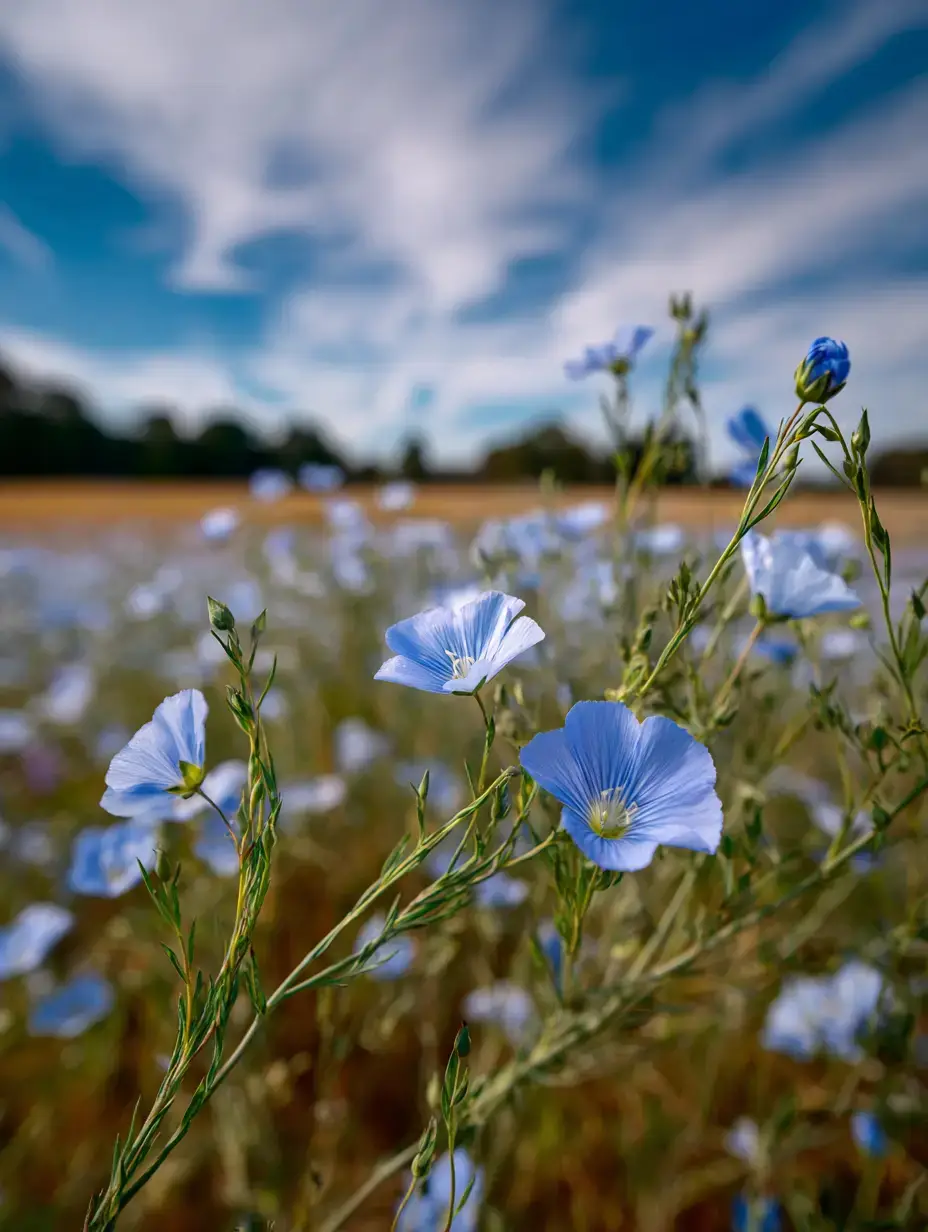
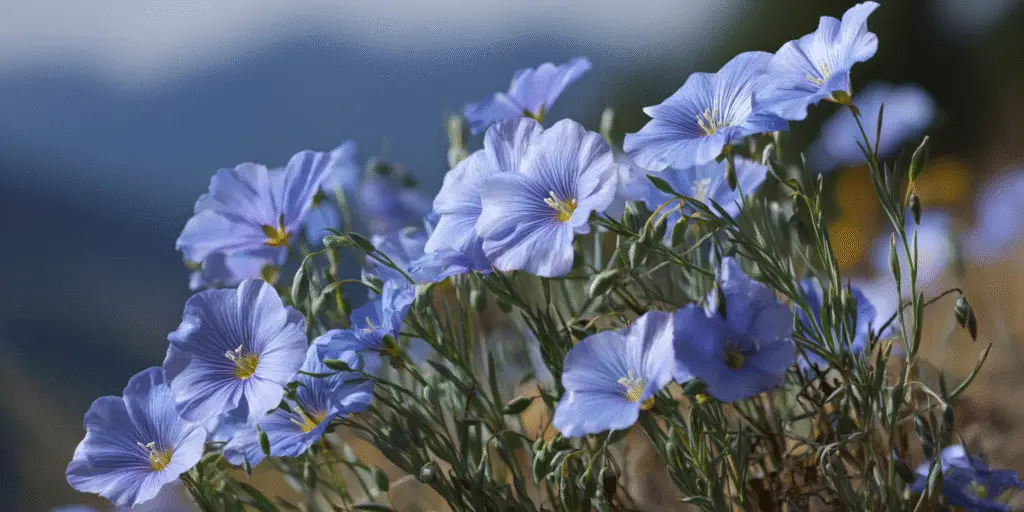
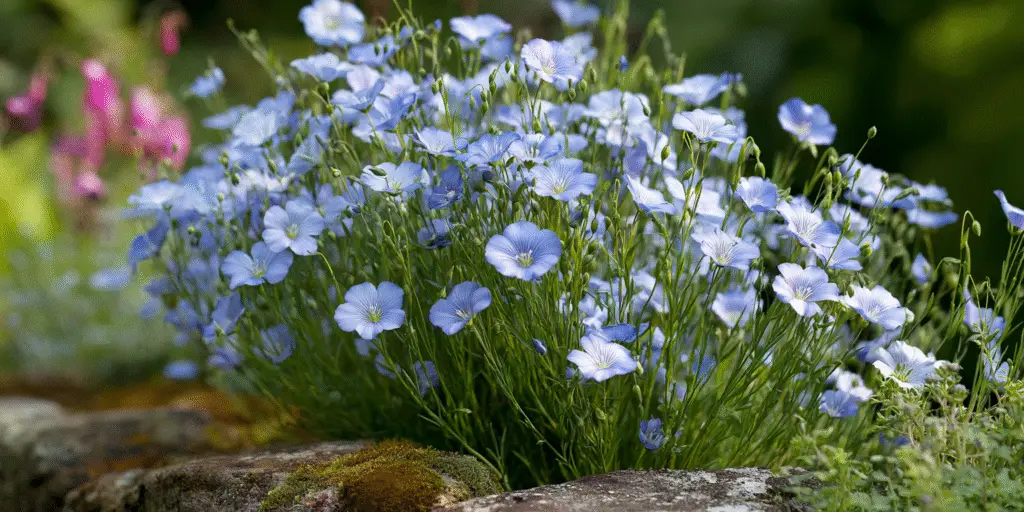
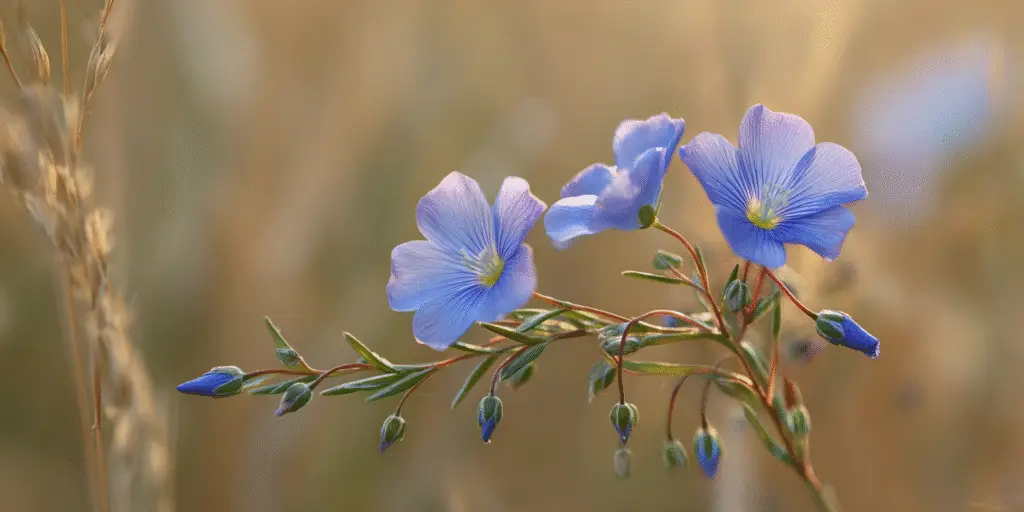
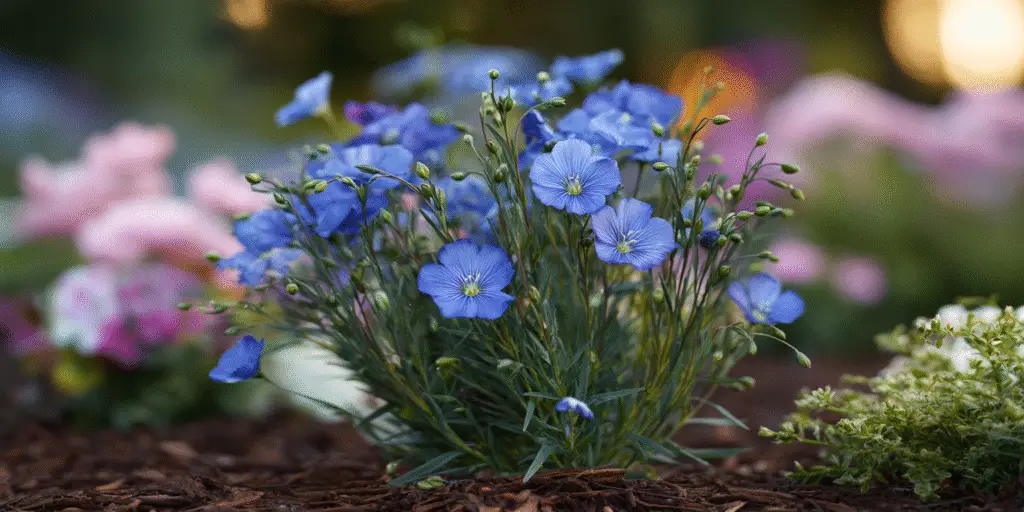
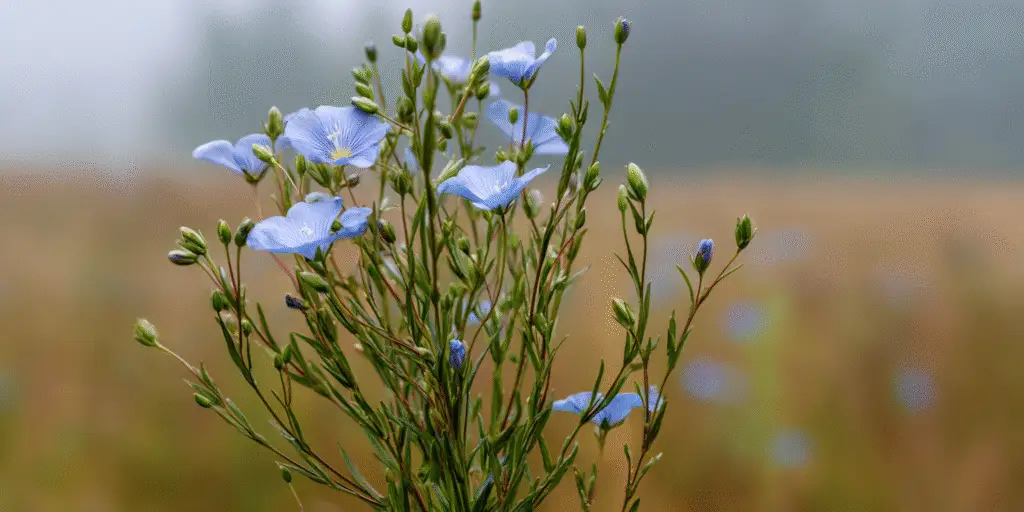
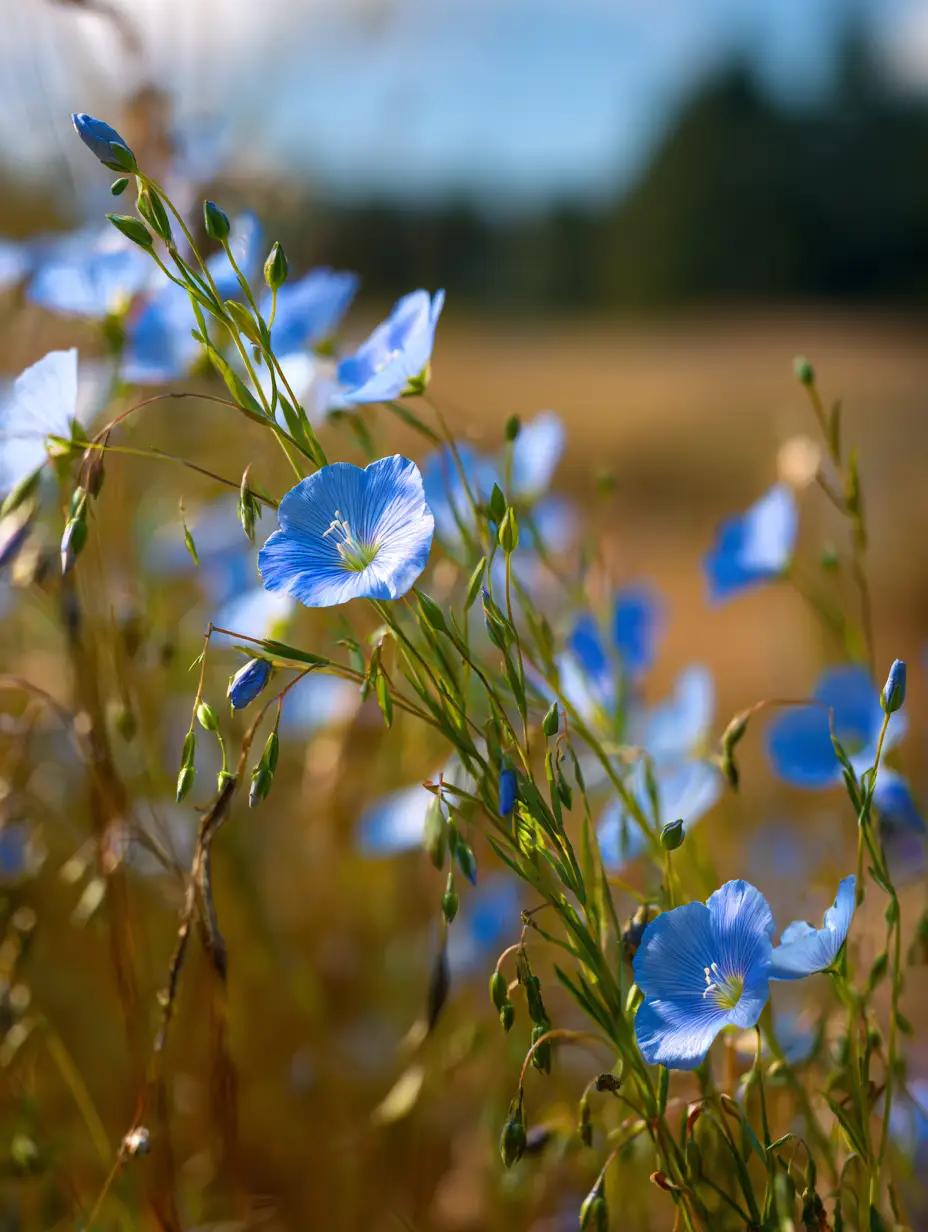
Blue Flax Flower (Linum perenne), also known as perennial flax or prairie flax, is a delicate blue-blooming perennial prized for its airy charm and hardiness. This plant forms slender clumps of fine, narrow blue-green leaves that sway on wiry stems. In late spring and early summer, it produces a profusion of sky-blue, five-petaled blossoms that open each morning. Each individual flower lasts only a single day, but new summer blooms continue to appear for weeks, creating a constant display of true-blue color rarely found in gardens. Blue Flax is a short-lived perennial flower that often-self-sows to return each year, making it ideal for naturalizing in meadows or a wildflower garden. Gardeners value this species for its low-maintenance nature and versatility. It thrives in tough conditions that many ornamentals cannot tolerate, yet it looks graceful and ornamental when massed in cottage borders, rockeries, or wildflower mixes. With its drought-tolerant habits and extended bloom period, Blue Flax Flower brings a touch of sky-blue beauty to informal plantings while requiring minimal care.
A clear, step-by-step guide to soil, planting, watering, feeding, pruning, and winter care. Includes zone timing, container tips, companions, and quick fixes for common problems.

Bouquet Ideas
Explore simple, beautiful bouquet ideas for the home, gifts, and special occasions from romantic mixes to clean, minimal styles. Each idea includes suggested flower combinations, color palettes, and sizes, with photos for quick inspiration.
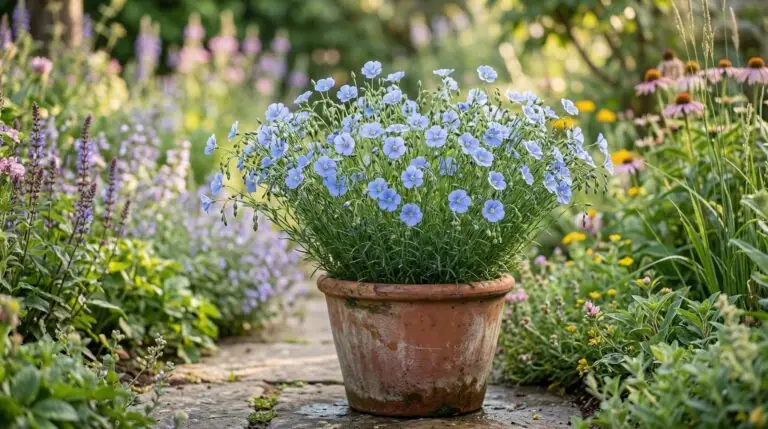
Growing blue flax in containers and window boxes for sky-blue summer color
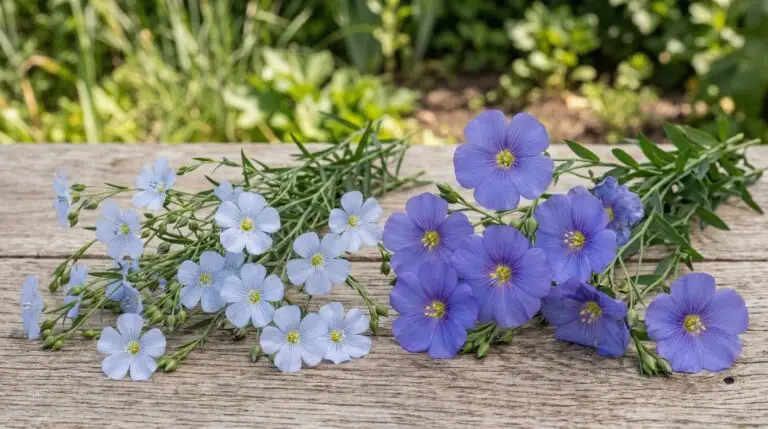
Lewis flax versus perennial blue flax and which native species to grow
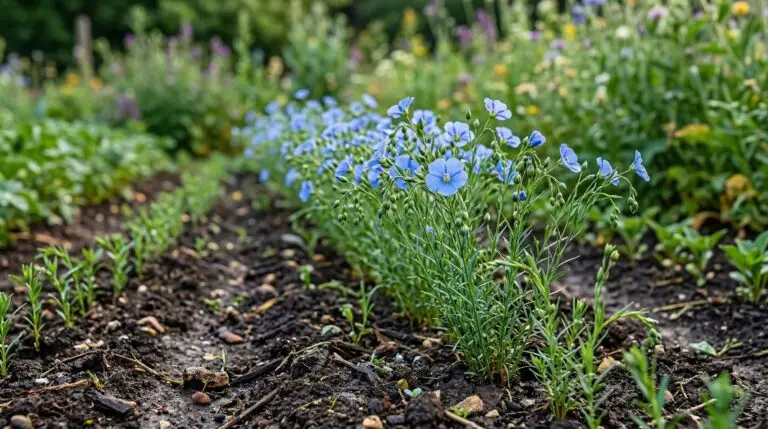
How to grow blue flax from seed for a low maintenance wildflower meadow
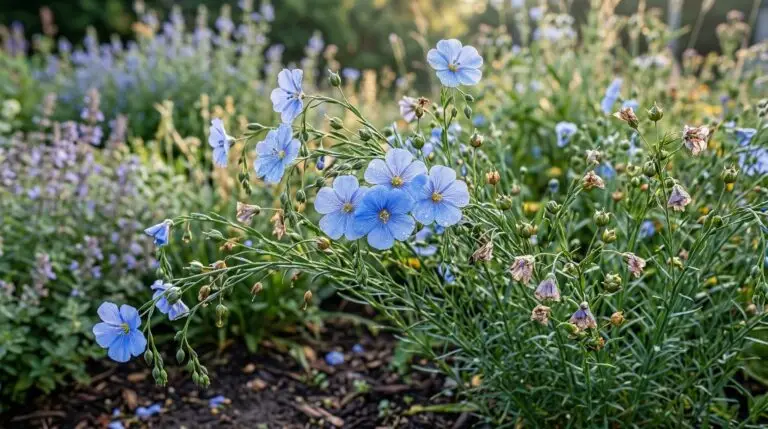
Why blue flax flowers only last one day and why that is actually a good thing
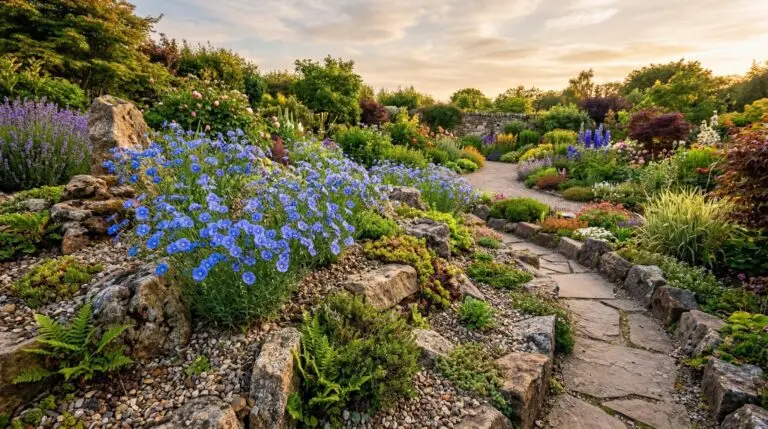
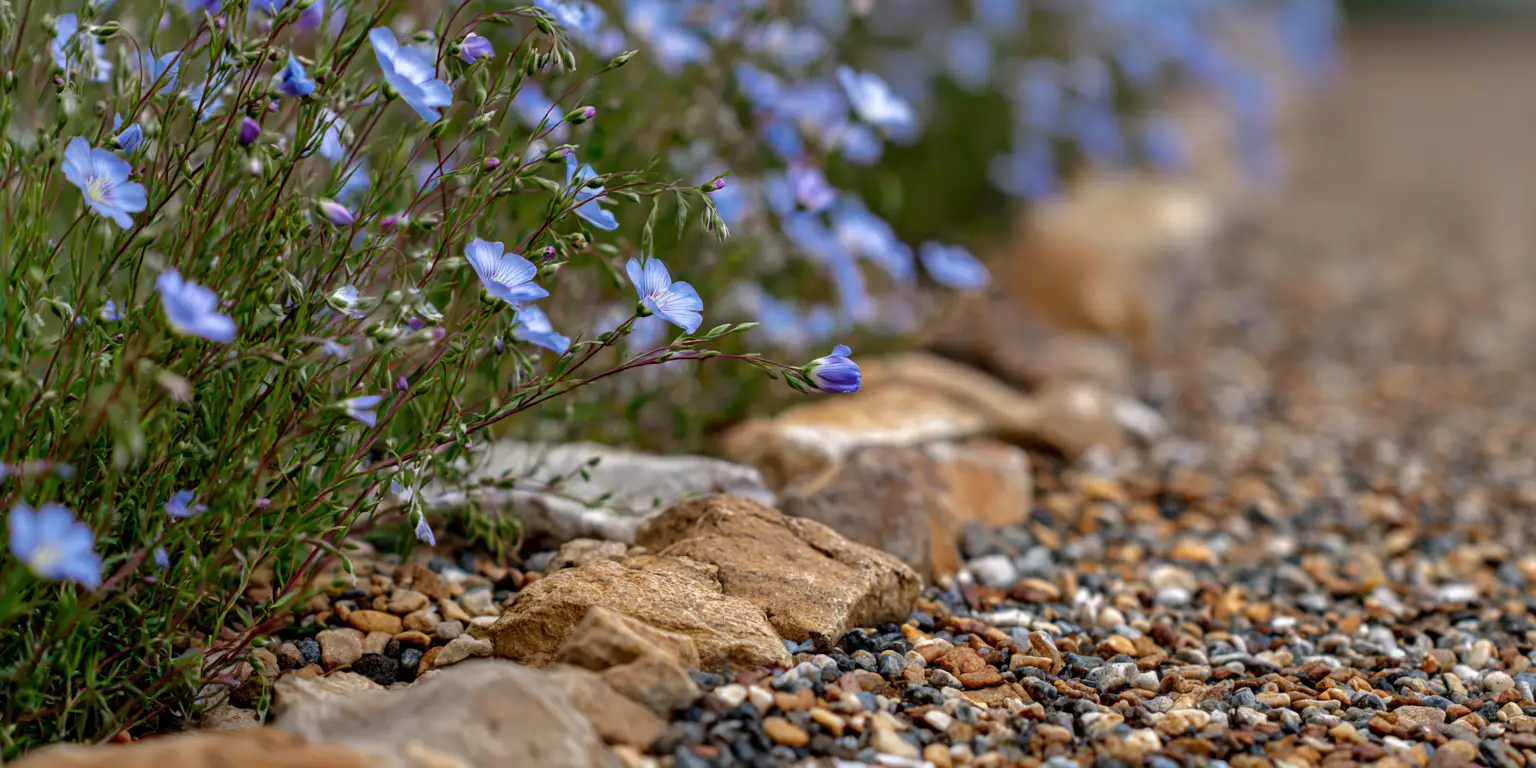
Blue flax in rock gardens and gravel pathways for a natural alpine look
How to collect and save blue flax seeds for planting next season
Blue flax for pollinator gardens attracting native bees and beneficial insects
The history of flax from ancient linen production to ornamental garden flower
Blue flax for xeriscaping and drought-tolerant gardens that still look beautiful
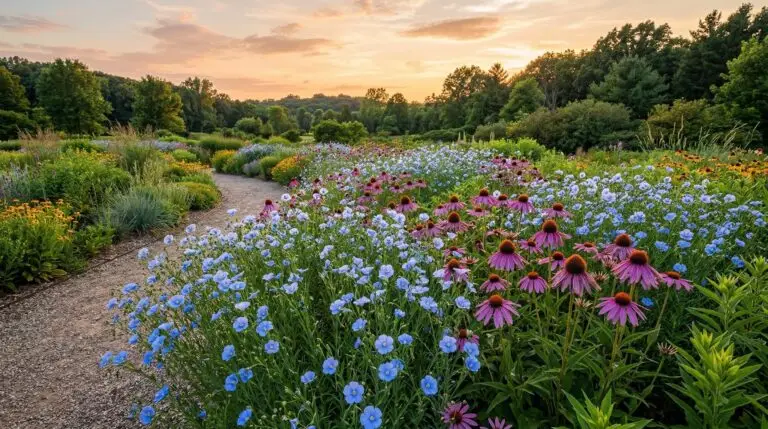
Blue flax companion plants: what to grow and what to avoid
🌱 Taxonomy and origin
Blue Flax Flower is a flowering plant in the flax family, Linaceae. Its botanical name Linum perenne reflects its life cycle as a perennial flax. The species is native to Europe and parts of Asia, particularly thriving in alpine meadows and grasslands. It has since been introduced to North America, where it is used in wildflower seed mixes and landscape plantings. In the western U.S., a very similar native species called Lewis flax (Linum lewisii) grows in the wild; Linum perenne is the Eurasian counterpart and is sometimes simply referred to as “blue flax” alongside the native type. Taxonomically, Linum perenne belongs to the same genus as the common cultivated flax (Linum usitatissimum) that is grown for linen fiber and linseed oil. However, Blue Flax Flower is grown as an ornamental wildflower rather than an agricultural crop. It has several colloquial names, including perennial flax, prairie flax, and lint bells. All refer to the plant’s flax-like appearance and enduring nature. Originating from temperate climates, it is well adapted to regions with cold winters and warm summers. Its natural habit of thriving in open, rocky soils and high elevations speaks to its toughness. Gardeners around the world now cultivate Blue Flax for its blue flowers and resilient growth, appreciating the plant’s European heritage and its ability to adapt to new landscapes.
🌸 Bloom time
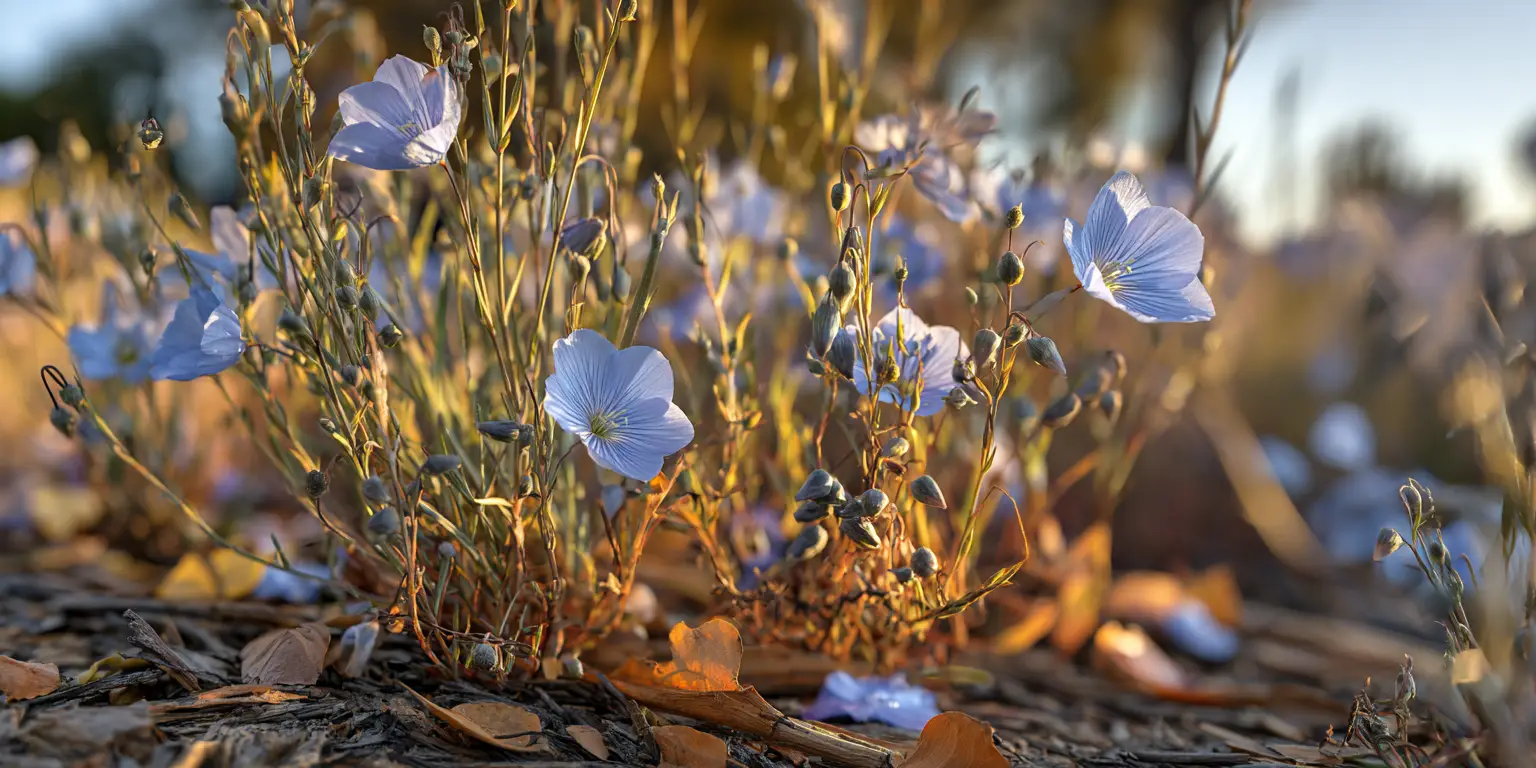
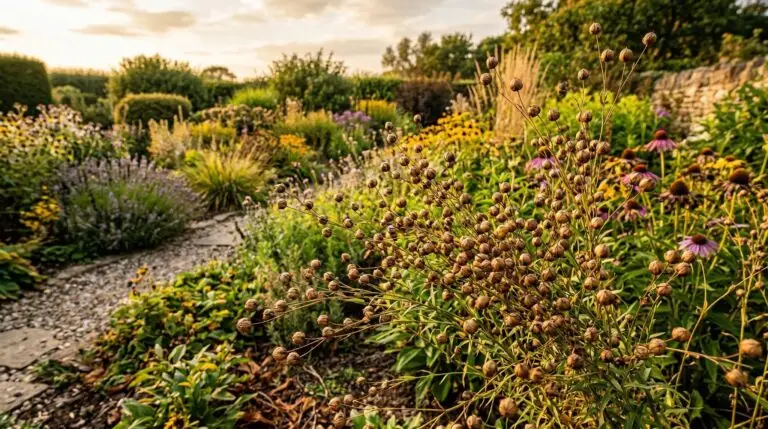
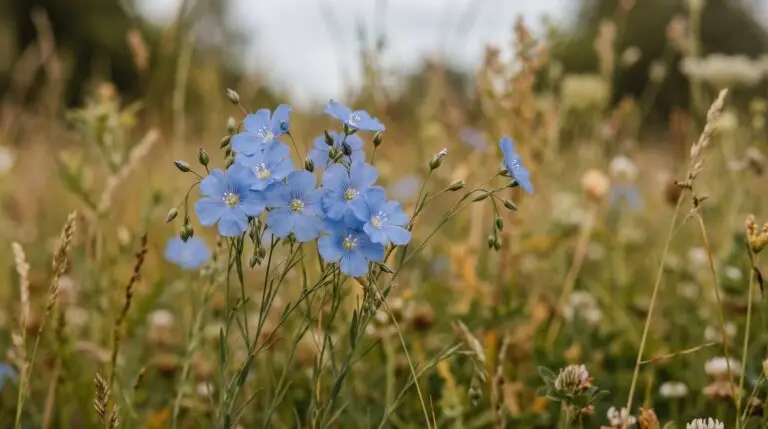
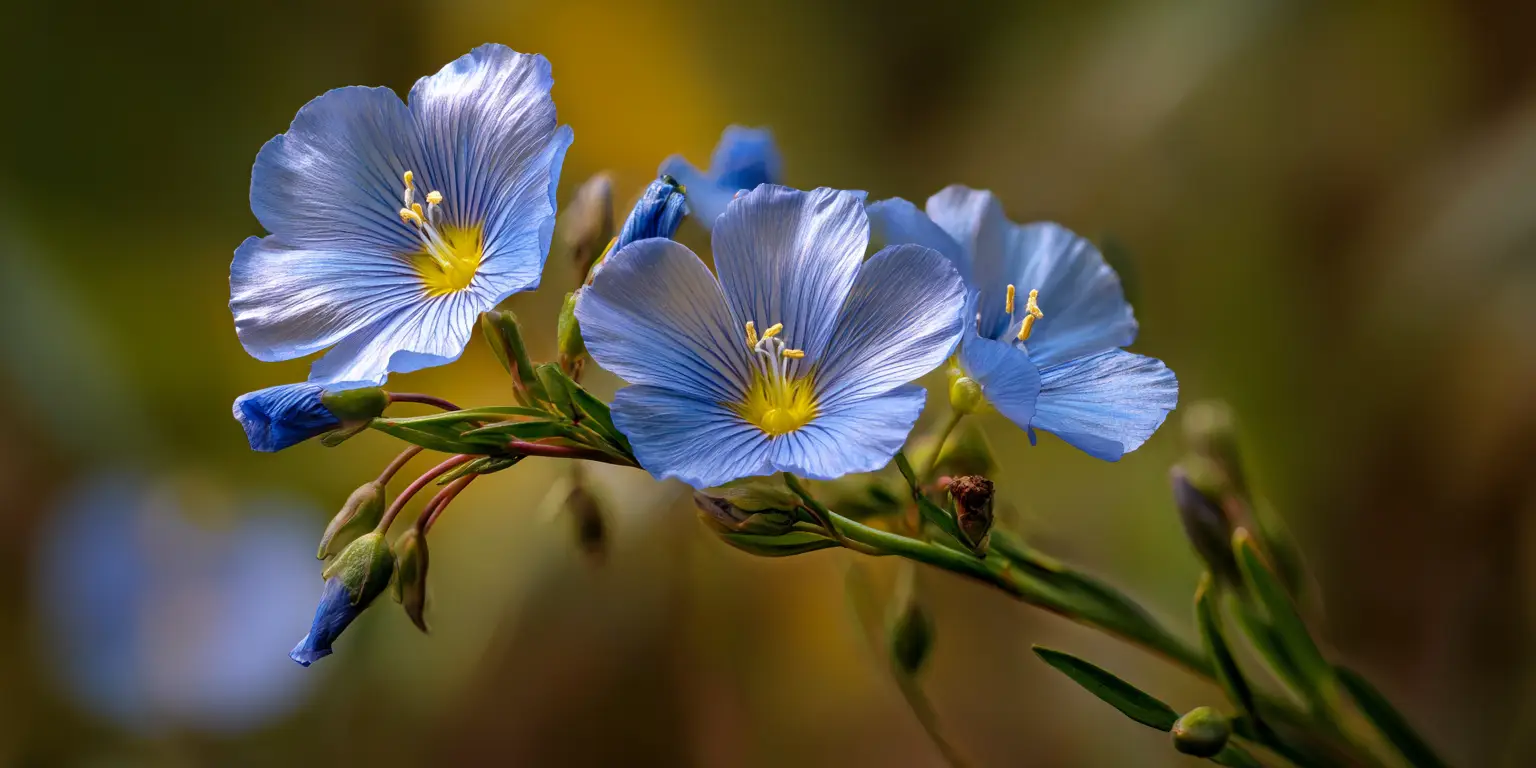
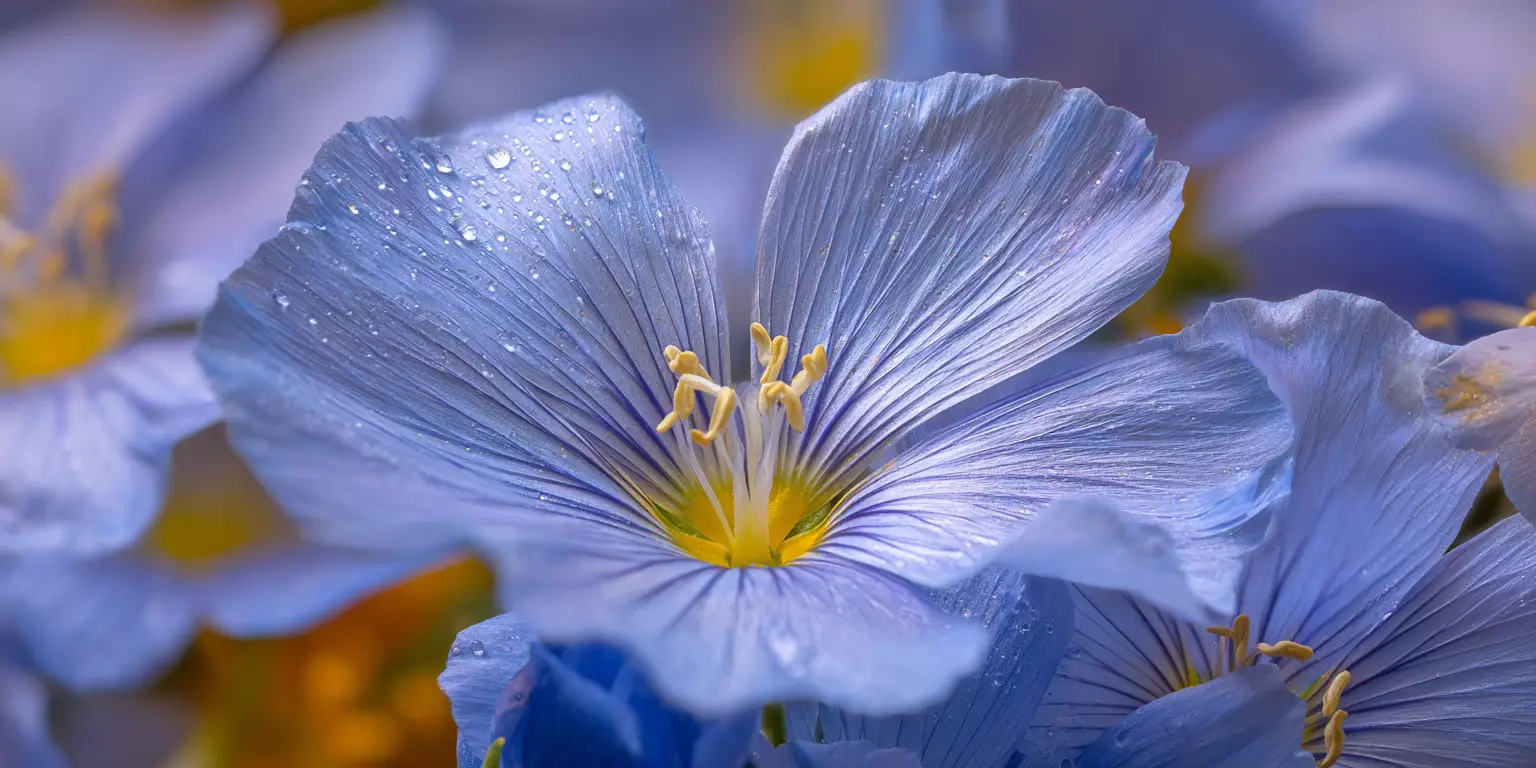
The flowering period of Blue Flax is one of its most delightful features. It begins blooming in late spring, often around May, and continues into mid-summer (June and July) depending on the climate. During this bloom time, new flowers open each day in a continual succession. The blooms are usually at their peak in early morning-petals unfurl with the sunrise, showcasing a vivid sky-blue hue sometimes accented by fine darker blue veins or a pale yellow center. Each bloom is about 1 inch (2.5 cm) wide, with a simple, open, saucer-like shape comprised of five petals. By afternoon or evening, the petals typically drop, as individual flowers have a short lifespan. However, because each stem carries many buds, the plant as a whole keeps flowering for several weeks. In ideal conditions, Blue Flax can provide summer blooms for up to two months or more. In slightly shaded positions (or cooler summer regions), blooming may extend longer into the season, whereas very hot weather might shorten the display. This extended bloom time makes Blue Flax a valuable filler in flower beds and wildflower mixes, bridging the gap between spring bulbs and later summer perennials. The continuous flush of new sky-blue flowers attracts bees and other pollinators during its bloom season. After flowering, the plant produces small round seed capsules that dry to a tan color, adding subtle interest. If spent blooms are not deadheaded, Blue Flax often self-seeds, which can lead to new seedlings and an encore of bloom the following year.
📏 Height and spread
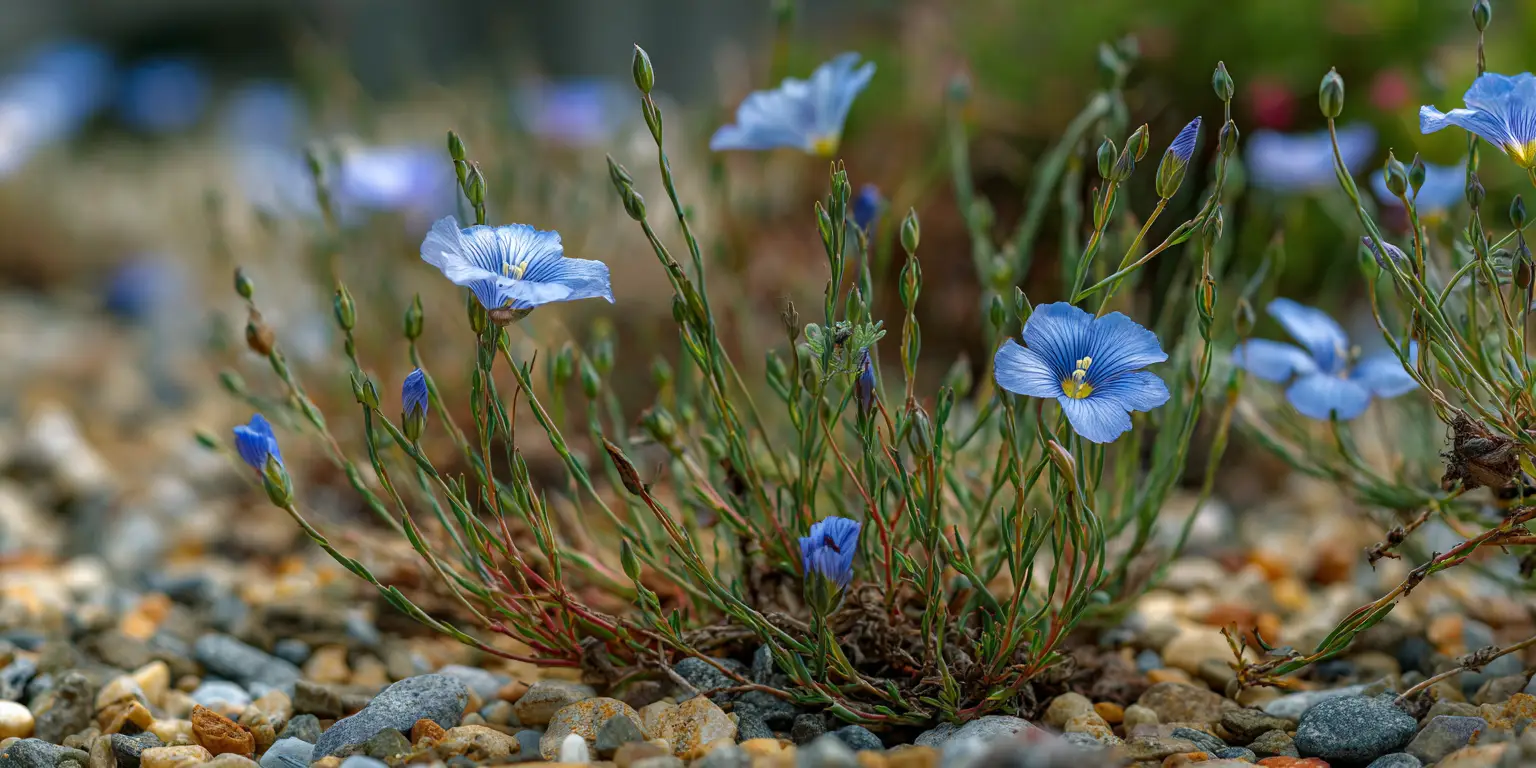
Blue Flax is relatively petite and well-behaved in size, making it easy to place in gardens. It typically grows 1 to 2 feet tall (about 30 to 60 cm) when in bloom. The wiry flowering stems give it an upright, open form, with a slight arching or billowing habit especially when planted in groups. The foliage at the base forms a loose mound that may be around 6 to 12 inches tall before the blooming stems elongate. In spread, an individual Blue Flax plant usually spans roughly 12 to 18 inches (30 to 45 cm) across. The plant tends to grow in clumps or tufts rather than as a single rosette, sending up multiple slender stems from the crown. Because of its fine texture and narrow leaves, Blue Flax does not appear bulky; instead it threads nicely among other plants. It can be placed near the front of borders or in the midst of meadow plantings without overwhelming neighboring flowers. Over time, a single plant may widen modestly, but it is not an aggressive spreader via roots. Any increase in colony size is often due to self-sown seedlings rather than the original clump creeping outward. When Blue Flax is “happy” in a site, you might notice a small drift of these plants forming as seedlings establish around the mother plant. Even so, the overall height remains around 2 feet or less, keeping it in scale with other small perennial flowers like forget-me-nots or shorter daisies. Its size and form allow Blue Flax to blend well in cottage garden plantings, rock gardens, or wild meadow-style landscapes where it can fill gaps and add movement without dominating the scene.
☀️ Light
In terms of light, Blue Flax thrives in full sun for best flowering. It is naturally adapted to open habitats such as prairies and alpine meadows where sunlight is abundant. Planting Blue Flax in a location that receives at least 6 hours of direct sun each day will promote sturdy growth and a generous display of blooms. In very hot summer regions or at lower latitudes, Blue Flax can benefit from a bit of afternoon shade to prevent heat stress; it is noted to tolerate partial sun (partial shade) and may even bloom a little longer into the season if shielded from the harshest afternoon rays. However, too much shade (for example, a mostly shaded woodland spot) will result in fewer flowers and spindly, floppy stems as the plant stretches for light. A wildflower garden setting in full sun or an open cottage garden border suits this plant perfectly. It pairs well with other sun-loving blue flowers like cornflowers and Delphinium elatum, all of which develop their best color in bright light. Blue Flax’s light, translucent petals almost seem to glow when the sun shines through them in the morning. Overall, ensure this flax gets ample sunshine to keep it blooming vigorously. If grown in part shade, expect a trade-off of slightly reduced flowering but potentially an extended bloom period and less intense midday wilting in extreme heat. Balance your site conditions accordingly, but lean toward sunny exposures for the happiest plants.
💧 Water
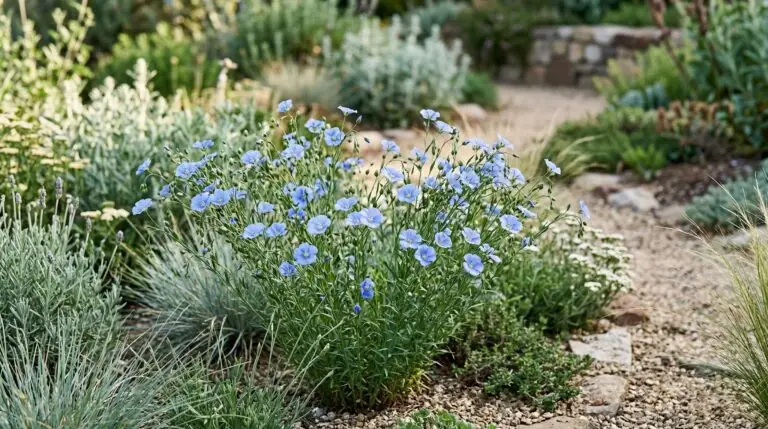
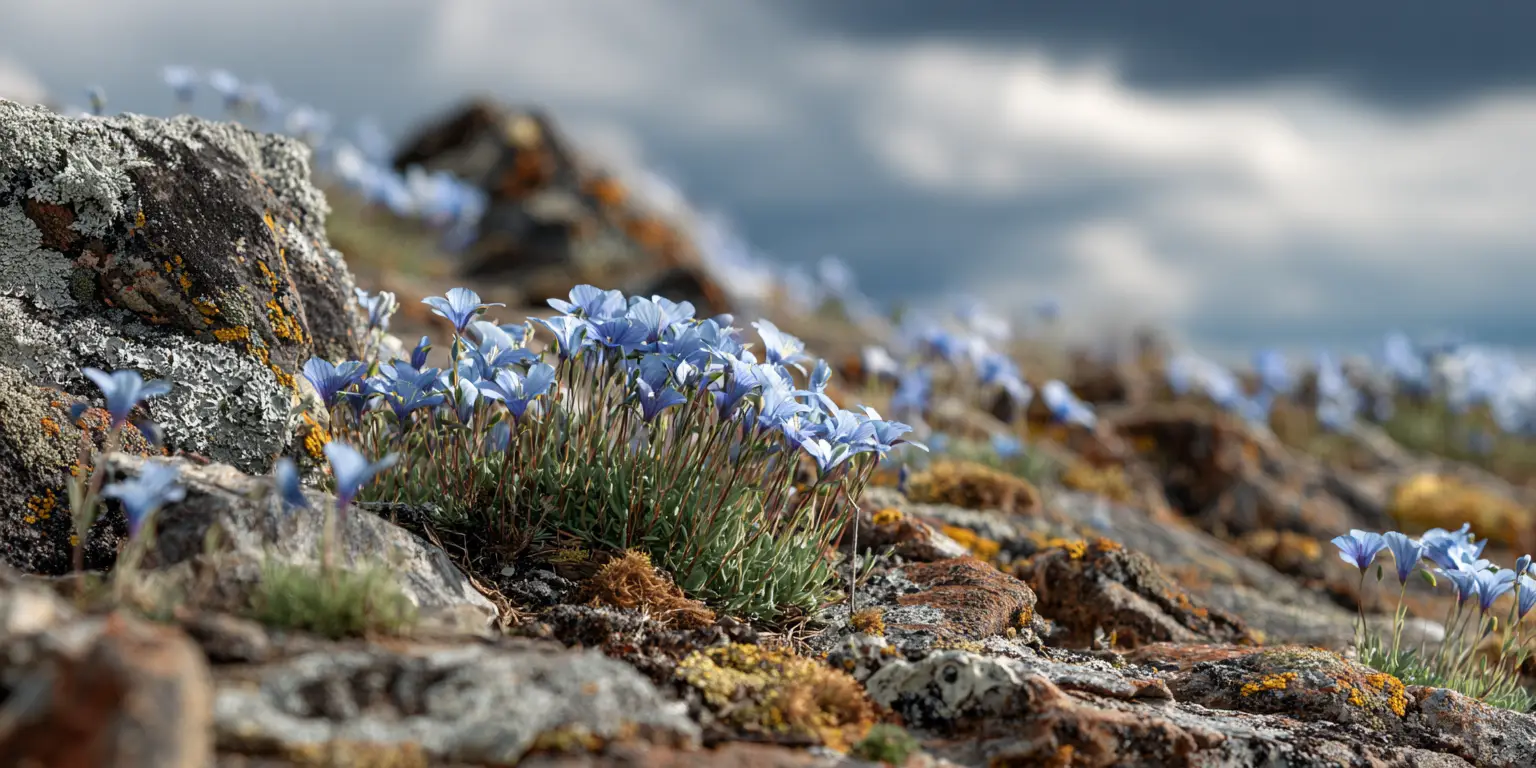
One of the reasons Blue Flax is popular in low-maintenance and xeriscape plantings is its moderate to low water needs. Once established, it is quite tolerant of dry conditions and is often listed among hardy drought-tolerant plants. In its native environment, Blue Flax experiences periods of relatively dry weather and survives on rainfall without fuss. In the garden, young plants will need regular watering to get established, especially during their first growing season. But after establishment, Blue Flax prefers only occasional watering. It thrives in average soil moisture and does not require heavy irrigation or consistently damp soil. In fact, overly wet conditions or poor drainage can harm the plant, leading to root rot or shortening its lifespan. It’s best to let the topsoil dry out between waterings. During hot summers, a deep watering every week or two is usually sufficient in most climates, though more frequent light water may be needed if it’s planted in sandy soil that drains very quickly. Blue Flax’s wiry stems and small leaves minimize water loss, and the plant will typically handle drought spells by slowing its growth or going semi-dormant after seeding. Avoid overwatering, as consistently soggy soil is far more detrimental than drought. In regions with regular rainfall, Blue Flax often gets by with little to no supplemental watering once it’s mature. Gardeners in arid climates appreciate that this flax can add color to dry landscapes where many other flowers struggle. Just remember that while Blue Flax is drought-tolerant, providing moderate water during its blooming period will result in lusher growth and more prolific flowering. After the bloom season, reducing water is fine and can help the plant harden off for winter.
🌍 Soil and pH
Blue Flax Flower is not very fussy about soil, as long as some key conditions are met. The plant does best in well-drained soil – excellent drainage is essential to prevent root problems. In its natural habitat, it often grows in coarse, sandy or rocky soils that never stay waterlogged. In the garden, Blue Flax will adapt to average loam, sandy soil, or even gravelly substrates. Heavy clay soil is typically unsuitable unless amended to improve drainage; waterlogged clay can cause the roots to rot. When it comes to fertility, Blue Flax actually prefers moderate to low soil fertility. It can grow in poor, lean soils where many ornamentals would fail. Rich, highly amended soils with a lot of organic matter are not necessary and may even cause the plants to become floppy. Regarding soil pH, Blue Flax is quite adaptable. It tolerates a range from slightly acidic to neutral to slightly alkaline soils. Whether your garden soil is on the acidic side or has some lime, this plant usually manages just fine. For reference, a pH anywhere roughly in the 6.0 to 8.0 range is acceptable, with neutral (~7.0) being ideal but not critical. In extremely acidic or highly alkaline conditions, nutrient availability issues could arise, but those scenarios are uncommon in well-tended gardens. If planting Blue Flax in a prepared bed, there’s usually no need for special fertilizers or pH amendments-its needs are simple. Ensure the site has decent drainage (consider raised beds or slopes for extra drainage if needed) and avoid over-fertilizing. Too much nitrogen can lead to lush foliage at the expense of flowers, and an abundance of nutrients isn’t required for this resilient wildflower. By providing gritty, average soil and avoiding waterlogging, gardeners can expect Blue Flax to thrive and self-perpetuate. These minimal soil demands make it a great choice for rock gardens, slope stabilization plantings, and other areas with dry or coarse soil where fussier plants wouldn’t prosper.
❄️ USDA hardiness
Blue Flax is a hardy perennial that can survive freezing winters, making it suitable for a range of climates. Typically, Linum perenne is rated for USDA hardiness zones 5 to 9. This means it can reliably overwinter in regions where winter low temperatures drop to about -20°F (-29°C) in zone 5, and it can also handle the warmer winters of zone 9 (down to around 20°F or -6°C). Some gardeners have successfully grown Blue Flax in zone 4, especially in well-drained soil with protective snow cover, and there are reports of it surviving even in zone 3 in favorable microclimates. However, in those colder zones its survival may depend on the exact strain and winter conditions, so zone 5 is a safer lower bound for most cultivars of Linum perenne. In the upper end of its range, zone 9, the main concern is not winter cold but rather summer heat and humidity. Blue Flax can tolerate heat (it is noted as heat-resistant) provided the soil is not too moist, but in very hot climates (such as parts of zone 9 or 10 with intense heat) it might act more like a short-lived perennial or even an annual, struggling if night’s stay warm and humidity is high. Generally, in Mediterranean or temperate climates with dry summers, it fares well. In zones within its comfort range, Blue Flax will behave as a true perennial, returning each spring from its root crown. It often remains semi-evergreen through mild winters, especially in zones 7-9 where the foliage may persist in a rosette form. In colder winter regions, the top growth will die back completely to the ground, and the plant will re-sprout new stems from the base in spring once temperatures rise. No special winter protection is usually needed in the appropriate zones, aside from ensuring good drainage to prevent freeze-thaw heaving or waterlogged soil in winter. For gardeners at the edge of its hardiness, a layer of winter mulch after the ground freezes can be used to insulate the roots, but generally Blue Flax is quite cold-hardy by nature.
🌼 Propagation and longevity
Blue Flax Flower is most commonly propagated by seed, and it often does the job itself by self-seeding in the garden. Propagation from seed is straightforward: seeds can be sown directly outdoors in fall or in early spring. Fall sowing allows seeds to stratify (experience cold moist conditions) over winter and germinate in spring, much as they would in nature. Spring sowing (as soon as the soil can be worked) also works well; the seeds germinate readily in cool weather. It’s not usually necessary to start Blue Flax indoors, as direct-sown seeds in a prepared bed tend to sprout and grow quickly. When seeding, scatter the small brown seeds on the soil surface or cover with a very thin layer of soil/grit – they need light to germinate. With adequate moisture, seedlings will emerge within a couple of weeks. Blue Flax often blooms in its first year when grown from seed, especially if started by early spring. Besides seed, another propagation method is by softwood cuttings of young stem tips, usually taken in late spring. These cuttings can root in a sandy potting mix under high humidity. However, seed propagation is so easy and effective that cuttings are rarely needed except to clone a particular variety. Division is generally not a common method for this plant, because its clumps are not dense and fibrous in the way some perennials are; Blue Flax has a taproot and does not respond well to being broken up. In terms of longevity, Blue Flax is often described as a short-lived perennial. An individual plant might live only 3 to 5 years, sometimes even just a couple of seasons in poor conditions. However, its tendency to naturalize by dropping seed means that a stand of Blue Flax can persist in a garden for many years as new seedlings take the place of older plants. Gardeners can encourage this by leaving some seed pods to mature and scatter. The plant doesn’t aggressively spread, but will politely reseed where it’s happy. To keep a population going, you might also collect seeds and resow them every few years. If you are growing Blue Flax in a more controlled border, you can deadhead spent flowers to neaten the appearance, but doing so will reduce self-sowing. Overall, expect to occasionally replenish Blue Flax by seed to maintain its presence, treating it as a self-renewing perennial. With this approach, you’ll always have some blooming plants each year even as individual ones come and go.
👃 Fragrance
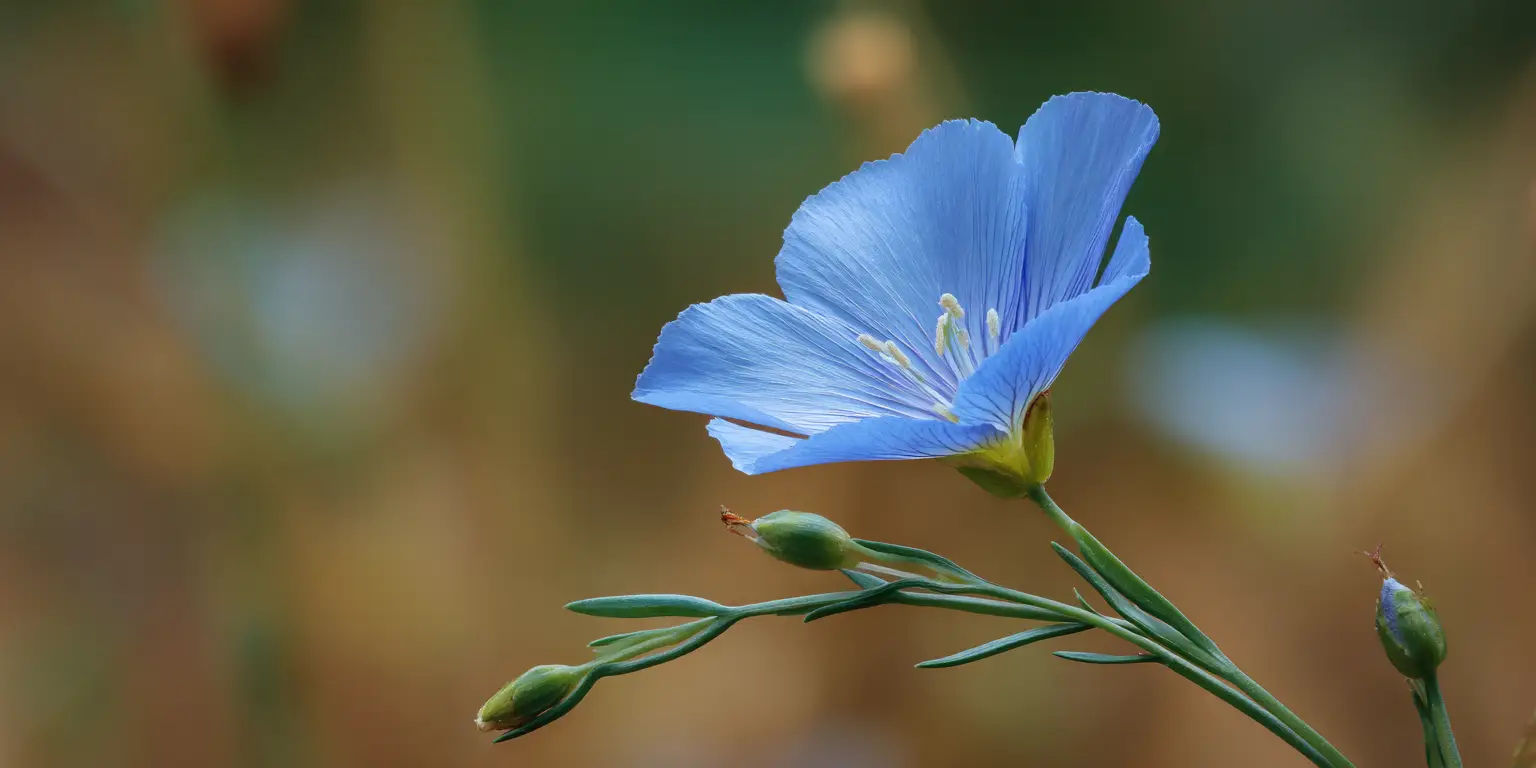
Blue Flax is not particularly known for fragrance. Unlike some garden flowers that have strong perfumes, the blooms of Linum perenne have little to no detectable scent to the human nose. The charm of Blue Flax lies in its color and form rather than any fragrance. On a warm day, you might notice a very mild fresh or herbal scent if you put your nose right up to the flowers or crush the foliage, but there is no prominent floral perfume. This makes Blue Flax a good companion in the garden for more fragrant plants, as it won’t compete or create any clashing scents. Many gardeners who include Blue Flax in a cottage garden or mixed border appreciate that it adds visual interest without overwhelming fragrant roses or other scented blooms nearby. The lack of fragrance also means that the flowers don’t typically attract pollinators by scent, but rather by their bright color and pollen. Bees in particular visit Blue Flax for its pollen and nectar, drawn by the blue hue and the flower’s open form. So while you won’t grow Blue Flax to perfume the air, you will still benefit from the lively activity of pollinators around it. If fragrance is a priority in a planting scheme, one can interplant Blue Flax with aromatic herbs or perfumed flowers (lavender, sweet alyssum, etc.), using Blue Flax mainly for a splash of clear blue color. In summary, Blue Flax Flower is essentially scent-neutral in the garden – not at all unpleasant, but essentially without a noticeable fragrance.
⚠️ Toxicity and pet safety
Gardeners with pets or children will be glad to know that Blue Flax is generally not regarded as a highly toxic plant in the landscape. Handling the plant is safe, as it does not have spines or irritants in its leaves or stems. However, like many members of the flax family, Linum perenne contains small amounts of natural compounds that could be harmful if large quantities are consumed. The seeds in particular, as with cultivated flaxseed, contain linamarin and other cyanogenic glycosides – substances that can release cyanide during digestion. In practical terms, this means if a dog or cat (or a curious child) were to eat a significant amount of raw flax seeds or a large quantity of the plant, it might cause gastrointestinal upset or other symptoms of poisoning. Typically, the bitter taste of raw flax deters animals from heavy grazing. Blue Flax is deer resistant, not due to toxicity that harms deer, but likely because its foliage is unpalatable and stringy, so deer and rabbits tend to ignore it. There are no widely reported cases of Linum perenne causing serious poisoning in household pets under normal garden circumstances. Still, it’s wise to prevent pets from nibbling on garden plants as a general rule. If you plan to harvest seeds (linseed) for any reason, know that raw flax seeds should be eaten in moderation even by humans, and only when processed properly (for example, baking or boiling removes most toxins). But in an ornamental role, Blue Flax poses minimal risk. The toxicity of this species is considered low, and it is not listed on common poisonous plant lists for dogs or cats by the ASPCA. In summary, Blue Flax Flower is pet-friendly in the garden in the sense that it won’t cause issues from casual contact or an occasional taste, but ingestion of large amounts of seeds or plant material should be avoided. As always, if a pet ever does consume an unusual amount of any plant and shows distress, consult a veterinarian.
🌿 Vase life
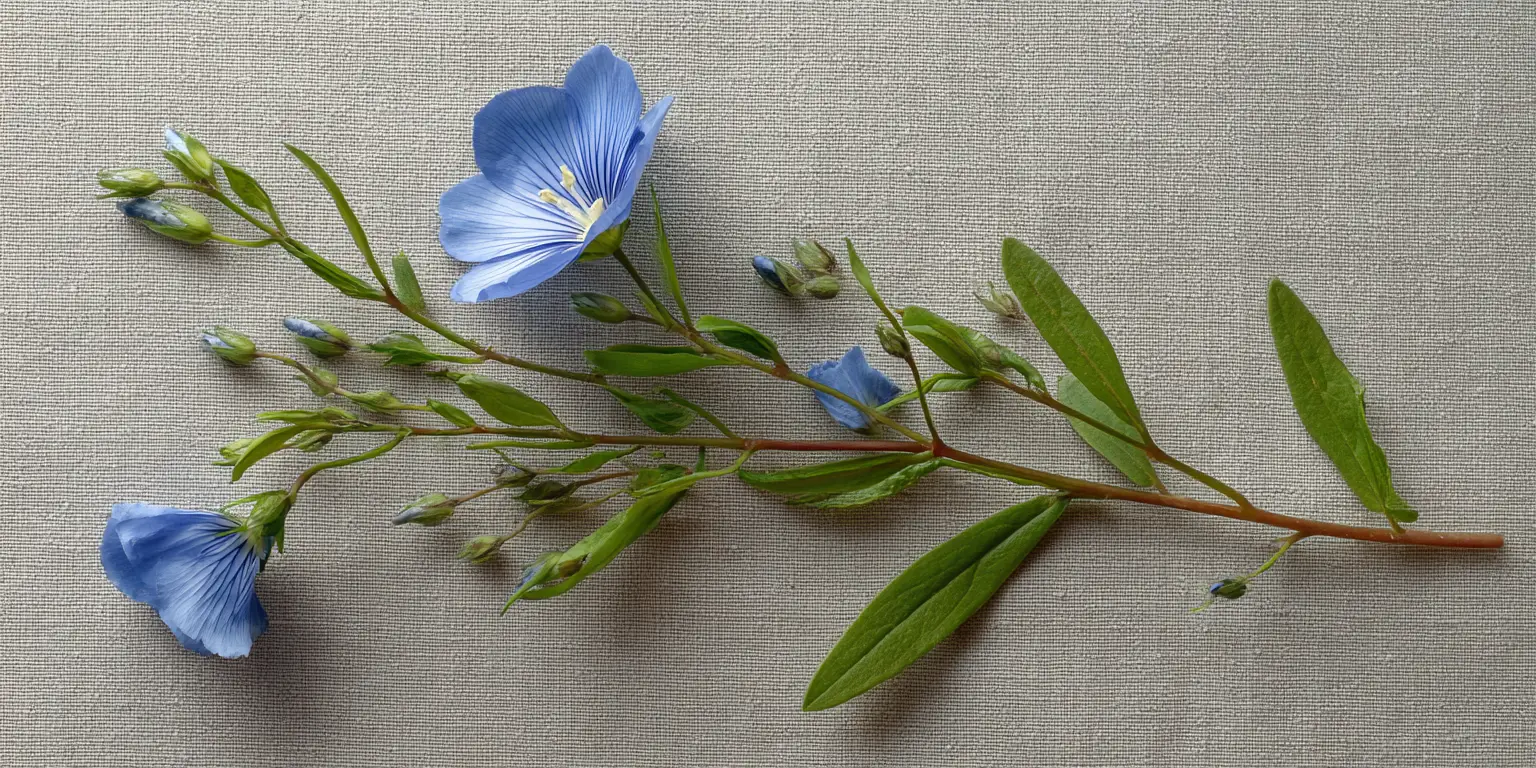
Blue Flax is not a traditional cut flower crop, but its blooms can be enjoyed in informal arrangements if handled carefully. The vase life of Blue Flax flowers tends to be short for each individual blossom – since each flower lasts only about a day, those open at the time of cutting will likely wilt by the next day. However, when stems are cut with many buds present, new flowers can continue to open on the stems for several days in water. With this sequential blooming, a stem of Blue Flax might give a modest display in a vase for roughly 3 to 5 days under normal conditions. In professional trials (for example, experiments in cut flower research), Linum perenne stems have achieved average vase lives of about a week or slightly more when placed in water with floral preservatives. In a home setting without special preservatives, expect just a few days of use. To maximize vase performance, cut Blue Flax early in the morning when some buds are just about to open and only a couple of flowers are fully open. Immediately place the stems in deep cool water. Stripping the lower foliage and using a clean vase will help as well. Change the water daily to keep it fresh. Even with these measures, Blue Flax will shed spent blooms each day (you might find fallen blue petals around the vase). It’s wise to use Blue Flax as a minor accent in mixed bouquets rather than relying on it as the focal flower. For example, a few airy sprigs of Blue Flax can add a touch of wildflower charm among sturdier flowers like daisies or cornflowers. The remaining buds on each stem will continue to open in sequence each morning for a short period, giving a fleeting but lovely touch of blue. Because the seed pods that form are also visually interesting (small round pods that start green and dry to tan), some people use Blue Flax stems in rustic arrangements and even allow the pods to dry, extending the decorative use of the cut stems. Overall, while Blue Flax won’t last as long in the vase as roses or chrysanthemums, its brief appearance can be a pleasant addition to a freshly-picked garden bouquet, especially if you’re aiming for a delicate wildflower look.
🐛 Pests and diseases
Blue Flax is largely trouble-free when it comes to pests and diseases, which adds to its appeal as an easy-care plant. In the garden, it does not suffer from many of the common ailments that plague other ornamentals. The foliage of Linum perenne is narrow and not particularly succulent, so it doesn’t attract a lot of chewing insects. That said, gardeners should occasionally watch for a few issues: aphids can sometimes cluster on the new growth or buds, especially in spring. These tiny sap-sucking insects are usually only a minor annoyance and can be sprayed off with water or treated with insecticidal soap if they become numerous. Slugs and snails might nibble on lower leaves or tender seedlings in damp conditions, although Blue Flax’s preference for drier soil means it’s not often in slug-prone environments. As mentioned, larger herbivores like deer and rabbits typically leave Blue Flax alone, making it one of the deer resistant flowers suitable for critter-heavy areas. In terms of diseases, Blue Flax has no serious disease susceptibilities in well-drained soils. Fungal issues like root rot or crown rot can occur if the plant is kept too wet, especially in cool weather, which underscores the importance of good drainage. In humid climates, there is a slight chance of foliar fungal spots or mildew, but these are uncommon and usually not severe. The plant’s habit of opening new flowers daily and shedding them means it self-cleans and doesn’t hold onto dead petals that could foster rot. If grown in very crowded conditions with poor air circulation, any perennial can develop some fungal leaf spot, but thinning plants or relocating to a breezier spot will prevent that. Blue Flax also doesn’t tend to require any chemical pesticides or fungicides in typical cultivation. At times, gardeners might observe the stems flopping or the center of an older clump dying out – this is usually due to natural aging or insufficient light, not a pest or disease. Simply trimming back leggy stems after flowering can refresh the plant’s appearance. In summary, pests and diseases are rarely a concern with Blue Flax. Basic good gardening practices (adequate sun, avoiding overwatering, occasional checks for aphids) will ensure that this drought-tolerant wildflower remains healthy. Its resilience and lack of serious pest issues make it a smart choice for low-maintenance and organic gardens.
FAQ
Is Blue Flax Flower the same as the flax used for making linen?
Not exactly. Blue Flax Flower (Linum perenne) is a wild perennial species grown as an ornamental, whereas the flax grown for linen fiber and edible seeds is Linum usitatissimum, an annual crop. They are related (both in the Linum genus) and have similar-looking flowers, but L. perenne is primarily for gardens and natural landscapes. It is not used for commercial fiber production. However, historically all flaxes share the common name “flax” because of their fibrous stems. Blue Flax’s stems do have fibrous qualities but are too small to be of practical use for linen. Gardeners grow Blue Flax for its blue flowers and hardiness, not for fiber.
Will Blue Flax come back every year?
Yes, Blue Flax is a perennial, so it is capable of coming back each year from its rootstock, as long as it is grown within its hardiness range (approximately USDA zones 5-9). Keep in mind that an individual Blue Flax plant may not live for many years – it’s often a short-lived perennial (sometimes only a few seasons). But it tends to self-seed in the garden. So even if the original plant dies out after 3 or 4 years, you’ll likely find new volunteer seedlings that keep the population going. In that way, Blue Flax can appear to come back year after year, either from the same plant or its offspring.
How do I propagate Blue Flax Flower?
The easiest and most common way to propagate Blue Flax is by sowing seeds. You can collect seeds from the dried seed capsules in late summer or purchase packets of seed. Sow them directly outdoors where you want the plants to grow. Late fall sowing is excellent because the seeds will sprout in spring after winter cold (natural stratification), but you can also sow in early spring. Ensure the soil is well-drained and press the seeds lightly into the surface; they need some light to germinate. Keep the soil moderately moist until germination. Blue Flax seeds usually germinate within 10-20 days. You can also start seeds in pots if you prefer, then transplant seedlings. Other propagation methods include taking softwood cuttings of young shoots in spring. Division is not commonly done, as the plant has a taproot and sparse crown. Fortunately, propagation by seed is very reliable and new seedlings often appear on their own near the parent plant.
Does Blue Flax Flower need a lot of maintenance?
No, Blue Flax is considered a low-maintenance plant. It thrives in dry conditions and doesn’t need rich soil or frequent watering. Once established, it largely fends for itself. Maintenance tasks are minimal: you can trim or shear the plant back after the main bloom flush if the stems get floppy or to encourage a tidier appearance. This cut-back may sometimes prompt a lighter rebloom later in summer, though not always. Removing spent flowers (deadheading) is optional – it can keep the plant looking neat, but if you want it to self-seed, allow some flowers to form seed pods. Blue Flax doesn’t typically require fertilizer; in fact, too much fertilizer can cause lush growth that flops over. Additionally, because it has few pest or disease problems, you won’t need to spray or treat it. In winter, any dead stems can be cleaned up, but often the plant is small enough that it doesn’t create much debris. Overall, Blue Flax is an easy-care perennial suited for gardeners who prefer drought-tolerant plants and a more natural look.
Is Blue Flax invasive or will it take over my garden?
Blue Flax is not generally considered invasive. It is not a vigorous spreader by roots, and it doesn’t form dense mats or runners. The primary way it spreads is by seed, and even then, it’s usually a polite self-seeder. You might find a few new seedlings in the vicinity of the original plant each year if conditions are right, but it will not overwhelm an area like aggressive invaders do. If you prefer no self-seeding at all, simply deadhead the flowers before they set seed. In some regions where it’s not native, Linum perenne has escaped cultivation, but it typically integrates into wildflower meadows rather than becoming a troublesome weed. Its seedlings are easy to recognize and pull up if they sprout in unwanted spots. Compared to truly invasive species, Blue Flax’s spread is modest and manageable. Gardeners actually often appreciate the slight naturalization, as it helps maintain a presence of the plant over time without replanting. So, you can enjoy it in a wildflower garden or border without fear of it taking over.
What are good companion plants for Blue Flax Flower?
Blue Flax’s airy texture and sky-blue color make it a lovely companion to many other sun-loving flowers. In a meadow or naturalized planting, it mixes well with grasses and other wildflowers. For example, you could pair Blue Flax with oxeye daisies, coreopsis, or gaillardia to create a prairie-style look – the fine blue flax foliage contrasts with broader leaves of those flowers. In a garden border, Blue Flax is beautiful near the front or middle among other cottage favorites. It goes well with cornflowers (Centaurea cyanus) and forget-me-nots for a cool-toned scheme of blue flowers. It also complements pink or yellow blooms like yarrow, pink evening primrose, or rudbeckia by offering a splash of blue among those warmer colors. Because Blue Flax is short, you can plant taller spires like Delphinium elatum or larkspur behind it; the flax will cover the “legs” of those taller plants and provide an extended bloom period before and during the time delphiniums flower. For a spring sequence, Blue Flax can follow spring bulbs – for instance, plant it in the same area as tulips or late daffodils; by the time the bulbs finish, the flax will start blooming and cover the dying bulb foliage. In terms of form, the delicate upright habit of Blue Flax looks nice against plants with a mounded habit like catmint (Nepeta) or beside structural plants like yucca or small shrubs in rock gardens. Its drought tolerance means you’ll want to pair it with other plants that like similar dry, well-drained conditions. Lavender, sage (Salvia), and thyme are examples of perennials and herbs that share those preferences and can make a silvery-green backdrop for Blue Flax’s blue blooms.
Does Blue Flax attract bees or butterflies?
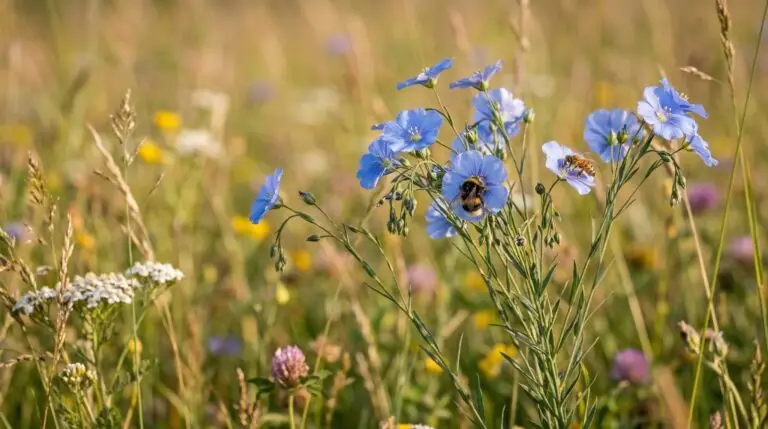
Yes, Blue Flax flowers are attractive to pollinators, especially bees. The open, saucer-shaped blooms provide easy access to pollen and nectar. On sunny mornings when the flowers are freshly opened, you’ll often see bees (both honeybees and native bees) visiting them. The pollen of flax is a food source for these insects. While Blue Flax may not be a top butterfly magnet compared to, say, butterfly bush or milkweed, some smaller butterflies might stop by for nectar occasionally. Its primary pollinators are bees and possibly hoverflies. The plant is not typically visited by hummingbirds, as the flowers are not the right shape or nectar volume for them. Overall, if you’re cultivating a pollinator-friendly garden, Blue Flax is a good component to include. It provides bloom in late spring when some early flowers are done, helping to feed bees in that intermediate period. Plus, because it’s not treated with pesticides (owing to few pest issues), it offers a safe stop for beneficial insects. If you allow it to form seed, birds like finches might also visit later to pick at the seeds in the dry capsules.
Can Blue Flax grow in containers?
Blue Flax can be grown in containers, but there are a few considerations. Its taproot and preference for deep, well-drained soil mean you’ll need a sufficiently deep pot with good drainage. Choose a pot at least 10-12 inches deep to accommodate root growth. Use a gritty or sandy potting mix to mimic the well-drained soil it likes – for example, a mix formulated for cacti or Mediterranean plants could work, or a standard potting mix amended with extra perlite and coarse sand. In containers, Blue Flax will need more regular watering than in the ground, since pots dry out faster. Water when the top inch of soil is dry, but be careful not to let the pot sit in water. Provide full sun to the potted Blue Flax for best growth. One advantage of pot culture is that you can have the plant in a controlled setting and enjoy it up close, perhaps on a patio. The plant’s form is somewhat loose and sprawling, so it might not have the same impact in a pot as a more compact bedding plant, but it can still bloom nicely. It could be nice in a large container mixed with other drought-tolerant flowers – for example, as a “thriller” or filler along with trailing verbena or ornamental grasses. Expect to treat it as a short-lived perennial in a pot; it might survive a mild winter in the container if the pot is protected, but often container perennials need to be treated as annuals or moved to the ground for long-term preservation. Collect seeds from your potted Blue Flax and you can easily start new ones next season if needed.
What should I do with Blue Flax after it finishes flowering?
After Blue Flax finishes its main flowering flush in summer, you have a couple of options. Many gardeners choose to shear back or trim the plant by about one-third to one-half its height. Using scissors or pruners, cut back the tangle of thin stems and spent blooms to form a small mound of foliage. This cleanup does a few things: it removes the drying seed pods and any scraggly stems, it tidies the appearance, and it can encourage fresh growth. Sometimes, after a good trim and a bit of water, Blue Flax will produce a smaller second wave of blooms later in summer or early fall (though typically not as many as the first flush). Even if it doesn’t rebloom significantly, the new growth will look greener and neater through the rest of the season. If you prefer to let it self-seed, you can skip the trim until you see seeds have dropped. You might also selectively deadhead – remove some spent flowers and leave others to develop seed. By late fall or after the first frost, the stems will dry out and you can cut the plant down to near ground level. In warmer zones, if the plant is semi-evergreen, you can just remove truly dead material and leave any low green rosettes. Applying a light mulch (like straw or leaf mulch) around the crown in late fall can protect it in very cold winters, but generally this is not required. Come spring, new shoots will emerge from the base. Essentially, post-bloom maintenance is about choosing between tidiness (trimming for looks and possible rebloom) versus natural reseeding (leaving it alone until seeds drop). Blue Flax is forgiving, so you can even trim part of the planting and leave part untrimmed, to get the best of both worlds.
Interesting tips
- Sow in Succession: To extend its presence, try sowing seeds in two batches – one in fall and one in spring. The fall-sown plants will bloom earlier, and the spring-sown ones might flower a bit later, giving a longer overall season of color. This also ensures new young plants are coming up as older ones mature, maintaining a continuous display year after year.
- Use in Meadows and Slopes: Blue Flax is excellent for naturalizing on sunny slopes, roadside strips, or meadow-style plantings. It can help with erosion control on slopes due to its taproot and semi-evergreen basal foliage holding soil. Its sprinkling of blue in a field of grasses is visually enchanting. Because it’s not aggressive, it mixes harmoniously with native wildflowers. Consider combining it with other drought-tolerant meadow plants like gaillardia, penstemon, and prairie grasses for a low-water landscape that still blooms beautifully.
- Cottage Garden Charm: In a cottage garden setting, Blue Flax brings an informal, airy texture that softens the look of the border. Plant it near stone pathways or at the front of flower beds where its delicate blooms can be appreciated up close. It pairs wonderfully with nostalgic flowers such as Virginia bluebells (for a sequential bloom from spring into summer) and old-fashioned pinks (Dianthus) or baby’s breath. The key is to allow Blue Flax enough space so its natural form can flop a little and weave among neighbors – that’s part of its charm.
- Mass Planting for Impact: Individual Blue Flax plants are thin and wispy, so for real impact, plant them in drifts or clusters of at least 5-7 plants together. A broad swath of Blue Flax creates a shimmering effect of blue when in bloom. This mass approach is great along fences or as a transition between a formal garden area and a more natural area. The effect has been likened to a “blue haze” when seen from a distance on a sunny morning.
- Reseeding Etiquette: If you welcome volunteers, let some seed pods drop. You might be happily surprised by where Blue Flax pops up, often finding just the right crevice or spot of bare soil to grow. If seedlings appear in inconvenient places, they are easy to transplant while young – just do so carefully to avoid disturbing the taproot. Conversely, if you want to control spread, deadhead diligently. The seeds are not wind-dispersed; they usually fall near the parent, so this plant won’t seed all over the yard, only nearby.
- Seasonal Behavior: Be aware that Blue Flax often looks its best in spring and early summer. As the season progresses into late summer, the plant may start to look a bit spent or sparse, particularly in hotter climates. This is normal – it’s conserving energy after seed set. You can cut it back to reinvigorate it, or allow companion plants to take over the show by that time. Later in the season, plants like sedum, Russian sage, or black-eyed Susans can shine while Blue Flax quietly retreats. This succession planning ensures your garden has continuous interest.
- No-Fuss Wildflower: If you are creating a wildflower garden or an area for pollinators, Blue Flax is a top pick because it naturalizes without overpowering other species. It also contributes to a long season of bloom (since many wildflowers either bloom in spring or mid-summer, Blue Flax covers late spring to early summer). Plus, its open flower form suits the “wild” aesthetic – it never looks overly bred or out of place among native flowers.
- Design with Color: The pure soft blue of Linum perenne can be used strategically in color schemes. Blue tends to recede visually, so planting Blue Flax can make a small garden appear a bit larger or give depth to a border. It also has a cooling effect – a patch of blue can calm down hotter colors nearby. For example, if you have a lot of bright reds or oranges in summer, inserting some Blue Flax in front can temper the palette and provide contrast. It also ties together beautifully with other blue flowers if you are going for a monochromatic theme – imagine a garden bed with Blue Flax, delphiniums, cornflowers, and salvia, all in different shades of blue and purple, creating a soothing cool-toned display.
Related Guides & Flowers
- Virginia Bluebells
Soft clusters of nodding bell shaped blue flowers that light up shady woodland style borders in mid spring. A good match for gardeners who love naturalistic sweeps of blue like Blue Flax, but in part shade. - Forget Me Nots
Low growing carpets of tiny sky blue blooms that edge paths and fill gaps between taller perennials such as Blue Flax. Great for soft cottage garden and meadow inspired plantings. - Gentian
Intensely deep blue funnel shaped flowers that give a richer, darker accent next to the lighter blue of Blue Flax. Works well in rock gardens and cool border spots where you want very strong blue color. - Globe Thistle
Architectural steel blue globes on tall stems that contrast nicely with the fine foliage and delicate flowers of Blue Flax. Good for more drought tolerant, wildlife friendly plantings. - Love in a Mist
A feathery annual with misty foliage and starry blue flowers that give the same light, romantic feeling as Blue Flax in cottage style borders and meadows. Great for self seeding among other blue toned flowers.
References
- Linum perenne L. – USDA PLANTS Database
Short official profile for blue flax with scientific classification, native and introduced status, growth habit, and distribution map for the United States. Good as a general reference for origin, life cycle, and range. - Blue Flax, common flax” – Guide to Poisonous Plants, Colorado State University
Veterinary oriented overview of blue flax and related flax species with notes on toxicity to livestock, typical circumstances of poisoning, and which animals are most at risk. Useful for a brief toxicity paragraph and safety notes. - BLUE FLAX LEWIS FLAX – Linum perenne L., Linum lewisii Pursh” – USDA NRCS Plant Guide
Detailed plant guide that treats Eurasian Linum perenne and native Linum lewisii together. Covers morphology, habitat, wildlife and pollinator value, seed production, and notes that flax species with yellow to red flowers are most toxic to livestock. Also comments on their use in restoration and ornamental plantings. - Linum perenne (Blue Flax) – NC State Extension Plant Toolbox
Horticultural fact sheet with description, flower and foliage details, landscape uses, recommended growing conditions, and notes on potential pest or disease issues. Good support for your sections on care, landscape use, and bloom time. - Native Blue Flax (Linum lewisii) – Colorado State University Extension, Gilpin County
Extension article focusing on the North American native blue flax, but very relevant for ecology, hardiness, and garden behavior. Describes flowering pattern through the day, mountain growing conditions, and general culture. You can use it when you explain climate, hardiness zones, and naturalistic plantings.
Written by: Your Flowers Guide editorial team
We are a small independent group of flower lovers who research and review each guide using trusted horticultural and educational sources. Learn more about us