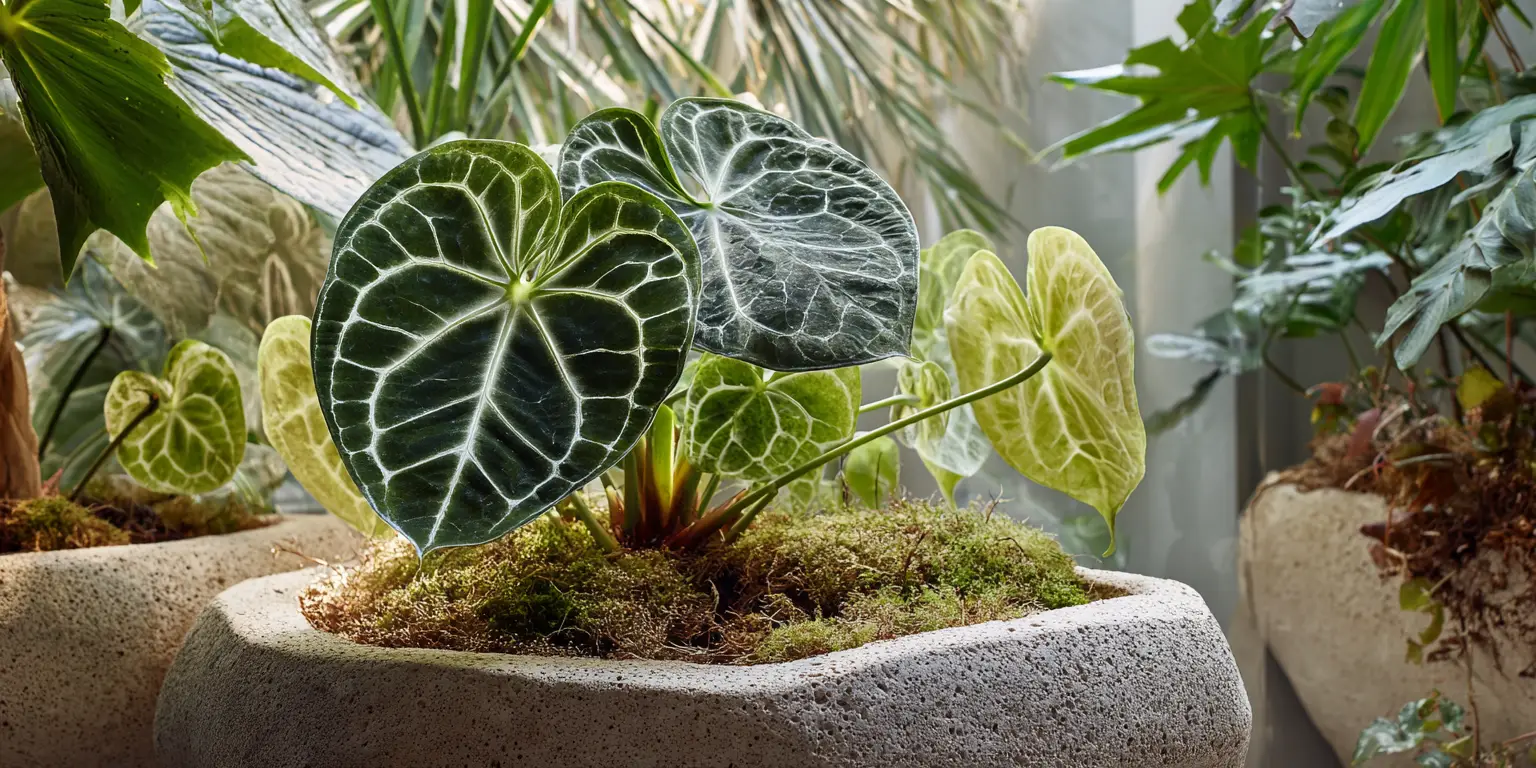
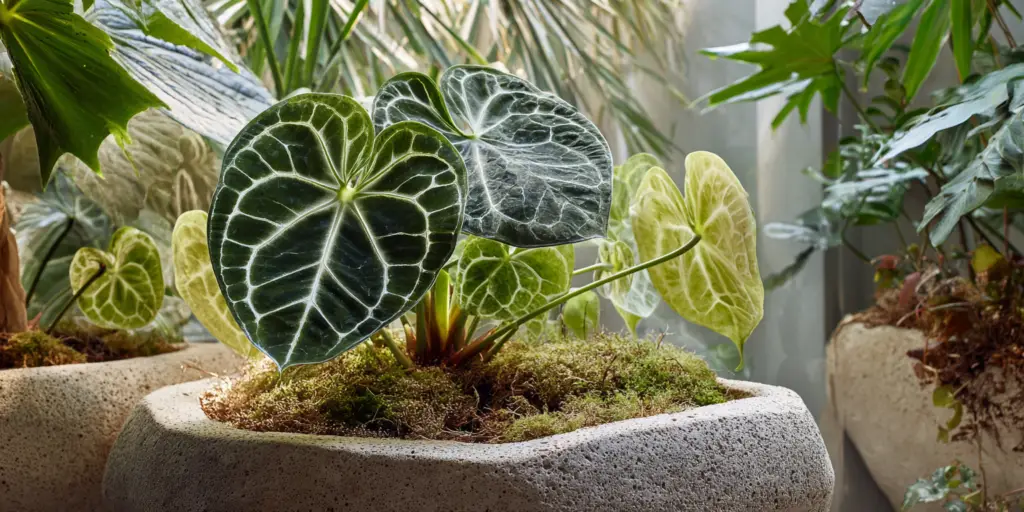
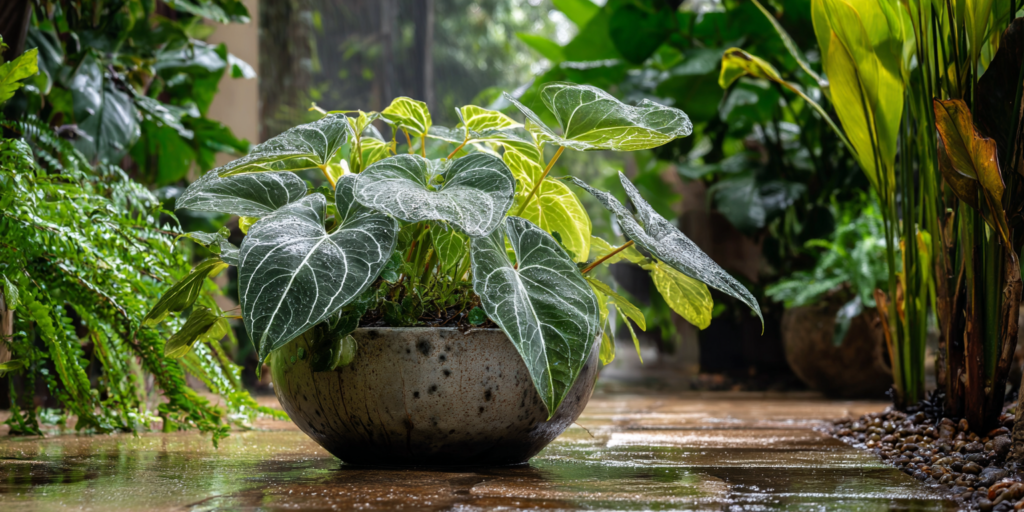
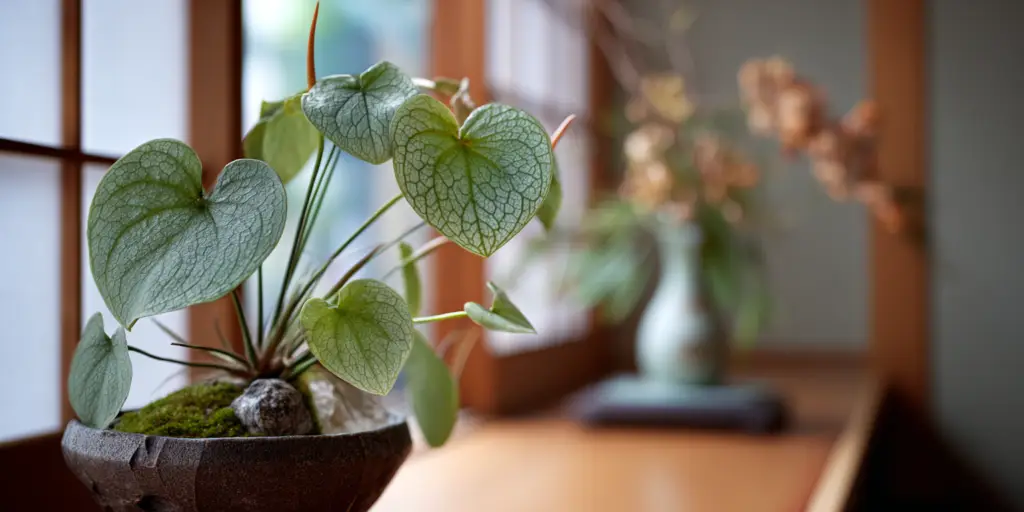
This Mexican species is a foliage anthurium prized for heart-shaped, velvety leaves with bold white veins. It stands out as a compact specimen for bright rooms and conservatories. Flowers are modest and not the main show. It performs best with steady warmth, humidity, and a freely draining mix. In North America it is almost always grown indoors.
At‑a‑glance
Group/Class: evergreen aroid; epiphytic to lithophytic subshrub
Height × spread: 12 to 24 in (30 to 60 cm) × 12 to 24 in (30 to 60 cm)
Bloom window: sporadic indoors; not grown for flowers
Color & flower form: small greenish to whitish spathe with pale spadix; foliage the focus
Fragrance: 0 none
USDA hardiness: 11 to 12; indoors elsewhere
Breeder / Year / Origin: unknown
Pet safety: avoid
How it differs
Grown for velvety, white-veined leaves rather than showy spathes
More compact than many velvet-leaf species
Prefers consistently humid air for best leaf edges
Strengths
• Striking leaf pattern on manageable plants • Adapts to containers and indoor light when bright and indirect • Leaves often maintain good form with regular wiping and even moisture
Care in one minute
Site: bright, indirect light; avoid hot, direct sun.
Soil: coarse aroid mix with bark and perlite; pH 6.0 to 6.5; excellent drainage.
Water: let top 1 in (2 to 3 cm) dry; water thoroughly; avoid standing water.
Feeding: light monthly feed spring to summer; flush salts periodically.
Overwintering: keep 65 to 80°F (18 to 27°C) and 50% to 70% humidity; protect from drafts.
Watch‑outs
Root rot in dense or waterlogged media
Leaf margin browning in dry rooms
Thrips or mites can blemish foliage
Best uses (tags)
containers; interiors; specimen; shade-tolerant
Provenance note
Native to Chiapas, Mexico. Leaves commonly reach about 12 to 16 in long in cultivation, with larger leaves in ideal conditions.
Written by: Your Flowers Guide editorial team We are a small independent group of flower lovers who research and review each guide using trusted horticultural and educational sources. Learn more about us