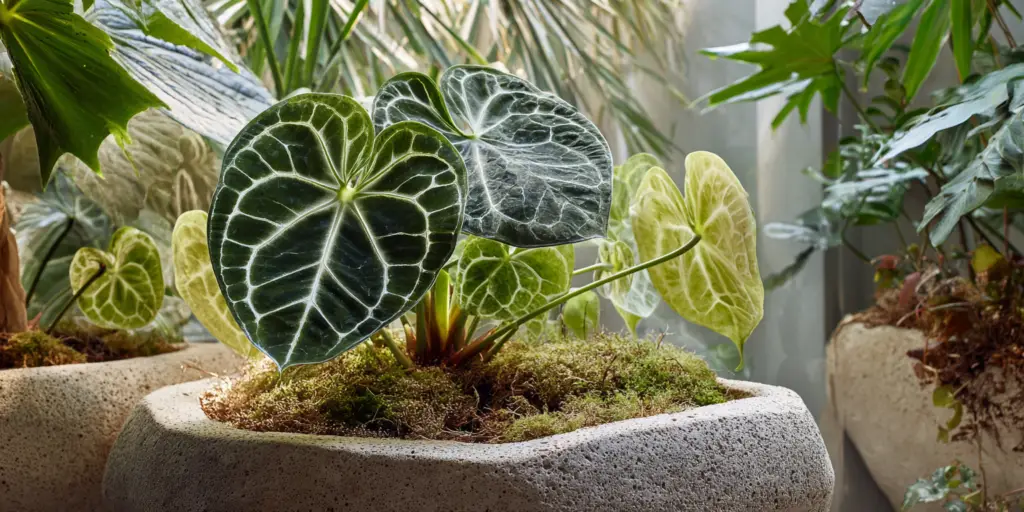
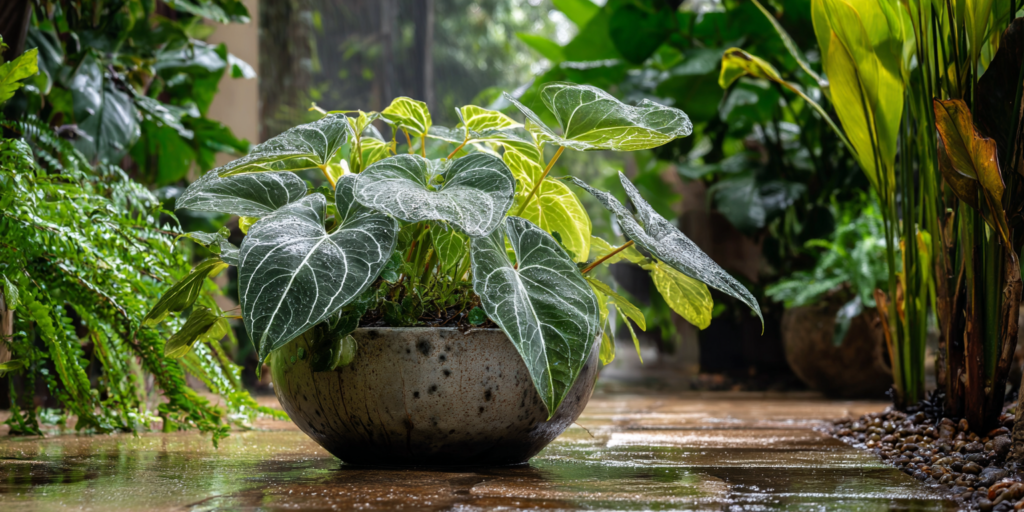
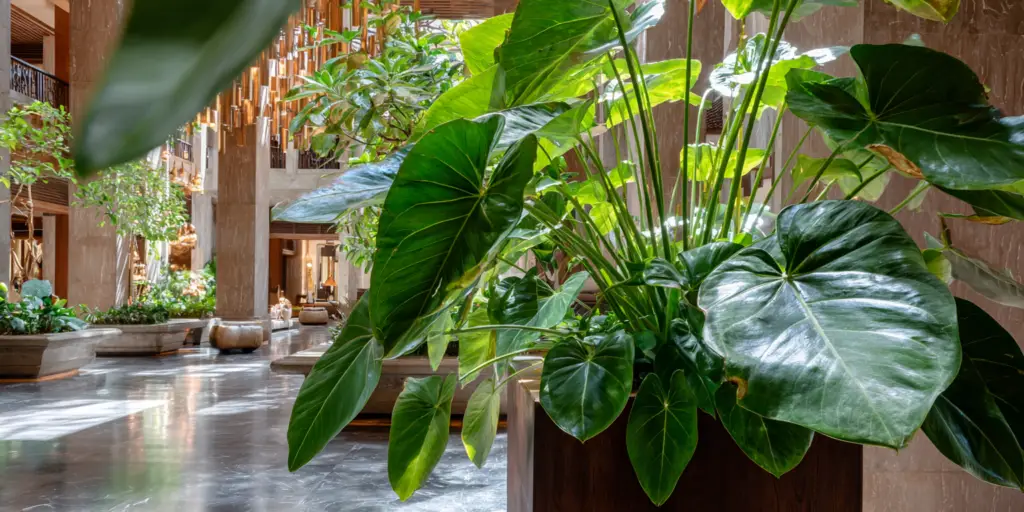
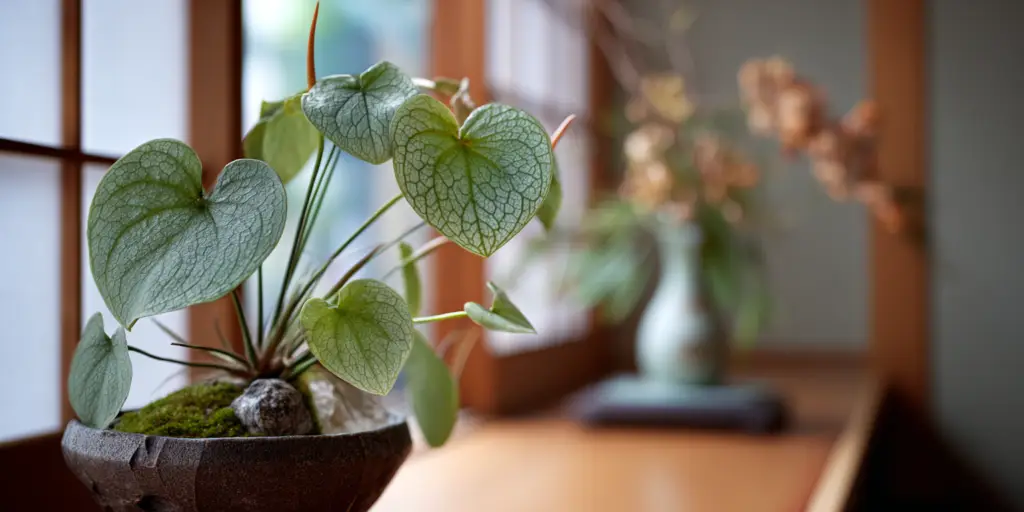
Often called the queen anthurium, this species is grown for its extraordinarily long, velvety leaves with pale veins. It stands out as a collector’s specimen that needs stable humidity and careful handling. Flowers are modest and green. It performs best in greenhouses, grow tents, and bright rooms with filtered light and moving air. In North America it is almost always an indoor plant.
At‑a‑glance
Group/Class: evergreen aroid; epiphyte
Height × spread: 24 to 48 in (60 to 120 cm) × 18 to 30 in (45 to 75 cm) (varies by culture)
Bloom window: infrequent indoors; not grown for flowers
Color & flower form: green spathe and greenish spadix; foliage the focus
Fragrance: 0 none
USDA hardiness: 11 to 12; indoors elsewhere
Breeder / Year / Origin: unknown
Pet safety: avoid
How it differs
Produces some of the longest leaves in the genus under high humidity
More sensitive to dry air and handling than most anthuriums
Benefits from support and excellent air movement
Strengths
Iconic foliage for display collections
Responds to stable warmth and humidity with steady growth
Leaf venation becomes more prominent with age
Care in one minute
Site: bright, filtered light; avoid direct sun on leaves.
Soil: very airy aroid mix with large bark and perlite; pH 6.0 to 6.5.
Water: water thoroughly, then allow the top 1 in (2 to 3 cm) to dry; ensure fast drainage.
Feeding: light, regular feeding during warm months; reduce in low light.
Overwintering: keep 65 to 80°F (18 to 27°C) and 60% to 80% humidity; provide gentle airflow; stake large leaves if needed.
Watch‑outs
Low humidity causes edge burn and leaf collapse
Cold drafts and temperatures below 60°F (16°C) slow growth
Waterlogging quickly leads to root issues
Best uses (tags)
interiors; specimen; collectors; shade-tolerant
Provenance note
Native to Colombia, including the Chocó region. Grown chiefly for its extraordinary foliage in controlled indoor environments.
Written by: Your Flowers Guide editorial team We are a small independent group of flower lovers who research and review each guide using trusted horticultural and educational sources. Learn more about us