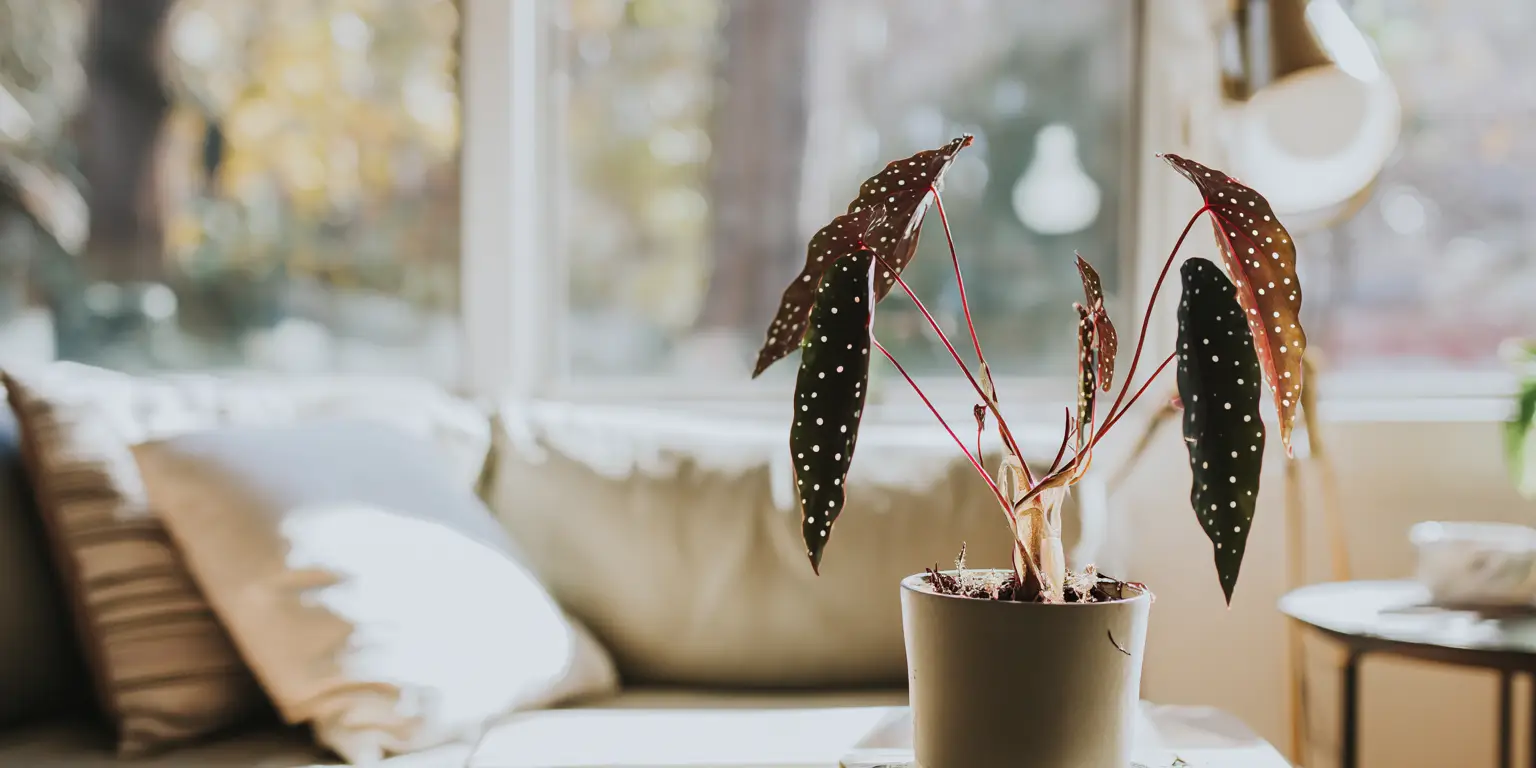
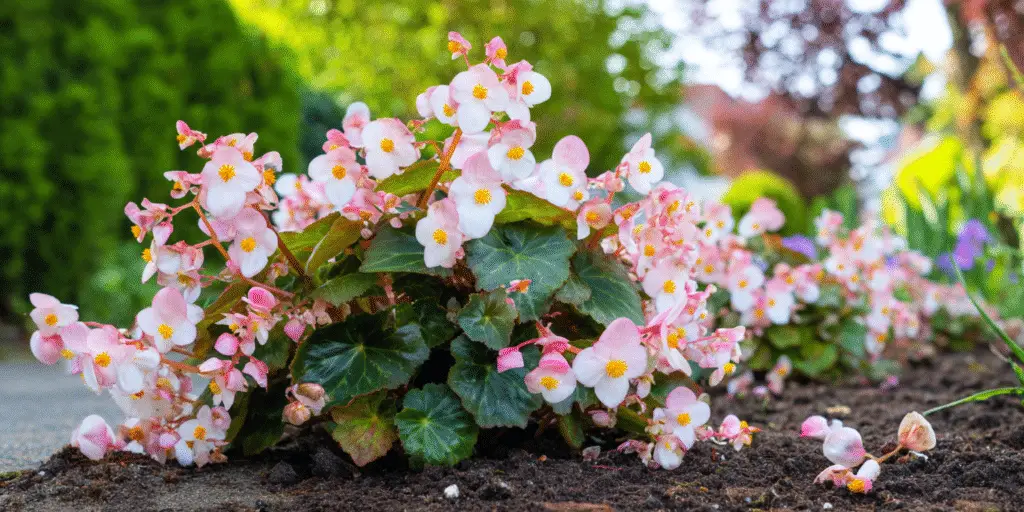
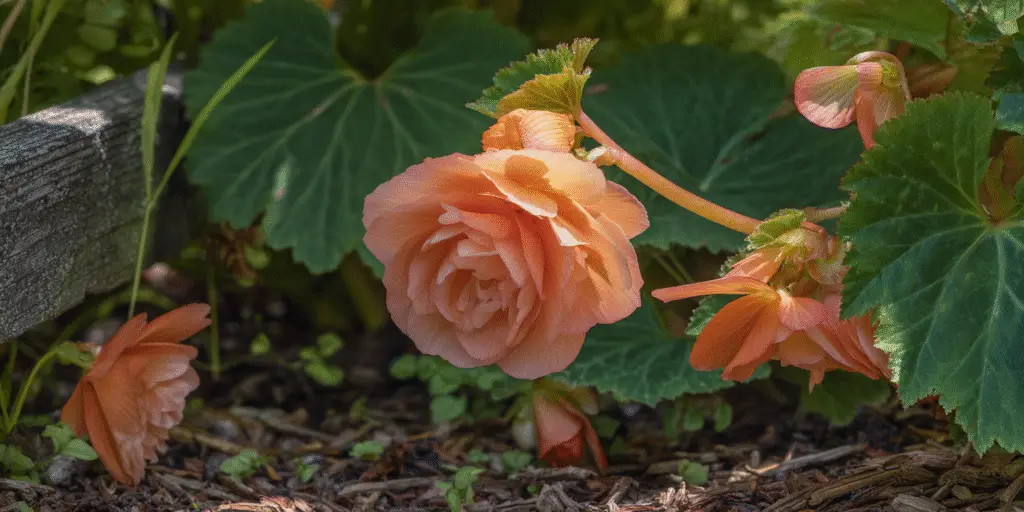
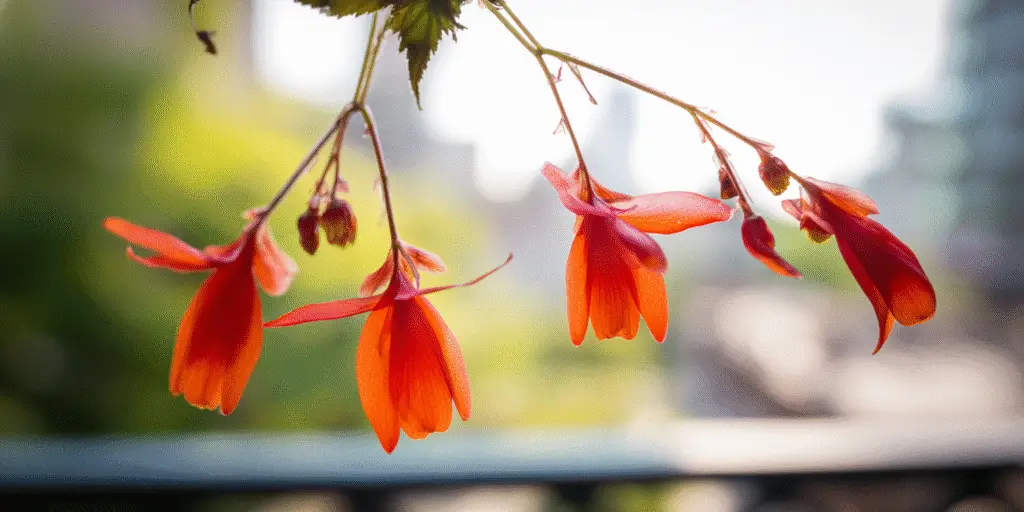
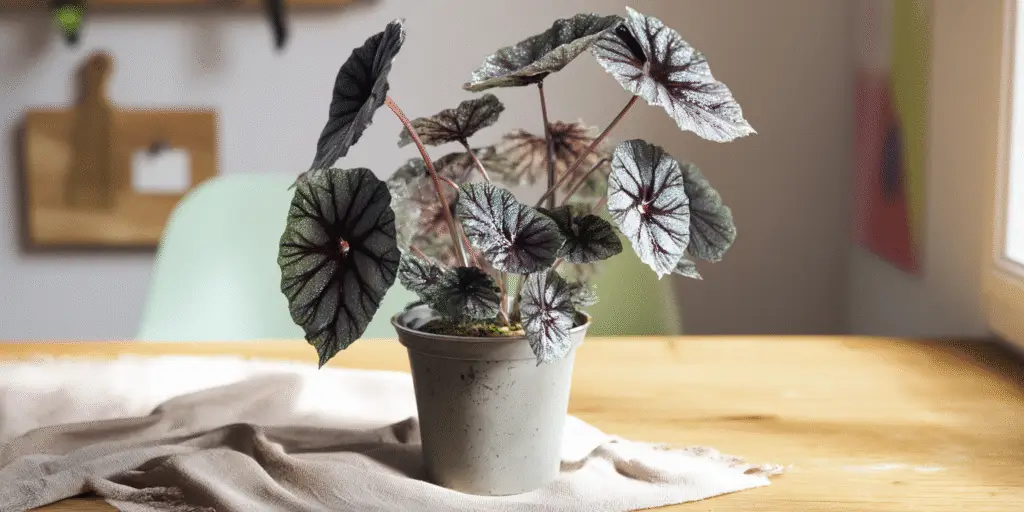
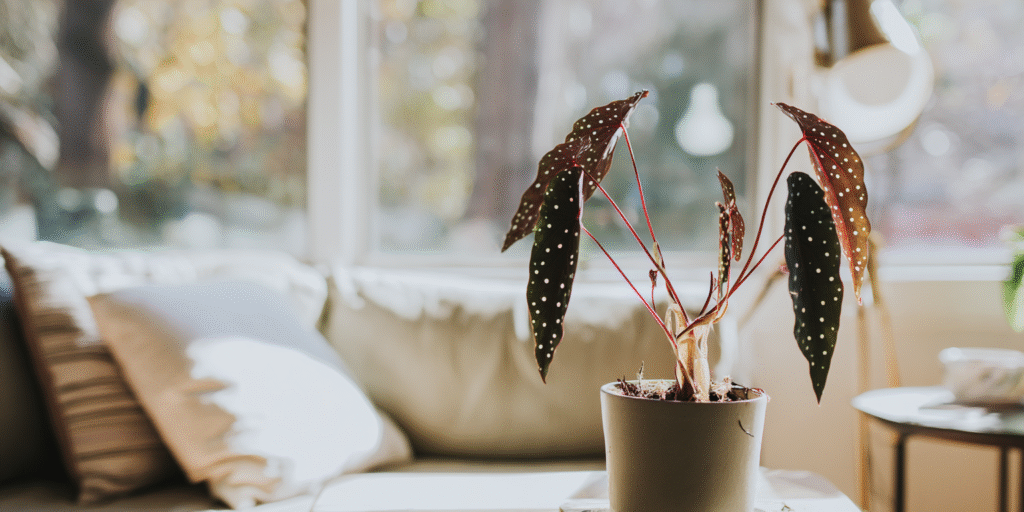
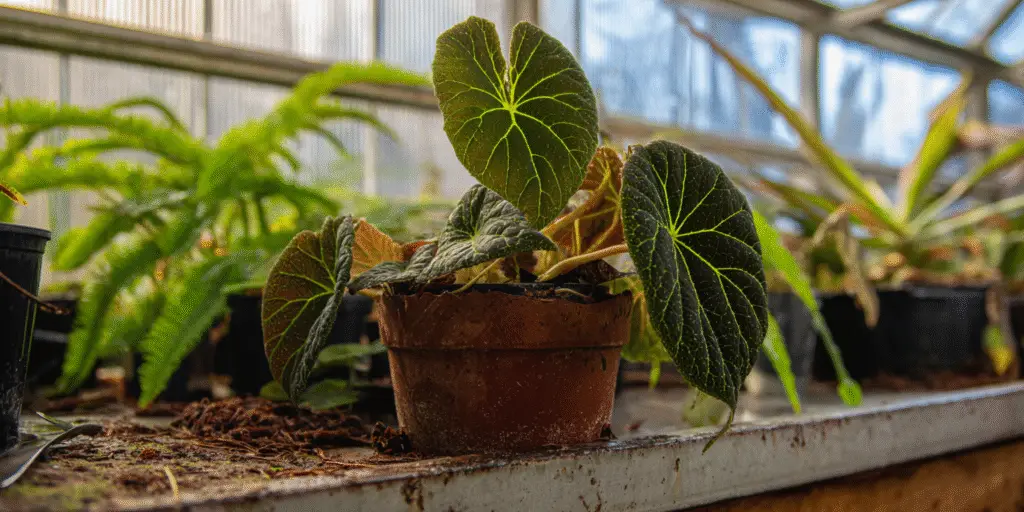
A cane‑type species prized for olive‑green leaves dotted silver above and red beneath. Pendent clusters of white to pale pink flowers appear mainly in summer. Plants develop tall, bamboo‑like canes and suit bright, indirect light indoors or shaded patios in frost‑free zones. In most of North America it is treated as a houseplant and appreciates even moisture, good drainage and airflow.
At‑a‑glance
Group/Class: Cane begonia (species)
Height × spread: 24-40 in × 12-20 in (60-100 cm × 30-50 cm)
Bloom window: summer
Color & flower form: Pendulous clusters of white to pale pink, single flowers
Fragrance: 0 none
USDA hardiness: grown indoors in most regions; outdoor only in zones 10-11
Breeder / Year / Origin: Raddi, 1820, Brazil (southeast)
Pet safety: avoid
How it differs
Cane‑forming habit with upright, segmented stems.
Spotted foliage and red leaf undersides for strong visual contrast.
Taller stature than many begonias; may need staking indoors.
Flowers in clusters rather than large singles or doubles.
Strengths
Architectural foliage for indoor displays and shaded patios.
Responds well to pruning and stem‑cutting propagation.
Performs in bright, indirect light where many flowering plants struggle.
Care in one minute
Site: bright, indirect light; protect from hot sun.
Soil and pH: well‑drained potting mix; neutral to slightly acidic.
Water: keep evenly moist; let the top inch dry slightly between waterings.
Feeding: balanced liquid feed at low strength during active growth.
Grooming: pinch tips to branch; stake taller canes as needed.
Overwintering: grow indoors except in zones 10-11.
Watch‑outs
Leaves scorch in direct afternoon sun.
Powdery mildew risk in stagnant air; provide circulation.
Canes may flop without support as plants gain height.
Written by: Your Flowers Guide editorial team We are a small independent group of flower lovers who research and review each guide using trusted horticultural and educational sources. Learn more about us