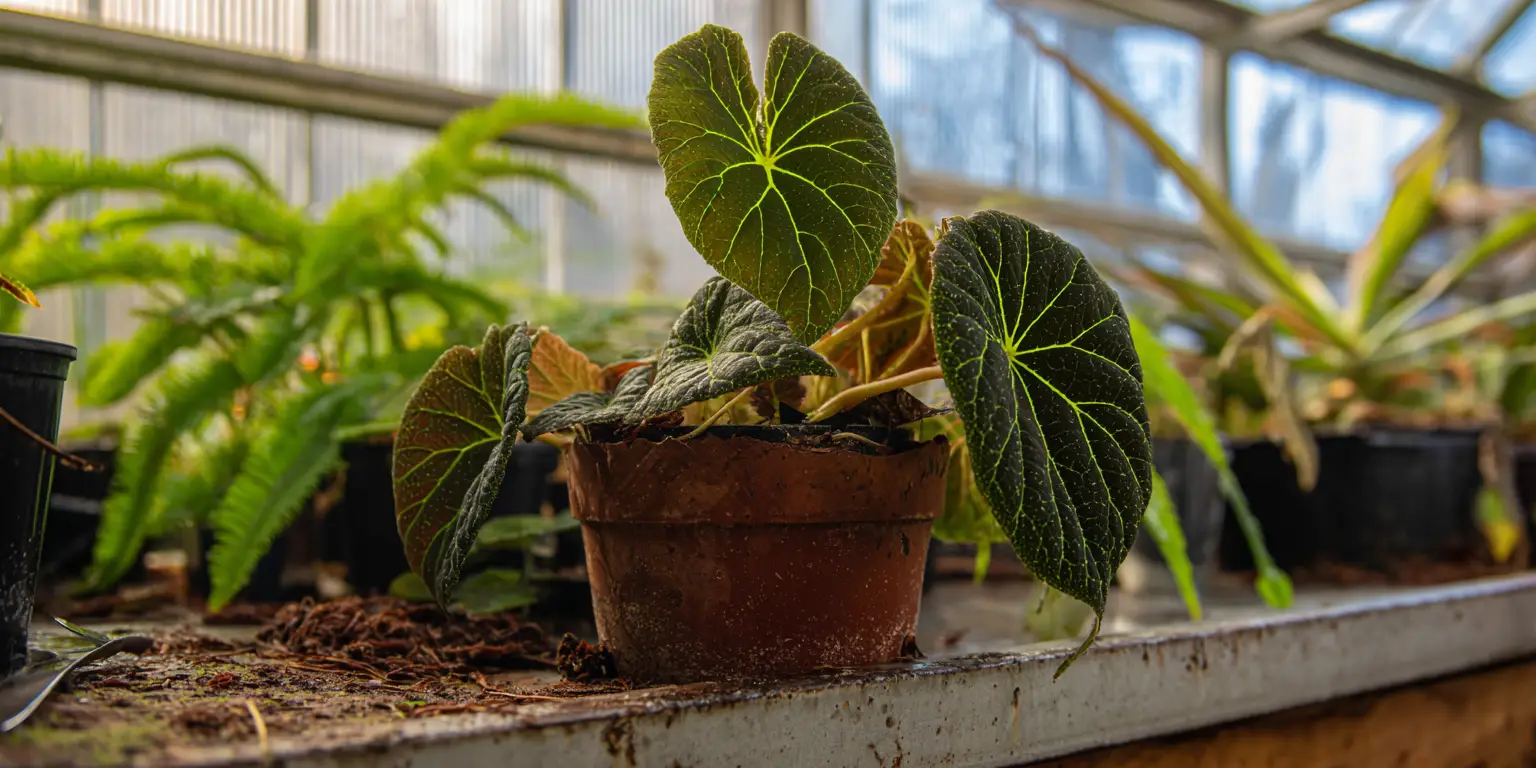
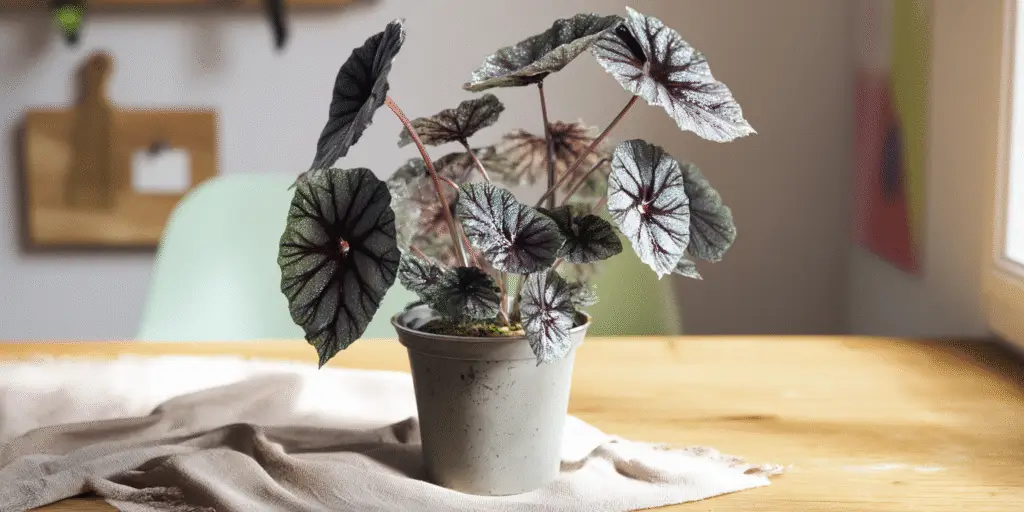
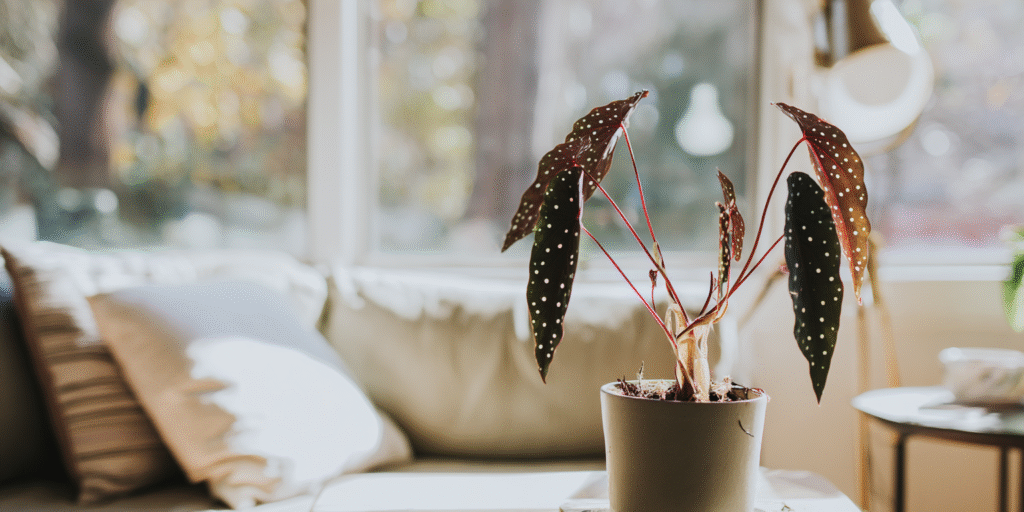
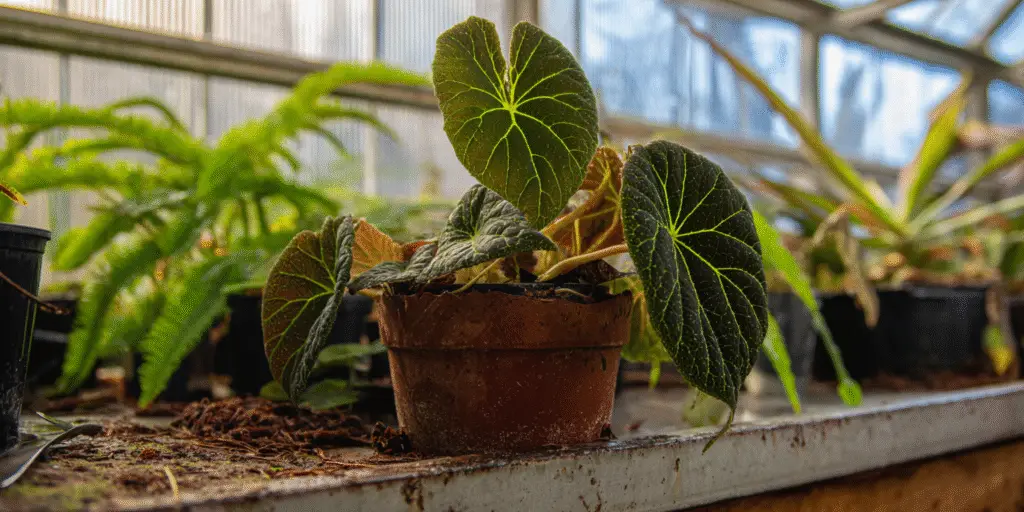
A rhizomatous species grown for puckered leaves marked with a dark cross. Plants stay compact and are usually kept as houseplants in North America. Greenish‑white flowers may appear in spring and summer, but the foliage is the main feature. Provide bright, filtered light, high humidity, and evenly moist but well‑drained media.
At‑a‑glance
Group/Class: Rhizomatous begonia (species)
Height × spread: 12-18 in × 12-18 in (30-45 cm × 30-45 cm)
Bloom window: spring to summer
Color & flower form: Greenish‑white cymes; leaves bright green with dark cross
Fragrance: 0 none
USDA hardiness: zones 11-12 outdoors; otherwise grown indoors
Breeder / Year / Origin: Irmscher ex Ziesenhenne, 1971, China to Vietnam (wild origin)
Pet safety: avoid
How it differs
Textured leaves with a distinct dark cross, unlike most begonias.
Rhizomatous habit; spreads slowly from thickened stems at soil level.
Prefers high humidity and consistent moisture without waterlogging.
Often smaller and more compact than cane or tuberous types.
Strengths
Striking foliage effect with compact habit.
Performs indoors where bright, indirect light is available.
Tolerates division; propagates from rhizome pieces.
Care in one minute
Site: bright, filtered light indoors or shaded patio in frost‑free areas.
Soil and pH: peat‑free, well‑aerated, well‑drained mix; neutral to slightly acidic.
Water: keep evenly moist in growth; let surface dry slightly between waterings.
Feeding: light, regular feeding during spring and summer.
Grooming: remove old leaves; divide rhizomes to rejuvenate clumps.
Overwintering: grow indoors except in zones 11-12.
Watch‑outs
Frost tender; temperatures below 55°F can injure plants.
Powdery mildew and leaf spots if foliage is kept wet or air is stagnant.
Named for English plantsman Maurice Mason from plants introduced to cultivation; later confirmed from wild populations in southern China and northern Vietnam.
Written by: Your Flowers Guide editorial team We are a small independent group of flower lovers who research and review each guide using trusted horticultural and educational sources. Learn more about us