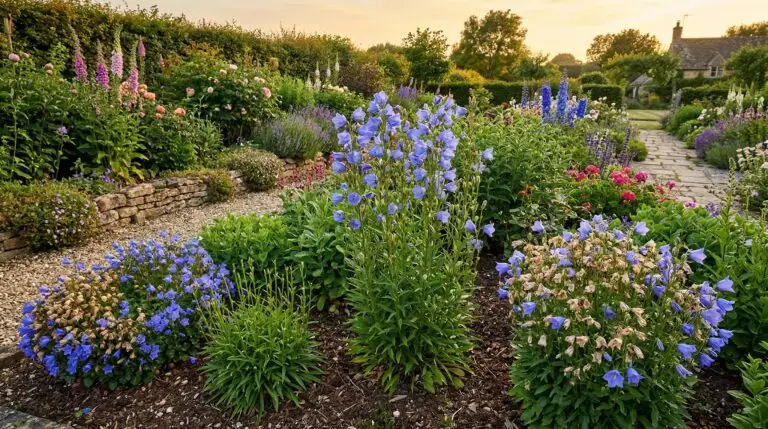
Long before these flowers found their way into American cottage gardens, their name echoed along the dusty pilgrimage routes of medieval England. Travelers riding toward the shrine of Thomas Becket in Kent attached small bronze bells to their horses to keep pace and ward off the quiet of the road. When English gardeners noticed a native European biennial with swelling, cup-shaped blooms that perfectly matched the shape of those horse bells, they gave the plant a name that would last for centuries. The Canterbury bell became a staple of the Elizabethan garden, prized for its tall spikes and generous, hollow blooms. European settlers eventually packed these tiny seeds into their trunks when they crossed the Atlantic. They planted them near their new front doors to recreate the familiar borders of home. Today, growing Canterbury bells offers a rare connection to that deep horticultural past.
The modern gardener is often conditioned to expect immediate gratification from a packet of seeds, but this plant operates on an older, slower rhythm. Canterbury bells belong to a specific class of flowers known as biennials, meaning they require two full growing seasons to complete their life cycle. A seed planted in the first year will only produce a low, unassuming cluster of leaves. The plant spends its entire first summer and autumn gathering energy from the sun and building a substantial root system deep within the soil. It asks for patience, quietly occupying a corner of the garden while annuals flash and fade around it. The real reward comes only after the plant has endured the cold of winter. This two-year commitment weeds out the impatient, leaving the tall bloom spikes to those willing to wait.
Sowing seeds in the warmth of summer
The story of a Canterbury bell begins in the heat of midsummer, long after the spring planting rush has ended. Starting campanula medium seed requires little more than a patch of fine, well-draining soil and a gentle hand. The seeds are remarkably small, resembling fine dust, and they need light to germinate properly. Instead of burying them, a gardener must simply press them onto the surface of the moist earth. A light mist of water settles them into place without washing them away. Over the next two to three weeks, tiny green specks emerge, slowly developing into true leaves. The young seedlings prefer cooler locations with partial afternoon shade to protect them from the harsh late summer sun.
As autumn approaches, the seedlings transform into distinct basal rosettes. These rosettes look like flat, green plates resting directly on the soil surface. The leaves are slightly hairy and rough to the touch, designed to channel water down toward the central taproot. The plant is entirely focused on anchoring itself against the coming winter winds. Gardeners often thin the rosettes at this stage, giving each plant about a foot of space to spread out comfortably. Crowded plants will compete for nutrients and fail to develop the strong foundations needed for next year’s vertical growth.
Surviving the winter freeze
When the first hard frosts arrive, the Canterbury bell stops growing entirely and enters a state of deep dormancy. The green leaves often turn a dark, bruised purple under the stress of freezing temperatures. Overwintering young plants is a passive process, though a loose layer of straw or pine boughs helps insulate the crown from cycles of freezing and thawing. The roots remain alive beneath the frozen crust, waiting for the days to lengthen. Just like a foxglove, another classic biennial of the cottage border, the Canterbury bell requires this period of cold vernalization to trigger its flowering mechanism. Without the winter chill, the plant would simply remain a flat rosette forever.
The arrival of spring brings a sudden shift in the plant’s behavior. As the soil warms and the snow melts away, the dormant crown pushes out fresh, bright green foliage. The plant abandons its horizontal growth habit and begins to build a thick, sturdy central stalk. This stalk rises rapidly, often growing several inches a week during the damp days of April and May. The energy stored carefully over the previous summer is now entirely directed upward. The stem thickens to support the weight of the coming buds, developing a ridged, almost woody texture near the base.
The reward of tall bloom spikes
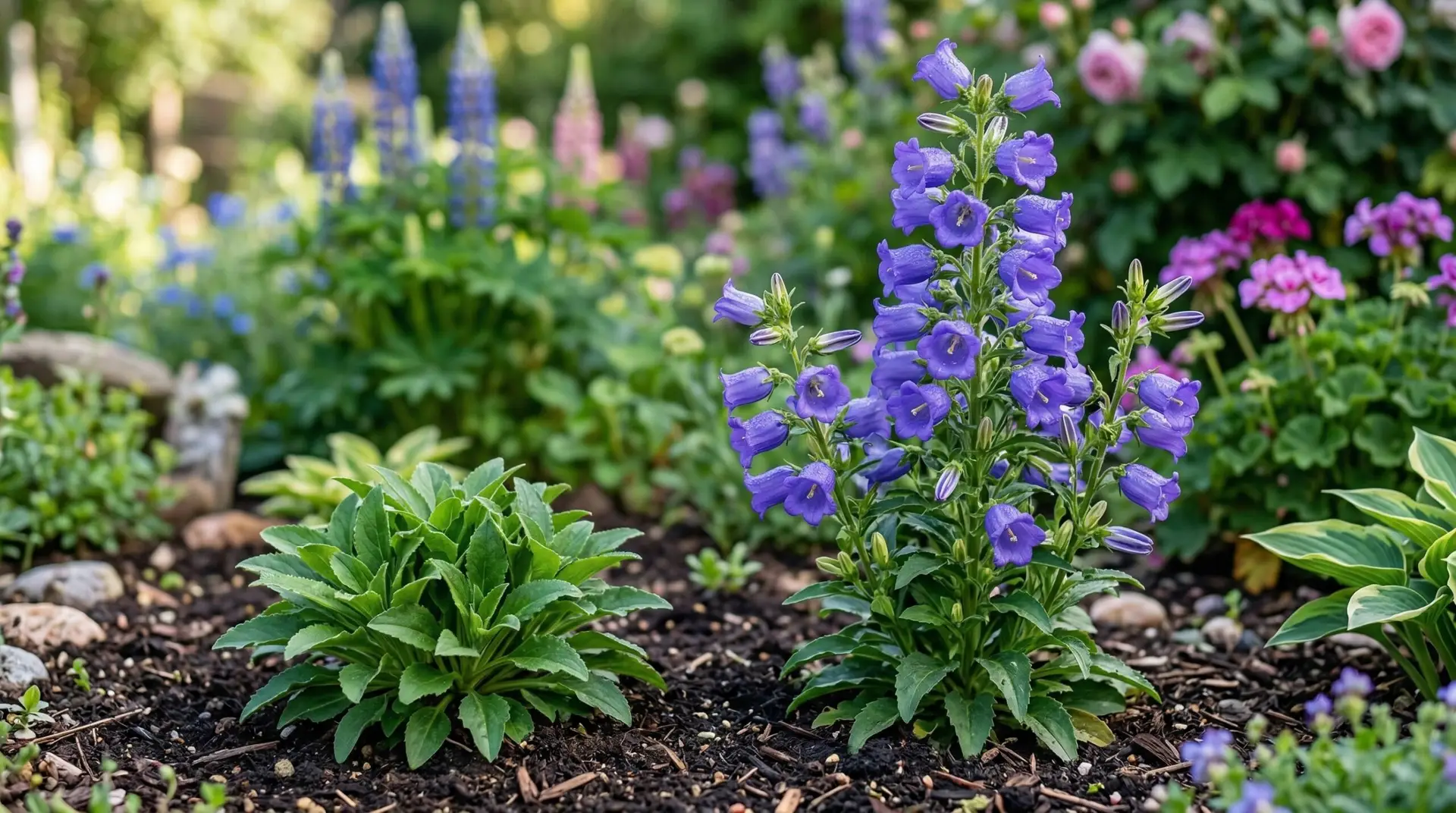
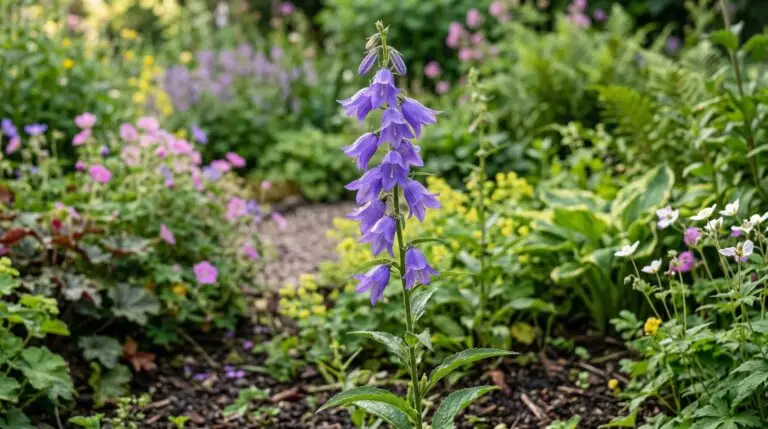
Achieving tall bloom spikes requires attentive watering during this rapid spring growth phase. The soil must remain consistently moist but never waterlogged, as drought will stunt the stalk and reduce the final flower count. By early summer, the central stem can reach three feet in height, heavily loaded with tightly furled buds. Because the blooms are so large and densely packed, the top-heavy stalk often requires staking to remain upright. A simple bamboo cane and a loop of soft twine, tied gently beneath the lowest buds, will keep the plant from toppling during heavy rainstorms. This vertical presence adds a strong architectural element to the garden, much like the rigid, colorful spires of a snapdragon border.
The flowering finally begins in early summer, precisely one year after the seeds were sown. The buds swell into large, inflated bells that open from the bottom of the stalk upward. Many traditional varieties have a unique ‘cup and saucer’ shape, where a flattened ring of petals sits directly beneath the main bell. Colors include pristine white, soft pink, and the most iconic shade of deep, luminous violet-blue. This specific hue connects the plant visually to its wild relatives in the broader Campanula family, which carpet the alpine meadows of Europe. The hollow blooms create natural acoustic chambers for bumblebees, and you can often hear the low, resonant buzzing of trapped insects moving from flower to flower.
The display lasts for several weeks, especially if the gardener faithfully removes the faded bells before they can set seed. Eventually, the summer heat signals the end of the plant’s life cycle. The final blooms wither, and the remaining energy goes into producing dry, papery seed pods. The original stalk turns brown and brittle, completing its two-year purpose. A gardener can cut the main stalk down to the ground to tidy the bed, or leave it standing to allow the seeds to scatter on the wind. Letting a few plants self-seed ensures a continuous supply of new rosettes for the following year.
Planting a biennial is an act of faith in the future of the garden. You press a speck of dust into the hot summer soil, knowing you will not see a single flower until the earth has completed a full rotation around the sun. The wait makes the eventual appearance of those massive, ringing blooms feel less like a given and more like an earned reward. When the wind catches the tall stalks on a June afternoon, the nodding flowers still evoke the gentle rhythm of a horse walking a long, ancient road. The garden becomes a place where time slows down, measured not in days, but in the slow, deliberate turning of seasons.
More About Bellflower
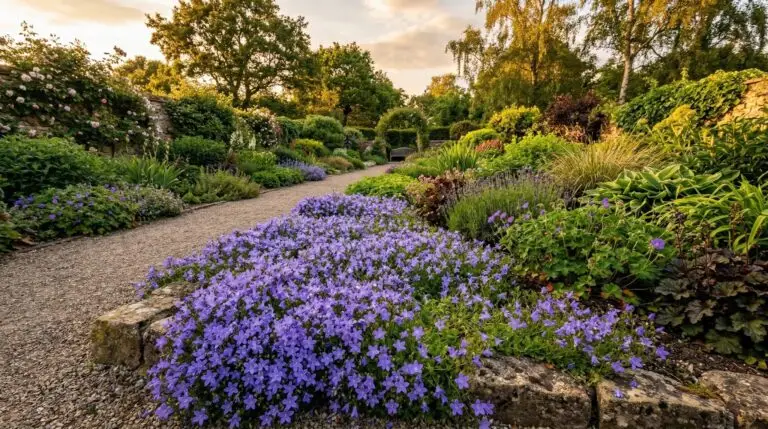
Bellflower ground covers that spread beautifully between stepping stones and rock walls
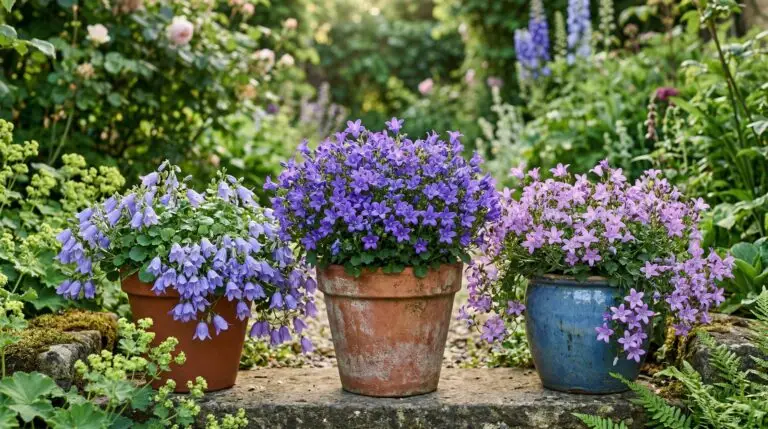
Growing bellflowers in containers for balconies and small urban gardens
How to control invasive bellflower that has taken over your garden beds