Taxonomy and origin
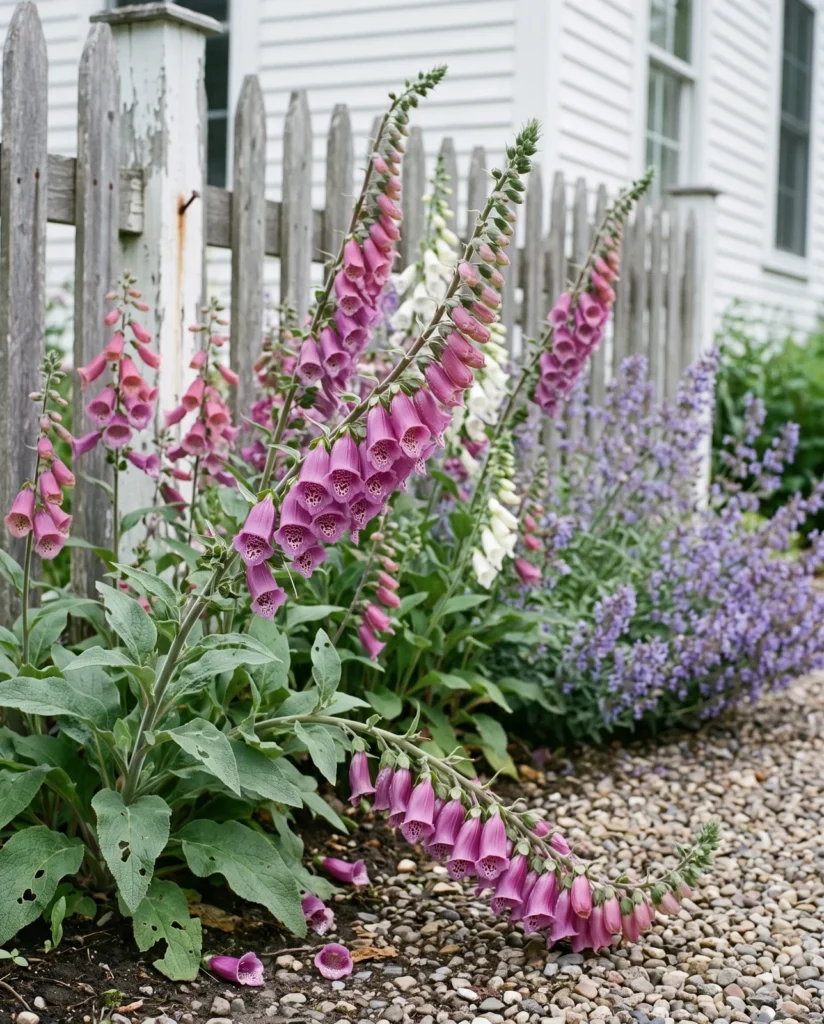
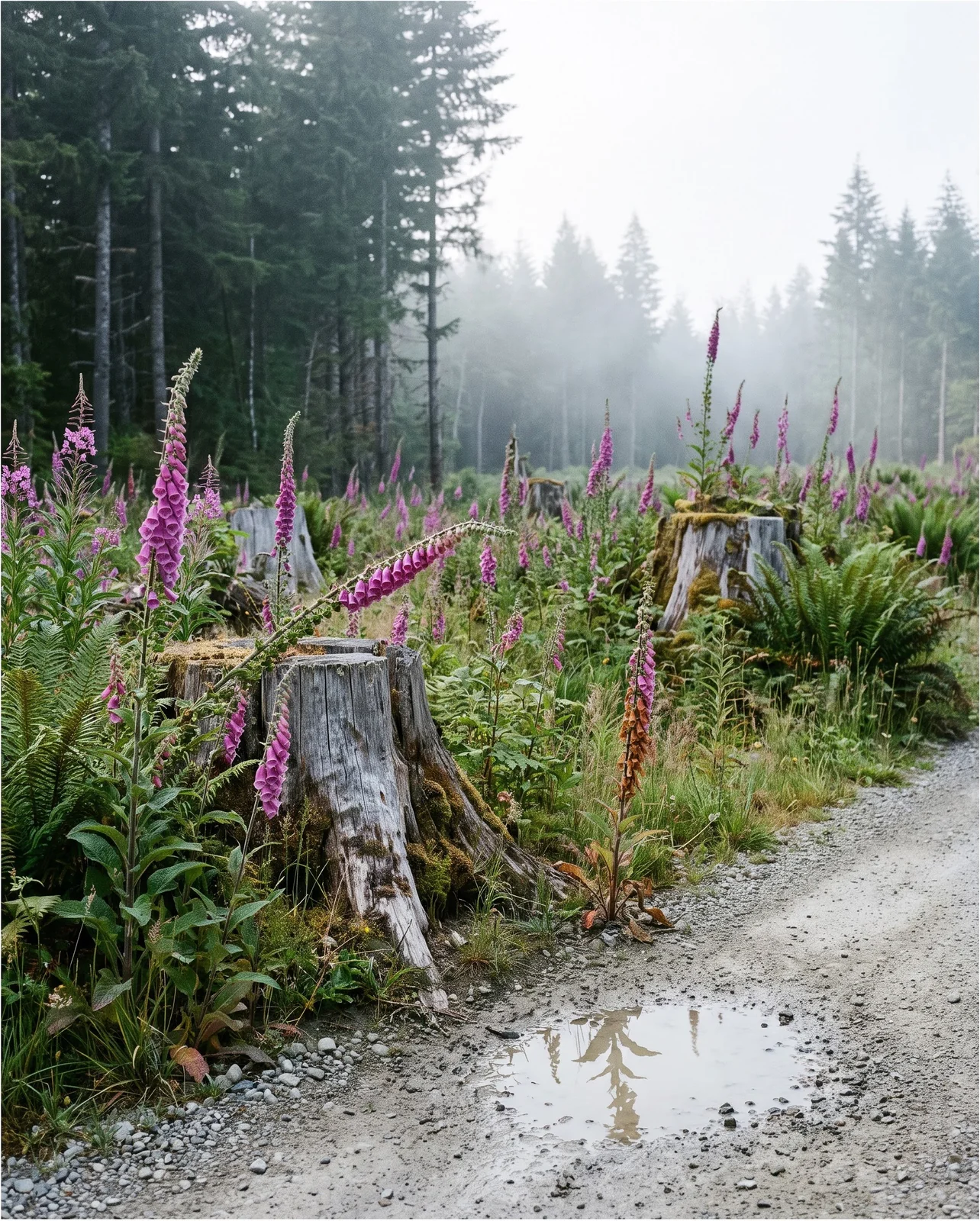
Foxglove is a group of about 20 species in the plantain family, Plantaginaceae, and the one behind nearly every garden spire is common foxglove, native to western Europe and Morocco. In the wild it takes woodland clearings, mountainsides, and above all disturbed ground, so it lines roadsides far outside its home range. Digitalis is Latin for finger, after the shape of the flower; purpurea is Latin for purple. The English name says the same thing in plainer words: a single bloom looks like the snipped off finger of a glove. Older country names stuck to it too: fairy gloves, fairy bells, lady's glove, and dead man's bells.
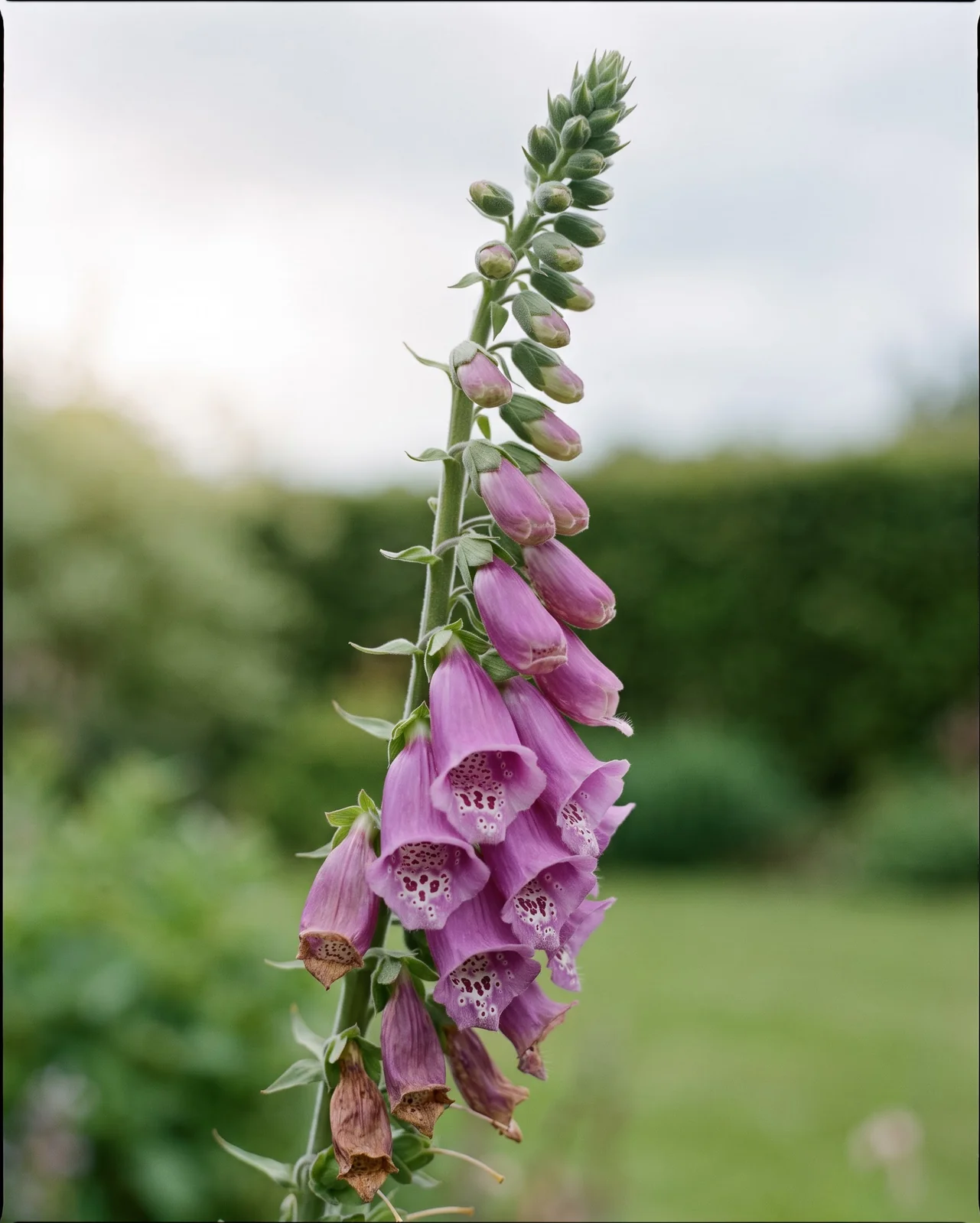
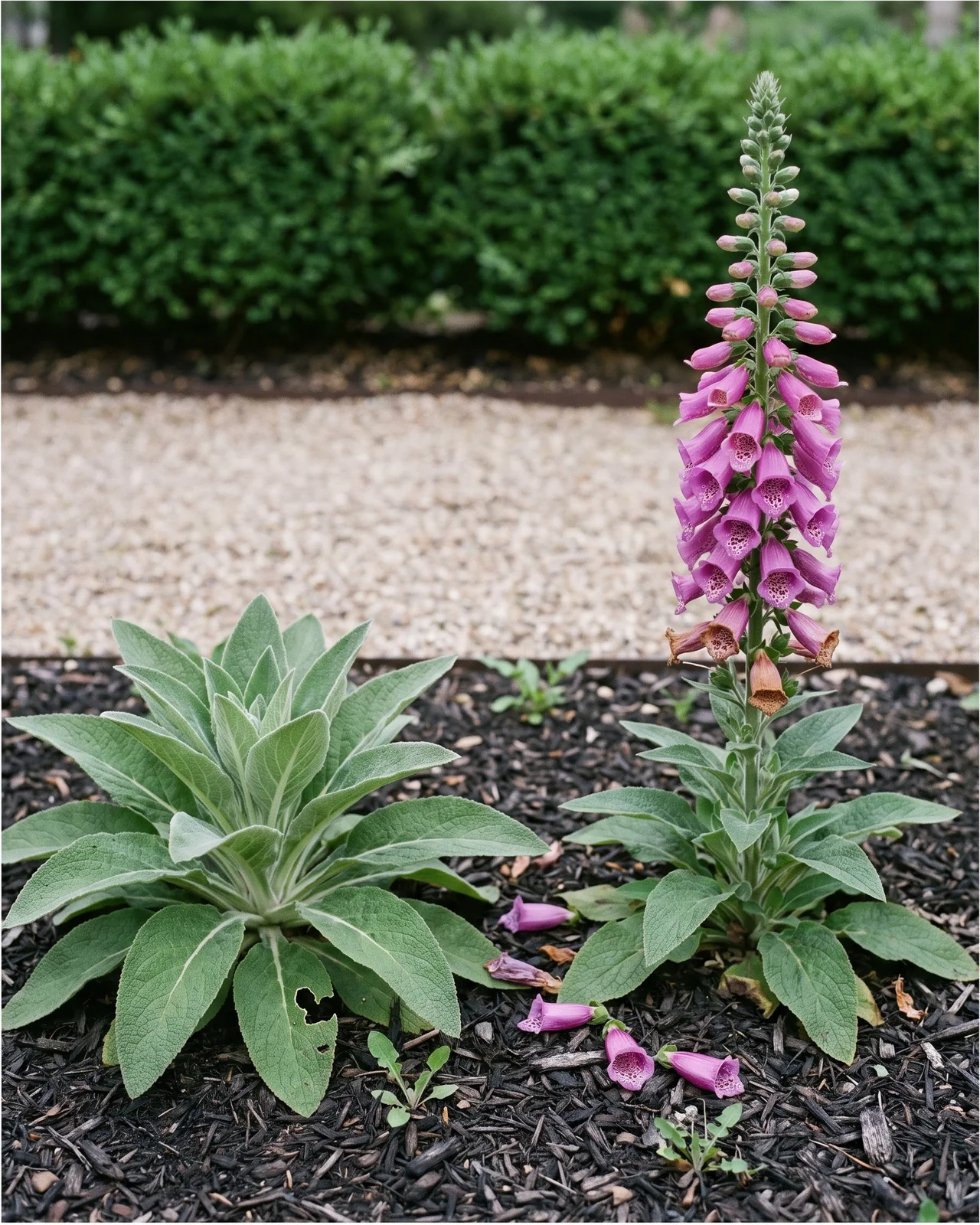
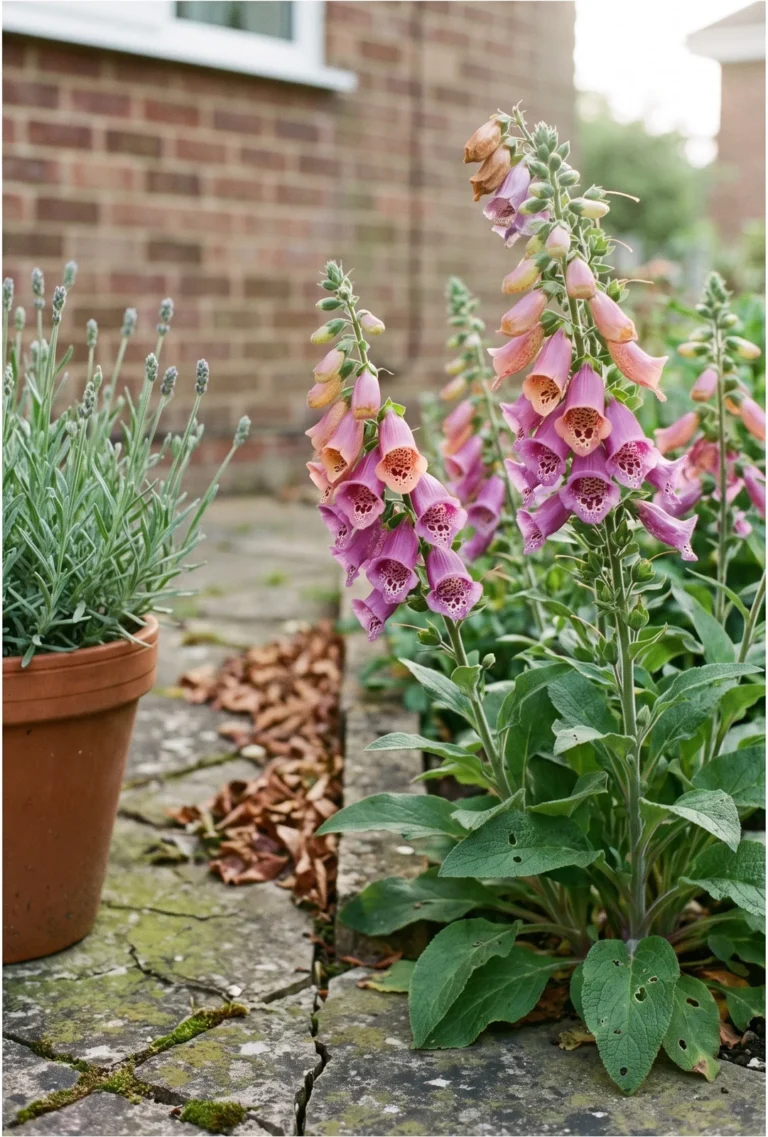
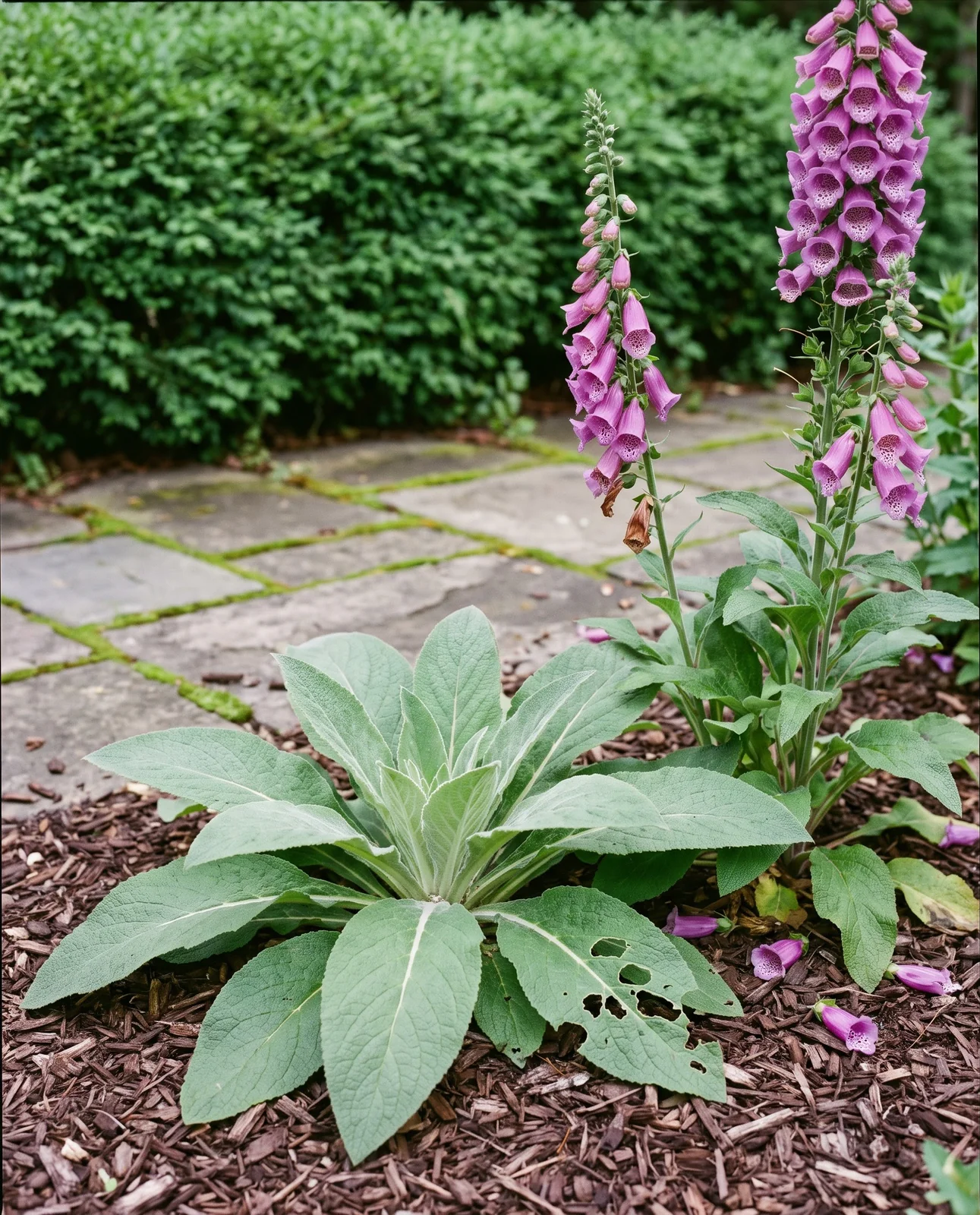
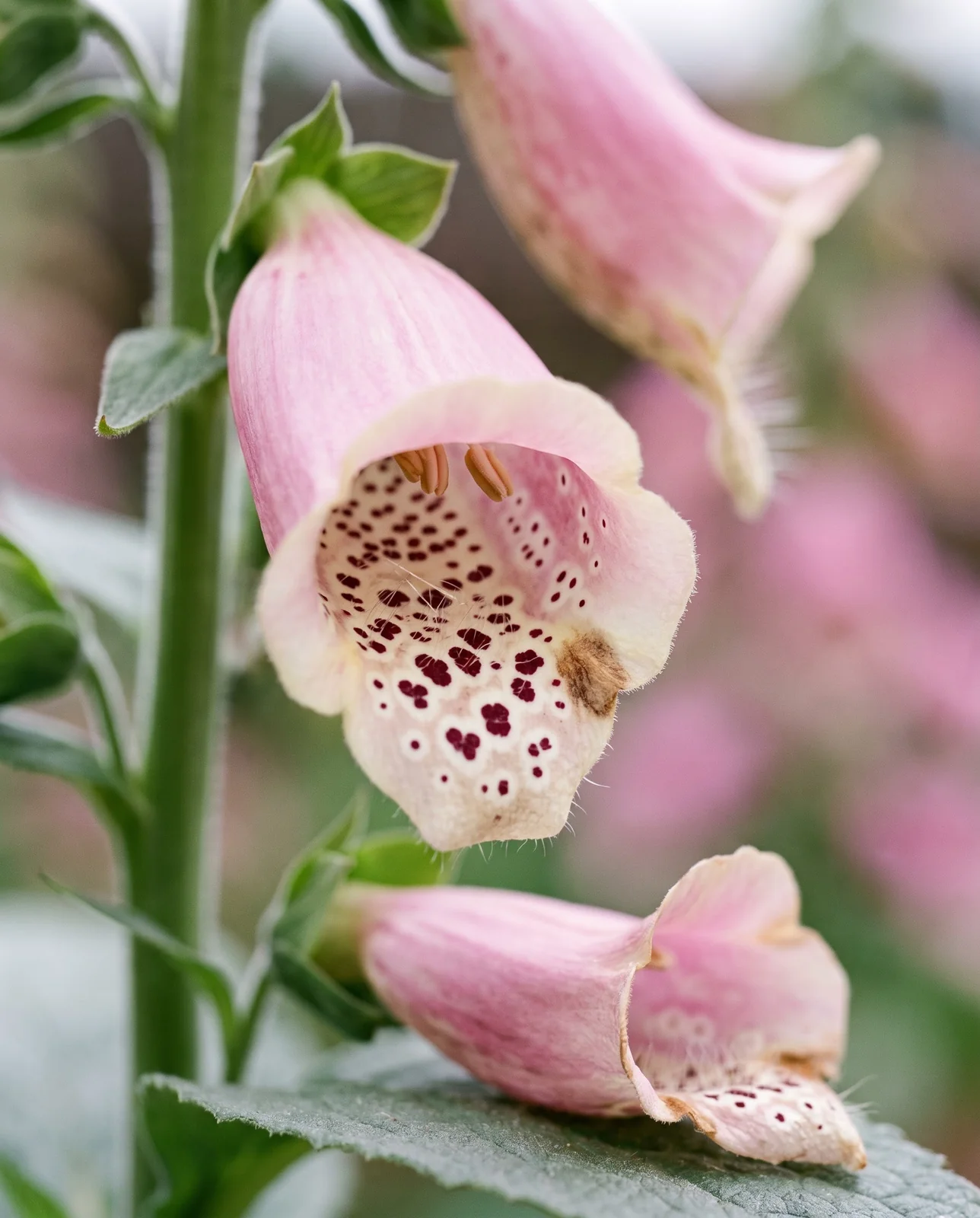
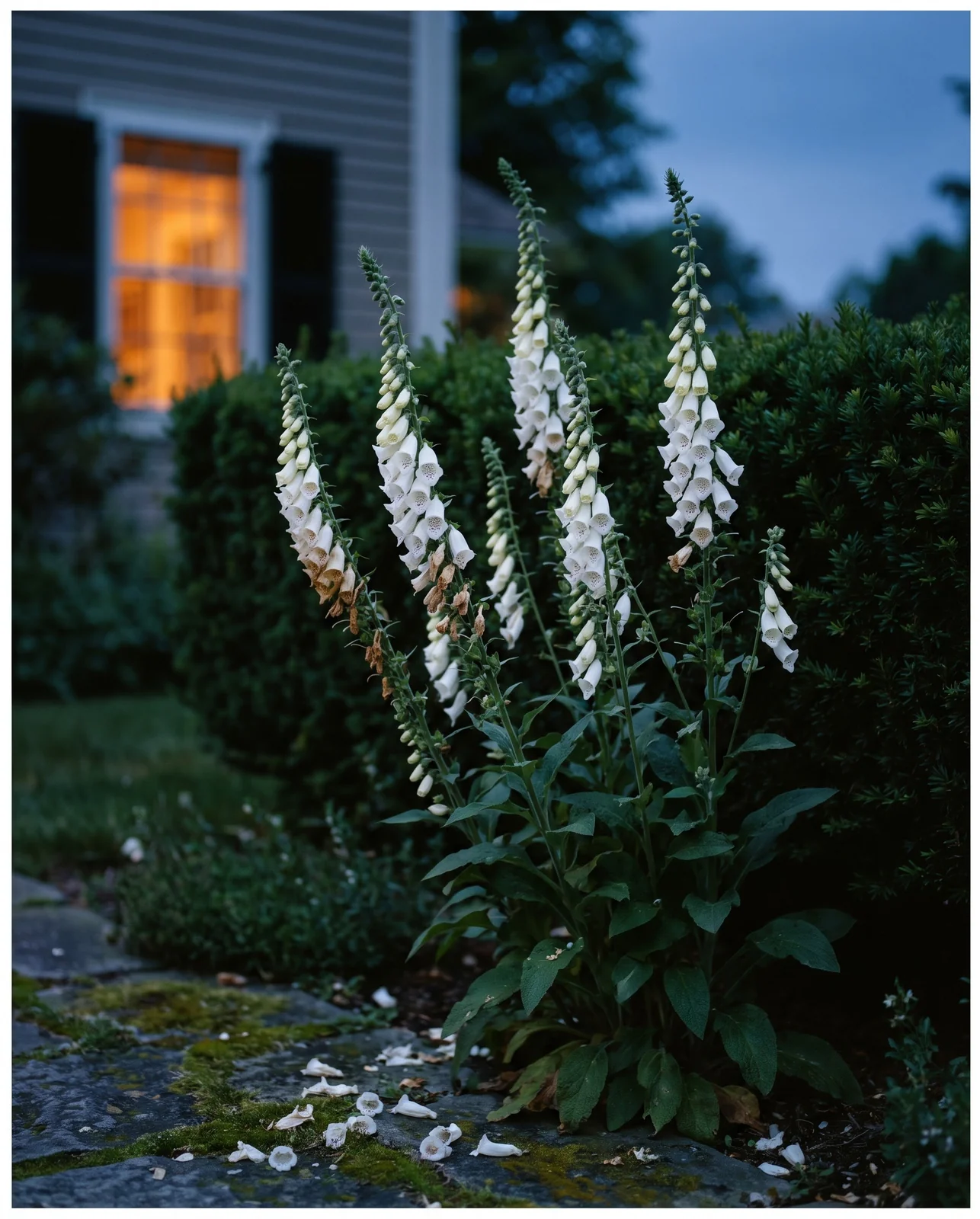
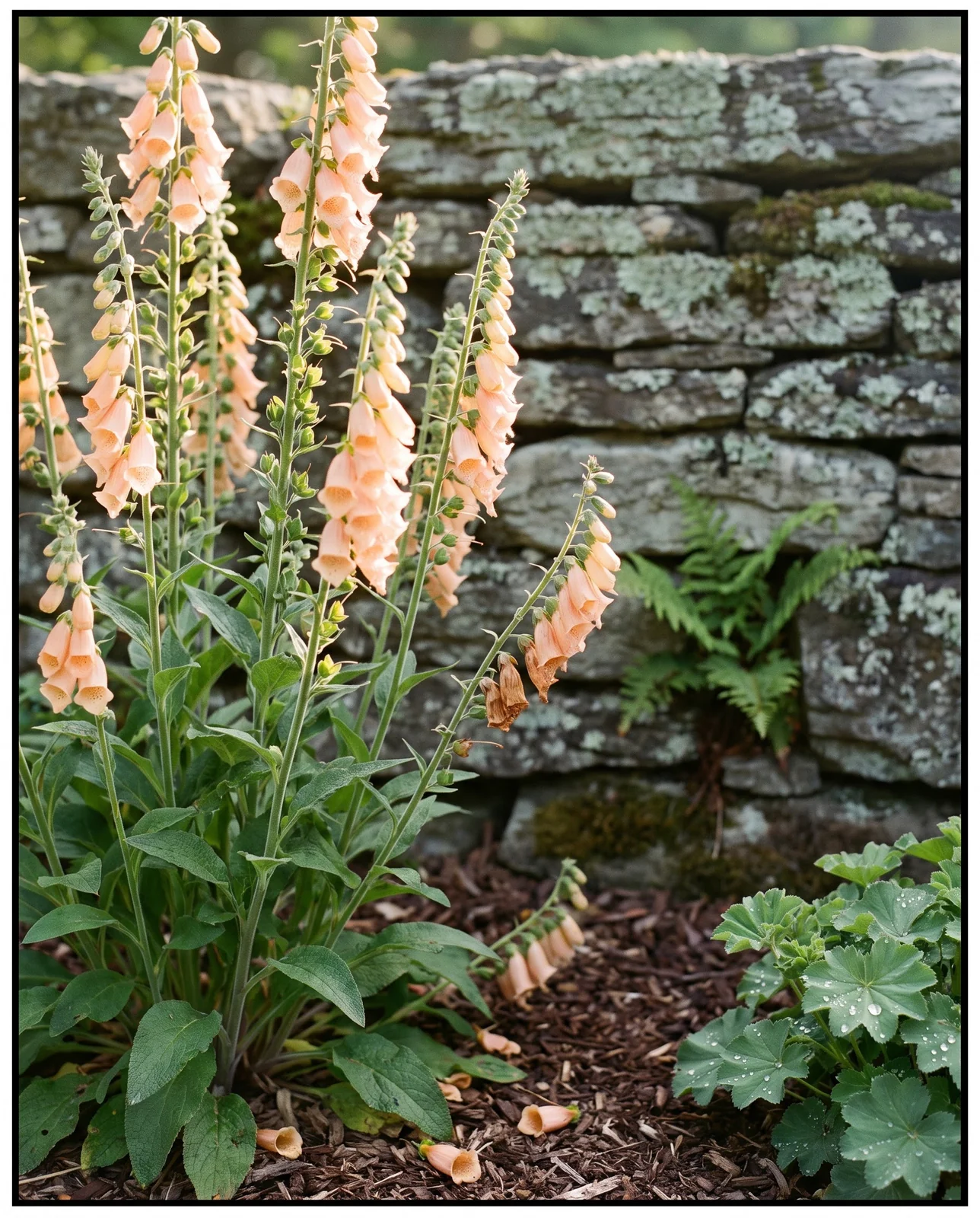
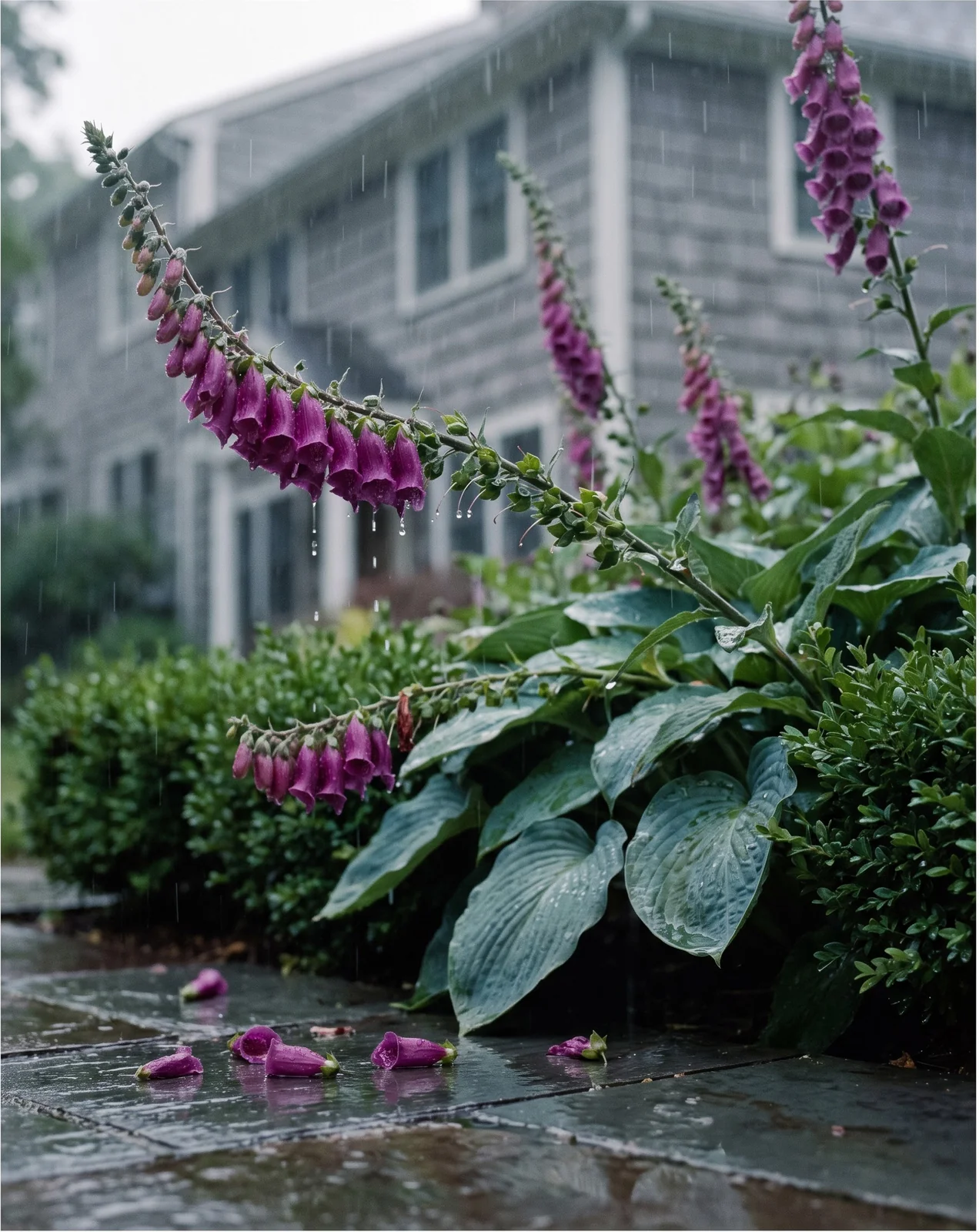
Low down sits a rosette of soft, downy leaves; out of its center rises a leafy spire of large, pendulous, funnel shaped bells. The leaves are alternate and reach up to a foot long, gray white and downy above, woolly or hairy below. The bells face downward, lined up along one side of the stem in the wild species and spiraled right around it in some cultivars. Each corolla runs 1.5 to 3 inches long and carries long hairs inside. Heavy dark purple spotting edged with white marks the lower lip, the landing platform for a bee. After pollination each flower is replaced by a rounded capsule that splits and spills numerous small brown ridged seeds.
The plant reached medicine long before it reached most American gardens. William Withering published An Account of the Foxglove, and Some of Its Medical Uses in 1785. He drew on 156 of his own cases to show that the leaf worked against dropsy, the swelling that came with heart failure. He set down the two details that still describe the danger: the leaf worked in small, nontoxic doses, and its strength shifted with the plant's stage of bloom. The leaves are still the source of the drug, and digitalis is the active ingredient of digoxin and digitoxin. Digoxin strengthens a failing heart and slows the beat when the atria run too fast.
Bloom time
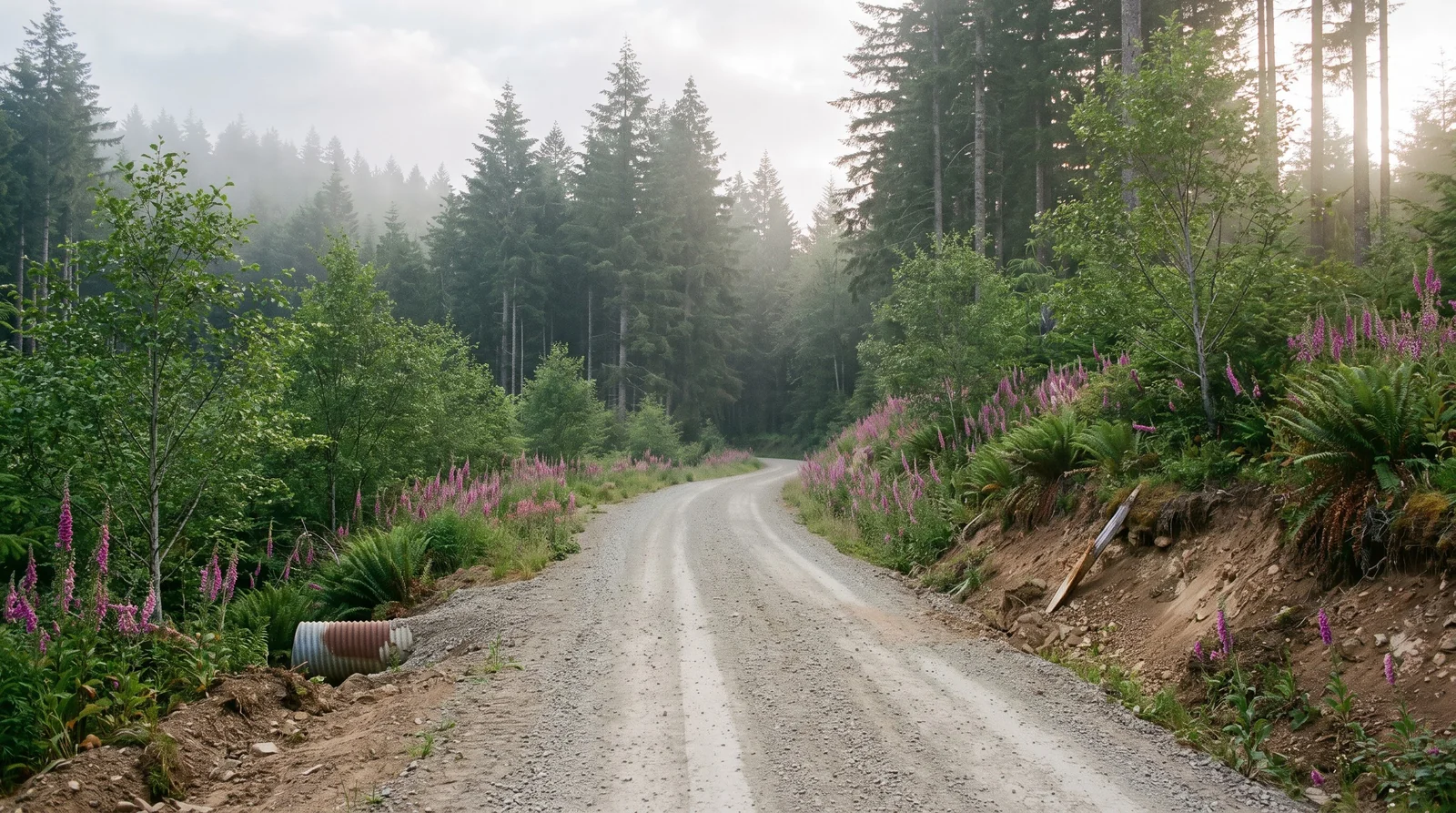
Foxglove flowers in late spring and early summer, May to June in most American gardens, about the time the first roses open. Each spike opens from the bottom upward and carries 20 to 80 flowers, so the top is still in bud while the lowest bells have gone over. A planting that holds several ages of plant carries bloom for months, and a cool growing season keeps it going until frost. Cut the first stalks off and some plants send up more later in the year. Yellow foxglove holds its spikes back to mid and late summer, so a bed carrying both keeps a spire standing from the roses through to the hottest weeks.
Toxicity and pet safety
Every part of foxglove is poisonous. Flowers, leaves, roots, and stems all carry cardiac glycosides, the chemicals that act on the heart, and any part of it can be deadly swallowed. Poisoning begins with the plant going into a mouth: sucking the flowers, or eating the seeds, stems, or leaves. What follows is nausea, vomiting, diarrhea, stomach pain, severe headache, a slow irregular pulse, tremors, unusual color visions, convulsions, and in the worst cases cardiac arrhythmias and death. The heart effects can be slow, delayed up to 8 to 12 hours, so a person who feels fine an hour afterward is not yet clear. Do not induce vomiting. If you are certain that part of the plant was swallowed, go to the emergency room. A man gathering wild greens picked about 12 young leaves in mistake for borage and cooked them into a sauce. He and his wife spent 2 nights in the hospital and were dizzy, with a low heart rate, for days afterward. Children are the group the warnings single out: the flowers and the seed capsules both draw them in.
Foxglove is toxic to dogs, cats, and horses through the same cardiac glycosides, and the signs are cardiac arrhythmias, vomiting, diarrhea, weakness, cardiac failure, and death. The Merck Veterinary Manual puts oleander and foxglove at the top of the cardiac glycoside plants, and says cats are more sensitive than dogs. Signs show within the first 2 hours and can last 4 to 5 days, and animals have died even under aggressive treatment. Handling is the smaller question: foxglove does not cause contact dermatitis, though the leaves can irritate sensitive skin, so wear gloves.
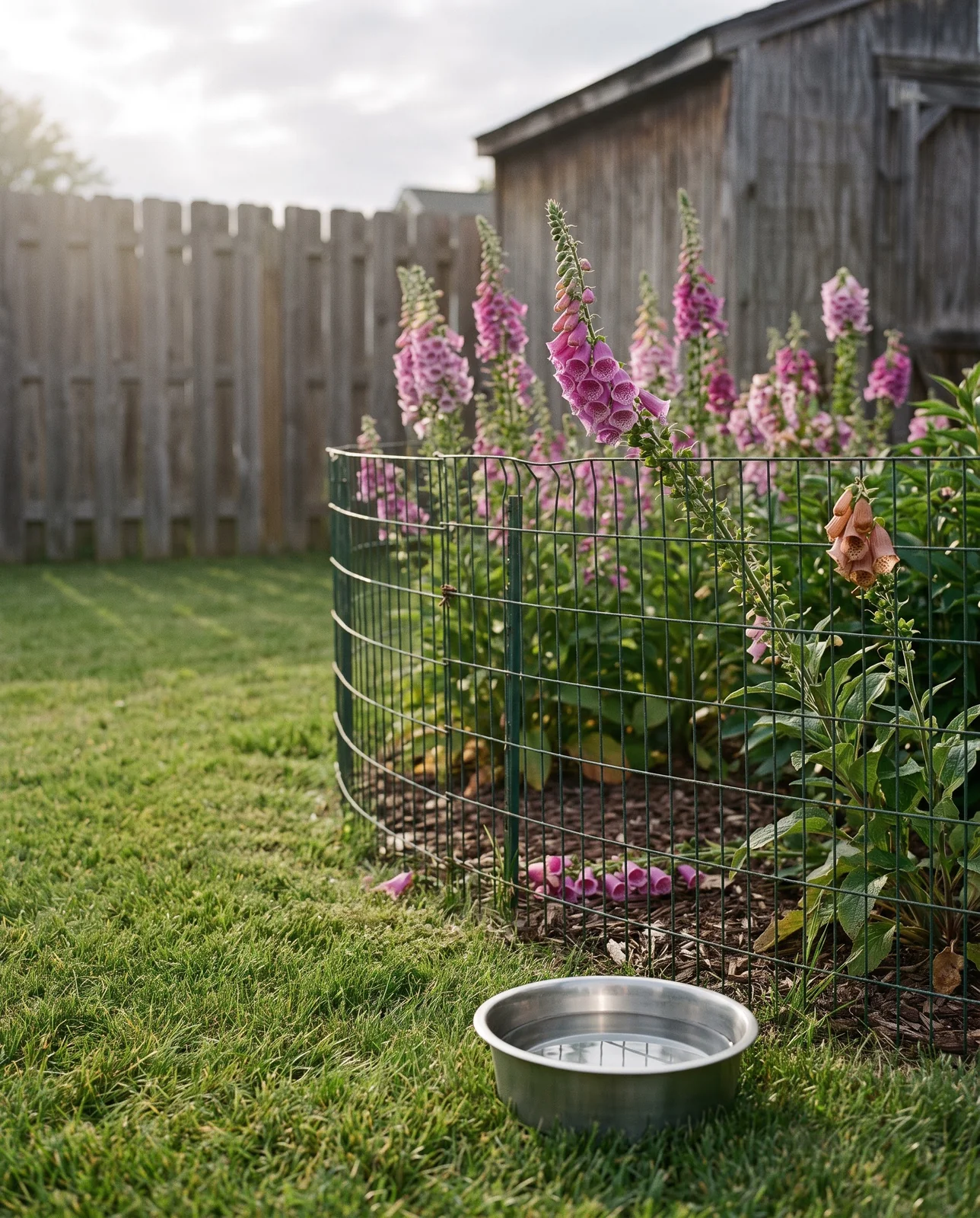
Whether it has to come out of the garden depends on who uses the bed. The strict answer is unqualified: do not plant foxglove where children or pets play. It is written for a plant standing within reach of a mouth, the exposure every poisoning case runs through. A border set back behind other planting, worked in gloves and followed by a hand wash, is a different proposition from a lawn edge patrolled by a puppy. Where a child or an animal can reach the bells, take the strict answer; where they cannot, foxglove is a border plant handled with gloves like any other. Where the bells have to go, snapdragon gives the border the same vertical line without them.
Does foxglove come back every year?
Common foxglove is a biennial: it lives two years. A rosette of foliage forms low to the ground in the first year, the flower spike grows out of that rosette in the second, and then the plant is finished. It does not always keep to that rule, and sometimes behaves like an annual and sometimes like a herbaceous perennial. A plant bought in flower is already in its second year, and that one summer is its whole remaining life. Biennial foxgloves die once they have flowered, so a display every year means sowing every year; skip a season and the spikes turn up in alternate years. What comes back in most gardens is the next generation. One plant can produce 1 to 2 million seeds, and they self-sow readily where conditions suit them. A colony holds its ground for years that way and passes for a long lived perennial, the way a hollyhock patch does. Tidy gardens lose it the opposite way: the seedlings meant to carry the planting forward get buried under mulch or pulled out with the weeds.
Some foxgloves are perennial in the ordinary sense. They live several years and can be divided every other year to stretch that further, though even then they last only a few years more than the biennials. Yellow foxglove manages 4 or 5 years. A third group skips the wait, the strains bred to flower in their first year from seed. Which of the three is in your pot is rarely printed on the label. Deadheading is the last hope people pin on a biennial. Cutting all the flowering stalks back to the basal foliage before seed sets can push a plant to act as a perennial. It works some of the time and not the rest, so keep back-up plants.
Foxglove types and which ones come back
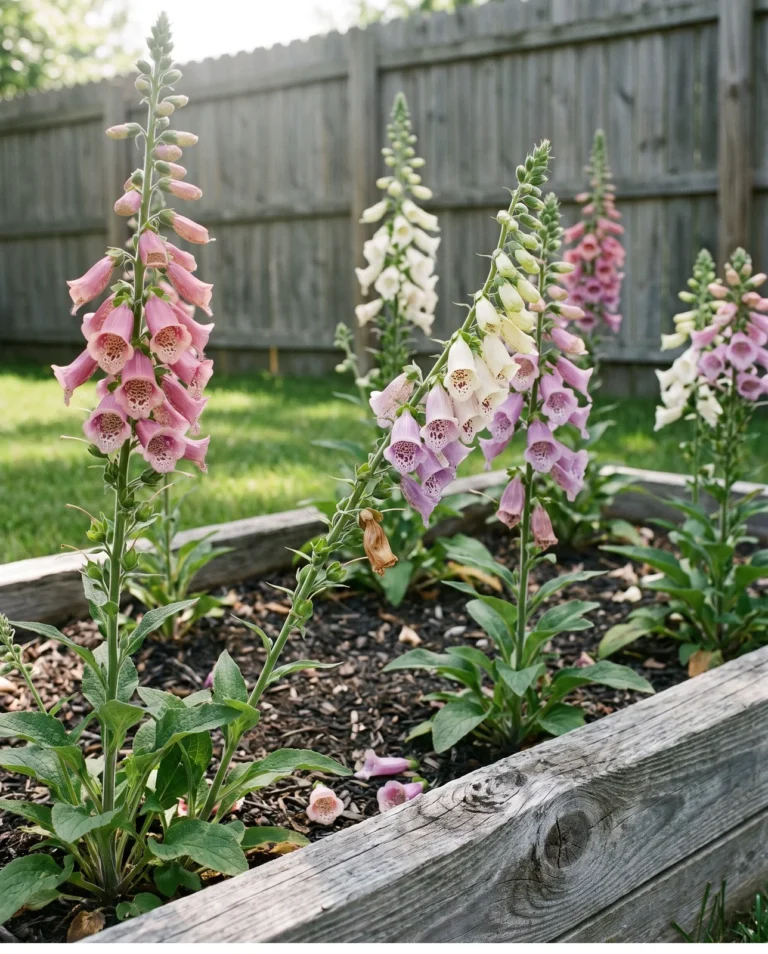
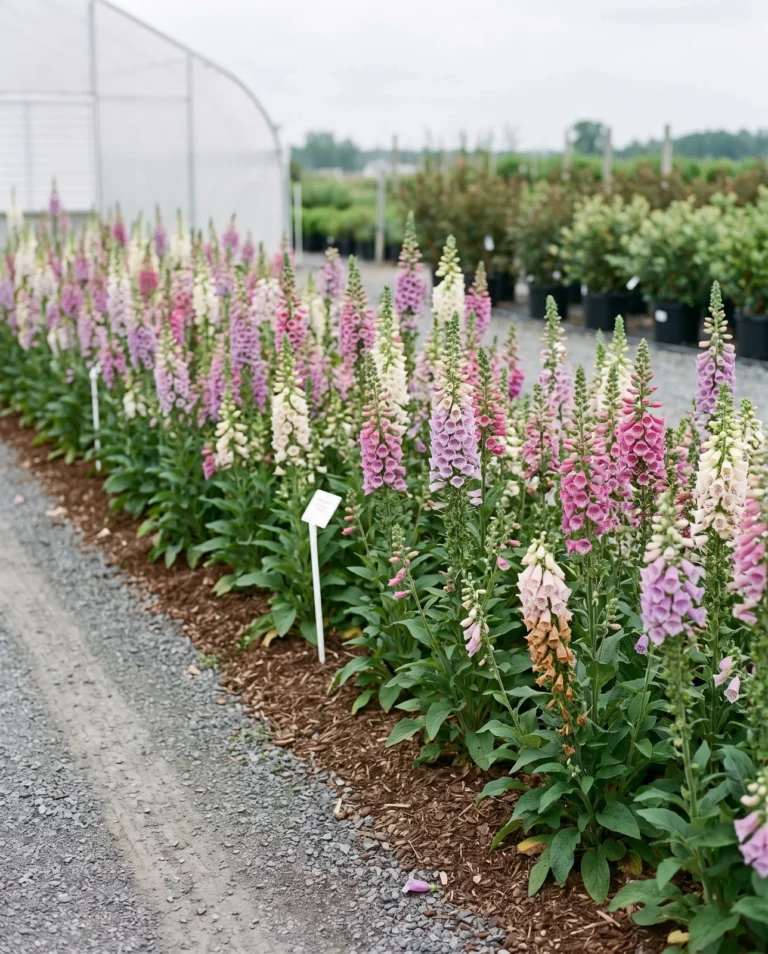
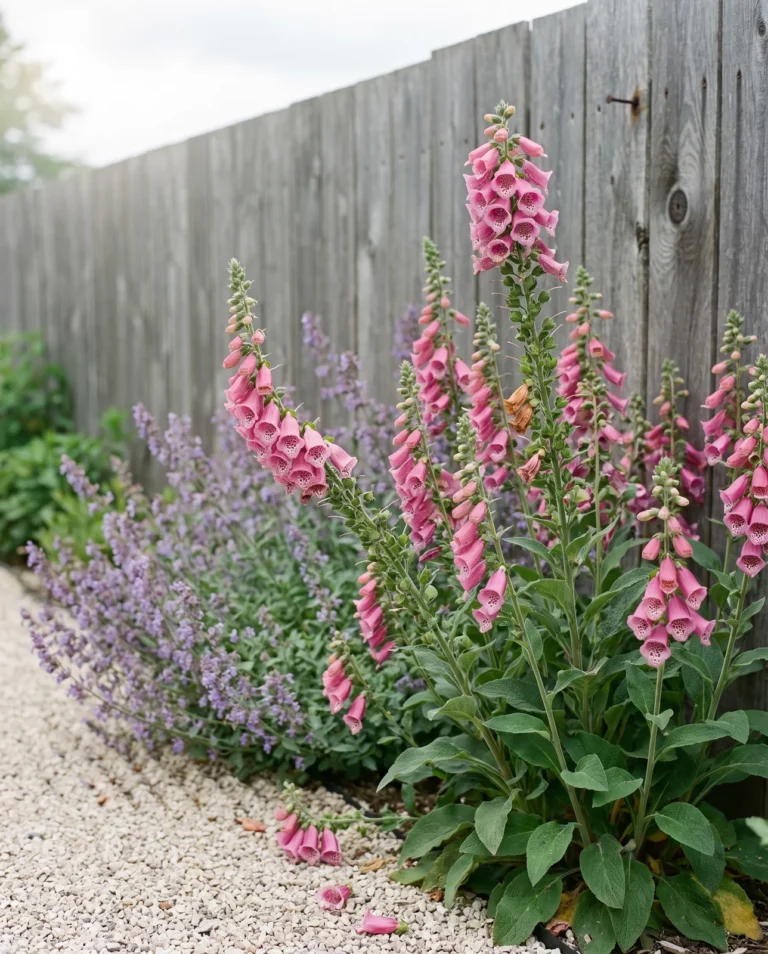
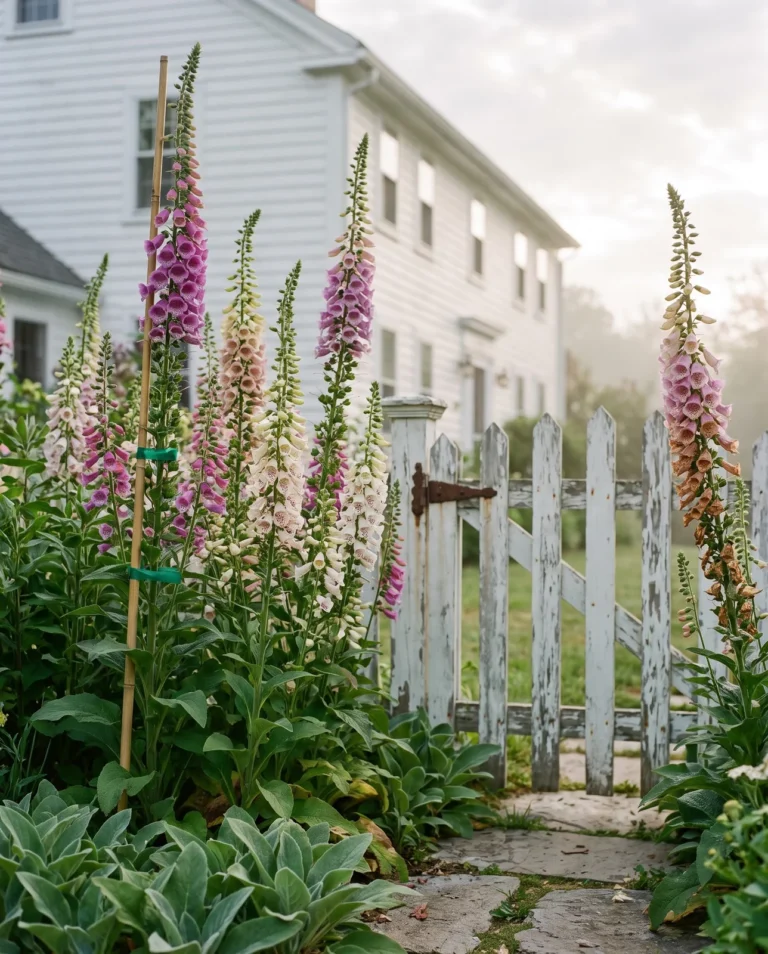
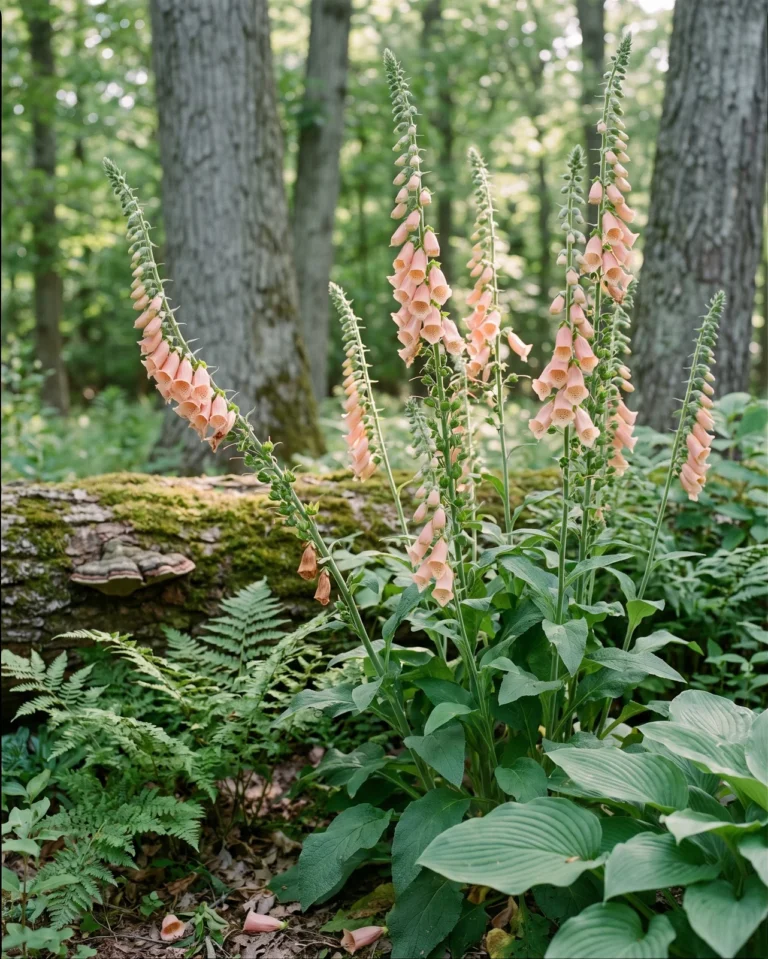
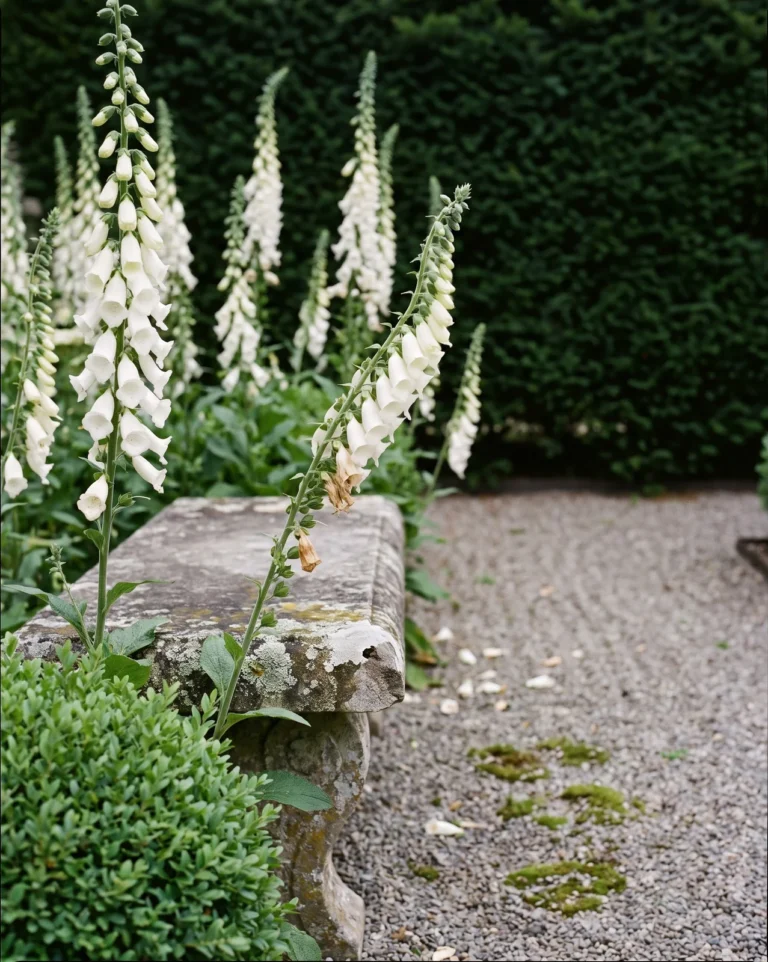
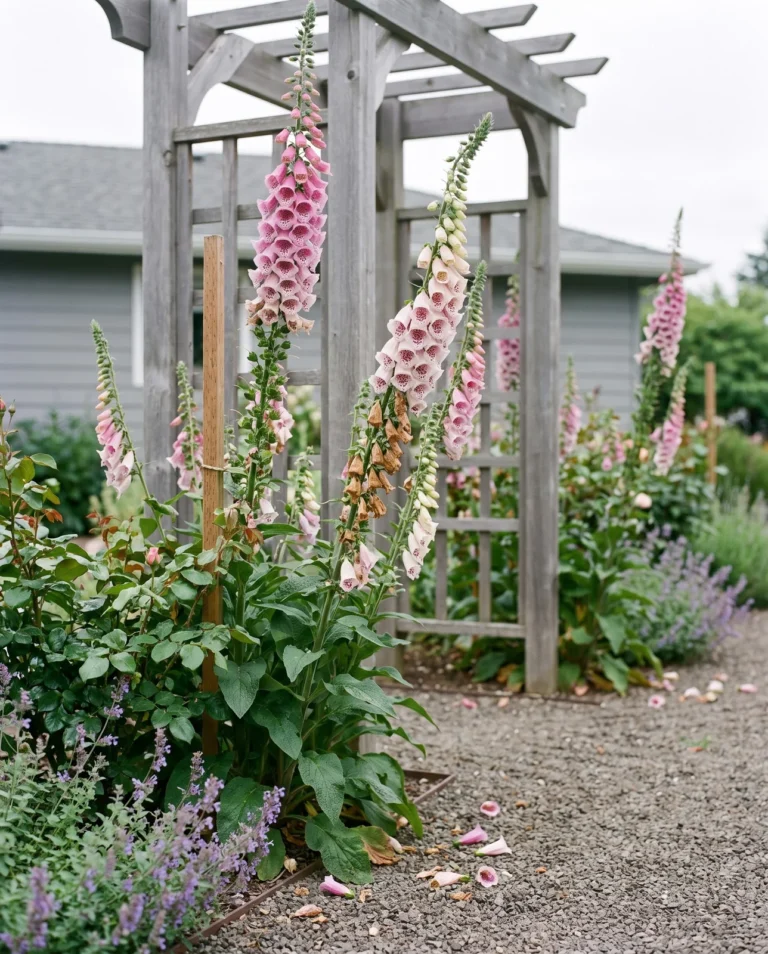
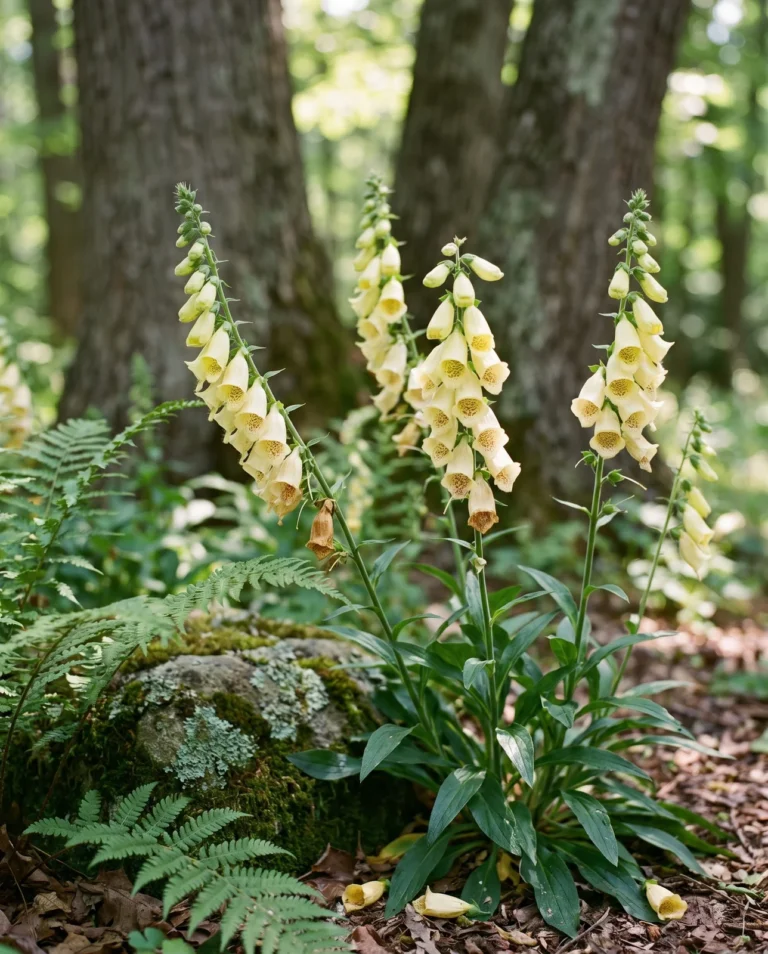
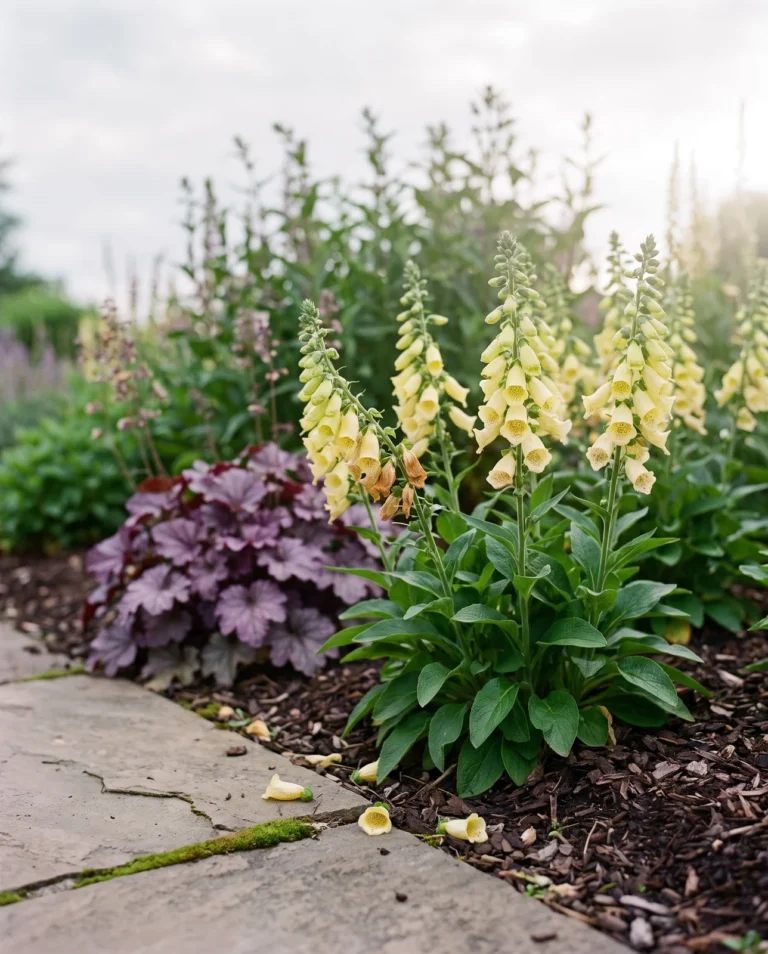
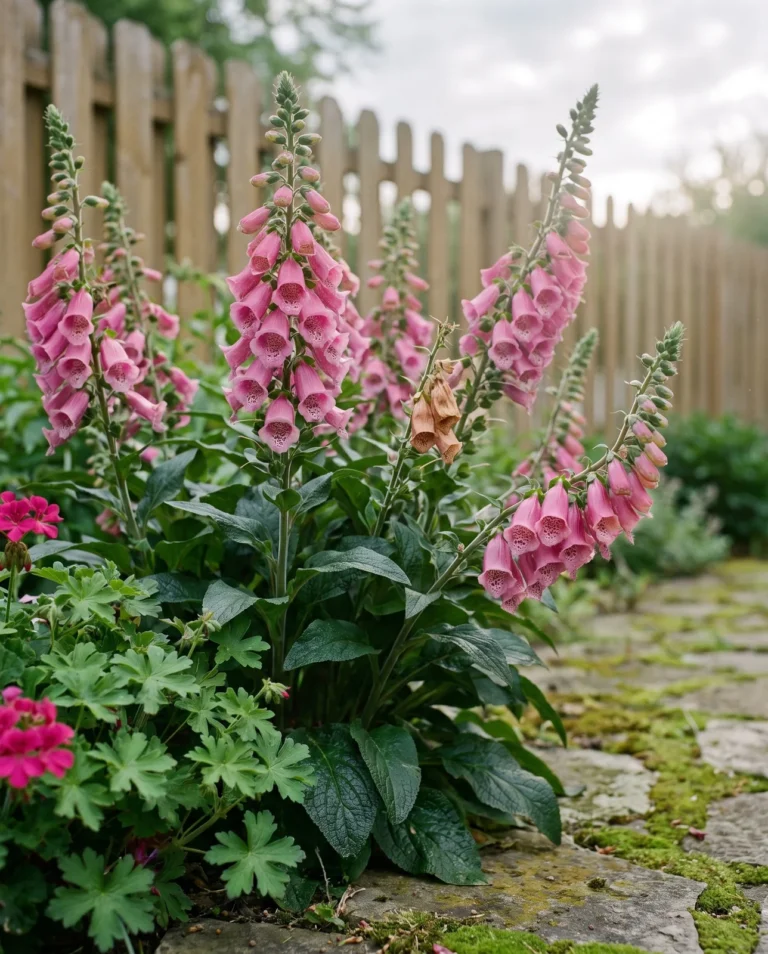
Color is the easy part: garden strains run from the wild purple through pink, peach, yellow, and white, most with the spotted throat. Life cycle is what to check before you buy, since some of these flower in their first year and others make you wait for the second. An unbadged card is a common foxglove on the biennial schedule.
Light
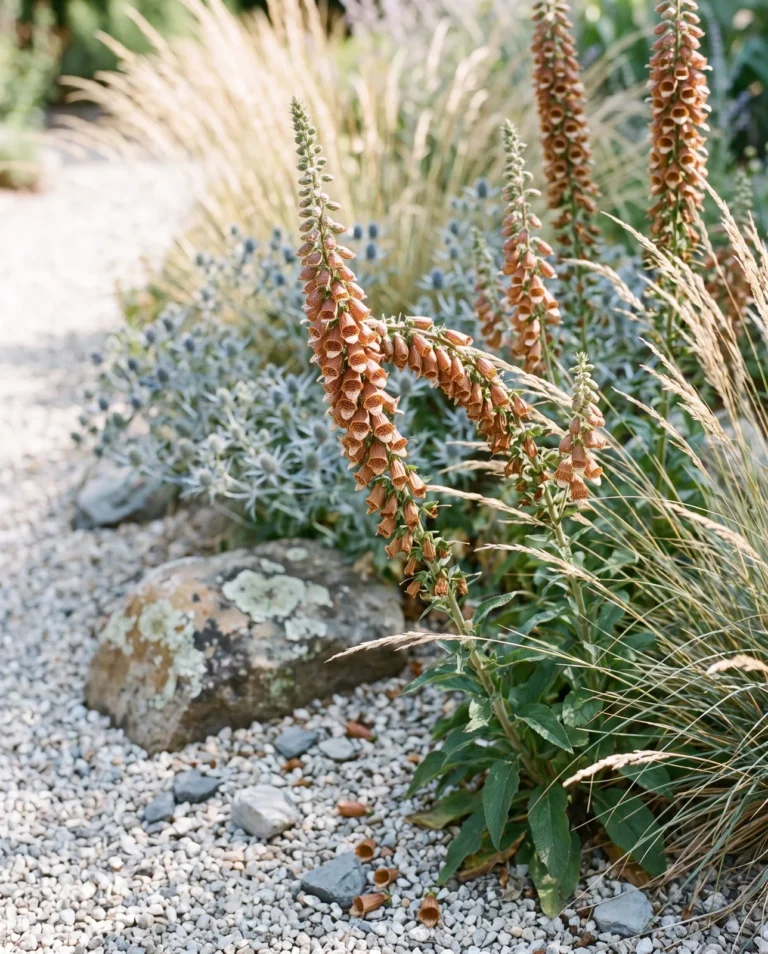
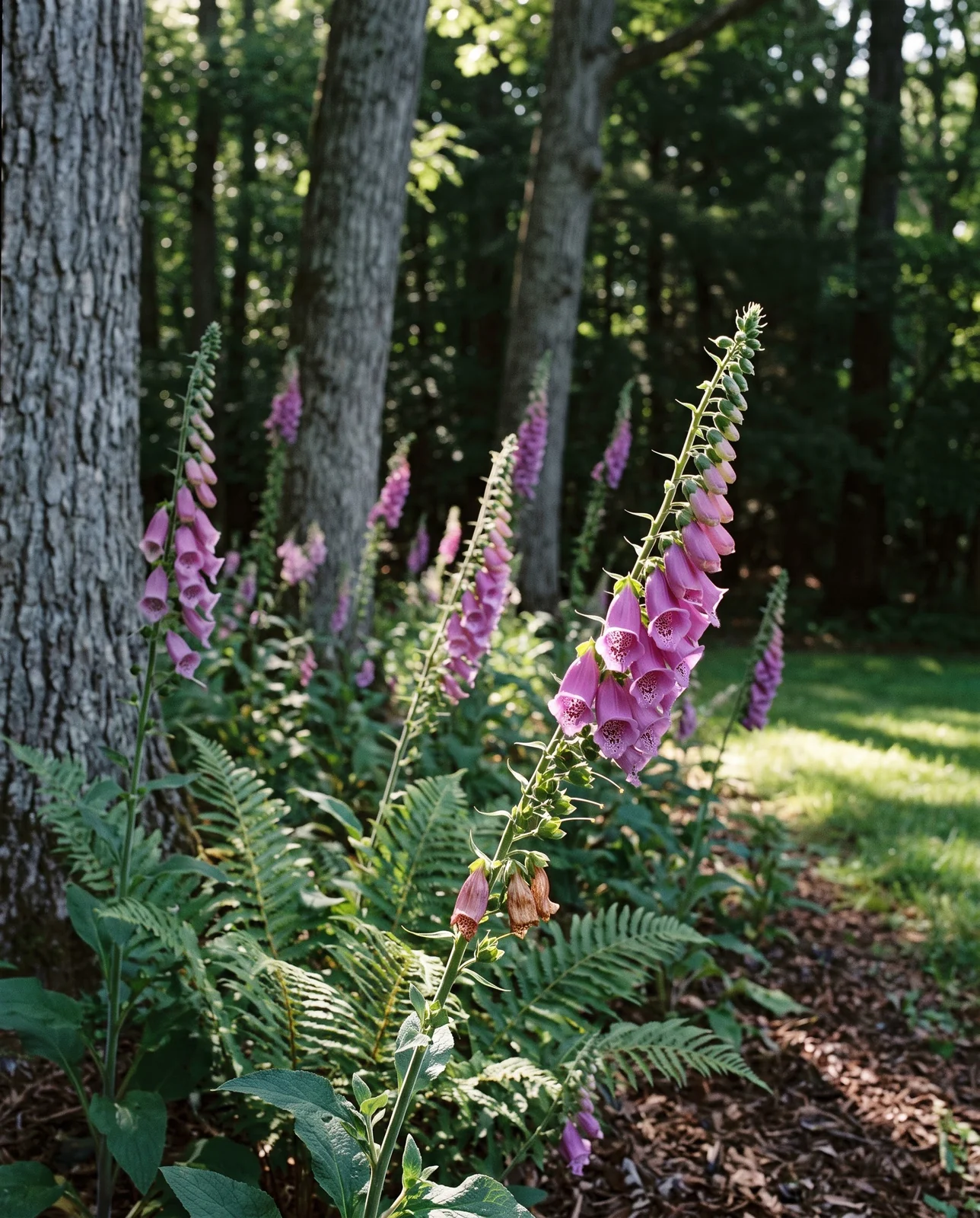
Morning sun with afternoon shade is the combination foxglove flowers best in. Almost anything between full sun and deep shade will do, because what it is really managing is moisture. Hot sun scorches the soft foliage, and a sunny position works only where the soil stays moist. These are woodland plants, at home in the dappled light under trees.
Soil and pH
Moist, well-drained soil with plenty of organic matter is what foxglove asks for, and it must never dry out. It leans acid, below pH 6.0, but grows easily enough in average, well-drained ground in part shade and takes almost any soil that is neither too dry nor too wet. Dig leaf mold or garden compost through the bed before planting, and lay a thick mulch over the surface afterward. On poor soil a yearly dose of balanced granular fertilizer helps. The perennial species fail at both extremes, ground that dries out for long periods and ground that stays permanently wet.
Water
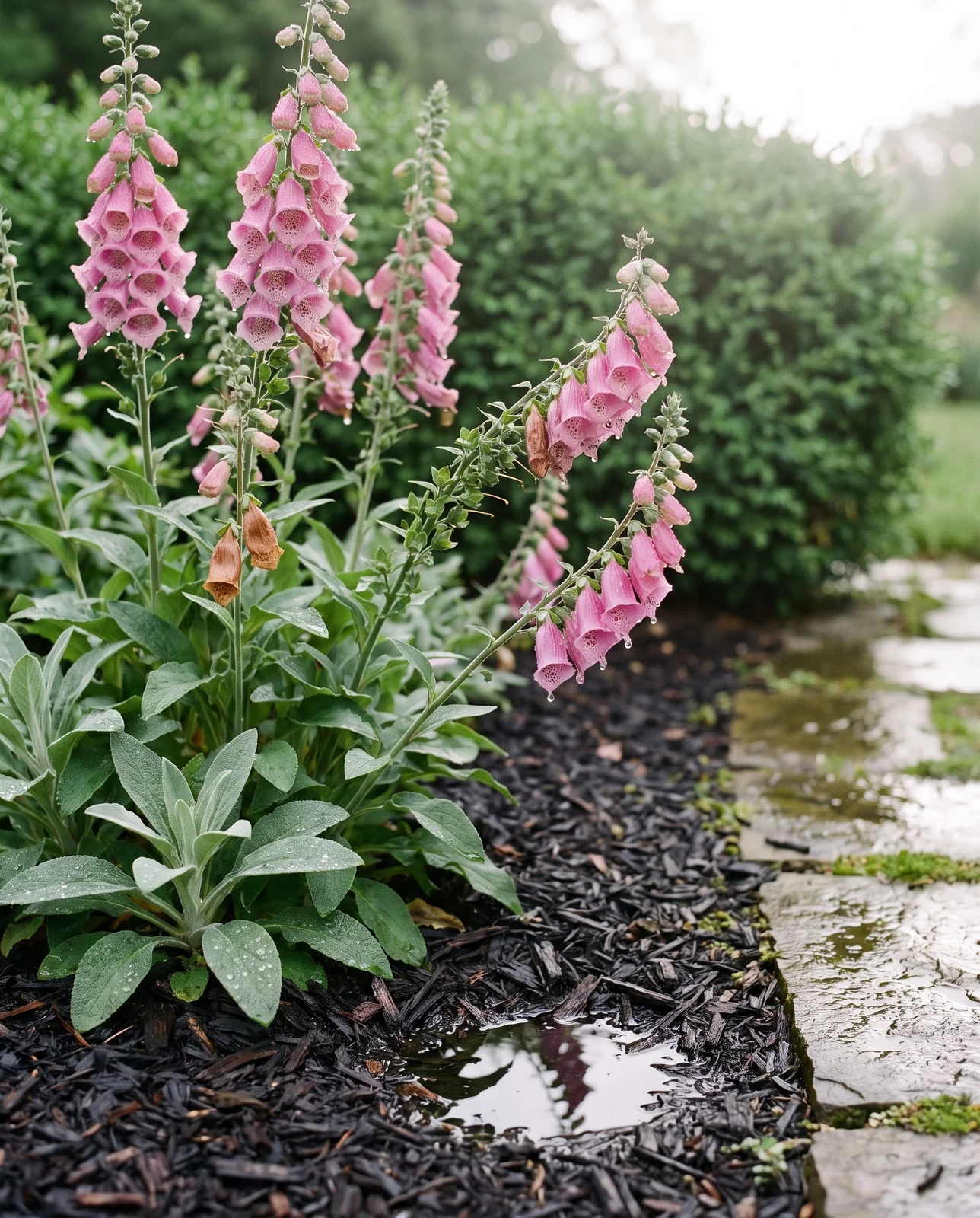
An established foxglove in soil rich in organic matter needs watering only during long dry spells in summer, and its overall demand is medium. Wilting large leaves mean it wants a long soak. New plants are the exception. They need regular water for at least the first few months, until their roots have spread into the surrounding soil, and they often droop while the ground still feels damp. Containers dry out faster and need watering right through the growing season. Yellow foxglove, once established, is relatively drought tolerant.
Sowing and planting
Foxglove is raised from seed, and the seed needs light to germinate, so it is pressed onto the surface of the potting mix and left uncovered. Outdoors that means a sheltered spot, an unheated greenhouse, or a coldframe. Seedlings raised inside go into the garden after the last spring frost. Plants bought in growth go in during spring or fall, when the soil is moist and warm. Small plug plants are the exception, since fall planting is not recommended for them. Keep them potted in a sheltered spot over winter, out of reach of slugs, and plant them out in spring.
Most foxgloves will grow in a large container of loam-based peat-free potting mix, in a sheltered spot in light shade. Roots in a pot take frost damage more readily than roots in open ground. Staking is a judgment call. Tall varieties may need it to stay upright, while sturdy stems in a sheltered spot out of strong winds do not. In exposed sites, and on tall cultivars carrying larger blooms, a bamboo cane keeps the spike from snapping. Give the tallest plants a sheltered position from the start.
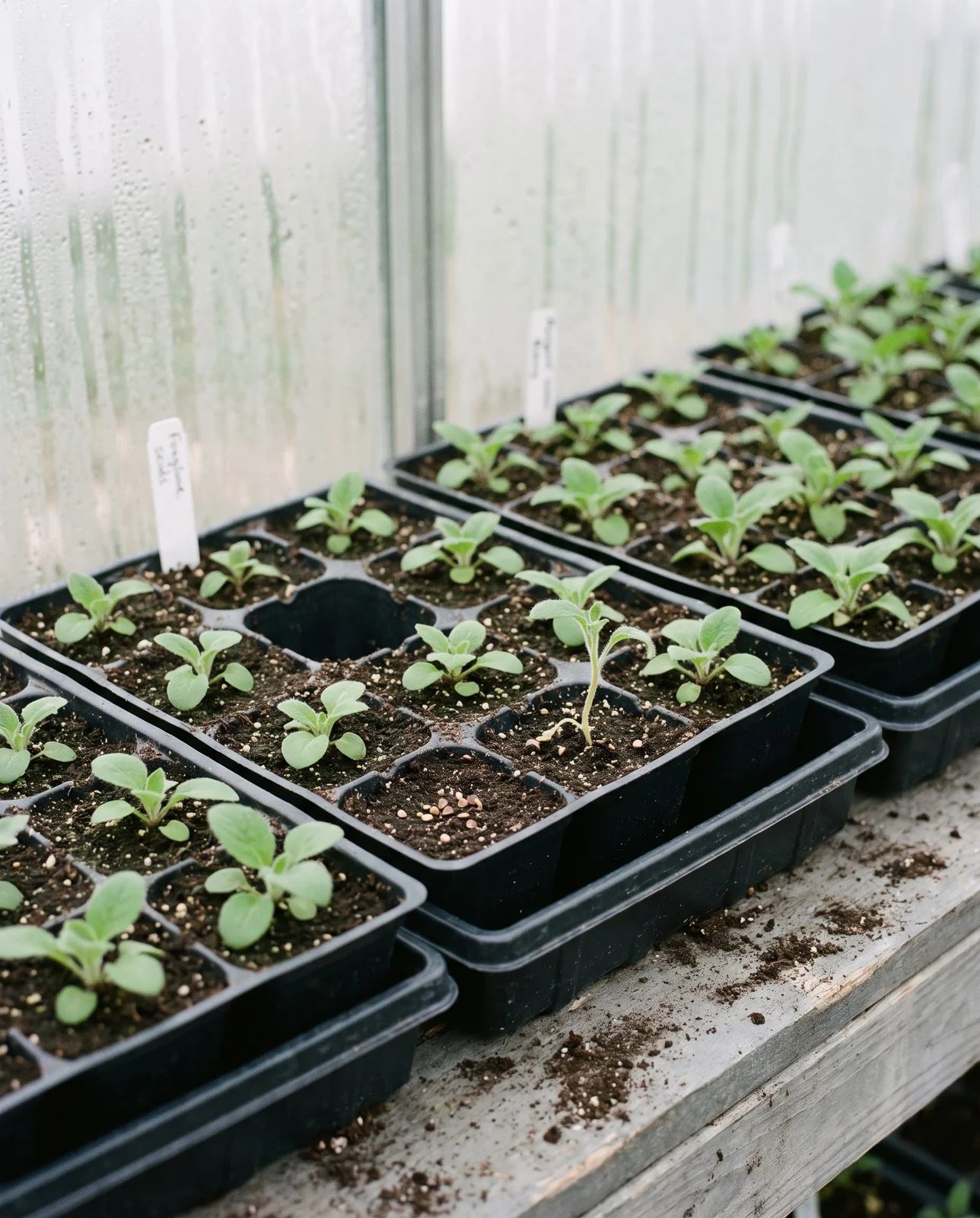
When to sow, and when it flowers
Which row applies depends on whether you want spikes next year or this one, and on whether the seed starts under cover or in the ground.
Height and spread
A foxglove in flower stands 2 to 5 feet tall and 1 to 2.5 feet across. Most spikes land in the middle of that band, at 3 to 4 feet, and 5 feet is infrequent. Cultivars pull the range wide at both ends, from 2 to 3 feet up to 5 to 6 feet, so the height on the packet matters more here than for most border plants. Across the whole genus the spikes run from 1 foot to 8 feet or more. The width describes the leafy base, since the stem itself occupies almost no ground, which puts foxglove at the back of a border beside lupine.
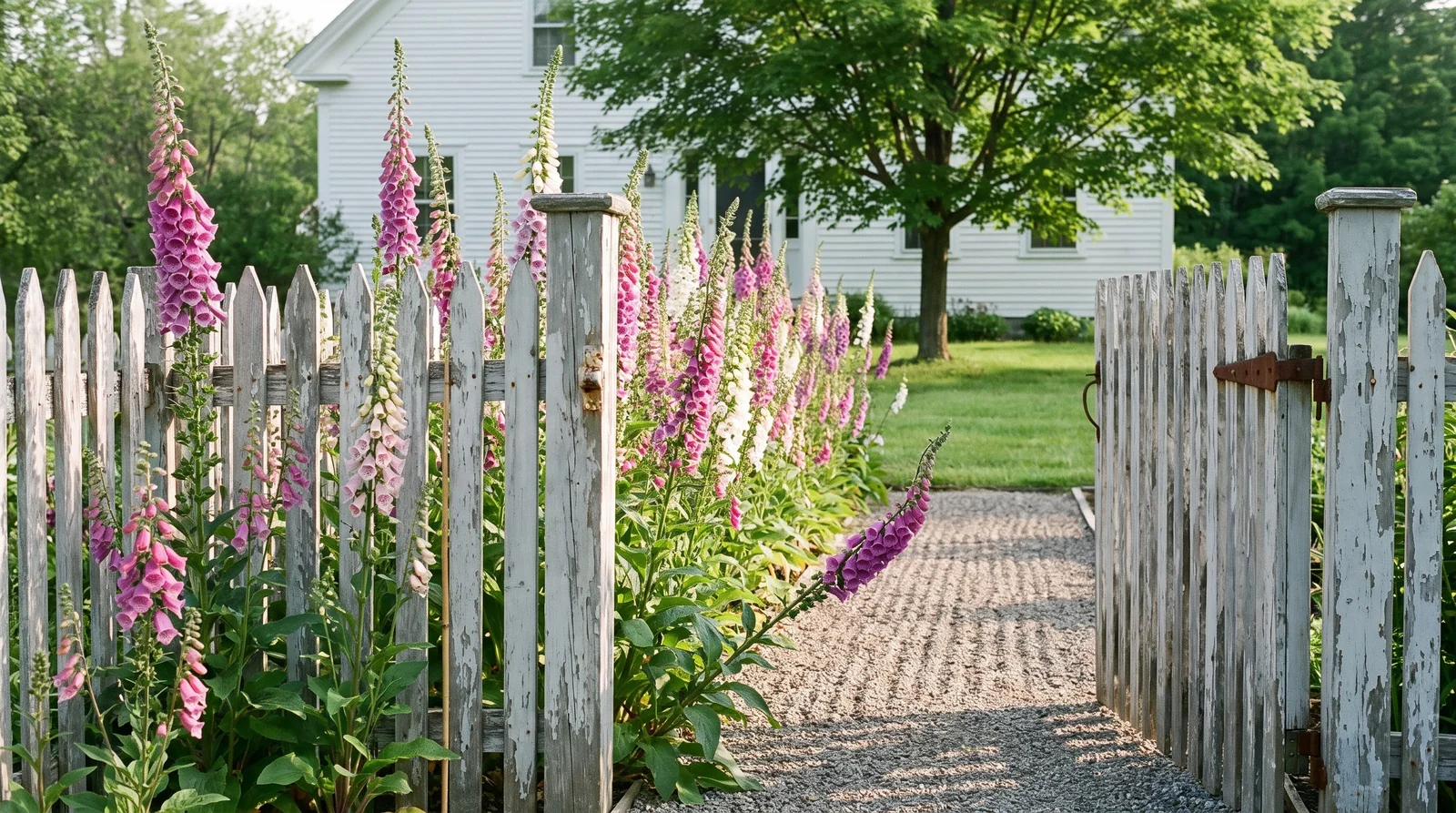
USDA hardiness
Foxglove is hardy through USDA zones 4 to 9. At the warm end the range is contested: Missouri Botanical Garden stops it at zone 8, Clemson carries it to 9, which leaves a zone 9 garden growing the plant at its published limit. Within the range the species is hardier than some of the plants sold under its name, because certain varieties are hardy only to zone 5. The perennial species vary more again. Several come from warmer climates, are not fully hardy, and want a mild sheltered position, winter protection, or both.
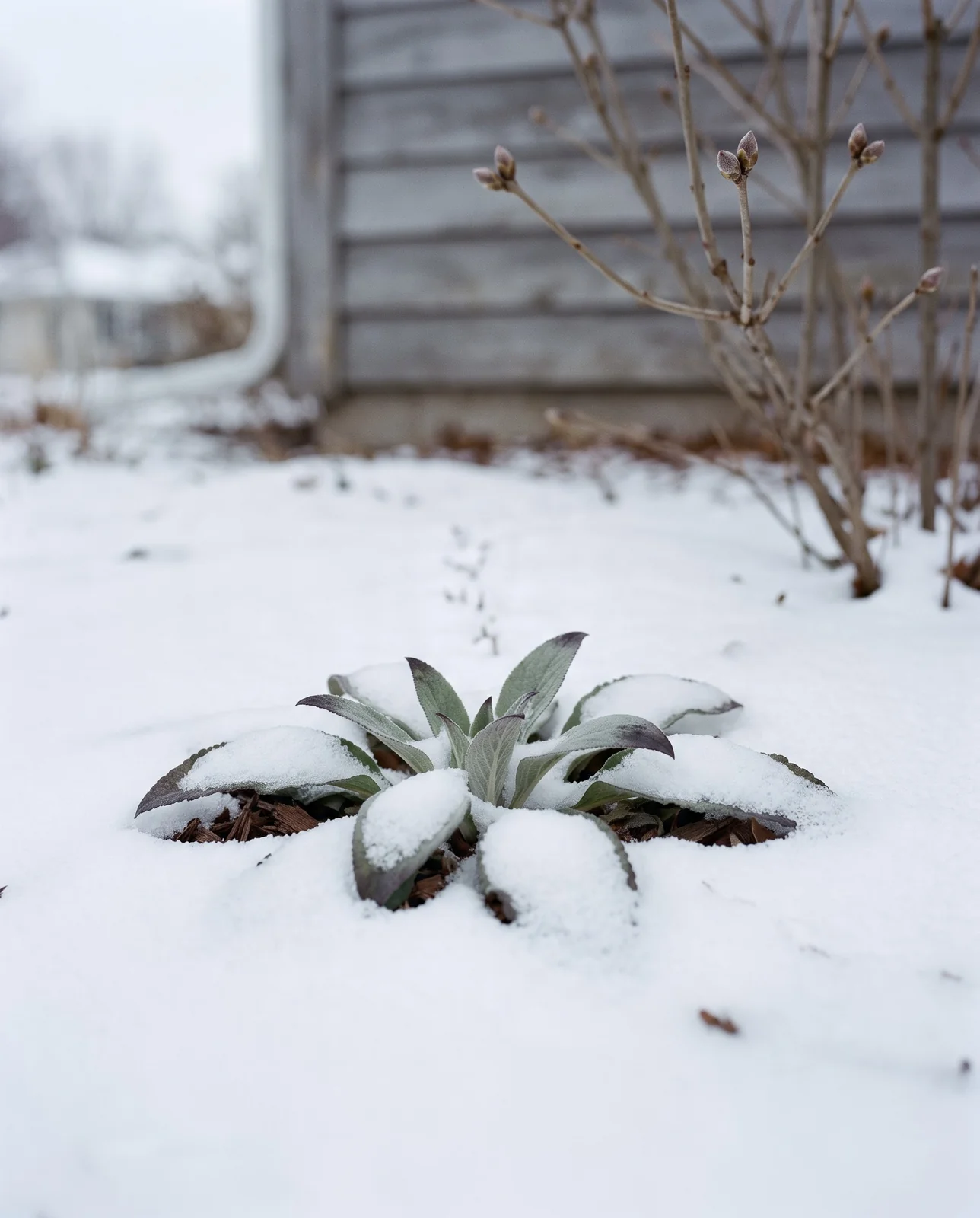
What to do after flowering
The cut you make when the main spike goes over decides what the plant does for the rest of the summer. Take the central spike out and more spikes follow. The cleanest version of that cut takes the whole stem off at the base as soon as the flowers finish, which keeps the plant's energy out of seed. The same cut ends the next generation, so leave a few stems standing to set seed and deadhead the rest to avoid a flood of seedlings. The plant itself is a separate decision: a foxglove looks ragged once it has finished, and nothing obliges you to keep it. The rest of the tidy-up waits for early spring, when winter damage, yellowing leaves, and old seedheads all come off together. Yellow foxglove takes the opposite handling in fall, because its foliage stays evergreen: cut the spent stems to the base, leave the leaves through winter, then prune off what the cold damaged in spring. Taking those stalks off as the blooms fade brings a second flush, and leaving a few is how it sows itself.
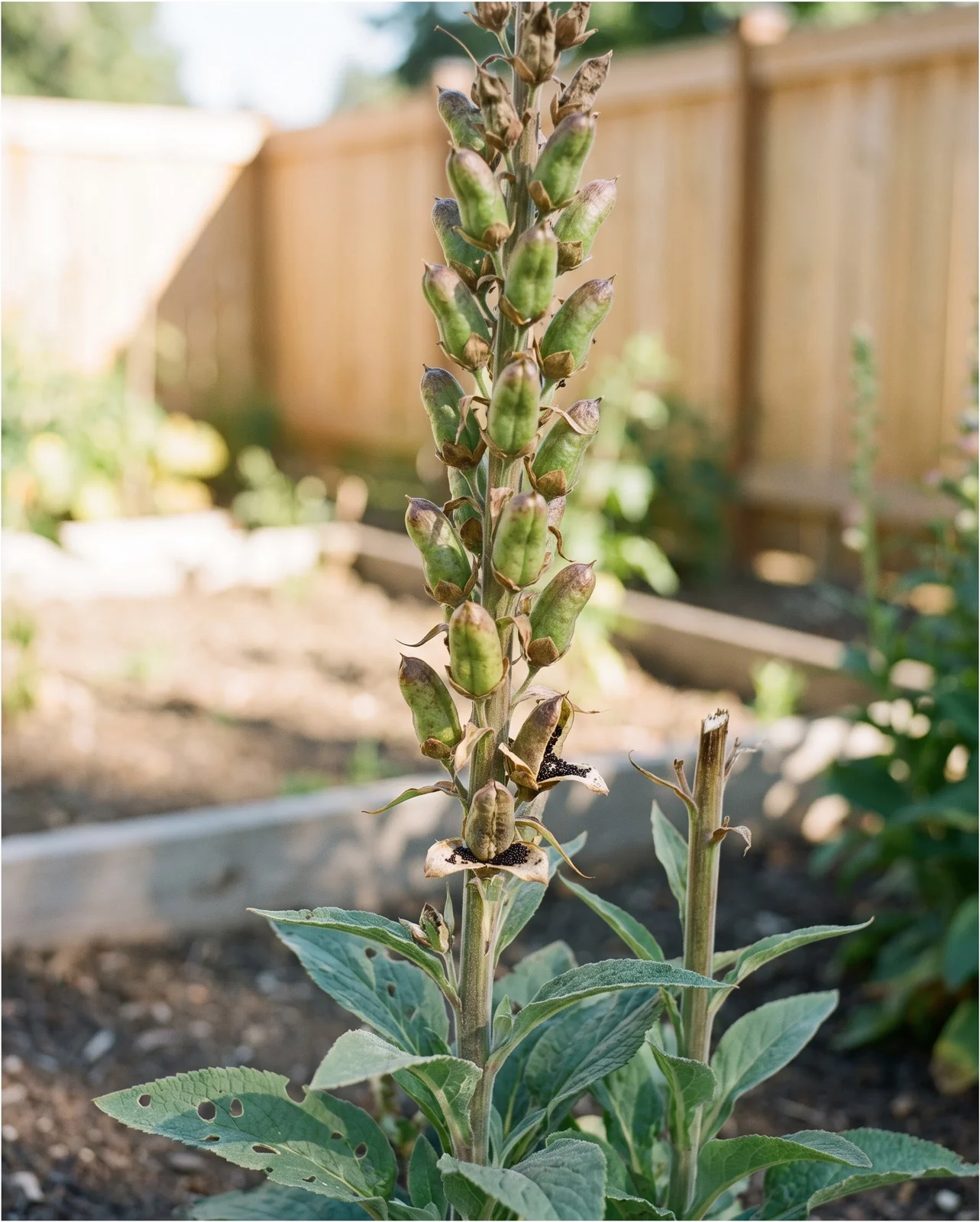
Leaves but no flowers
A foxglove making leaves and no spike is usually doing what it is supposed to do, and these checks separate the plant that is waiting from the plant that is failing.
Pests and diseases
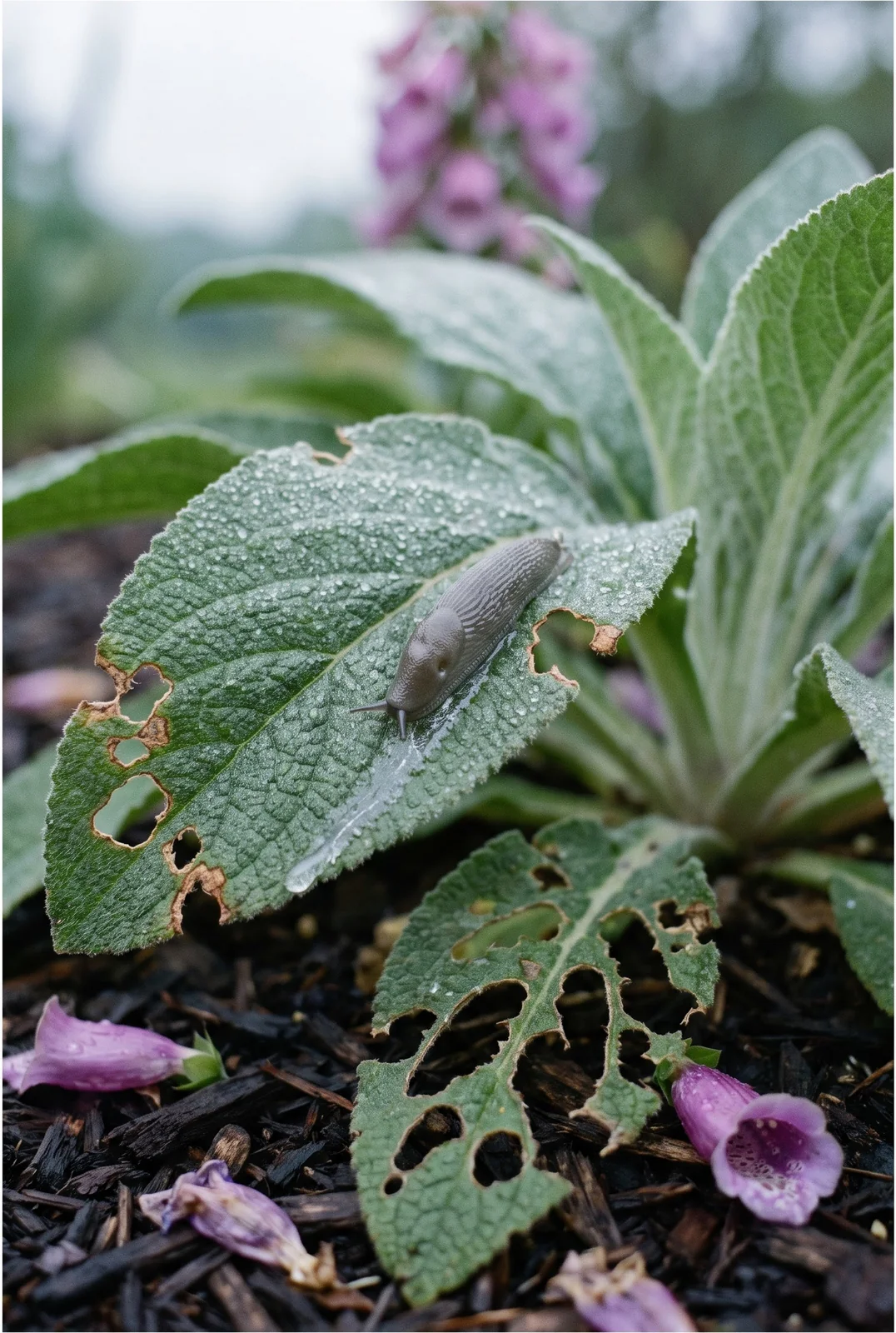
Foxglove has few pest problems, and deer and rabbits are not among them. Both walk past it because every part is toxic, and it carries a chemical deer avoid. What does go wrong is mostly fungal and mostly seasonal. Powdery mildew can infect the foliage in late summer, and left untreated, mildew and leaf spot together spoil the leaves badly by early to mid-summer. Plants usually recover from mildew without treatment. Aphids, mealy bugs, slugs, and Japanese beetles make up the insect list. Aphids colonize the developing flower spikes and can usually be washed off with a hose, taking care not to damage the stem. Leaf and bud eelworms damage the leaves in a way easily taken for weather damage or fungal leaf spots.
What actually goes wrong, ranked
These are the six things gardeners run into most often, in that order.
Every part is toxic and the bells hang at hand height. Where a child or an animal can reach them, do not grow it; where they cannot, gloves and a hand wash cover it.
Seed sown indoors germinates well, then the seedlings fall over when the cover comes off. Sow uncovered in the light and raise them cool.
Overwatering and lost roots are behind most of it. Established plants want water only in long dry spells, and dense crowns rot in soggy winter ground.
The plant flowered, set seed, and died on the biennial schedule. Sow every year, or leave a few spikes standing so the next generation arrives on its own.
Seedlings are stripped before the plants are large enough to survive it. Protect the small ones until the leaves coarsen.
Tall spikes lean or fall in the open. Cane the tall cultivars in exposed sites and give the tallest plants shelter from the start.
Bumblebees and hummingbirds
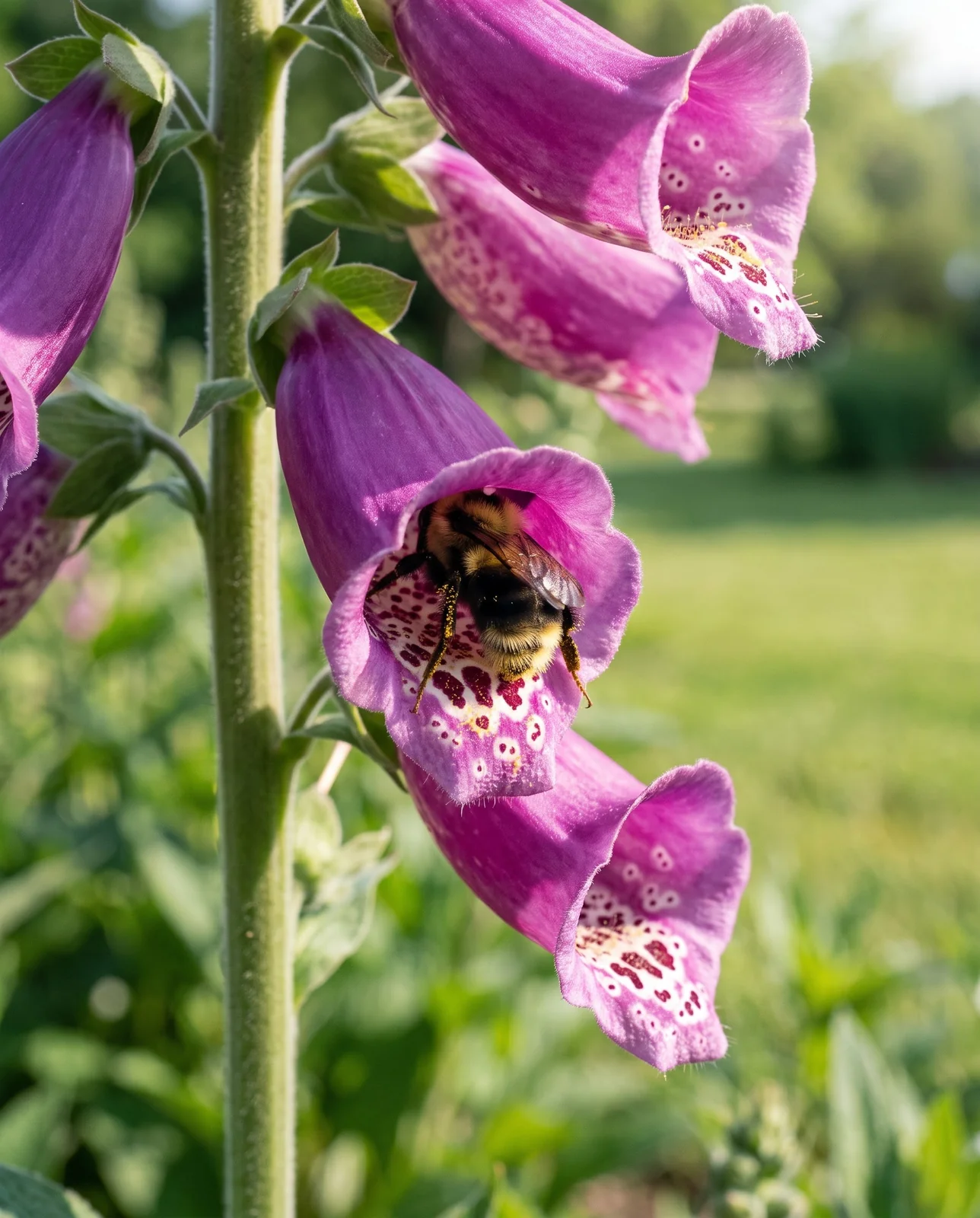
Bumblebees and hummingbirds are the visitors, both drawn by the nectar. The nectar sits in a ring at the base of each flower tube. A bumblebee climbs deep inside to reach it and rubs against the anthers lying flat on the upper inside surface on the way through. The spotted throats are part of the same mechanism, guiding pollinators to the nectar deep inside the individual flowers.
Propagation and longevity
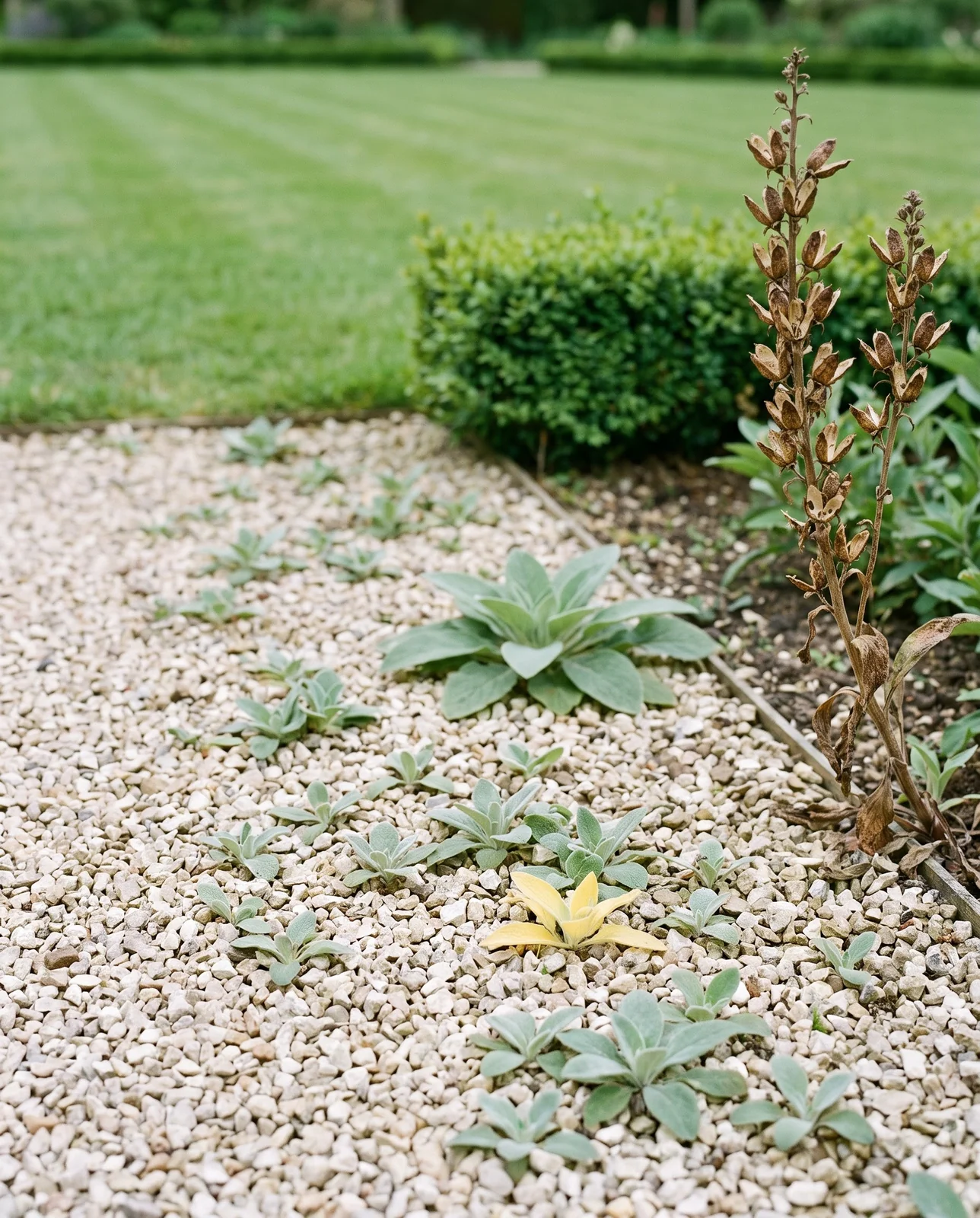
Seed is the recommended way to propagate foxglove, and for most of the genus it is the only route that matters. The perennial species offer two alternatives. Yellow foxglove can be divided in spring or fall by separating new sections from the crown, and off-shoots taken from around the base in spring give plants identical to the parent. Some cultivars produce very few viable seeds, so collect and sow plenty. The strawberry hybrid needs planning around. It usually dies after flowering and sets no seed, though some plants come true from seed and bloom for several years. Where it does not seed, replacement means buying new plants or commercial seed. Yellow foxglove sows itself where conditions suit, without becoming aggressive.
In the vase
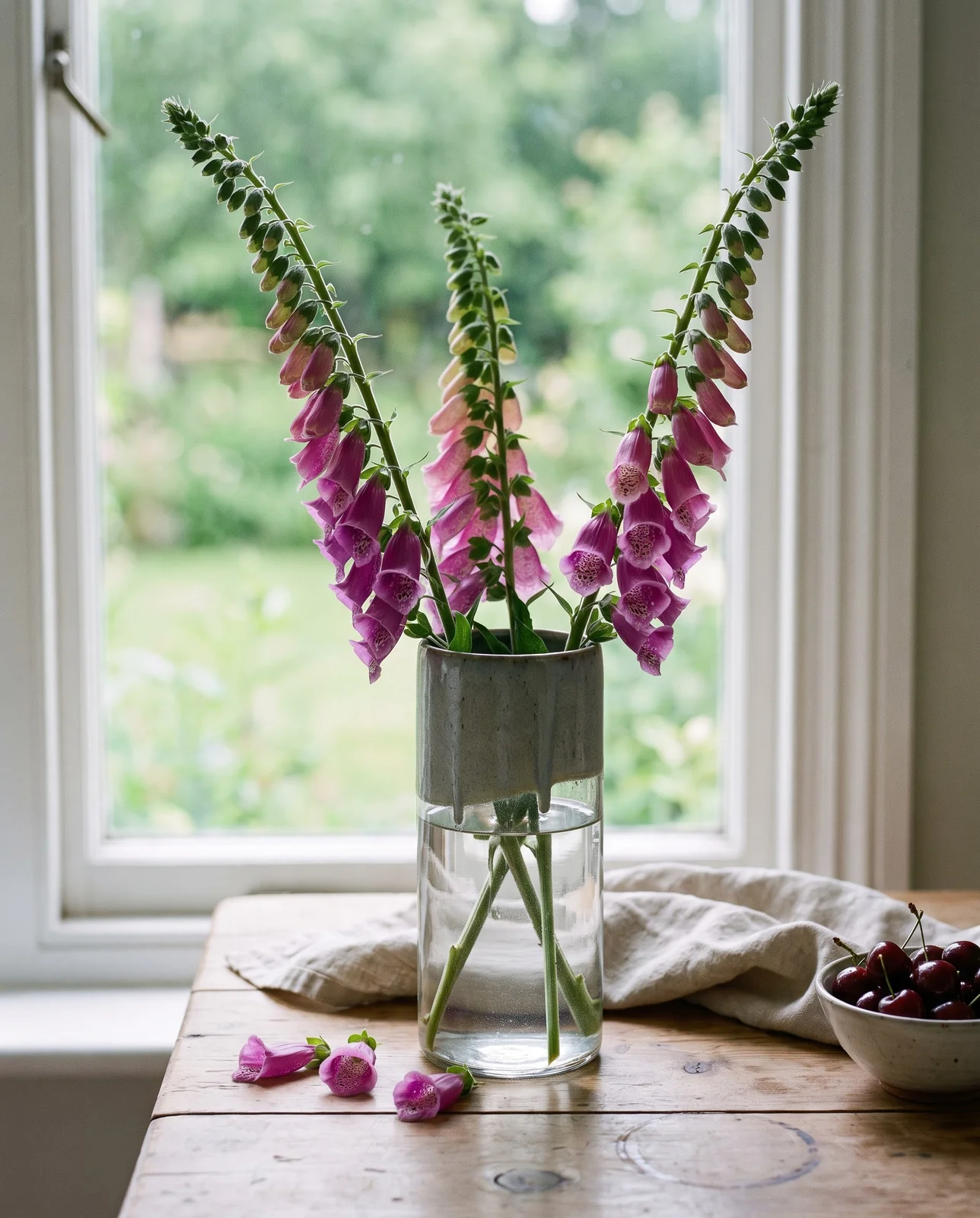
Foxglove spikes are cut for bouquets, and the yellow species is best picked half open. Tie the stem to a support while the plant is still in the bed and it comes out straight, the way arrangers want it.
Foxglove myths, settled
Foxglove attracts more folklore than most border plants, and these claims come up often enough to settle.
The myth: One leaf is enough to kill a grown man.
The reality: Any swallowed part can be deadly, so a household treats it as an emergency. Real poisonings run milder than the legend: symptoms last 1 to 3 days, sometimes with a hospital stay, and death is unlikely.
The myth: Foxglove tea is an old heart remedy worth trying.
The reality: Eating any part of the plant, or making tea from the leaves, is an unregulated dose of heart medicine that can slow the heart or throw it out of rhythm. It treated heart conditions and is highly poisonous used incorrectly.
The myth: Foxglove is invasive everywhere in the United States.
The reality: It is invasive in some places, among them the Pacific Northwest and Aoraki Mount Cook National Park in New Zealand, which is a shorter list than the reputation suggests.
The myth: Slugs leave foxglove alone because the whole plant is poisonous.
The reality: Slugs and snails are fond of foxglove seedlings, and the young rosettes are stripped before the plants are big enough to shrug it off.
What to expect from year to year
Three seasons stand between a sown seed and a patch that runs itself, and only the middle one has flowers in it.
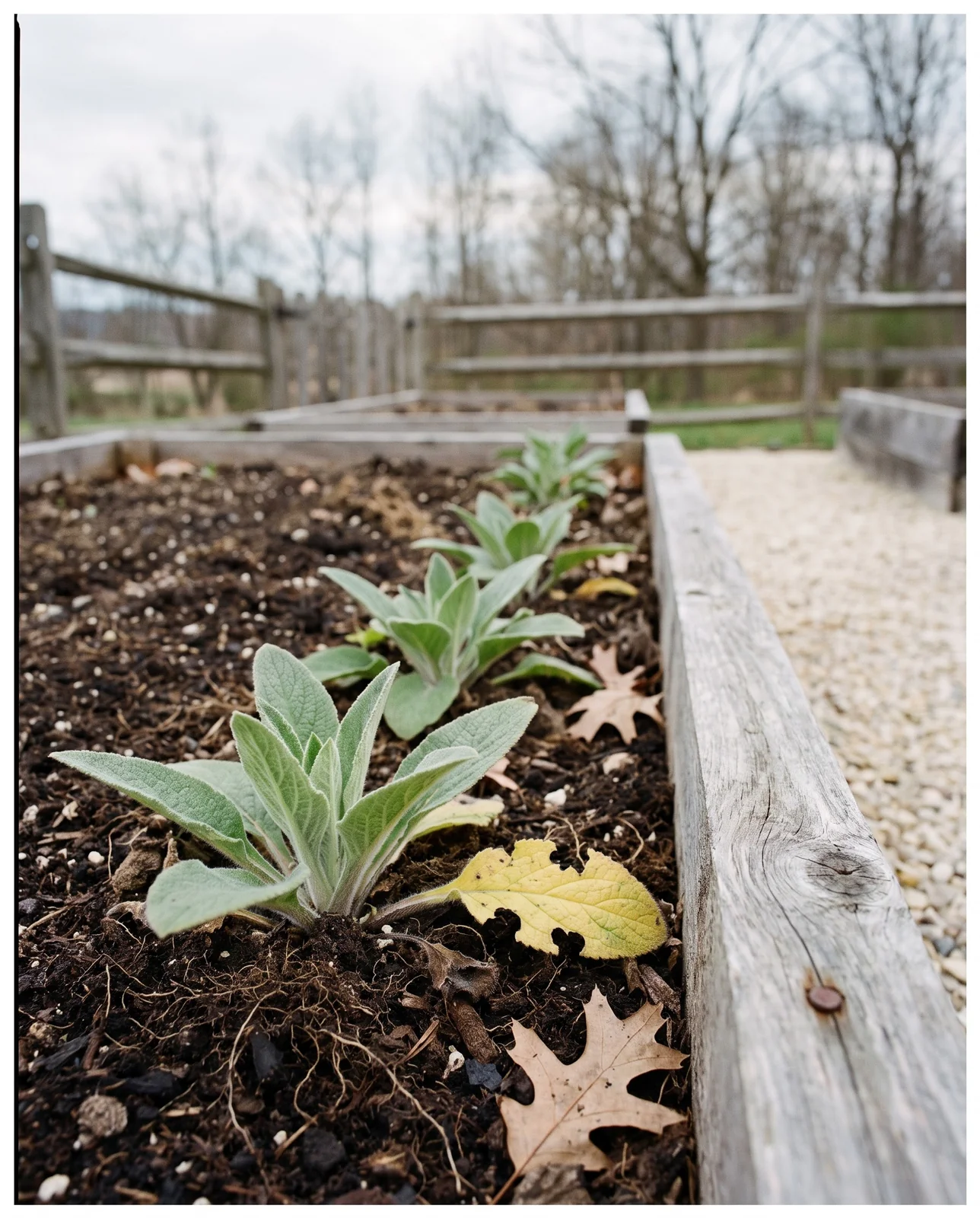
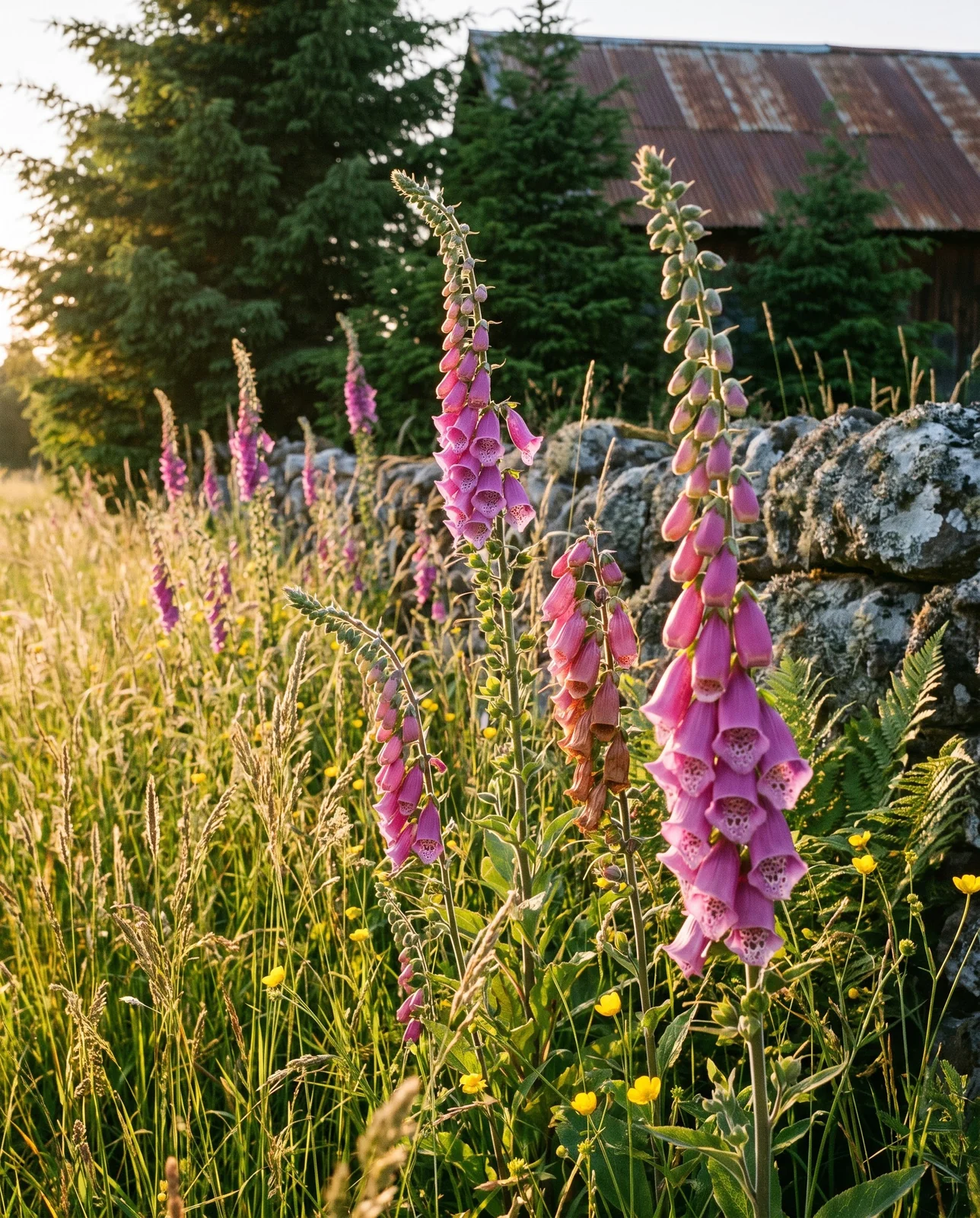
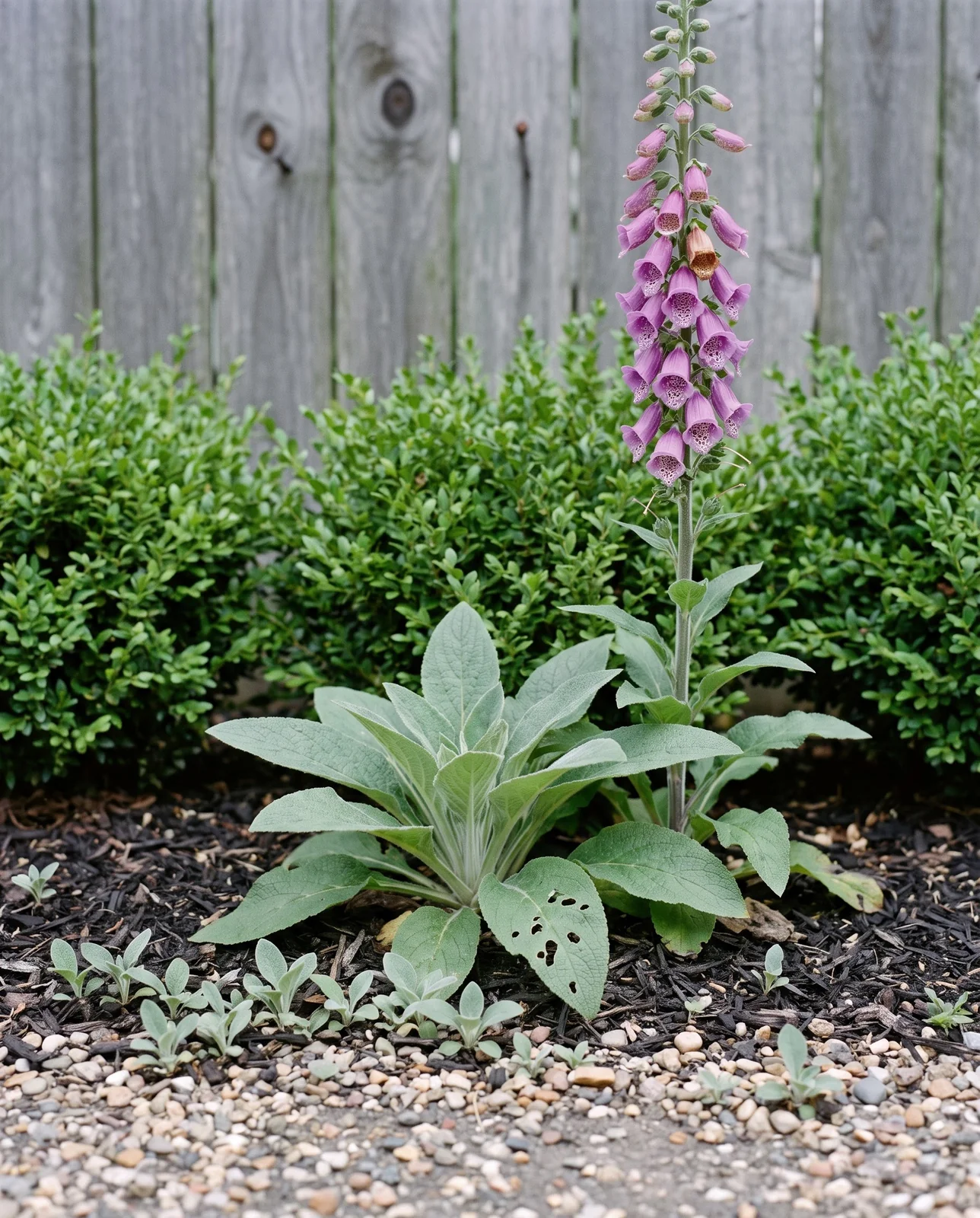
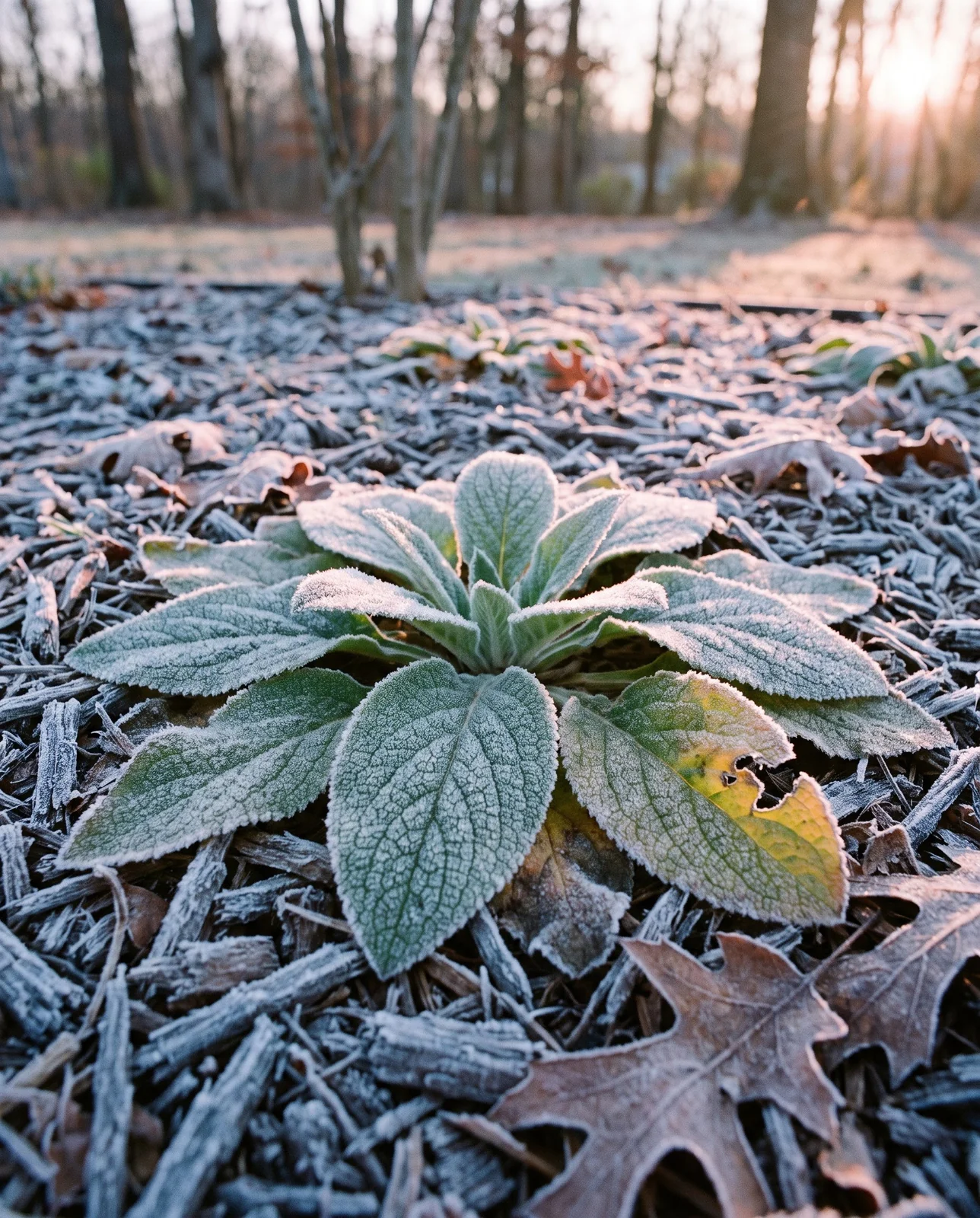
Year one is leaves. A seed sown in spring produces only a basal rosette, and that rosette overwinters as evergreen foliage. It looks nothing like the plant on the packet.
Year two is the spike. Slender spikes rise from the rosette in spring and bloom in late spring to early summer. Left standing, they self-seed readily. By late summer the plant is scraggly and can be pulled once it has released its seed.
Year three is the seedlings. They come up close to the parent in spring, in numbers, and they move easily while small, so this is when the patch gets arranged by hand. One group skips the sequence: 'Foxy' was the first variety bred to flower in the year it is sown, and the 'Camelot' series followed.
Flower photos
FAQ
Is foxglove poisonous to touch?
The danger is in swallowing it, not in handling it. Wear gloves for plants and seed all the same, and wash your hands when you come in from the garden.
What does foxglove do to a person who eats it?
Stomach upset comes first, with visual symptoms that classically appear as a yellow-green discoloration and heart symptoms such as palpitations, breathlessness, and fainting. Some people see halos around objects.
Can I have foxgloves in a yard with dogs?
Not where a dog can get at them: foxglove is a problem for dogs, cats, horses, and children, and cardiac glycoside plants have a narrow margin of safety. A dog that has chewed any part needs a vet, and digoxin-specific antibody fragments work as an antidote.
How dangerous is foxglove for a small child?
Poison severity for the species is high. Plant ingestions account for 80 percent of pediatric exposures to this class of poison, and medicines for the other 20 percent.
Are foxglove seeds poisonous too?
Yes. The poisonous ingredients, deslanoside, digitoxin, and digitalis glycoside, sit in the flowers, leaves, stems, and seeds.
Which foxgloves are true perennials?
Yellow foxglove, straw foxglove, rusty foxglove, strawberry foxglove, and the Illumination Series. Their spikes are more modest than the biennial types and they live a little longer, in soft yellow, rusty orange, or dusky pink.
Are foxgloves bad for hummingbirds?
No. Hummingbirds are among the pollinators the flowers attract, and they feed at them alongside the bumblebees.
Is every foxglove poisonous, or only the purple one?
All of them. Every species and hybrid in the genus is highly toxic and none of it should be eaten, so a yellow or rusty perennial gets handled like the purple biennial.
How do I know the plant in my border is a foxglove?
In its first year it is a low rosette of hairy leaves that reach 10 to 12 inches long. In its second it carries tubular bells in white, pinks, and purple, spotted inside the petals.
Interesting tips
- Every so often the top flower on a spike opens out fully and faces forward, flat and round like a small satellite dish. The mutation is called terminal peloria, and it turns up only occasionally.
- The perennial side of the genus has selections of its own to hunt for. 'John Innes Tetra' stands about 2 feet with rose colored flowers, and 'Spice Island' reaches 3 to 4 feet in yellow-orange on tall sturdy stems.
Related Guides & Flowers
Hollyhock
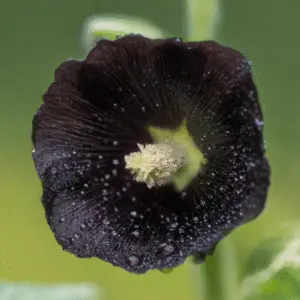
The other cottage spire that holds its ground by seeding itself, a patch that outlives any single plant.
Delphinium
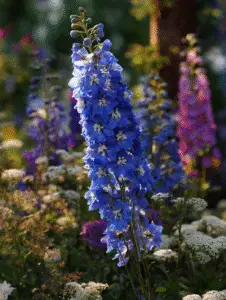
The tall early summer spire gardeners plant beside foxglove, with the same argument about staking.
Snapdragon
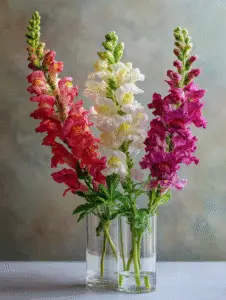
A shorter garden spike that flowers in its first summer, for the same upright shape in a smaller bed.
Purple flowers
Where foxglove sits among the other purples, if color is what you are planting for.
Enjoying our flower guides? Add YourFlowersGuide as a preferred source on Google. It helps more readers find us.
Add to Preferred Sources