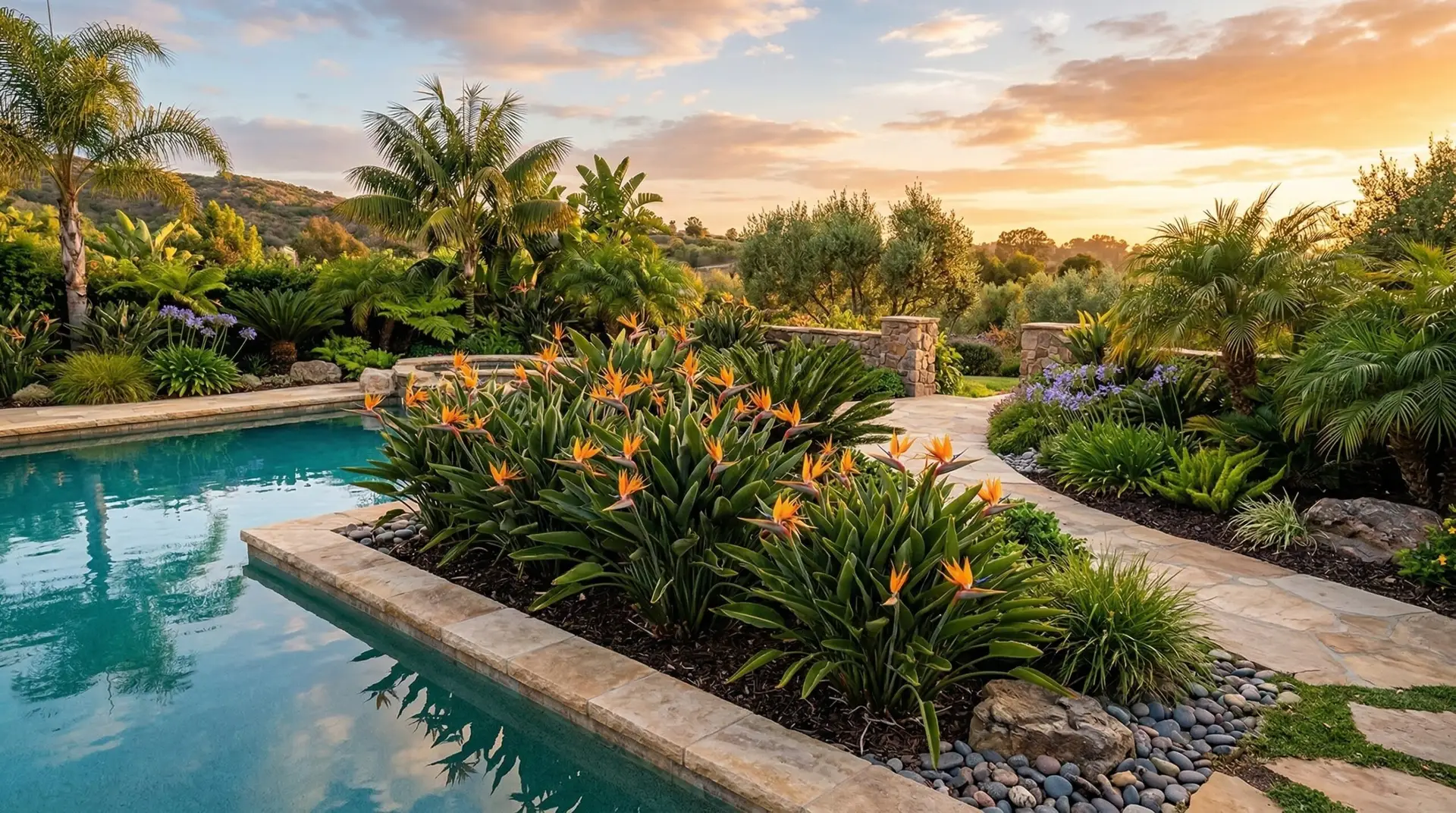
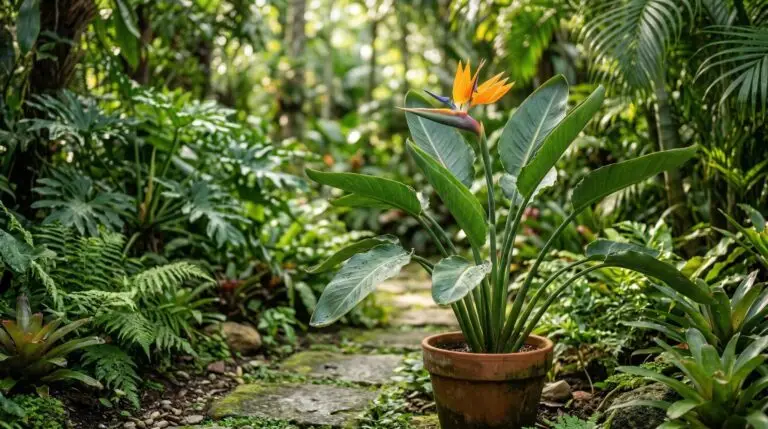
When designing a resort-style backyard, the bird of paradise functions as an essential architectural anchor. This plant brings an immediate sense of scale and structure to any space it occupies. Rather than using it as a simple filler plant, you should treat it as a primary structural element that dictates the flow of your tropical garden design. The broad, paddle-shaped leaves create a strong visual weight that grounds lighter, more ephemeral plantings nearby. Placing a mature bird of paradise near a seating area or along a primary sightline establishes a definitive tropical atmosphere before the first flower even opens. You can rely on its bold silhouette to hold a composition together, creating a framework that supports the entire landscape plan.
Understanding how to position this plant requires looking at its unique growth habit and spatial demands. The standard Strelitzia reginae forms dense, clumping mounds that expand outward over time, requiring adequate breathing room to look intentional rather than overgrown. In a poolside setting, these clumps provide necessary visual mass without shedding excessive debris into the water. You want to place them where their arching foliage can soften the hard geometric lines of concrete patios or pool coping. When designing a bird of paradise landscape, spacing is critical. Giving each plant enough room to display its entire fan-like structure ensures it remains a focal point rather than becoming lost in a crowded jungle of competing foliage.
Contents 4 sections
Architectural form and spatial function
The coarse texture of bird of paradise foliage offers a specific design utility when building a layered planting scheme. In landscape design, we use broad, leathery leaves to stop the eye and create a sense of depth against finer textures. You can maximize this effect by positioning the Strelitzia in the mid-ground of a planting bed. Behind it, you might place tall, feathery palms that provide a softer, moving backdrop. In front of it, low-growing groundcovers with small leaves will emphasize the sheer size of the bird of paradise foliage. This intentional contrast in leaf size and shape is what transforms a random collection of tropical plants into a cohesive, designed space.
Scale and proportion play heavily into strelitzia garden ideas, especially when deciding between the standard species and the giant white bird of paradise, Strelitzia nicolai. The giant variety acts as a tree-like canopy element, easily reaching twenty feet or more in height. You should reserve the white variety for areas that need serious vertical scale, like the blank space between second-story windows or the corner of a large courtyard. The smaller Strelitzia reginae is much better suited for human-scale interactions along pathways or bordering a pool deck. Matching the mature size of the plant to the surrounding architectural elements prevents the garden from feeling either dwarfed by massive foliage or cluttered by plants that are too small for their setting.
Color theory in a tropical garden design
The specific color relationship within a bird of paradise flower is a perfect study in complementary contrast. The bloom pairs a highly saturated orange with a deep, piercing violet-blue, creating a visual tension that immediately draws the eye. To build a successful color palette around this plant, you have to decide whether to harmonize with these colors or push the contrast further. For a harmonious, warm composition, you can surround the plant with neighboring hues like yellows, peaches, and reds. Introducing a canna lily with bronze foliage and bright orange blooms will echo the warm tones of the Strelitzia while adding a different vertical leaf structure. This creates a cohesive, glowing border that feels naturally integrated and intensely tropical.
If you prefer a more dramatic color scheme, you can design around the cool blue element of the bird of paradise flower. Planting deep purple or cool magenta flowers nearby will pull out the blue tongue of the Strelitzia bloom, shifting the overall mood of the garden bed. A bright pink hibiscus planted slightly behind the bird of paradise creates a high-energy, contrasting background that makes the orange sepals pop forward visually. You can also use foliage color to manipulate the scene, incorporating plants with purple or burgundy undersides to their leaves. The key to managing these strong tropical colors is to provide plenty of deep green foliage as a neutral resting place for the eyes between the bright floral moments.
Designing the tropical border with companion plants
Building a resort-style backyard requires layering different plant families to create a lush, immersive environment. The bird of paradise needs companions that share its cultural requirements for sunlight and water while offering different forms and textures. Plumeria trees make excellent upper-canopy companions, providing an umbrella of shade and dropping fragrant flowers onto the broad Strelitzia leaves below. To fill the lower and middle tiers of the border, variegated shell ginger brings a bright, striped pattern that breaks up the solid green mass of the bird of paradise clumps. You can weave a fragrant jasmine along a nearby fence or trellis to introduce a delicate, twining habit that contrasts sharply with the stiff, upright posture of the Strelitzia.
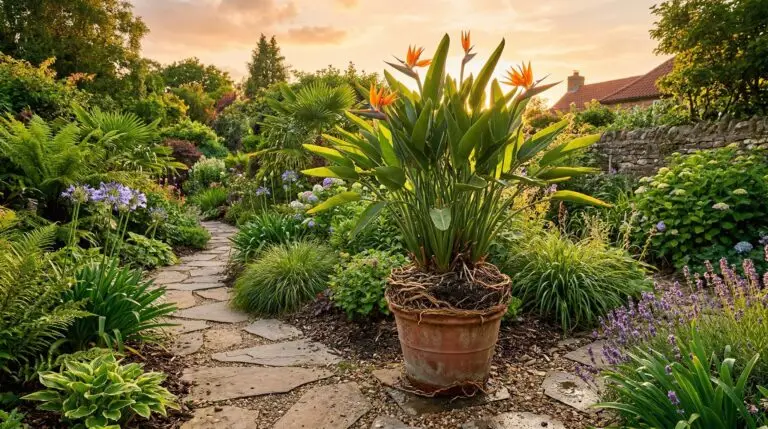
When arranging these companion plants, think about the physical shape of the planting bed and how the viewer moves through the space. A tropical border should feel deep and enveloping, rather than flat and linear. Stagger your bird of paradise plants in a zigzag pattern rather than a straight line, and tuck your companion plants into the negative spaces between the clumps. This technique creates overlapping layers of foliage that obscure the back of the border, tricking the eye into believing the garden is deeper than it actually is. By mixing the bold architecture of the Strelitzia with the softer, flowing habits of grasses or ferns, you establish the relaxed, abundant feeling of a high-end island resort right in your own backyard.
Seasonal interest and structural permanence
A well-designed garden must perform visually even when the primary plants are not in active bloom. The bird of paradise excels in this regard because its evergreen foliage maintains its structural integrity throughout the entire year. During the winter months, when softer tropicals might look battered or enter dormancy, the thick, waxy leaves of the Strelitzia continue to hold space and define the garden beds. The glaucous, slightly blue-green coating on the leaves catches the low winter sunlight, adding a subtle color variation to the landscape. You can rely on these permanent green anchors to keep your backyard looking intentional and furnished, regardless of the season.
The physical longevity of the blooms also contributes heavily to the plant’s value in a landscape composition. A single bird of paradise spathe can produce a succession of flowers over several weeks, providing a long-lasting point of color that you can plan around. Even as the older flowers dry and fade, the stiff, beak-like bract remains visually interesting, offering a sculptural silhouette against the sky. The most effective way to use this plant is to treat it as a piece of living sculpture. By giving the bird of paradise enough physical space to show off its distinct form, surrounding it with contrasting textures, and repeating its colors in nearby companion plants, you create a garden composition that feels professionally curated and endlessly engaging.
More About Bird of Paradise
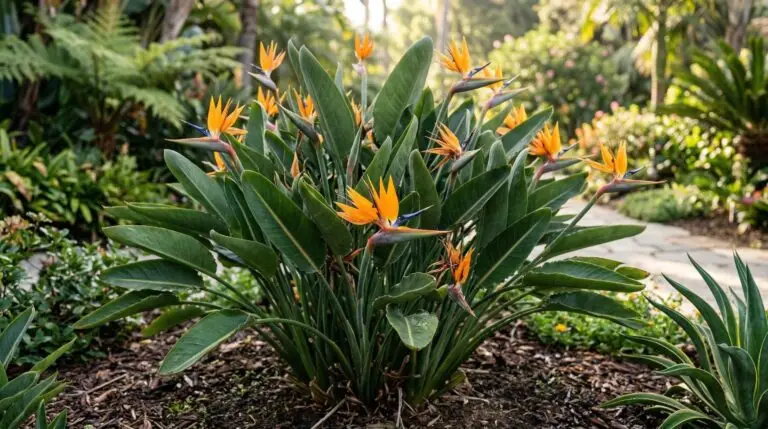
Growing bird of paradise outdoors in zones 9 through 11 for year-round tropical color
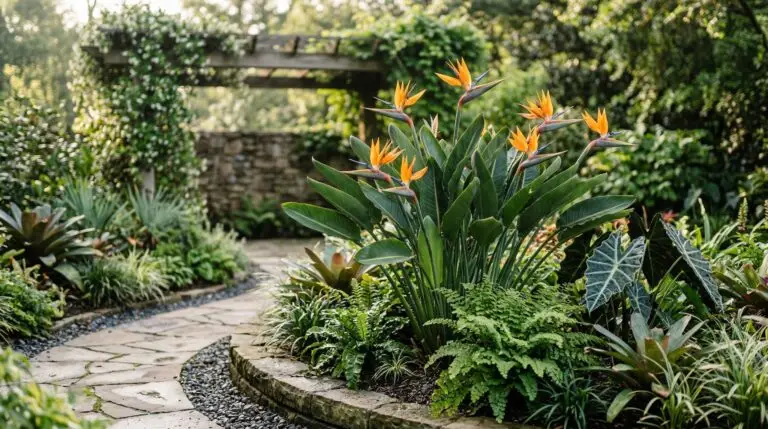
Using bird of paradise flowers in dramatic tropical floral arrangements
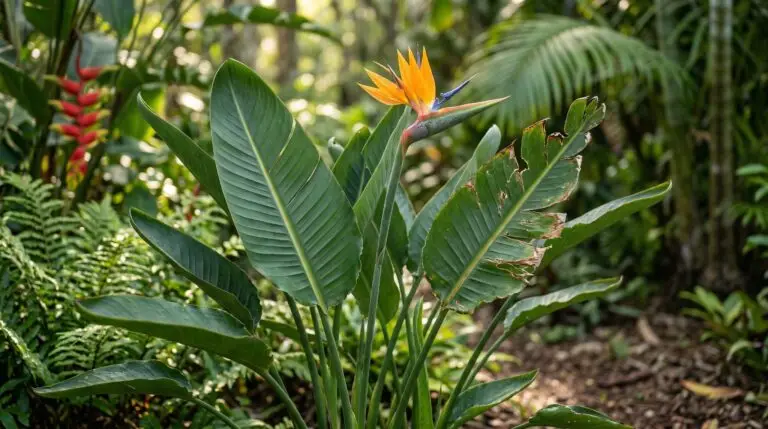
Bird of paradise leaf splitting and curling and what your plant is trying to tell you
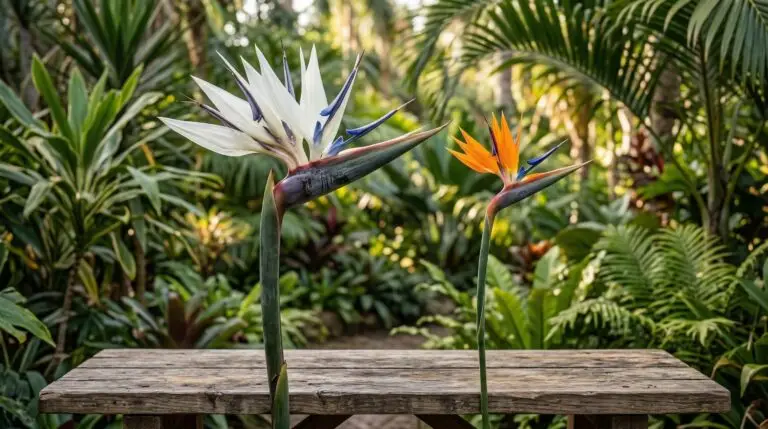
Giant white bird of paradise versus orange bird of paradise and which to choose
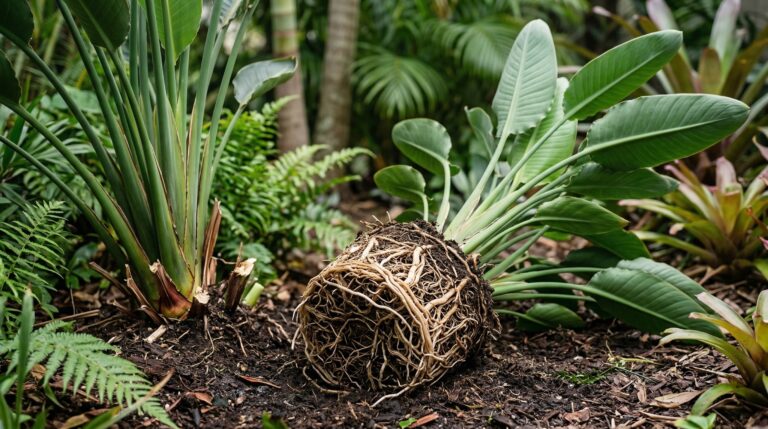
How to divide bird of paradise to share with friends or fill your garden
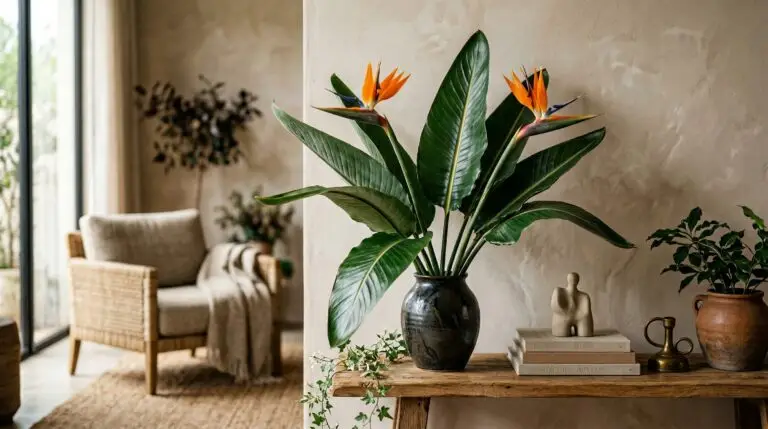
Bird of paradise in modern interior design as a living sculptural statement
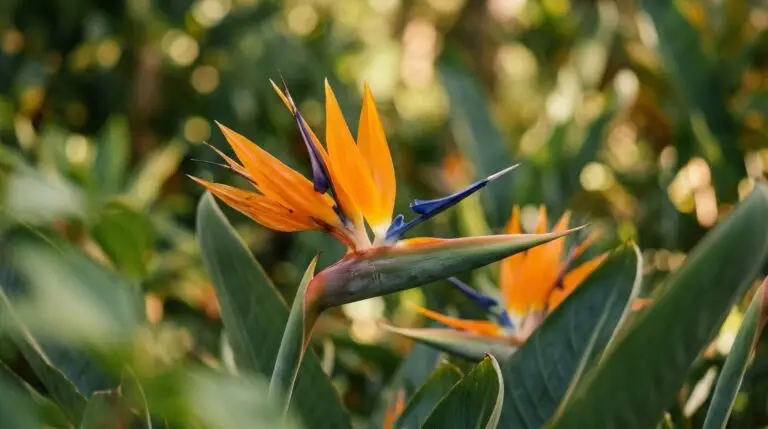
Bird of paradise flower meaning and its connection to freedom and paradise
How to grow bird of paradise indoors and get it to bloom in your living room
How to repot a large bird of paradise plant without damaging the root system
Enjoying our flower guides? Add YourFlowersGuide as a preferred source on Google. It helps more readers find us.
Add to Preferred Sources