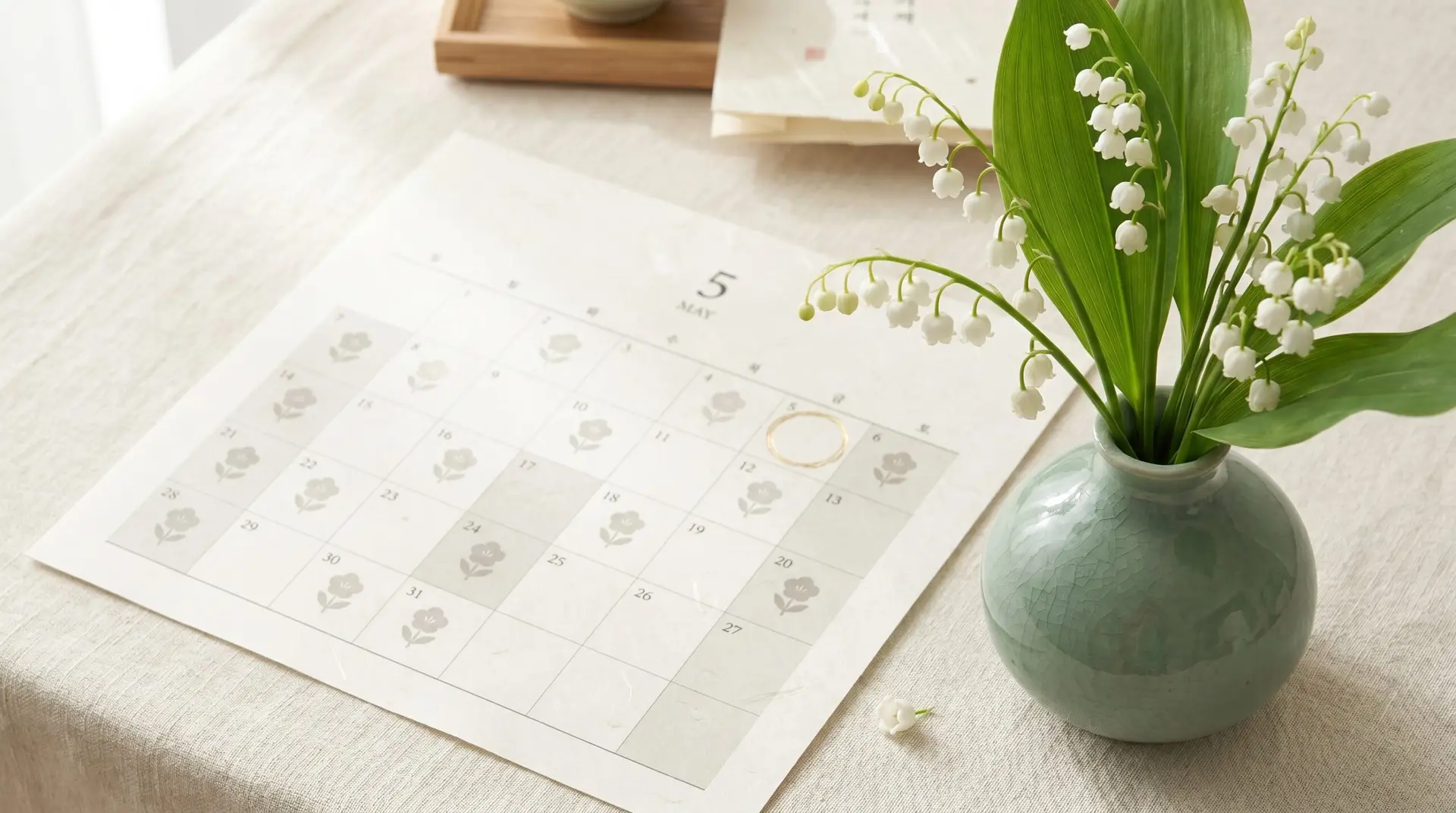
Korean tradition assigns a unique flower to each of May’s 31 days. The system runs parallel to the Western birth flower tradition (which gives all of May to lily of the valley and hawthorn) and offers a more granular reading that ties specific birthdays to specific blooms.
May in the Korean list features three direct cross-cultural alignments with Western tradition: lily of the valley on May 5 (matching the Western May primary), hawthorn on May 13 (matching the Western May secondary), and water lily on May 8 (cross-aligning with the Western July primary). This is the highest number of cross-cultural alignments in any month of the Korean tradition, reflecting the broad significance of late-spring flowers across both East Asian and Western birth flower traditions. The cluster of alignments around May 5 to 13 makes this period particularly meaningful for readers seeking strong cross-cultural birth flower symbolism.
In this guide 6 sections
Early May (May 1-10): youth and trust themes
The first ten days of May in the Korean tradition center on youth, trust, and the cross-cultural lily of the valley alignment.
| Day | Flower | Korean (한국어) | Meaning |
|---|---|---|---|
| May 1 | Cowslip | 카우슬립 | Sadness and happiness of youth |
| May 2 | Buttercup | 미나리아재비 | Truthfulness |
| May 3 | Dandelion | 민들레 | Trust |
| May 4 | Garden strawberry | 딸기 | Respect and love |
| May 5 | Lily of the valley | 은방울꽃 | Exquisite |
| May 6 | Stock flower | 비단향꽃무 | Eternal beauty |
| May 7 | Strawberry leaf | 딸기잎 | Love and respect |
| May 8 | Water lily | 수련 | Innocent heart |
| May 9 | Prunus | 겹벚꽃 | Pure, elegant |
| May 10 | Flag iris | 창포 | Elegant heart |
The early May cluster moves through themes of youth and reverent affection. Cowslip (Primula veris) on May 1 with “sadness and happiness of youth” gives the month an opening reading that acknowledges both joy and bittersweet quality of growing up. The cross-cultural alignment with Western tradition is significant: Western tradition treats cowslip as a primrose-family member with similar youthful associations.
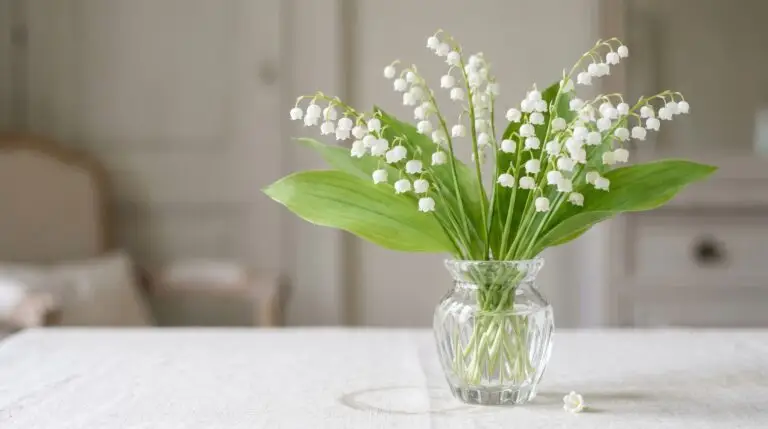
Lily of the valley on May 5 with the Korean reading “exquisite” is a remarkable cross-cultural alignment. Western tradition treats May as lily of the valley’s month with “return of happiness, humility, sweetness” symbolism. The two traditions independently identified May 5 as a date of lily of the valley significance, with both readings emphasizing the flower’s refined elegant character. A May 5 birthday has the strongest combined symbolic weight of any date in the Western May tradition.
May 5 is also Korean Children’s Day (어린이날, Eorininal), a national holiday in South Korea since 1975. The combination of Korean Children’s Day with the lily of the valley assignment gives May 5 a doubled cultural register that includes both the Korean civic celebration of children and the broader floral symbolism.
Water lily (수련) on May 8 with “innocent heart” gives May a second cross-cultural alignment. Water lily is the Western July primary birth flower with related “purity” symbolism. The two traditions independently emphasize the purity-and-innocence reading of water lily, regardless of the specific month assignment.
Mid May (May 11-20): love bud and victory themes
The middle ten days of May feature additional cross-cultural alignment plus themes of love bud and victory.
| Day | Flower | Korean (한국어) | Meaning |
|---|---|---|---|
| May 11 | Apple blossom | 사과꽃 | Seduction, temptation |
| May 12 | Lilac | 라일락 | Love bud |
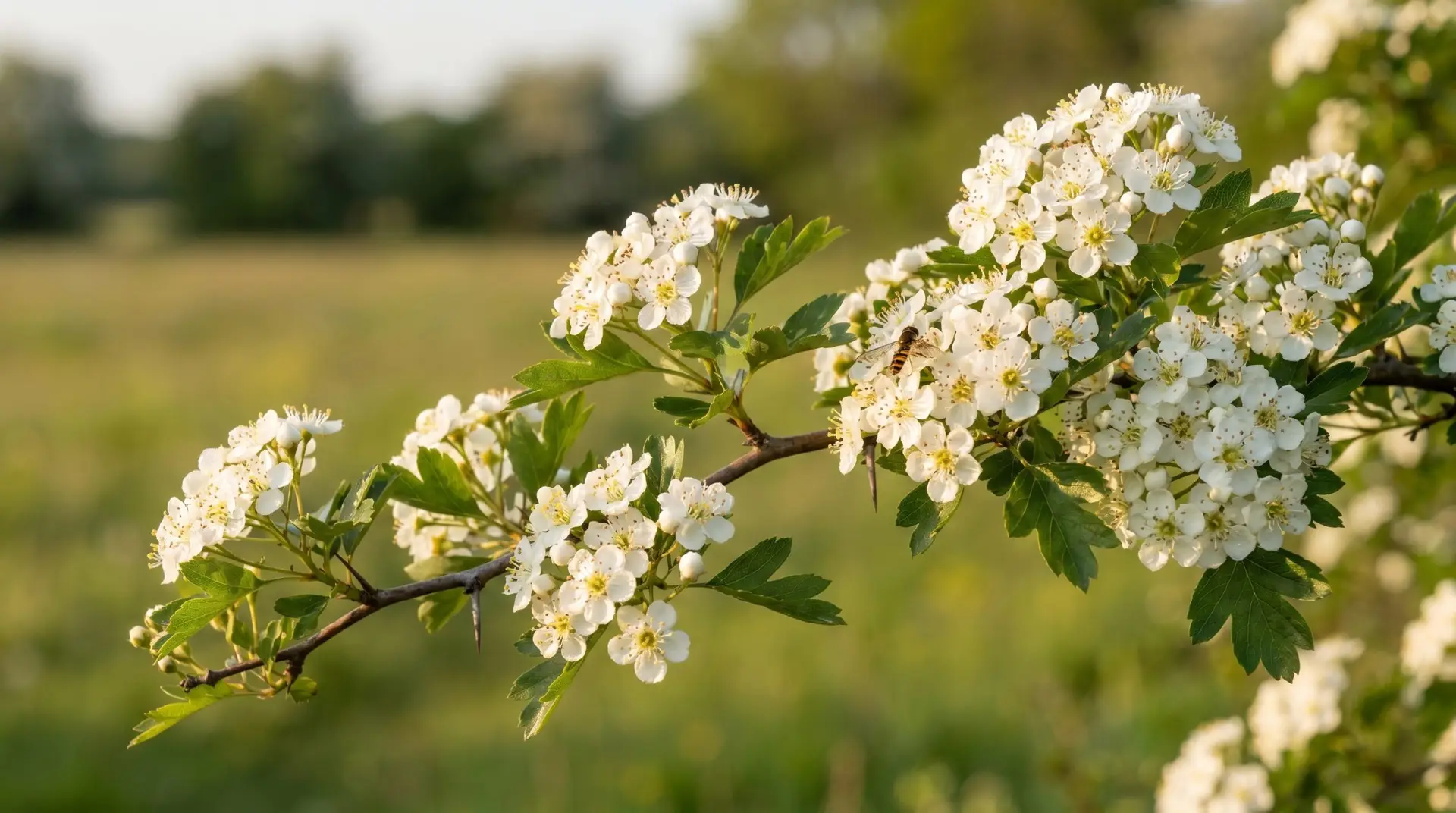
| May 13 | Hawthorn | 산사나무 | Only love |
| May 14 | Columbine | 매발톱꽃 | Decisive victory |
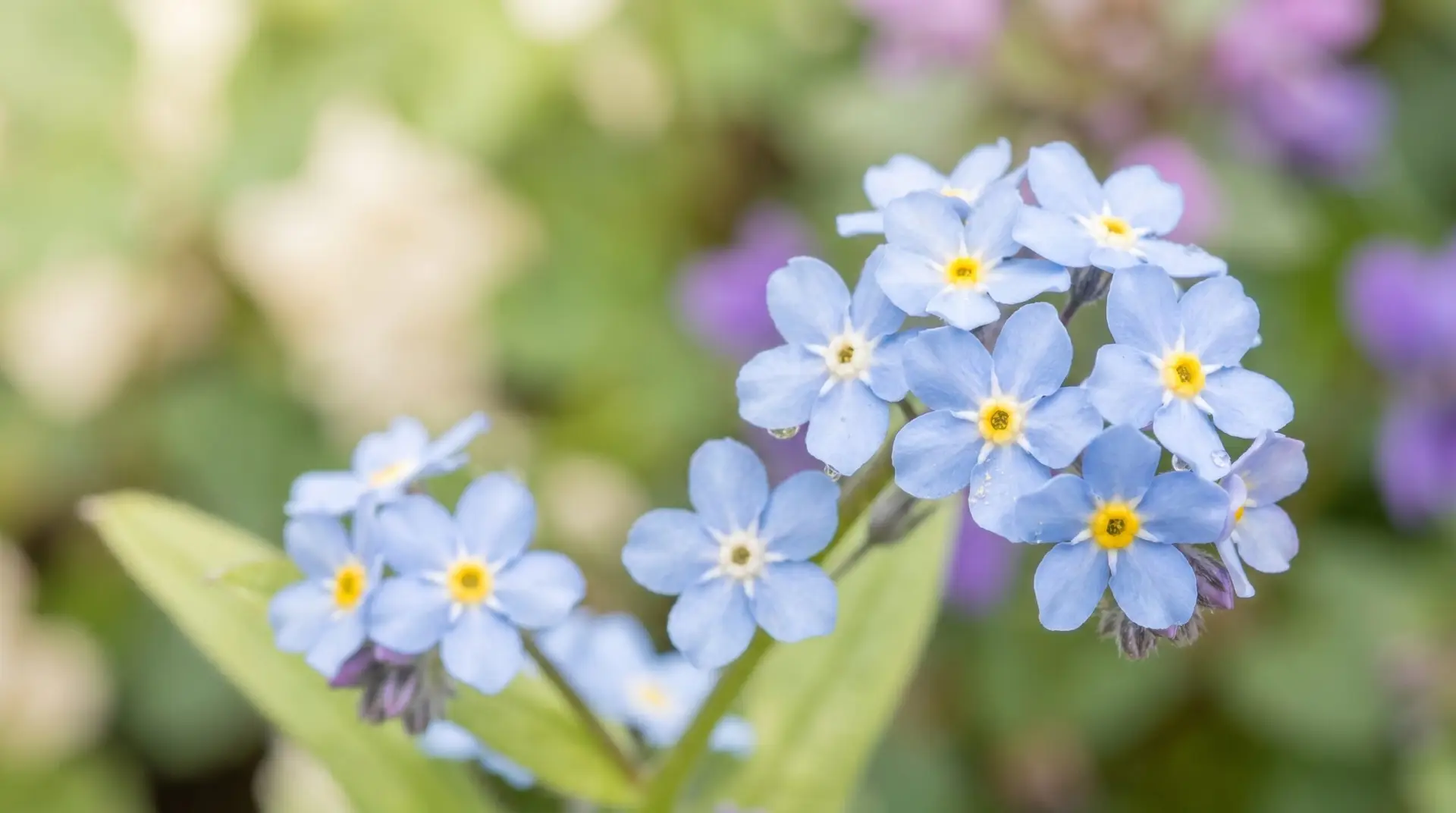
| May 15 | Forget-me-not | 물망초 | True love |
| May 16 | Bridal wreath (Spiraea) | 조팝나무 | Effort |
| May 17 | Yellow tulip | 노란튤립 | Sign of love |
| May 18 | Oxlip | 옥슬립 | First love |
| May 19 | Aristata | 아리스타타 | Owner of beauty |
| May 20 | Wood sorrel | 괭이밥 | Shining heart |
Hawthorn (산사나무) on May 13 with “only love” gives the third major cross-cultural alignment for May. Western tradition treats hawthorn as May’s secondary birth flower with “hope and supreme happiness” symbolism. The Korean reading emphasizes the romantic-loyalty dimension that aligns with the Celtic Beltane (May 1) tradition surrounding hawthorn.
Apple blossom (사과꽃) on May 11 with “seduction, temptation” connects to the broader Western tradition of apple blossom as Eden imagery (the forbidden fruit narrative in Christian tradition). Korean reading is more directly romantic-temptation rather than the religious framing of Western Christian symbolism.
Lilac (라일락) on May 12 with “love bud” connects to the broader European tradition of lilac as a young-love flower. Lilac bloom typically peaks in early-to-mid May across most temperate climates, making the seasonal assignment accurate.
Forget-me-not (물망초) on May 15 with “true love” connects to the broader Western symbolism of forget-me-not as remembrance and faithful love. The flower also appears as Princess Diana’s favorite (incorporated into Meghan Markle’s 2018 royal wedding bouquet as tribute), giving the date additional contemporary cultural weight for readers familiar with British royal family history.
Late May (May 21-31): freedom and pure heart themes
The final eleven days of May move toward themes of freedom, harmony, and the closing cross-cultural daisy alignment.
| Day | Flower | Korean (한국어) | Meaning |
|---|---|---|---|
| May 21 | Red larkspur | 빨간참제비고깔 | Freedom |
| May 22 | Fuchsia | 후크시아 | Enthusiastic heart |
| May 23 | Leaf buds | 새싹 | Memories of first love |
| May 24 | Heliotrope | 헬리오트로프 | Eternal love |
| May 25 | Pansy | 팬지 | Pure love |
| May 26 | Olive | 올리브 | Peace and harmony |
| May 27 | Daisy | 데이지 | Pure heart |
| May 28 | Mint | 박하 | Virtue |
| May 29 | Clover | 클로버 | Vibrant |
| May 30 | Purple lilac | 보라라일락 | Sudden love |
| May 31 | Scilla | 스킬라 | Strong restraint |
The late May cluster shifts to themes of freedom and refined feeling. Olive on May 26 with “peace and harmony” connects to the broader Mediterranean tradition of olive branch as universal peace symbol (the olive branch in Genesis flood narrative, Greek mythology, modern peace iconography).
Daisy (데이지) on May 27 with “pure heart” gives the fourth cross-cultural alignment for May. Daisy is the Western April primary birth flower with “innocence, loyal love” symbolism. The Korean reading “pure heart” aligns directly with the Chaucerian medieval English reading of daisy as the flower of loyal love and innocence.
Pansy (팬지) on May 25 with “pure love” connects to the broader Western tradition of pansy as the “you occupy my thoughts” flower (the Shakespearean Midsummer Night’s Dream reference). Korean reading emphasizes the pure-love dimension that aligns with broader pansy symbolism.
Purple lilac (보라라일락) on May 30 with “sudden love” makes the closing days of May particularly love-themed. The cluster of love-readings (May 12 lilac, May 23 leaf buds, May 24 heliotrope, May 25 pansy, May 30 purple lilac) gives the second half of May an unusually concentrated romantic-symbolism register.
How Korea’s May compares to Western tradition
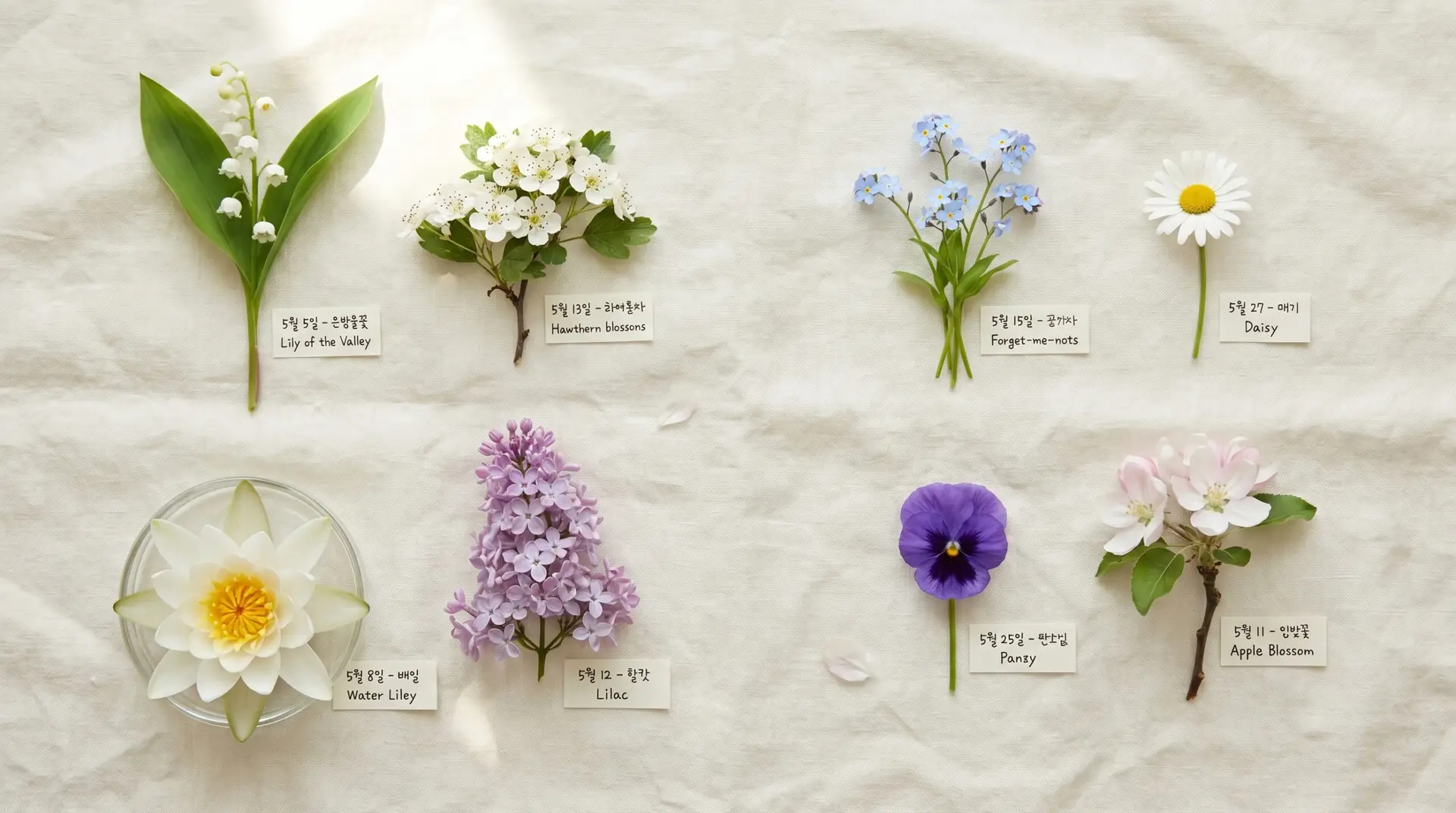
May has the strongest cross-cultural alignment between Korean and Western traditions of any month. Three Korean May entries directly match Western flower assignments:
- May 5: Lily of the valley. Korean “exquisite” reading aligns with Western “return of happiness, humility, sweetness” symbolism. Western primary May flower.
- May 13: Hawthorn. Korean “only love” reading aligns with Western “hope, supreme happiness” symbolism. Western secondary May flower.
- May 8: Water lily. Korean “innocent heart” aligns with Western “purity” symbolism. Cross-month alignment with Western July primary.
Additional cross-month alignment:
- May 27: Daisy. Korean “pure heart” aligns with Western “innocence, loyal love” symbolism. Cross-month alignment with Western April primary.
The May 5 lily of the valley alignment is the most significant. Two unrelated cultural traditions independently selected May 5 as a date of particular lily of the valley significance. Combined with Korean Children’s Day on May 5 (national holiday since 1975), this gives May 5 birthdays the strongest combined cross-cultural symbolic weight of any specific date in the entire birth flower calendar.
May has no direct equivalent to the French Fête du Muguet (May 1 muguet tradition) in Korean culture. Korean May 1 is cowslip (“sadness and happiness of youth”), a different reading entirely. The Korean tradition does not include the May 1 muguet civic celebration that defines French May 1.
Questions
Frequently asked
What is the Korean birth flower for May 5?
Lily of the valley (은방울꽃), with the meaning “exquisite.” This date is also Korean Children’s Day (어린이날), giving May 5 a doubled cultural register. The Korean lily of the valley assignment directly cross-aligns with Western May primary tradition.
What is the Korean birth flower for May 13?
Hawthorn (산사나무), with the meaning “only love.” This cross-aligns directly with Western May secondary tradition (hawthorn as May tree with “hope, supreme happiness” symbolism). The Korean reading emphasizes the romantic-loyalty dimension.
What is the Korean birth flower for May 8?
Water lily (수련), with the meaning “innocent heart.” This cross-aligns with Western July primary tradition (water lily with “purity” symbolism), making May 8 a cross-month significant date for water lily readers.
Why does Korean May have so many cross-cultural alignments?
May features four direct alignments with Western tradition: May 5 lily of the valley, May 8 water lily, May 13 hawthorn, May 27 daisy. The clustering reflects the broad cultural significance of late-spring flowers across both East Asian and Western birth flower traditions. The May 5 lily of the valley alignment is particularly significant because two unrelated traditions independently identified this specific date.
What is Korean Children’s Day?
Korean Children’s Day (어린이날, Eorininal) is May 5, a Korean national holiday established in 1923 by Korean writer Bang Jeong-hwan and made a national holiday in 1975. The day celebrates Korean children with parades, parks visits, and family activities. The day intersects with the Korean May 5 lily of the valley birth flower assignment.
What does forget-me-not symbolize in Korean May?
Forget-me-not (물망초) on May 15 has “true love” symbolism in Korean tradition. The flower also has significant contemporary Western cultural resonance as Princess Diana’s favorite flower (incorporated into Meghan Markle’s 2018 royal wedding bouquet as a tribute to her late mother-in-law).
Which Korean May birth flower is for my birthday?
Find your date in the tables above. The Korean tradition assigns one specific flower to each day from May 1 (cowslip) through May 31 (scilla). Each daily flower has its own symbolic reading.
Sources
- Korean birth flower 365-day tradition guide · Creatrip Korean culture portal
Keep reading
May birth flower: lily of the valley, hawthorn, and what they mean

Hawthorn flower meaning: Celtic Beltane tradition, folklore, and growing
Lily of the valley tattoo: bell-flower designs, royal wedding inspiration, and placement
Birth flower by month: all 12 monthly flowers
Enjoying our flower guides? Add YourFlowersGuide as a preferred source on Google. It helps more readers find us.
Add to Preferred Sources