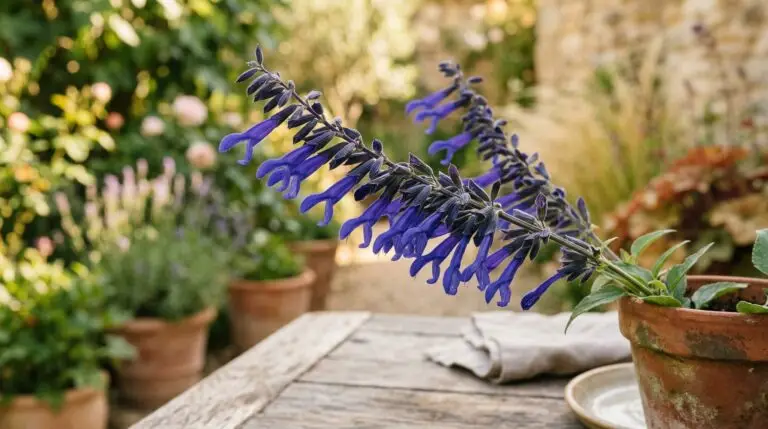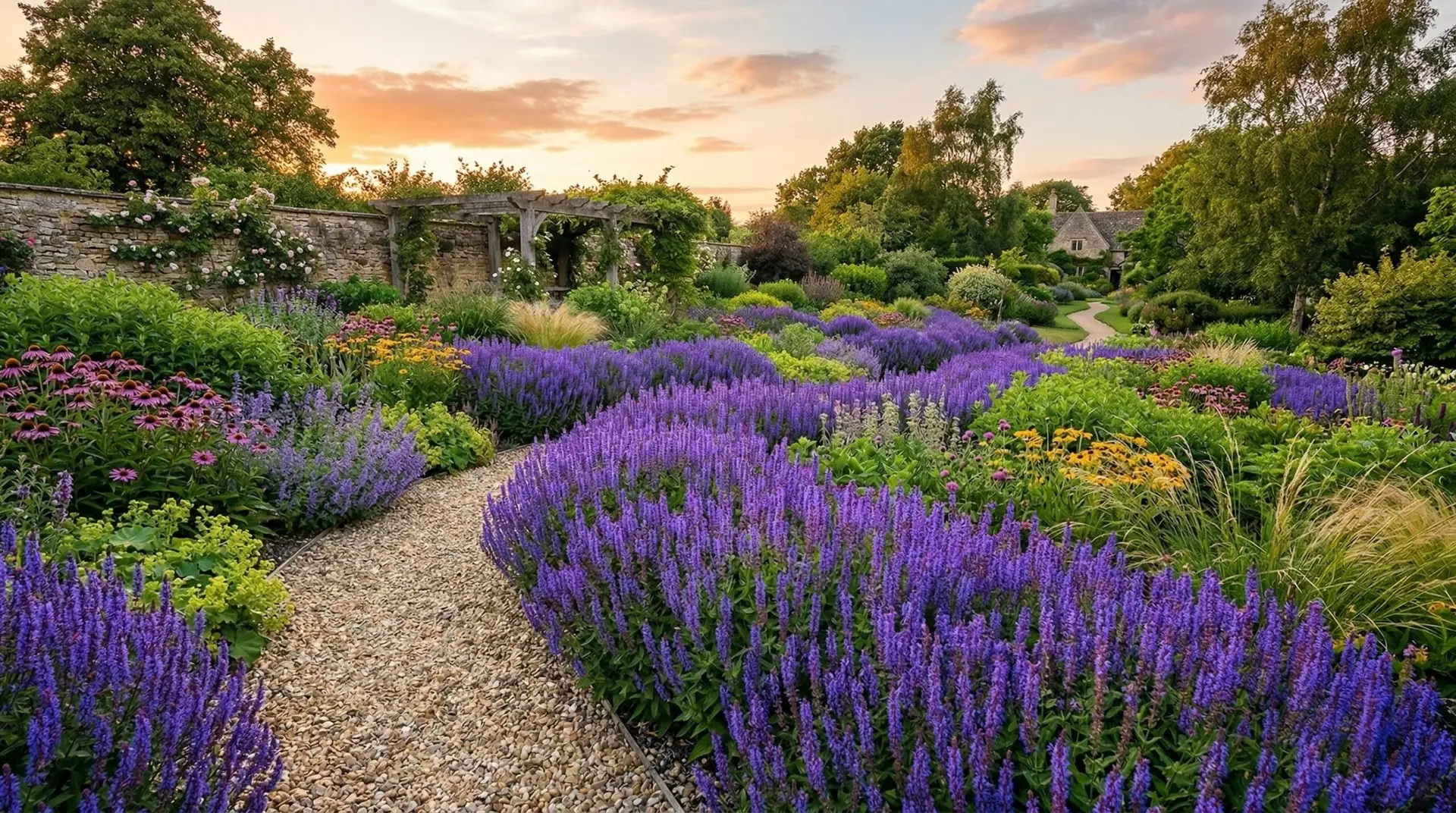
Late summer mornings bring a specific quality of light that transforms a wide expanse of earth into a living canvas. When the early sun hits a sweeping river of blue salvia, the effect stops even the most hurried visitor in their tracks. The tall spikes of indigo and violet catch the dew, creating a haze of color that seems to hover just above the soil. This is the magic of a blue flower drift planting, a technique that turns a simple perennial into a dominant architectural element. Individual plants disappear into a unified wave of color that draws the eye across the property. Most gardeners discover that while a single plant offers a quiet charm, multiplying that same plant by the dozens changes the entire atmosphere of a space. The garden suddenly feels expansive, intentional, and deeply rooted in its surroundings.
Learning from public spaces
Walking through a well-designed botanical garden often reveals the secret to making a large garden feel cohesive rather than chaotic. Designers of these grand spaces rely heavily on a salvia mass planting to anchor their vast borders. They understand that the human eye craves rhythm and repetition to make sense of a large area. Instead of placing one plant here and another there, they group dozens of identical blue salvias into long, irregular ribbons. These ribbons mimic the way water flows through a valley, pooling in wide areas and narrowing as they wrap around corners. The resulting visual weight grounds the surrounding plantings and provides a steady baseline of color from early summer straight through to the first frost.
Replicating this grand scale at home requires a shift in how we purchase and place our plants. Instead of buying one of everything at the nursery, the strategy shifts to buying flats of a single, reliable variety. A large garden salvia installation demands commitment to a unified vision. The specific cultivar you choose matters less than the sheer volume of plants you are willing to install. When thirty or forty blue salvias bloom simultaneously, the air above them hums with the constant movement of bees and butterflies. The scent of the crushed foliage, earthy and slightly sharp, rises in the afternoon heat. This sensory immersion is the true reward of planting in generous drifts, turning a walk to the mailbox into a memorable event.
Shaping the drifts
Creating a successful sweep of color relies entirely on the geometry of the planting bed. The most effective drifts are shaped like elongated teardrops or crescent moons, never perfect squares or rigid circles. The wide end of the drift should face the primary viewing angle, perhaps a patio or a kitchen window, while the narrow tail curves away to suggest distance. This forced perspective tricks the eye into believing the garden stretches much further than the actual property line. Planting the salvias in staggered, interlocking rows ensures no bare earth breaks the illusion of a solid mass. As the plants mature and expand, their foliage knits together to form a dense weed-suppressing canopy.
Spacing these plants correctly requires a balance between instant gratification and long-term health. Placing the crowns about eighteen inches apart usually yields a solid block of color by the second growing season. If the spacing is too wide, the individual plants look like isolated islands rather than a continuous river. If they are packed too tightly, poor air circulation invites powdery mildew and stunts their natural arching habit. A proper salvia mass planting allows each root system enough room to establish deep connections in the soil while ensuring the upper canopies mingle freely. The soil itself becomes invisible by mid-June, completely eclipsed by the textured green leaves and the rising tide of blue flower spikes. Watering becomes easier as the unified canopy shades the ground and holds moisture in the earth.
Building combinations with contrasting colors
While a solid block of blue makes a strong statement, weaving contrasting textures and tones through the salvia elevates the entire composition. Silver foliage provides the perfect foil to deep violet blooms. Many designers will run a parallel drift of Russian Sage just behind the salvia to create a tiered effect of pale blue and silver against the darker indigo. The airy, transparent quality of the sage prevents the solid mass of salvia from feeling too heavy in the midsummer heat. Alternatively, planting a low, spilling border of Catmint along the front edge softens the transition between the upright salvia stems and the lawn. The soft, sprawling habit of the edging plant contrasts beautifully with the rigid, upright spikes behind it.
Introducing warm colors into the mix creates an entirely different mood in the garden. Drifts of yellow yarrow or bright orange sneezeweed planted adjacent to the blue salvia create a complementary color clash that commands attention. The cool blue tones actually make the warm yellows and oranges appear much brighter than they would on their own. For a more subdued, aromatic experience, a nearby sweep of Lavender echoes the purple-blue spectrum while introducing a completely different fragrance profile. The stiff, needle-like foliage of the lavender plays against the broader, softer leaves of the salvia. These intentional pairings turn a simple mass planting into a sophisticated horticultural composition. The garden becomes a study in texture and tone, changing subtly as the sun moves across the sky.
There is a quiet magic that happens in the garden just as the sun dips below the horizon. The bright yellows and reds of the surrounding borders fade into the shadows, but the deep blues and purples of the salvia seem to hold onto the twilight. A massive sweep of these flowers glows with a strange, luminous intensity in the dusk, drawing the moths and the final foraging bees. The sheer volume of the planting amplifies this evening glow, turning the entire bed into a beacon. It is in these quiet evening hours that the true power of a drift planting reveals itself, leaving an image in the mind long after the garden gate is closed.
More About Blue Salvia
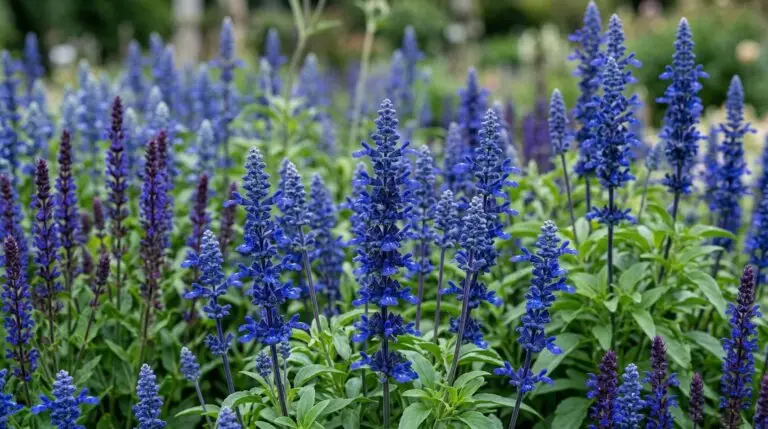
Best blue salvia varieties for non-stop color from late spring through first frost
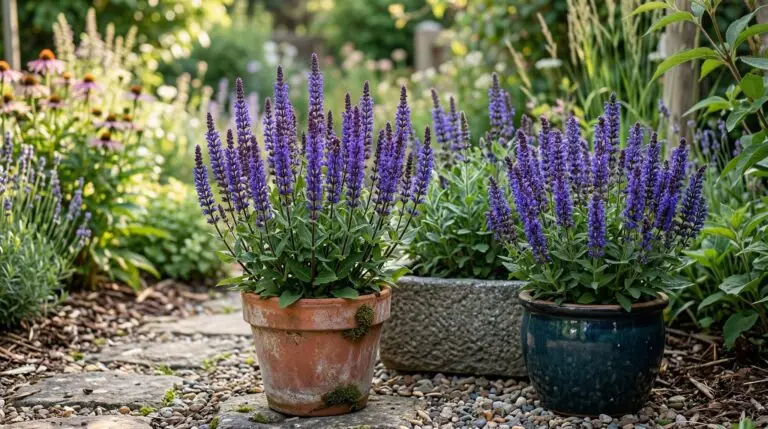
How to grow blue salvia in containers for a burst of color on sunny patios
Perennial salvia versus annual salvia and how to choose the right one