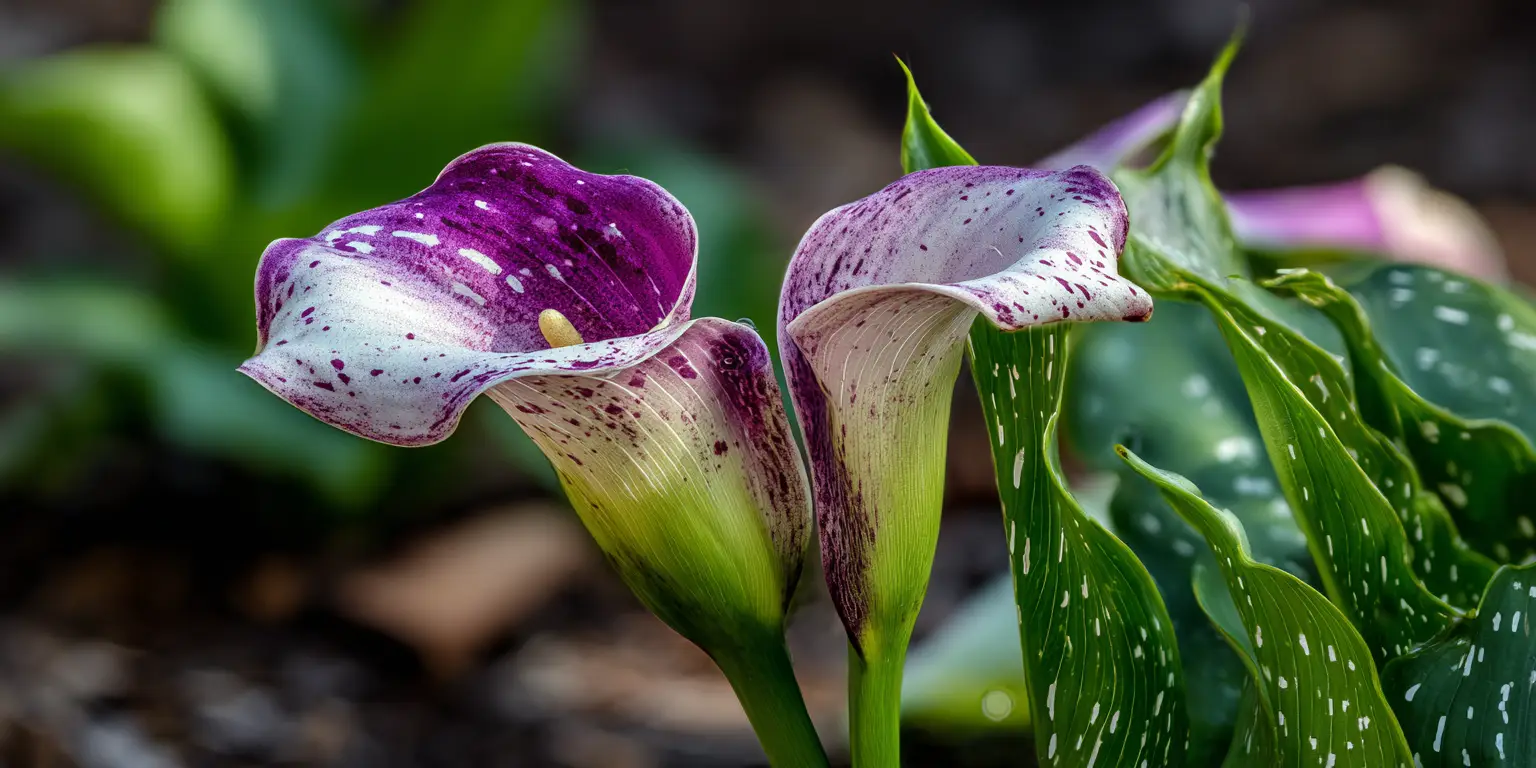
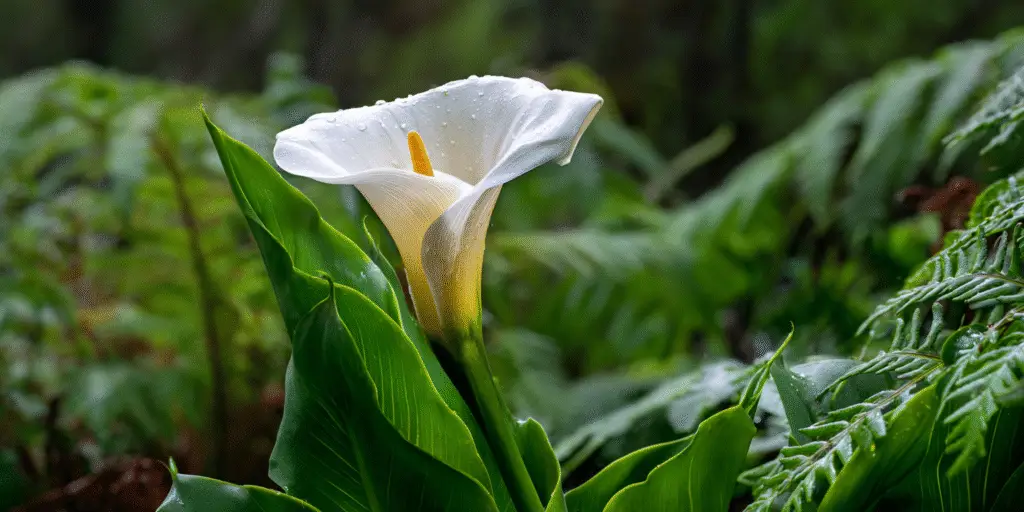
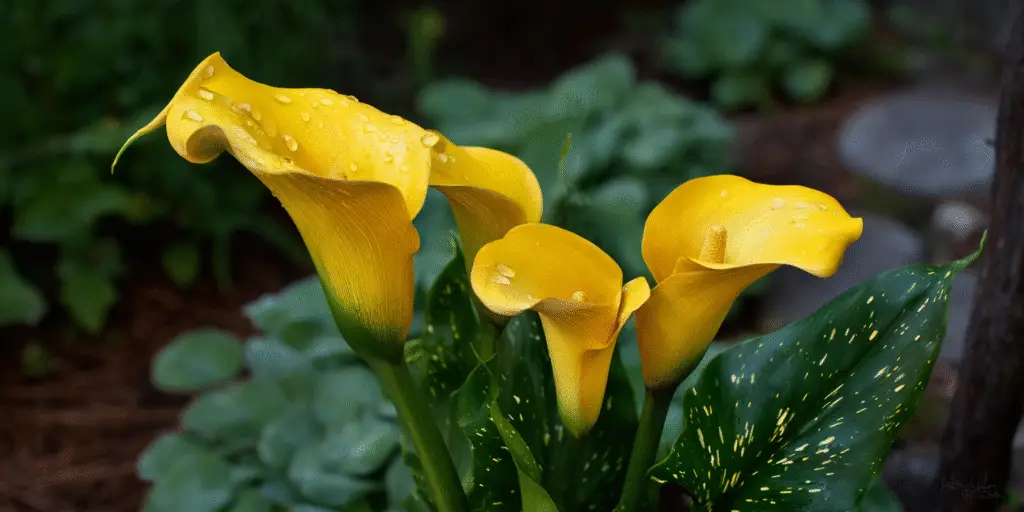
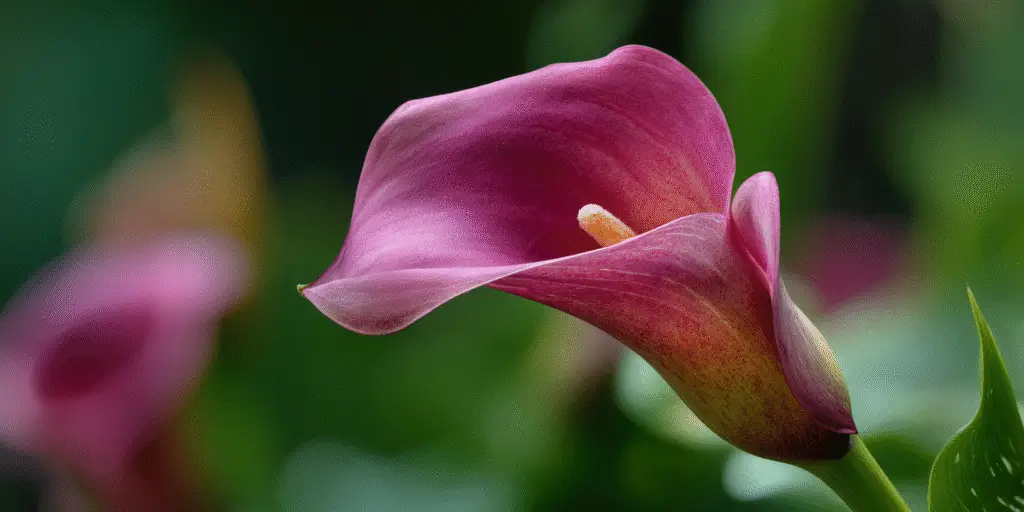
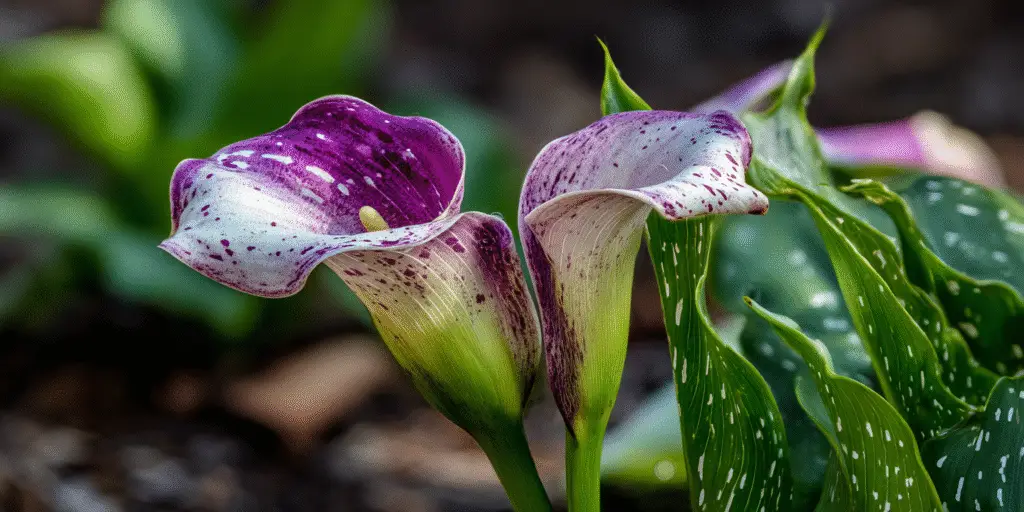
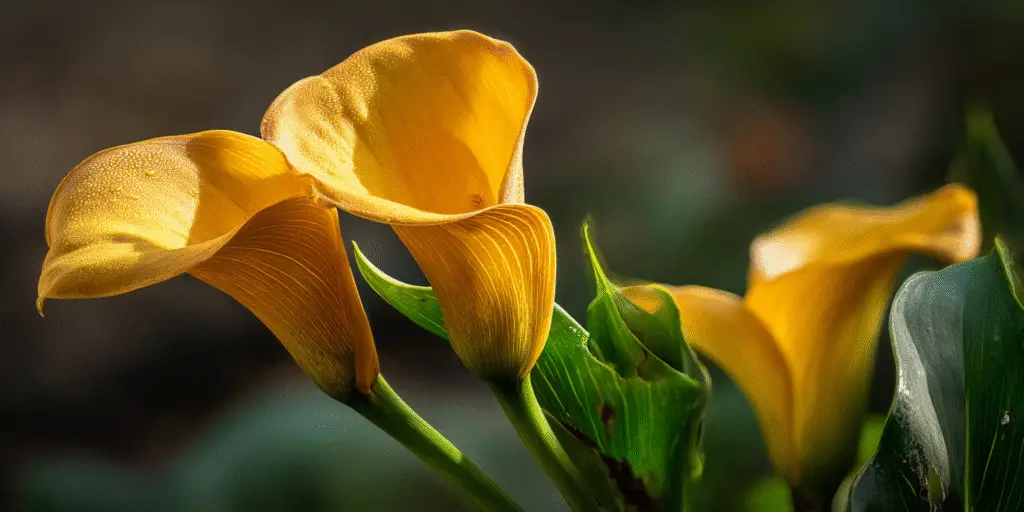
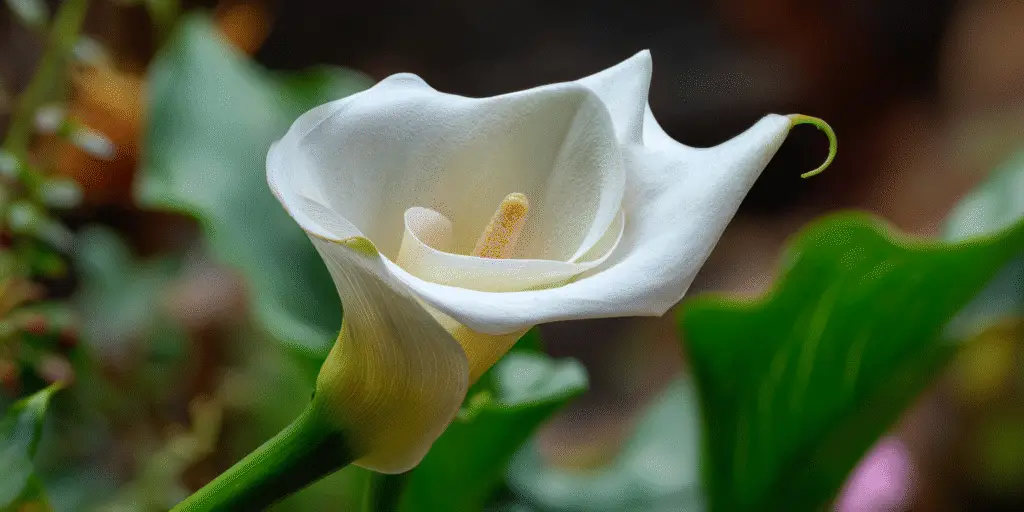
Zantedeschia albomaculata is the spotted calla lily valued for decorative leaves and creamy to white spathes. It stands out for foliage dotted with translucent white spots. Plants perform best in warm summer regions and in containers with excellent drainage. It is grown as a seasonal bulb across much of North America. Bloom usually runs from late spring into summer. Some forms show a dark purple flush or throat at the base of the spathe.
At‑a‑glance
Group/Class: Species; tuberous calla lily
Height × spread: 18 to 24 in (45 to 60 cm) × 12 to 18 in (30 to 45 cm)
Bloom window: Late spring to summer
Color & flower form: White to cream spathe often with a dark basal flush; spotted foliage
Fragrance: 0 none
USDA hardiness: Zones 8 to 10; grown as annual or lifted in colder zones
Breeder / Year / Origin: Unknown, unknown, southern Africa
Cut‑flower notes: Medium stems; typical vase life 7 to 10 days
Pet safety: Avoid
How it differs
Leaves are attractively and heavily spotted.
Spathe color ranges from white to cream with possible dark throat.
Deciduous and summer growing; not suited to standing water.
Strengths
Foliage gives interest before and after bloom.
Performs well in containers and raised beds.
Useful as a cut in mixed bouquets.
Care in one minute
Site: full sun to part shade; provide afternoon shade where summers are hot.
Soil: fertile and well drained; avoid heavy clay or standing water.
Watering: keep evenly moist while growing; reduce water as leaves yellow.
Feeding: light monthly fertilizer during active growth.
Grooming: remove spent spathes and any badly spotted foliage.
Overwintering: lift and store dry at 50 to 55°F (10 to 13°C) outside zone 8 to 10.
Watch‑outs
Soft rot can occur in cold and waterlogged media.
Leaf spot and botrytis may appear in prolonged wet weather.
Frost sensitive; lift tubers in cold regions.
Best uses (tags)
containers, cutting, borders, mass planting
Provenance note
Widespread in southern Africa with variable local forms.
Written by: Your Flowers Guide editorial team We are a small independent group of flower lovers who research and review each guide using trusted horticultural and educational sources. Learn more about us