returns in
304
days
Bloom calendar
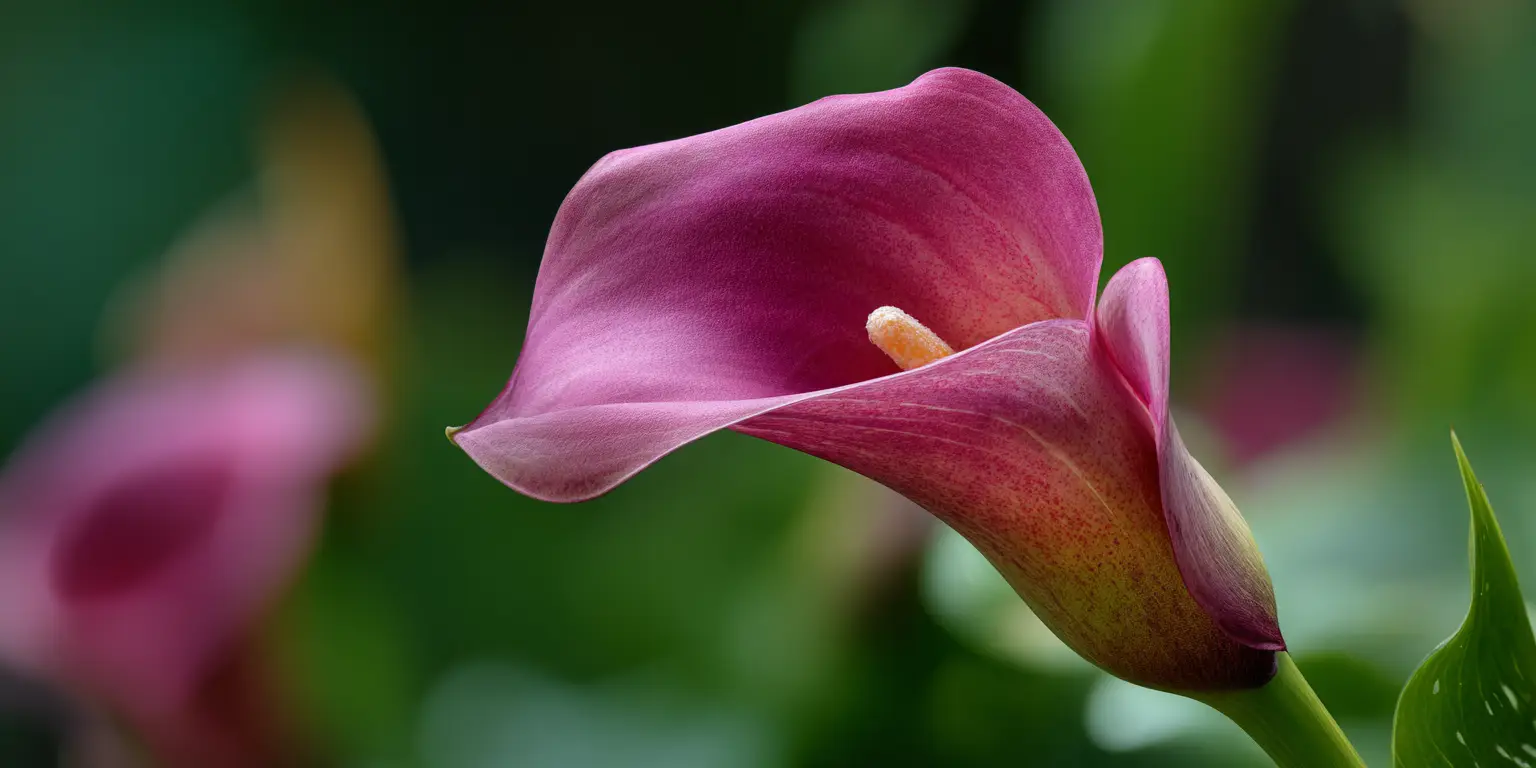
Zantedeschia rehmannii
Species; tuberous calla lily
At‑a‑glance
- Group/Class: Species; tuberous calla lily
- Height × spread: 12 to 18 in (30 to 45 cm) × 12 to 18 in (30 to 45 cm)
- Bloom window: Midsummer
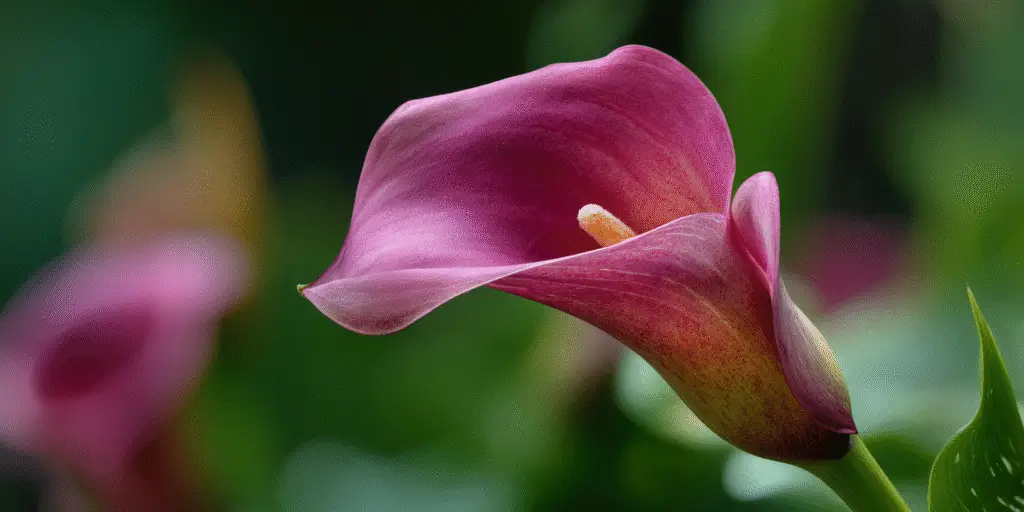
- Color & flower form: Pink to rose purple spathe with yellow spadix; slender funnel form; leaves usually unspotted
- Fragrance: 0 none
- USDA hardiness: Zones 8 to 10; grown as annual or lifted in colder zones
- Breeder / Year / Origin: Unknown, unknown, South Africa
- Cut‑flower notes: Medium stems; typical vase life 7 to 10 days when cut at open spathe stage
- Pet safety: Avoid
How it differs
- Shorter stature than many calla selections.
- Spotless and narrow leaves give a clean look.
- Colors well in steady summer warmth.
- Tuberous bulbs need sharply drained soils.
Strengths
- Compact habit for containers and small borders.
- Good stem production with even moisture and feeding.
- Useful as a cut when harvested at the proper stage.
Care in one minute
Site: full sun to part shade; give afternoon shade where summers are very hot.
Soil: fertile and well drained; slightly acidic to neutral pH.
Watering: maintain even moisture in growth; reduce after foliage yellows for dormancy.
Feeding: light monthly fertilizer during the growing season.
Grooming: remove spent spathes and senescent leaves.
Overwintering: lift before frost and store dry at 50 to 55°F (10 to 13°C).
Watch‑outs
- Soft rot can develop in cold or saturated media.
- Requires frost free storage; tubers do not tolerate freezing.
Best uses (tags)
Provenance note
Native to eastern South Africa and Eswatini.
References
- Missouri Botanical Garden – Zantedeschia rehmannii
- NC State Extension – Zantedeschia profile
- ASPCA – Calla lily toxicity
Similar Flowers
Enjoying our flower guides? Add YourFlowersGuide as a preferred source on Google. It helps more readers find us.
Add to Preferred Sources