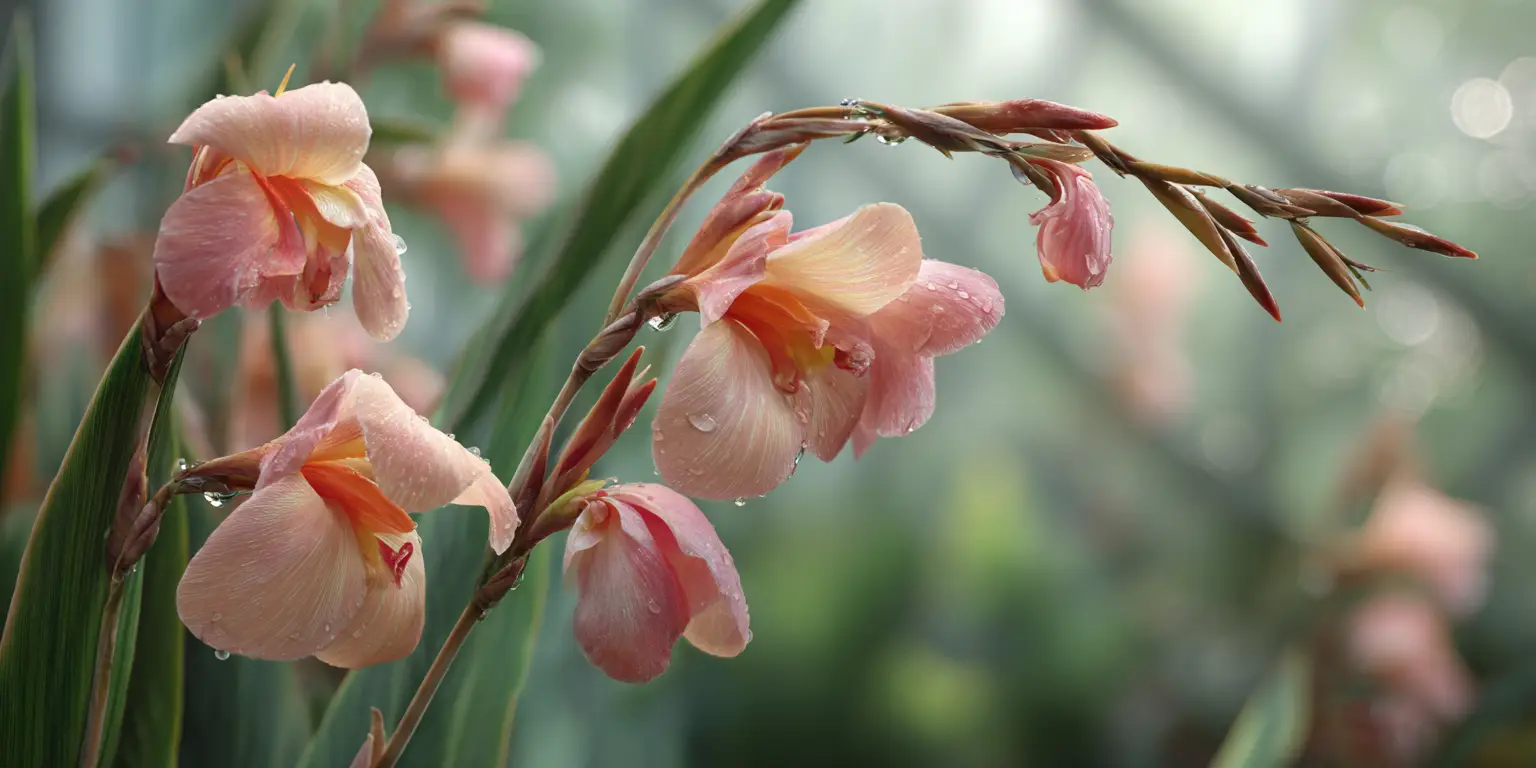
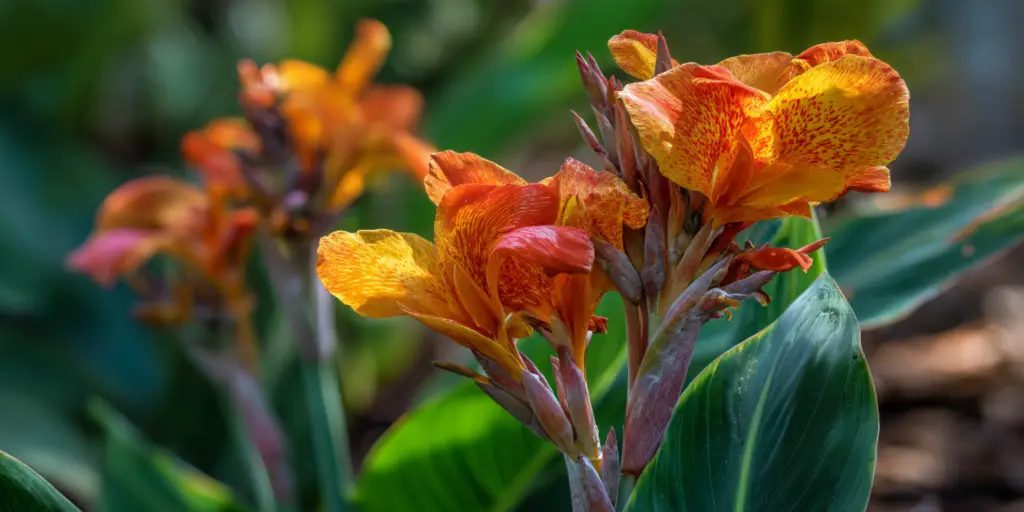
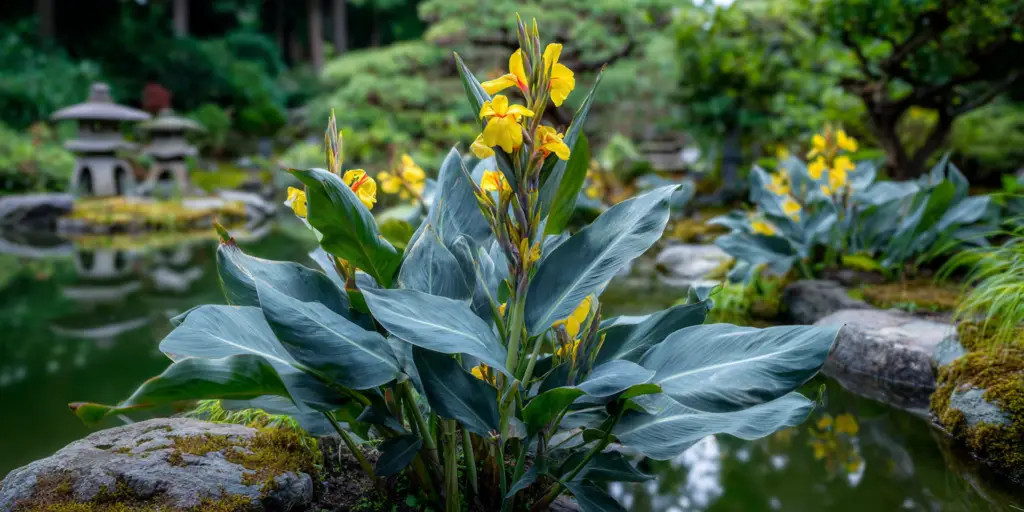
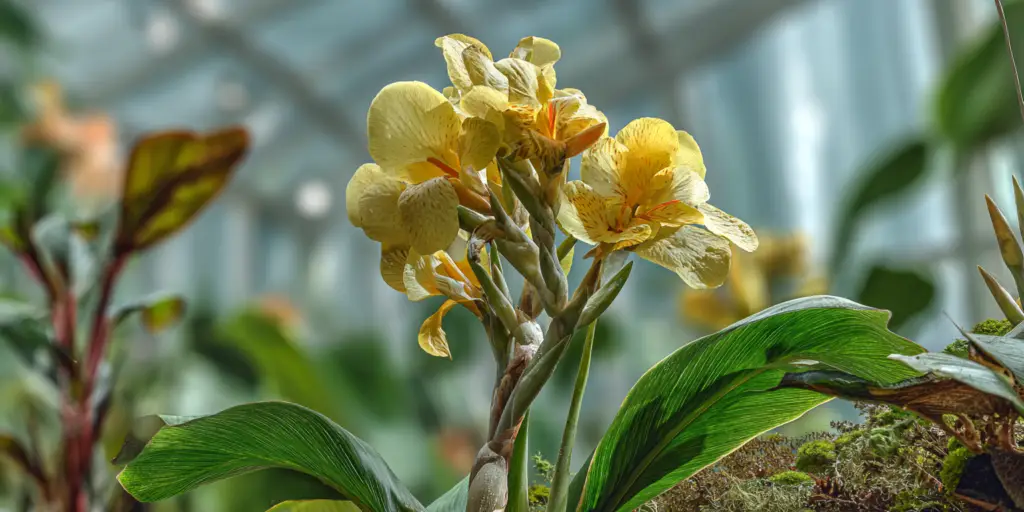
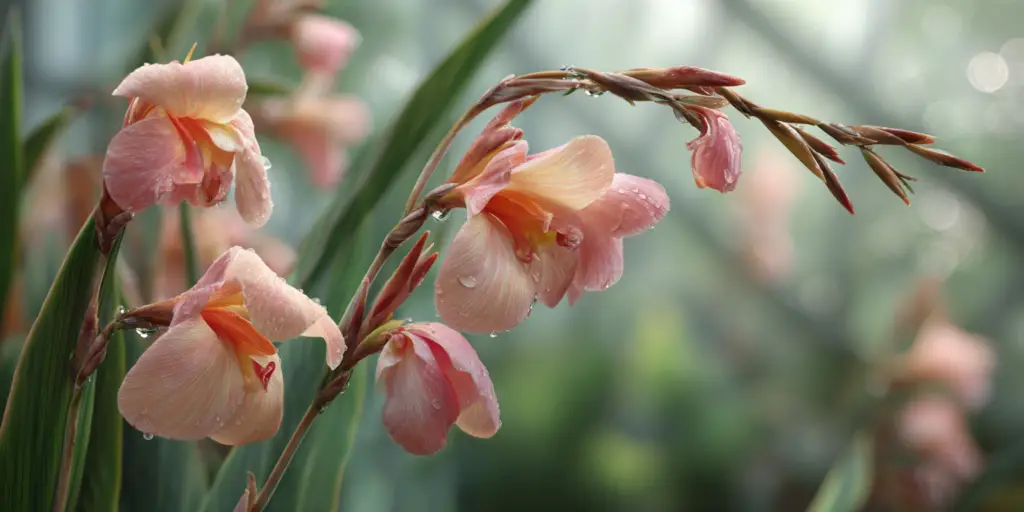
Peruvian canna is a tall species with large, pendant pink flowers. It excels in warm, long-season climates with rich soil and regular water. Towering clumps make a bold backdrop in large borders. In cool summers it may not flower freely and benefits from wind shelter. Rhizomes must be protected from frost across most of North America.
At‑a‑glance
Group/Class: Species
Height × spread: 8 to 13 ft (2.5 to 4 m) × 1.5 to 3 ft (0.5 to 1 m)
Bloom window: midsummer to early fall
Color & flower form: bright pink; large pendant tubular flowers
Fragrance: 0 none
USDA hardiness: zones 10 to 11; grown as annual or lifted in colder regions
Breeder / Year / Origin: unknown
Pet safety: safe
How it differs
Much taller than typical garden cannas.
Pendulous flowers rather than the usual erect blooms.
Needs a longer, warmer season to flower well.
Strengths
Striking height and architecture.
Heat-loving in fertile, moist soils.
Attracts hummingbirds in warm regions.
Care in one minute
Site: full sun; light shade in hottest inland sites.
Soil: rich, moisture-retentive but well-drained; neutral to slightly acid.
Water: keep evenly moist through summer.
Feed: monthly balanced fertilizer during active growth.
Overwinter: lift and store rhizomes above 40°F in colder zones.
Written by: Your Flowers Guide editorial team We are a small independent group of flower lovers who research and review each guide using trusted horticultural and educational sources. Learn more about us