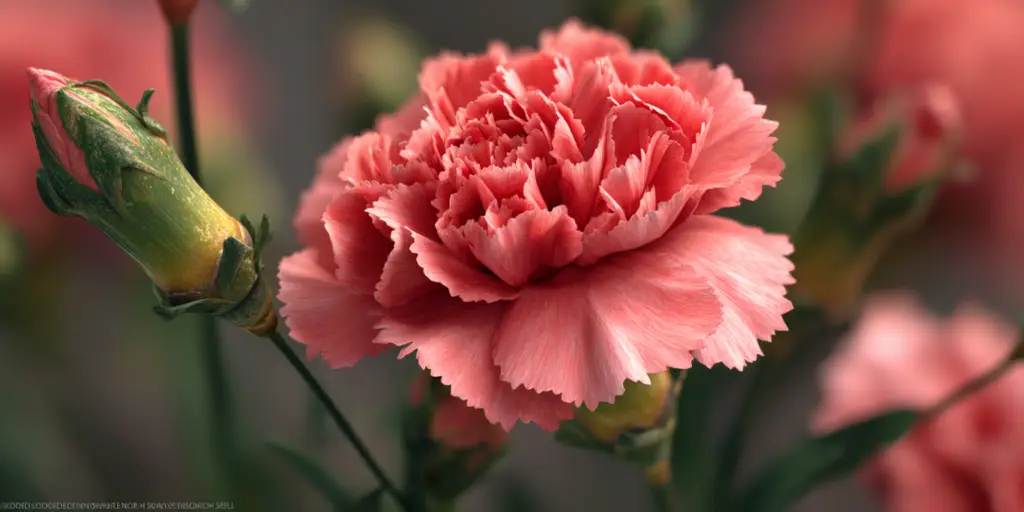
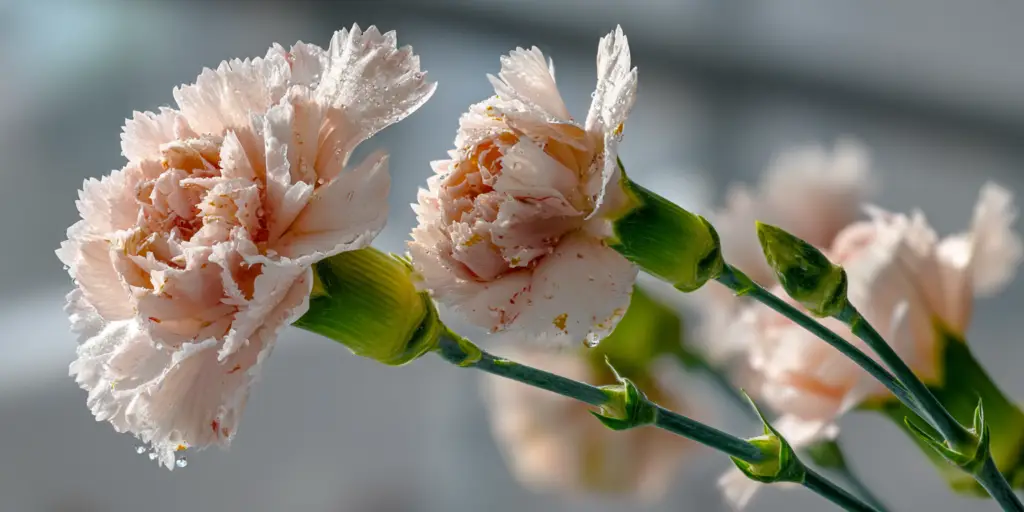
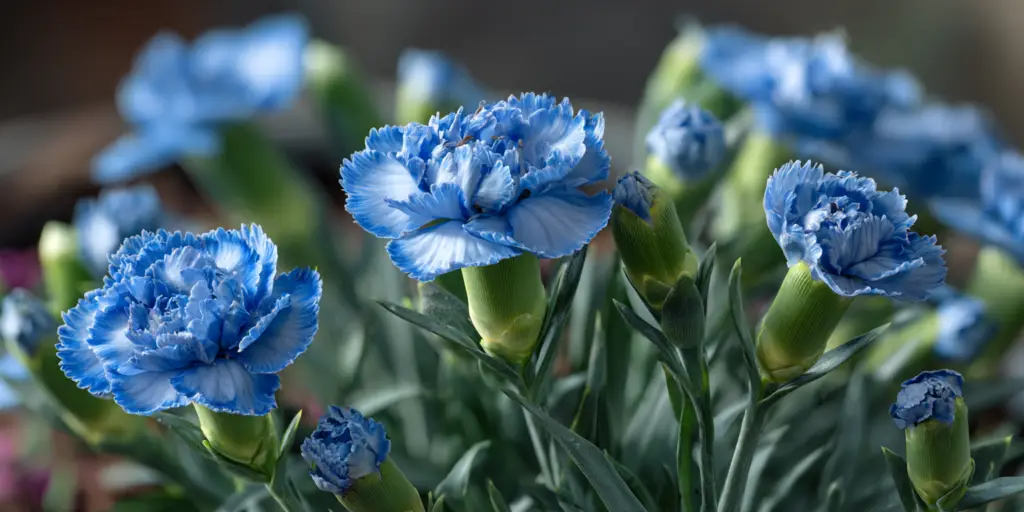
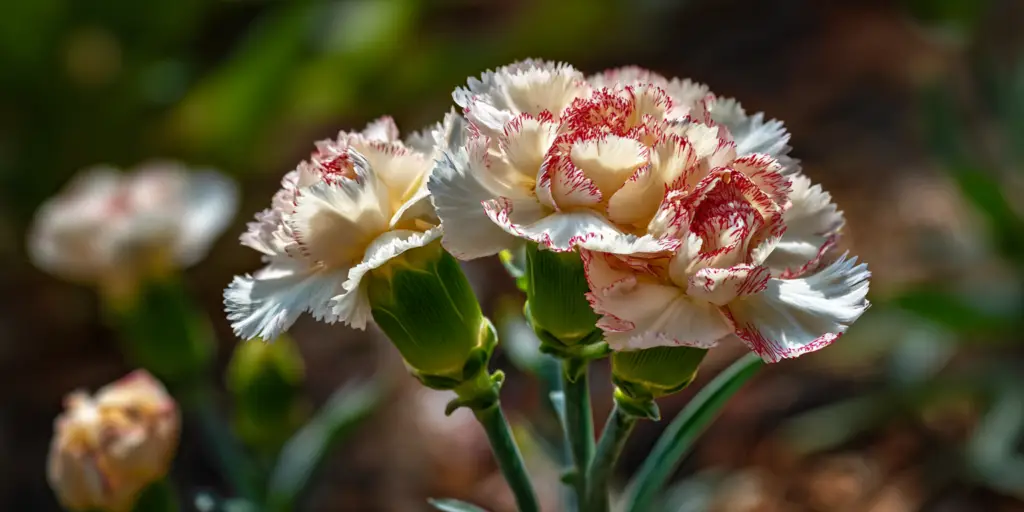
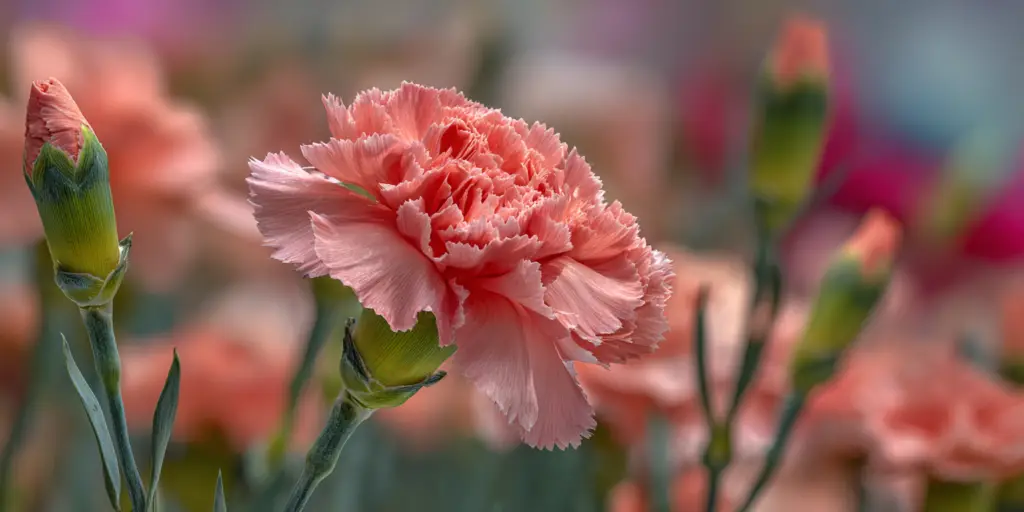
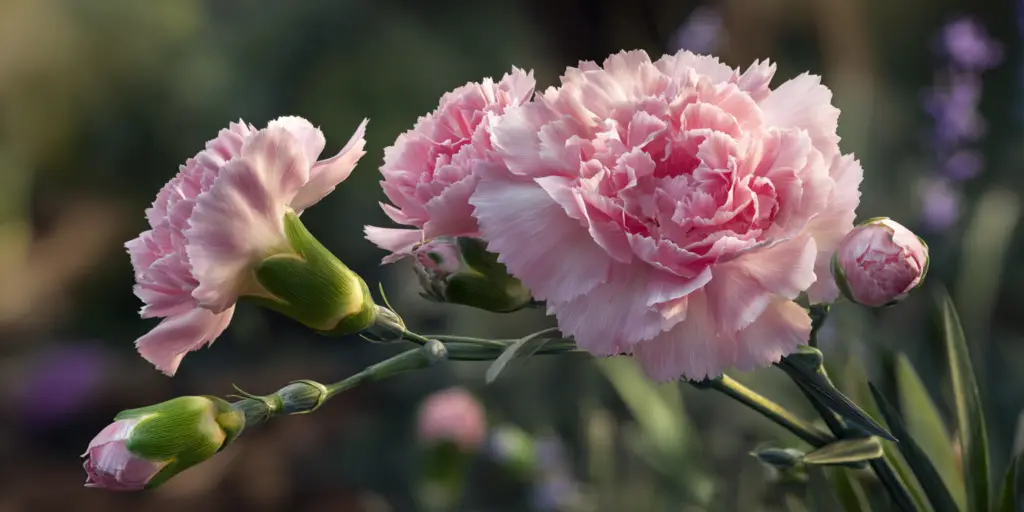
Dwarf Carnation is a compact form of Dianthus caryophyllus selected for short stems and dense flowering. It is commonly sold as a flowering pot plant and also works as a small-scale edging plant where summers are not extreme. Compared with tall florist types, dwarf forms focus on many blooms close to the foliage rather than long stems. They still need sun and fast drainage, and they perform poorly in heavy, wet soils. In containers, steady moisture and good airflow help reduce rot and gray mold. Dwarf forms are often easier to keep tidy with deadheading than taller garden strains.
At‑a‑glance
Group/Class: Dwarf or pot carnation type
Height × spread: 7-12 in (18-30 cm) × 6-9 in (15-23 cm)
Bloom window: late spring to summer (varies by climate and cultivar)
Color & flower form: small to medium, semi-double to double blooms; many colors
Fragrance: 1-2 (varies by cultivar)
USDA hardiness: 6a-9b (often grown as an annual in colder zones)
Breeder / Year / Origin: unknown / varies by cultivar; species origin Mediterranean region
Pet safety: avoid
How it differs
Much shorter habit than standard florist types.
Better suited to pots and small borders than long-stem cutting.
Flowers sit closer to foliage, so airflow is more important.
More sensitive to waterlogged mixes than in-ground border strains.
Strengths
Compact size fits patios, balconies, and small beds.
Heavy bloom display in a small footprint.
Easy to shape with light pinching and deadheading.
Works well for seasonal color in cool to moderate climates.
Care in one minute
Place in full sun with good airflow.
Use a gritty, well-drained mix with neutral to slightly alkaline pH.
Water when the top layer dries, and do not keep the pot constantly wet.
Feed lightly during bloom, and avoid heavy nitrogen.
Deadhead regularly, and pinch lightly early to encourage branching.
Overwinter indoors in a bright, cool spot where winters are harsh.
Watch‑outs
Overwatering causes root problems fast in containers.
Wet petals and crowded growth increase botrytis risk.
High heat can stall flowering and weaken plants.
Pot-bound plants decline sooner if not repotted.
Best uses (tags)
containers, edging, patio, small spaces, seasonal color
Provenance note
Pot and dwarf carnations are selected and grown for compact flowering displays, which is why many culture guides describe them by flowering height above the pot rather than long stem length.
Written by: Your Flowers Guide editorial team We are a small independent group of flower lovers who research and review each guide using trusted horticultural and educational sources. Learn more about us