Evaluating catmint for the modern garden
When evaluating the vast genus of Nepeta for garden use, we must immediately narrow our focus to the sterile hybrids of Nepeta x faassenii. The genus contains dozens of species, but many are weedy, sprawling plants that offer little ornamental value. True garden merit belongs to the named sterile cultivars that have been selected for their habit, bloom longevity, and structural integrity. These hybrids do not produce viable seed, meaning they direct all their energy into producing flowers rather than reproducing. By eliminating the aggressive reseeding habit of their wild cousins, these cultivated varieties become predictable, reliable components of a designed planting space.
Many gardeners make the error of purchasing generic catmint seeds, invariably ending up with Nepeta cataria. That species is a floppy, aggressive plant that belongs in a dedicated herb patch rather than a refined border. A carefully curated garden requires plants that hold their shape and provide extended seasons of interest. The sterile faassenii hybrids provide the cool blue and purple tones often associated with growing lavender, but they require far less precise drainage. They tolerate high humidity, heavy clay soils, and erratic rainfall while still delivering months of continuous color.
The compact utility of Junior Walker
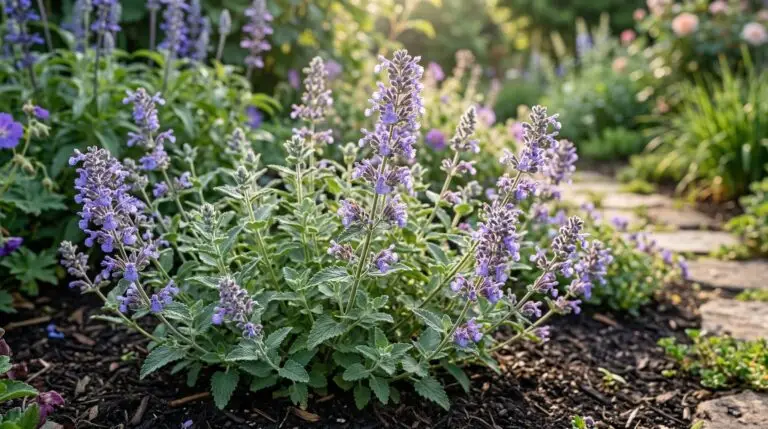
For those seeking a highly controlled edge to a planting bed, Junior Walker is the exact right choice. This variety reaches roughly 15 to 18 inches tall and wide, forming a dense, uniform mound of aromatic gray-green foliage. It was specifically bred to solve the primary flaw of older catmint varieties, which is the tendency to split open in the center after the first heavy rain of early summer. The stems of Junior Walker are shorter and thicker, allowing the plant to maintain a perfect dome shape even under the weight of water. The bloom color is a soft lavender-blue that reads clearly from a distance without overpowering neighboring pastel flowers.
Junior Walker proves its worth when planted along the edges of brick or stone pathways. You want plants to spill slightly over the hardscape to soften the lines, but you do not want them to become a tripping hazard. This variety blooms heavily in late spring and requires very little maintenance during its peak display. If you shear the entire plant back by a third in July, it will reliably push a second flush of flowers in early autumn. This predictable, heavy rebloom makes it a superior choice for small residential gardens where every plant must perform across multiple seasons.
The proven standard of Walker’s Low
Moving up in scale, we must address Walker’s Low, a plant with a name that causes endless confusion at garden centers. The word “Low” refers to a specific geographic location in Ireland, not the plant’s physical stature. In reality, Walker’s Low grows to a substantial 30 inches tall and 36 inches wide. This is the plant that defined modern catmint varieties and remains the benchmark against which all new introductions are measured. It earned its reputation by offering an exceptional volume of flowers on a plant that is virtually indestructible in temperate climates.
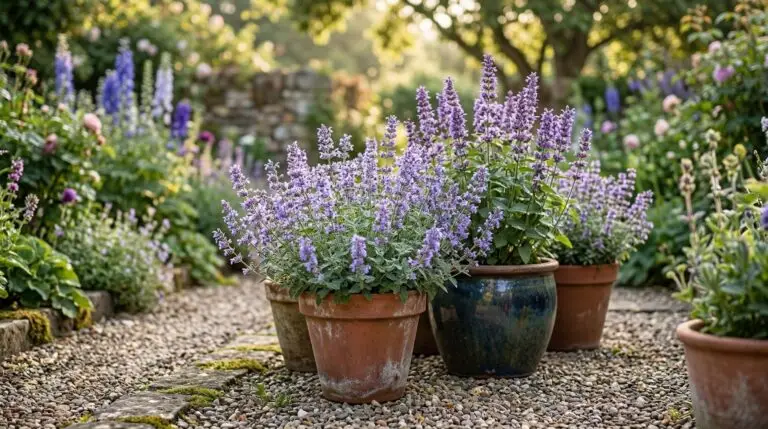
Walker’s Low creates a massive cloud of violet-blue flowers that perfectly bridges the gap between early spring bulbs and late summer perennials. The foliage is highly aromatic, releasing a minty scent whenever brushed, which effectively deters deer and rabbits from browsing. Because of its substantial size, it pairs exceptionally well with upright, structural plants. You can plant it alongside perennial blue salvia to create a repeated rhythm of cool tones across a large planting bed. The contrasting shapes of the mounding catmint and the spiked salvia provide excellent visual tension.
Scaling up with Six Hills Giant
There are situations where even Walker’s Low is not large enough, and that is where Six Hills Giant earns its place in the curated garden. This specific variety reaches a full 36 inches tall and can spread up to four feet across in a single season. This massive scale is absolutely necessary for large properties, estate gardens, or expansive borders where smaller plants simply disappear into the background. Six Hills Giant produces larger individual flowers than the Walker varieties, displaying a slightly deeper shade of violet. These flowers are held on thick, sturdy stems that resist the flopping commonly seen in older generations of tall catmints.
This immense size does require specific management to keep the plant looking its best. Because of its massive vegetative growth, Six Hills Giant must be cut back hard after its first flush of blooms to prevent it from suffocating neighboring plants. When managed correctly with a mid-summer shearing, it provides a structural presence rarely found in herbaceous perennials. Many commercial garden centers have stopped carrying it in favor of newer dwarf varieties that fit more easily on shipping racks. However, it remains the absolute best choice for filling large, dry, difficult spaces with months of continuous color.
Selecting the right variety for your space
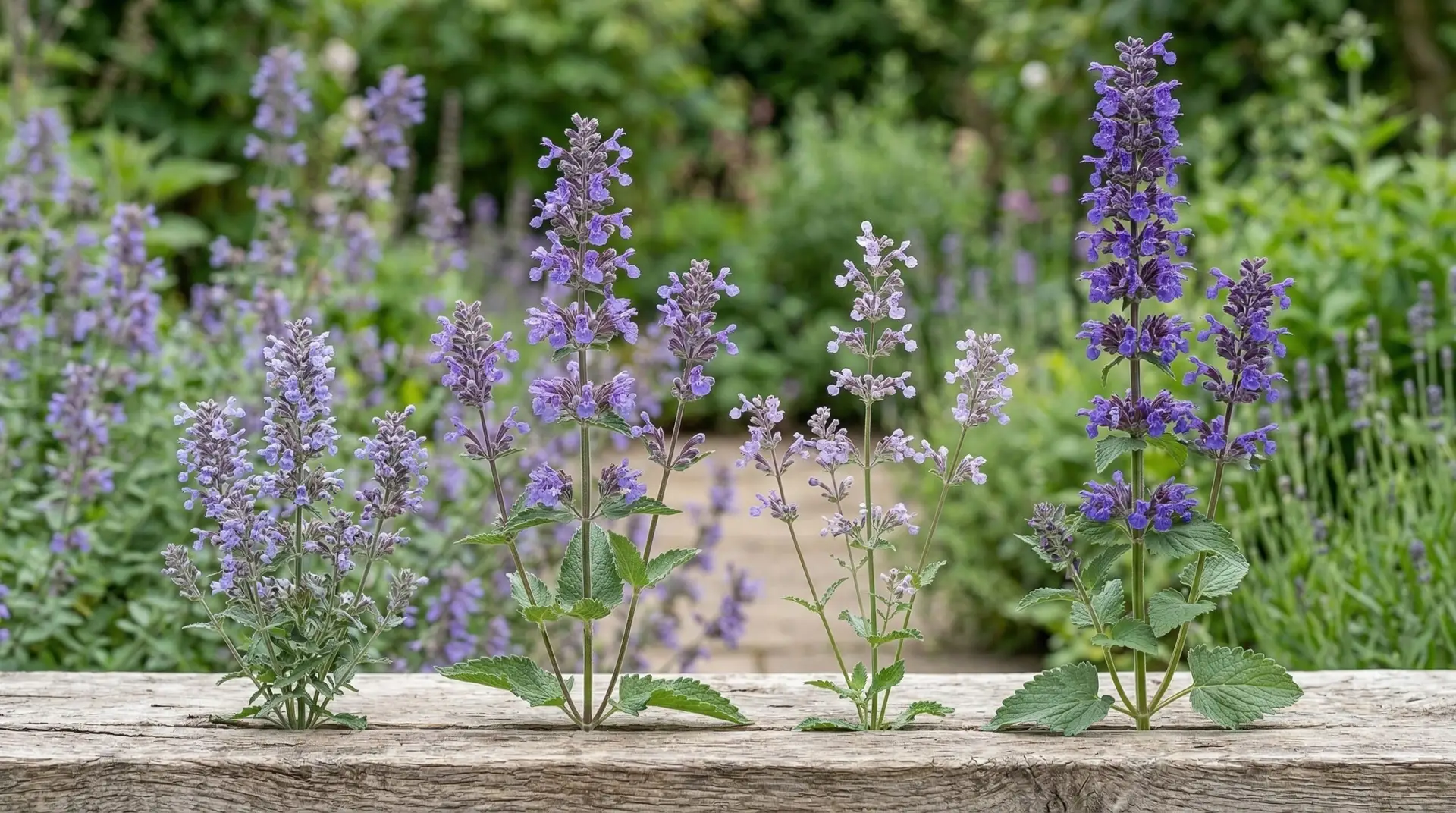
Choosing the best nepeta ultimately comes down to matching the plant’s mature wingspan to your available square footage. If you plant Six Hills Giant in a narrow foundation bed, you will spend your entire summer fighting to keep it off your walkways. Conversely, planting a compact variety like Junior Walker in a massive mixed border will result in the plant being swallowed by its neighbors. You must evaluate your site honestly and select the cultivar that naturally fits the spatial constraints of the bed. All three of these sterile hybrids will provide excellent drought tolerance, deer resistance, and pollinator attraction.
While Six Hills Giant offers unmatched scale and Junior Walker provides perfect tidy edging, Walker’s Low remains my top recommendation for the majority of gardens. It offers enough height to interact beautifully with companion plants like shrub roses, yet it maintains enough basal density to suppress weeds effectively. The plant rarely requires staking unless grown in excessive shade or overly rich soil. It strikes the perfect balance between wild, herbaceous energy and predictable garden performance. Plant Walker’s Low in full sun, ignore it during summer droughts, and it will reward you with a reliable, architectural mound of violet-blue year after year.