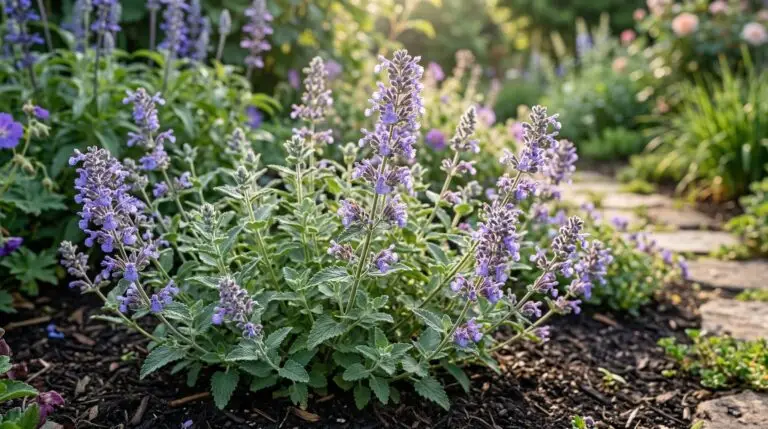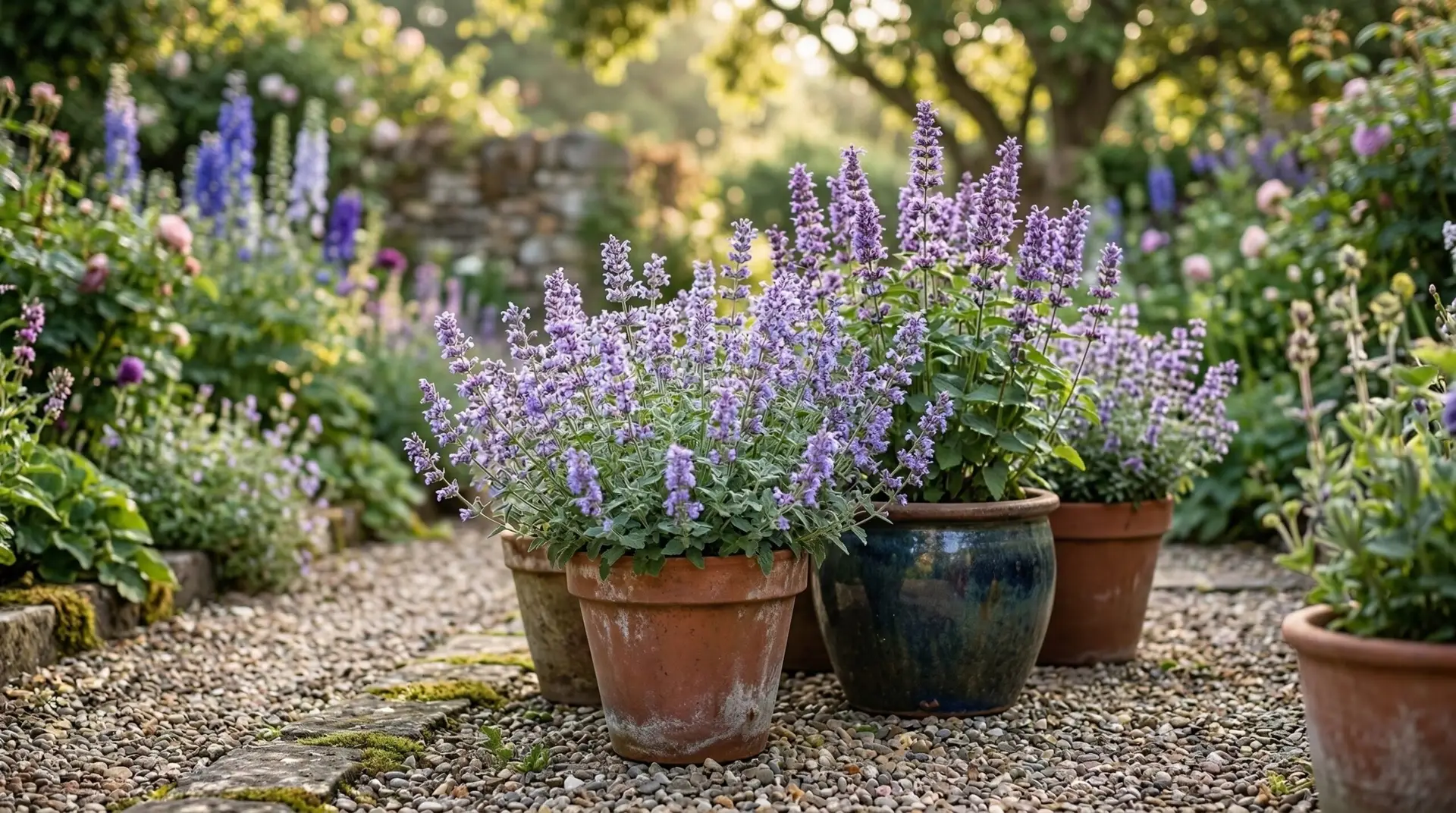
Anyone who has tried to keep a balcony garden alive through a hot July knows the familiar crunch of dried leaves. Balconies are harsh environments where wind whips away moisture and concrete walls reflect baking heat onto delicate plants. After dragging heavy watering cans through the living room day after day, finding a plant that actually thrives on a bit of neglect feels like a relief. Growing catmint in pots offers that exact kind of resilience for container gardeners. This tough perennial brings in the bees and butterflies just as well as it does in a ground border, but it handles the confined space of a balcony planter beautifully. The fuzzy gray-green foliage releases a minty, herbal scent every time a breeze hits it or someone brushes past.
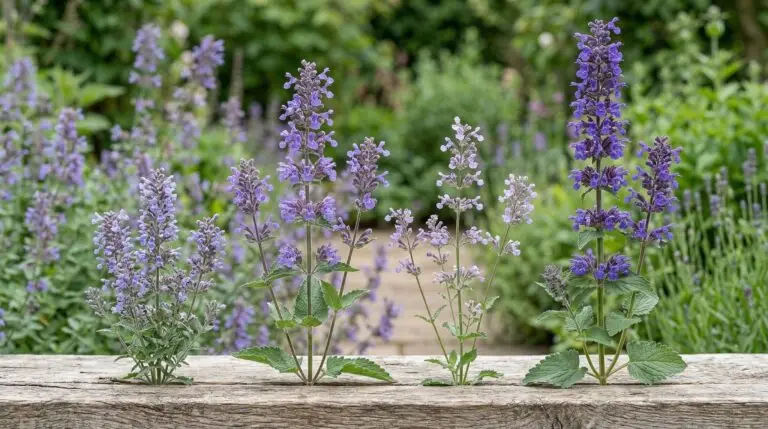
The transition from ground to container changes how this plant behaves, so picking the right type matters. Standard garden center varieties often grow massive and will quickly overtake a small balcony space, flopping over the edges in a messy tangle. For a nepeta container setup, seeking out dwarf varieties is the secret to a tidy, cascading look that stays manageable. Varieties with names referencing kittens or pajamas usually stay under fifteen inches tall and form a neat mound that spills perfectly over the rim of a pot. These compact types still produce the same dense spikes of purple-blue flowers but have sturdier stems that resist snapping in high balcony winds. Gardeners in the South may find that even dwarf varieties grow a bit larger because of the long growing season, so giving them a slightly wider pot from the start prevents mid-summer repotting.
Choosing pots and preparing the soil
The container itself plays a massive role in how well catmint survives the summer heat. Terracotta pots are incredibly popular because they breathe well and prevent the roots from rotting, but they dry out exceptionally fast on an exposed balcony. A standard plastic nursery pot dropped inside a cheap decorative basket works just as well and holds moisture a fraction longer without waterlogging the plant. Whatever container holds the plant must have at least three drainage holes punched in the bottom. Catmint absolutely hates sitting in wet soil, and a single heavy rainstorm can drown the roots if the water has nowhere to escape. Elevating the pot on a few pieces of scrap wood or cheap pot feet keeps the drainage holes clear and prevents water stains on the balcony floor.
Expensive specialty potting mixes are completely unnecessary for this rugged herb. A standard, affordable bag of basic potting soil works perfectly well as long as it gets modified for better drainage. Mixing in a generous handful of perlite or coarse sand for every three scoops of potting soil creates the gritty texture catmint prefers. Avoid fertilizers with high nitrogen levels, or potting soils that come pre-loaded with moisture-retaining crystals. Too much nitrogen causes the plant to push out weak, leggy stems that flop open in the center and produce very few flowers. The goal is to mimic the lean, rocky soil where this plant naturally thrives, which makes container preparation exceptionally cheap and straightforward.
Sun exposure and watering rules
Catmint wants as much direct sun as it can possibly get, which makes it perfect for south-facing or west-facing balconies. Six full hours of direct sunlight is the minimum requirement to keep the plant blooming and prevent it from stretching toward the light. In northern zones, putting the pot in the absolute brightest spot available is necessary to get that signature dense, bushy growth. Down south, the rules change slightly because afternoon sun reflecting off glass doors or brick walls can literally bake the roots inside a dark plastic pot. Tucking the container behind a slightly larger pot to shade the roots while leaving the foliage in the sun solves this problem easily. If the stems start looking pale and the flowers are sparse, the plant is simply asking to be moved out of the shade.
Watering a catmint balcony planter requires a bit of restraint, as overwatering kills more of these plants than drought ever will. The easiest way to check if the plant needs water is to tip the pot slightly and feel the weight. If the pot feels heavy, walk away and check again in two days, even if the surface soil looks dry. When the pot feels surprisingly light, soak the soil completely until water runs out the bottom drainage holes. During the hottest weeks of August, a container plant might need this deep soaking twice a week, but during spring and fall, once a week is usually plenty. The foliage might look a little droopy when thirsty, but it bounces back within a few hours of a good watering.
Companion plants and mid-season pruning
A single large pot of catmint looks fine on its own, but it really shines when paired with other sun-loving, low-water plants. Mixing it in a large trough planter with lavender creates a highly fragrant container that requires the exact same lean soil and infrequent watering schedule. For a bit of contrasting color, trailing plants work beautifully when tucked into the corners of the same pot. A bright pink or white verbena will weave its way through the silver foliage and spill down the sides of the container. If you prefer larger blooms, adding a deep purple petunia to the arrangement creates a dense mound of continuous flowers that lasts until the first frost. Grouping plants with identical watering needs in one large container saves space and makes balcony maintenance much simpler.
Sometime in mid-July, the first massive flush of flowers will start to fade and turn brown. This is the moment where many new gardeners think the plant is dying, but it simply needs a hard haircut to reset itself. Grab a pair of cheap garden shears and cut the entire plant back by at least half, shaping it into a low, tight dome. The chopped plant looks like a bundle of dead sticks for about two weeks after this pruning. It is not dead, and the roots are busy pushing new growth that will soon appear at the base of those old stems. Within a month, the pot will be covered in a fresh crop of silver leaves and a second round of purple flowers that lasts straight through autumn.
Winter survival for potted perennials
Keeping perennials alive through the winter in containers is genuinely difficult because the roots do not have the earth to insulate them. A pot left out in the open wind will freeze solid, thaw, and freeze again, which turns catmint roots to mush. To give the plant the best chance of surviving, wait until the top completely dies back after a few hard frosts, then cut the stems down to two inches. Move the pot flush against the wall of the building, preferably in a corner out of the direct winter wind. The heat leaking through the building walls provides just enough warmth to keep the soil temperature slightly more stable. Water the dormant pot lightly perhaps once a month during dry, thawy stretches so the roots do not completely desiccate.
When spring arrives, pull the pot back into the sun and wait patiently for signs of life. Container soil warms up much faster than ground soil, so tiny green shoots often appear at the base of the stems quite early in the season. If the center of the plant looks dead but the outside edges are growing, the crown has likely rotted from holding too much winter moisture. Simply dump the pot out, break off the healthy side pieces with roots attached, and replant them in fresh soil. Learning to read the moisture levels and the sun patterns on a specific balcony takes a season or two of trial and error. Once the rhythm is established, keeping these tough, fragrant plants thriving in pots becomes one of the easiest and most rewarding gardening chores of the year.