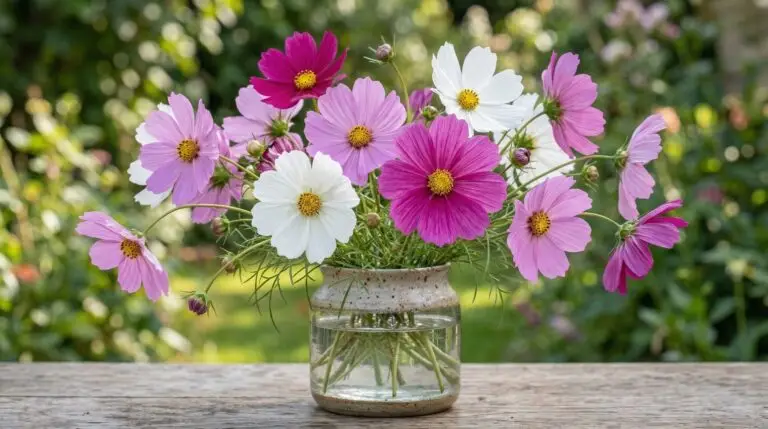
Cosmos functions as the ultimate transparent filler in a garden composition. You can plant it at the front, middle, or back of a border, and its airy structure allows you to see right through to the plants behind it. This visual permeability makes it an essential tool for creating depth in a planting scheme without blocking sightlines. In a self-sowing annual garden, cosmos acts as the connective tissue that ties disparate elements together into a cohesive whole. The plants grow quickly from seed to form a soft, green haze before exploding into flat, open blooms that hover above the foliage like floating saucers. Designing a space that relies on these self-sowing annuals requires a shift in perspective from rigid control to guided spontaneity. You are setting up a framework where plants decide exactly where they want to grow each season.
The true value of cosmos lies in its fine, feathery texture. The thread-like leaves create a visual softness that breaks up the solid masses of heavy green foliage typical in summer gardens. When you place cosmos next to plants with broad, coarse leaves, the contrast makes both plants look more distinct and intentional. Form also plays a critical role here, as cosmos has a loose, branching, upright habit that sways easily in the wind. This movement brings kinetic energy to the garden, drawing the eye and making the space feel alive. Because the lower stems often lose their leaves and become bare by late summer, you need to think carefully about what sits at their feet. Masking these bare legs with mounding or bushy companions ensures the composition remains visually solid from the ground up.
Designing with self-sowing companions
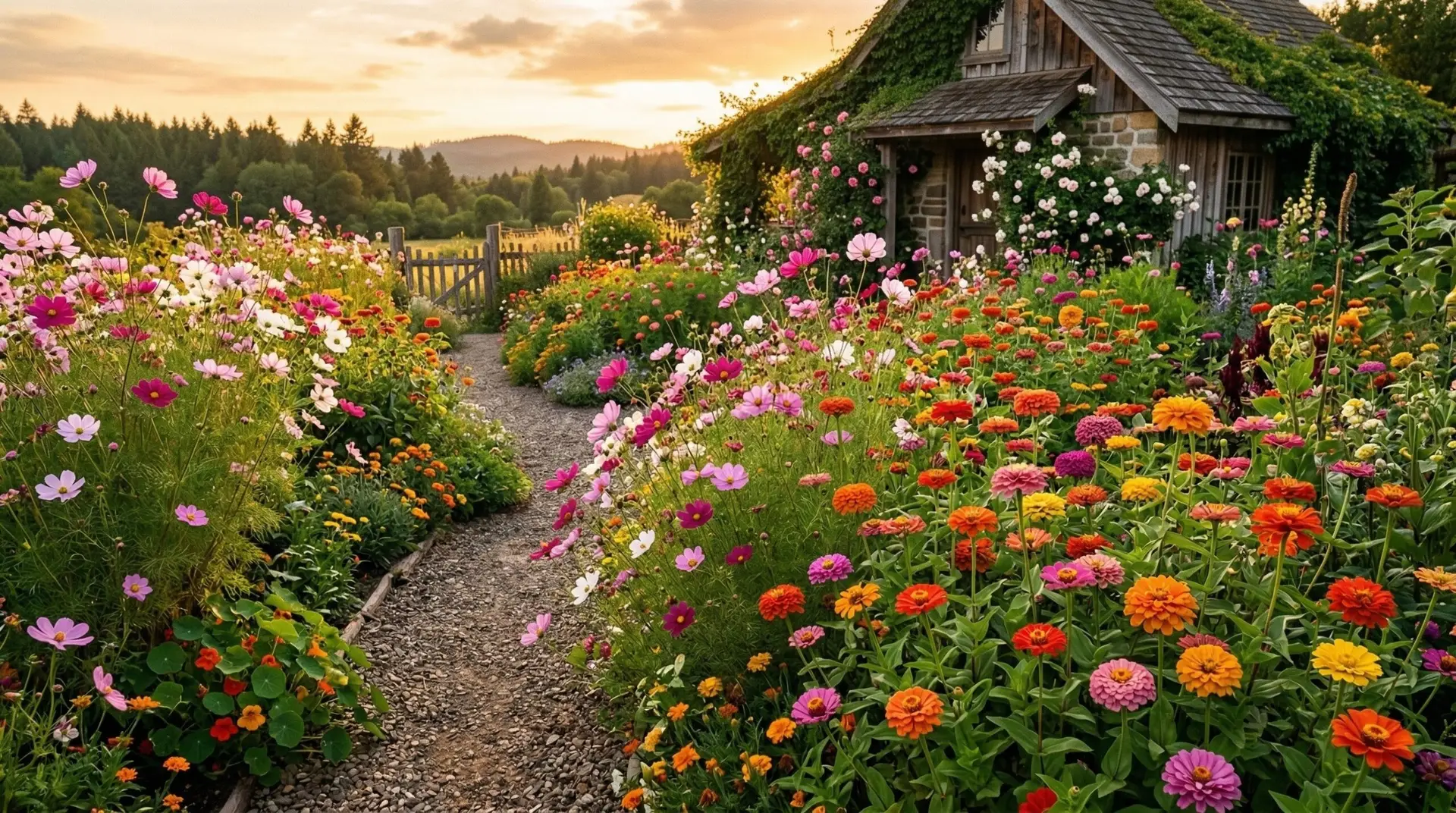
Pairing cosmos with zinnias creates one of the most reliable structural contrasts in a summer border. Zinnias have a rigid, upright form and thick, coarse leaves that anchor the fine wisps of the cosmos foliage. When you plant these two together, the stiff architecture of the zinnia provides a visual grounding point, while the cosmos softens the hard edges. Color coordination between the two can take several directions depending on the mood you want to establish. You can match pale pink cosmos with soft apricot zinnias for a gentle, harmonious blend that feels quiet and restrained. Alternatively, you can mix magenta cosmos with lime green zinnias to create a high-contrast combination that demands attention from across the yard. Both plants are prolific self-sowers if you leave the seed heads intact, ensuring this pairing returns year after year.
Scale and proportion dictate how a wildflower garden feels when you walk through it. Cosmos can reach four to five feet tall, meaning it requires companions of equal or greater stature to prevent the planting from looking flat. Sunflowers provide the massive scale and dominant focal points needed to anchor a large drift of cosmos. The giant, coarse leaves and thick stalks of the sunflower contrast sharply with the delicate cosmos, while the towering blooms pull the viewer’s eye upward toward the sky. Adding cleome to this mix introduces a spiky, vertical form that pierces through the mounding canopy of the other flowers. When you position these tall elements near pathways, you create an immersive experience where the plants envelop the viewer. The combination of these three self-sowing giants forms a self-sustaining thicket that requires almost no intervention once established.
Color theory in the wildflower border
Color relationships in a self-sowing garden often shift organically, but you can guide the palette by choosing your initial seed varieties carefully. Planting white and pale pink cosmos alongside cornflowers establishes a cool, harmonious color scheme. The pure blue of the cornflowers acts as a receding color, creating the illusion of deep shadows and expanding the perceived size of the garden bed. Against this blue backdrop, the white cosmos blooms catch the light and step forward visually, creating a layered three-dimensional effect. This cool palette is particularly effective in areas of the garden that receive morning light or partial afternoon shade, where the soft colors glow rather than wash out. As both plants drop their seeds, they will weave together in unpredictable patterns, creating a natural meadow aesthetic that feels completely unforced.
If you prefer a dramatic, high-energy composition, you should focus on the warm side of the color wheel. Cosmos sulphureus, the yellow and orange cousin of the standard garden cosmos, pairs exceptionally well with marigolds. The marigolds form a dense, low-mounding carpet of coarse foliage that perfectly hides the spindly lower stems of the taller cosmos. This combination creates a solid block of fiery color that holds up well under the harsh glare of the midday sun. The saturated oranges, golds, and deep reds advance toward the viewer, making a large garden space feel more intimate and enclosed. Because both plants thrive in lean soil and intense heat, they function as a reliable, drought-tolerant duo for difficult planting sites.
Seasonal interest and spatial relationships
A well-designed garden must consider what plants contribute when they are no longer in active bloom. As summer fades into autumn, cosmos drops its petals and develops small, star-shaped seed heads that add a new textural element to the border. The foliage often takes on a bronzed or purplish tint as the nights turn cold, providing subtle late-season color. These maturing seed heads attract flocks of goldfinches and other small birds, bringing a different kind of life and movement to the garden space. Leaving the skeletons of cosmos, sunflowers, and zinnias standing through the early winter provides vertical structure when most perennials have melted into the ground. This practice is also functionally necessary for a self-sowing garden, as the winter winds will scatter the dried seeds across the soil surface to germinate the following spring.
The success of a self-sowing wildflower garden relies heavily on the design principle of layered planting through repetition. Instead of placing single plants as isolated specimens, you should aim to create large, repeating drifts that carry the eye down the length of the border. When you repeat the airy texture of cosmos at regular intervals, you establish a visual rhythm that unifies the entire composition. You can allow the plants to self-sow where they please, but you must edit the seedlings in the spring by pulling out those that disrupt the desired rhythm or crowd the pathways. This approach combines the loose, romantic appeal of a wild meadow with the intentional structure of a formal border. By curating the self-sown seedlings rather than planting them, you achieve a highly designed look with a fraction of the traditional labor.