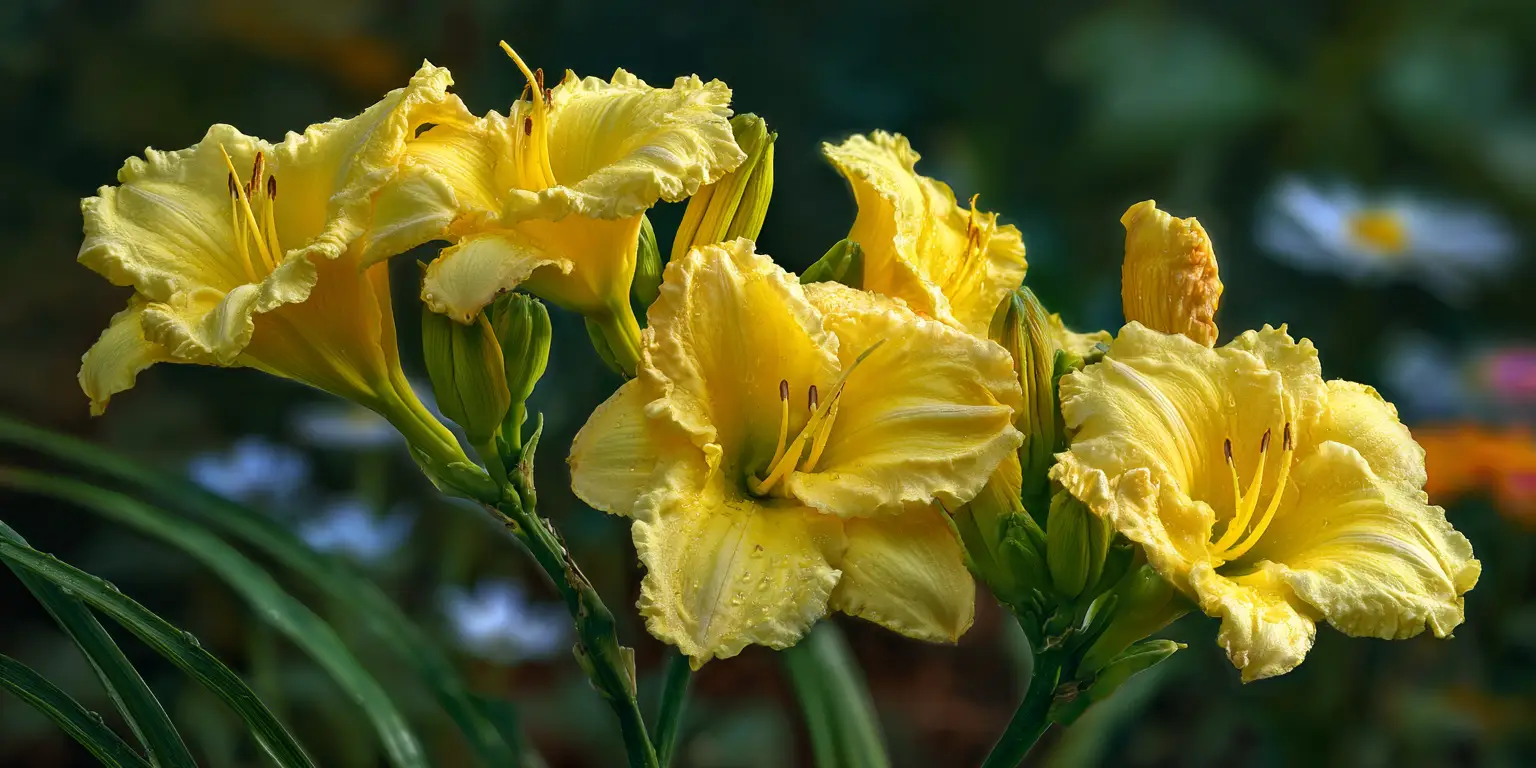
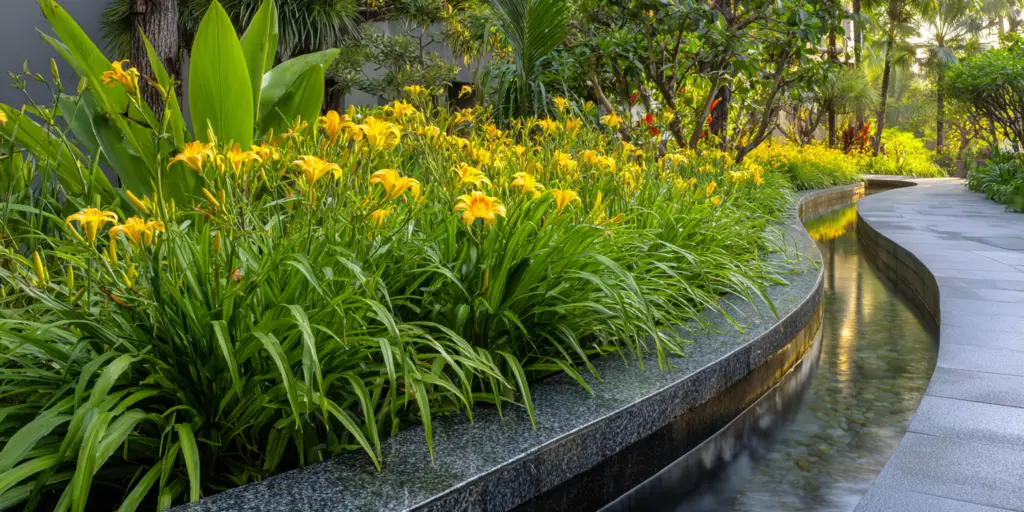
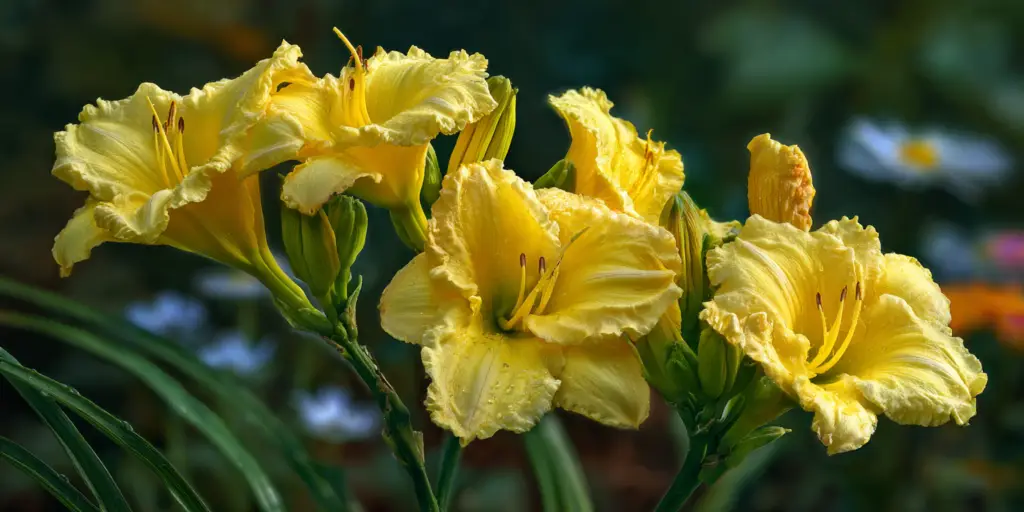
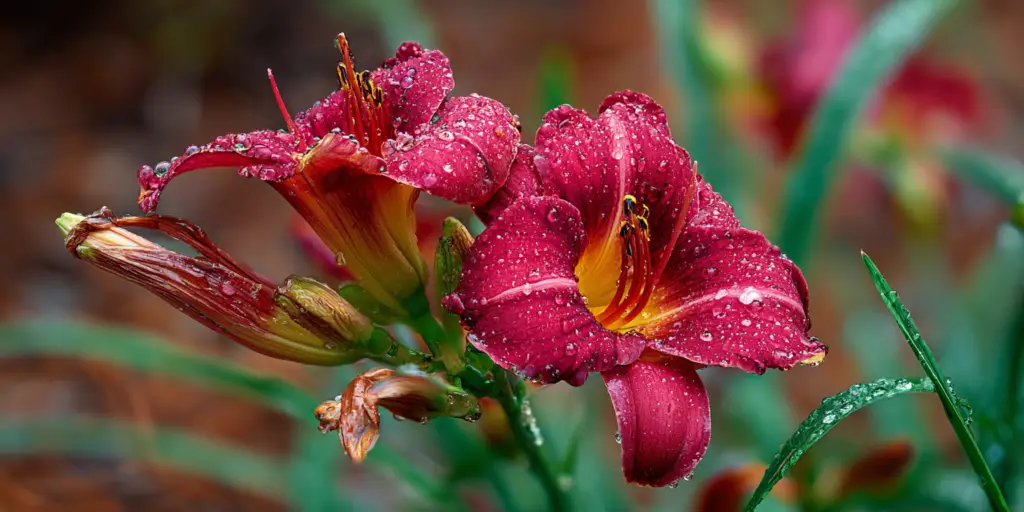
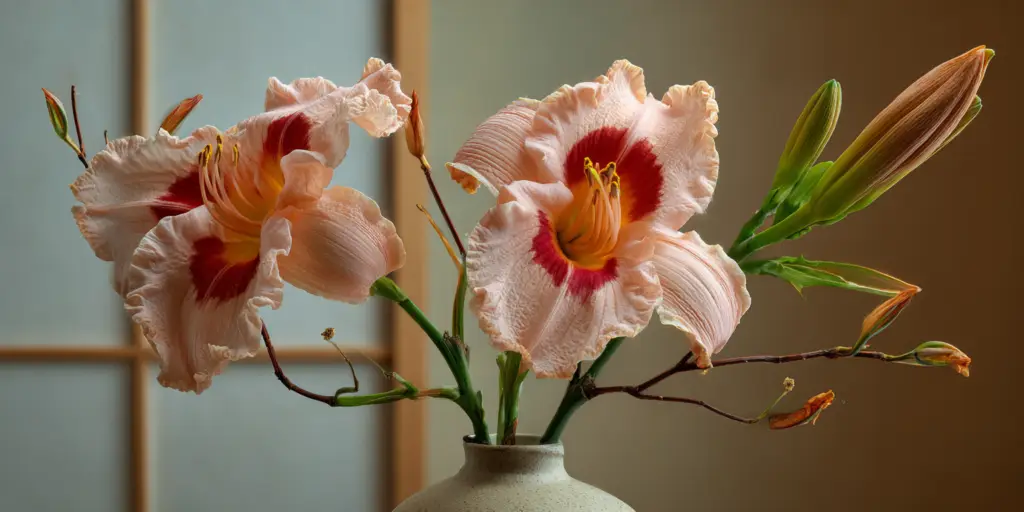
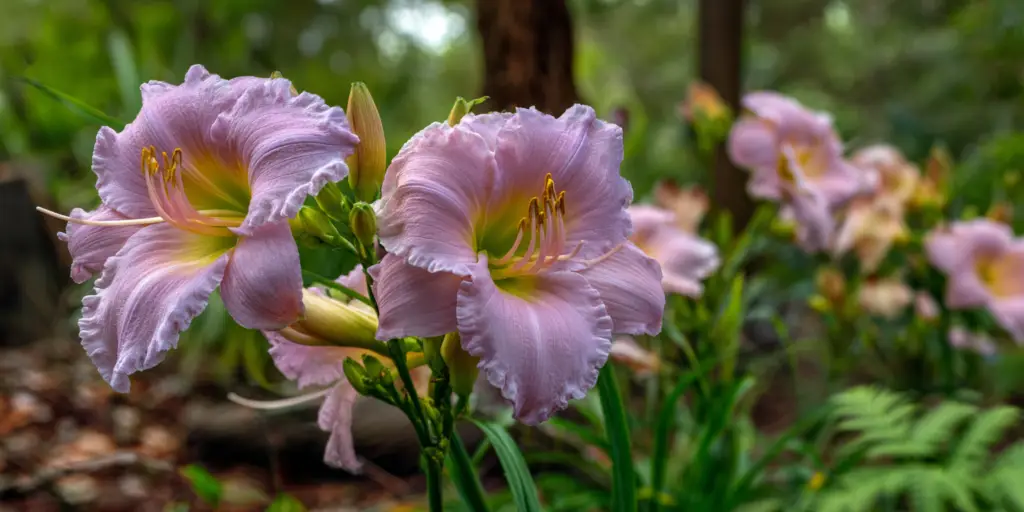
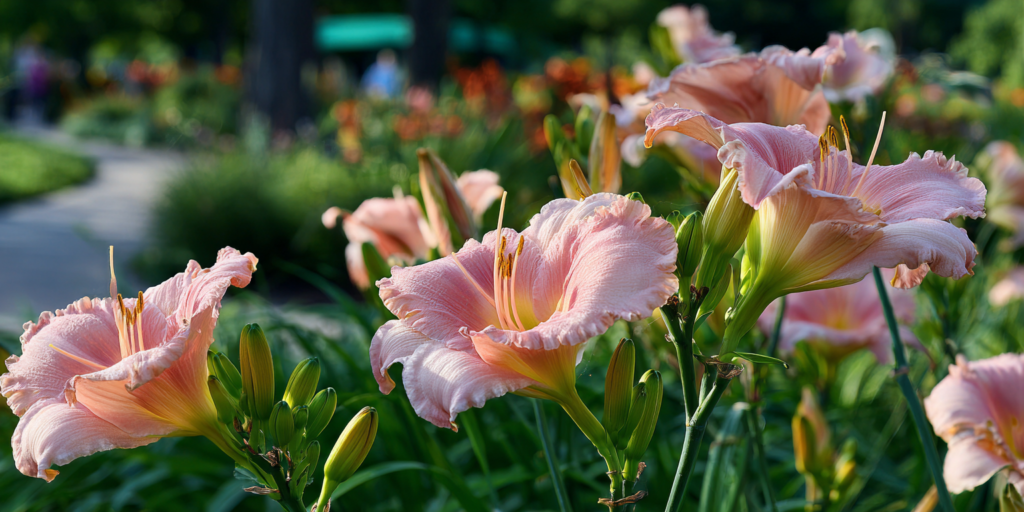
‘Happy Returns’ is a lemon yellow, repeat blooming daylily. It starts early and can flower on and off into fall in long seasons. It stays compact for the front of borders. It shows best color in full sun. It thrives in average, well drained soil. It is hardy across much of North America. It works in containers and mass plantings.
At‑a‑glance
Group/Class: Reblooming daylily
Height × spread: 12-18 in (30-45 cm) × 12-18 in (30-45 cm)
Bloom window: June to October; repeats
Color & flower form: Lemon yellow; ruffled, about 3.5 in
Fragrance: 1 trace
USDA hardiness: zones 3-9
Breeder / Year / Origin: Apps, 1986, USA
Awards/registration: Missouri Botanical Garden Plant of Merit
Cut‑flower notes: Each bloom lasts 1 day; scapes open more buds in water
Pet safety: avoid: toxic to cats; generally non‑toxic to dogs
How it differs
Earlier start to bloom than many daylilies
Clear lemon color rather than gold
Compact habit suited to edging and containers
Strong repeat bloom in long warm seasons
Strengths
Extended bloom season
Low maintenance and adaptable
Tolerates summer heat and humidity
Performs in average garden soils
Care in one minute
Site: full sun for best rebloom; light shade tolerated
Soil: well‑drained, moderately fertile; slightly acidic to neutral
Water: about 1 in per week; keep moist in peak bloom
Feeding: light spring fertilizer or compost
Grooming: remove spent flowers and scapes; tidy foliage
Divide every 3-4 years in spring or after flowering
Watch‑outs
Less bloom in shade
Daylily rust or leaf streak may occur in humid or wet periods
Written by: Your Flowers Guide editorial team We are a small independent group of flower lovers who research and review each guide using trusted horticultural and educational sources. Learn more about us