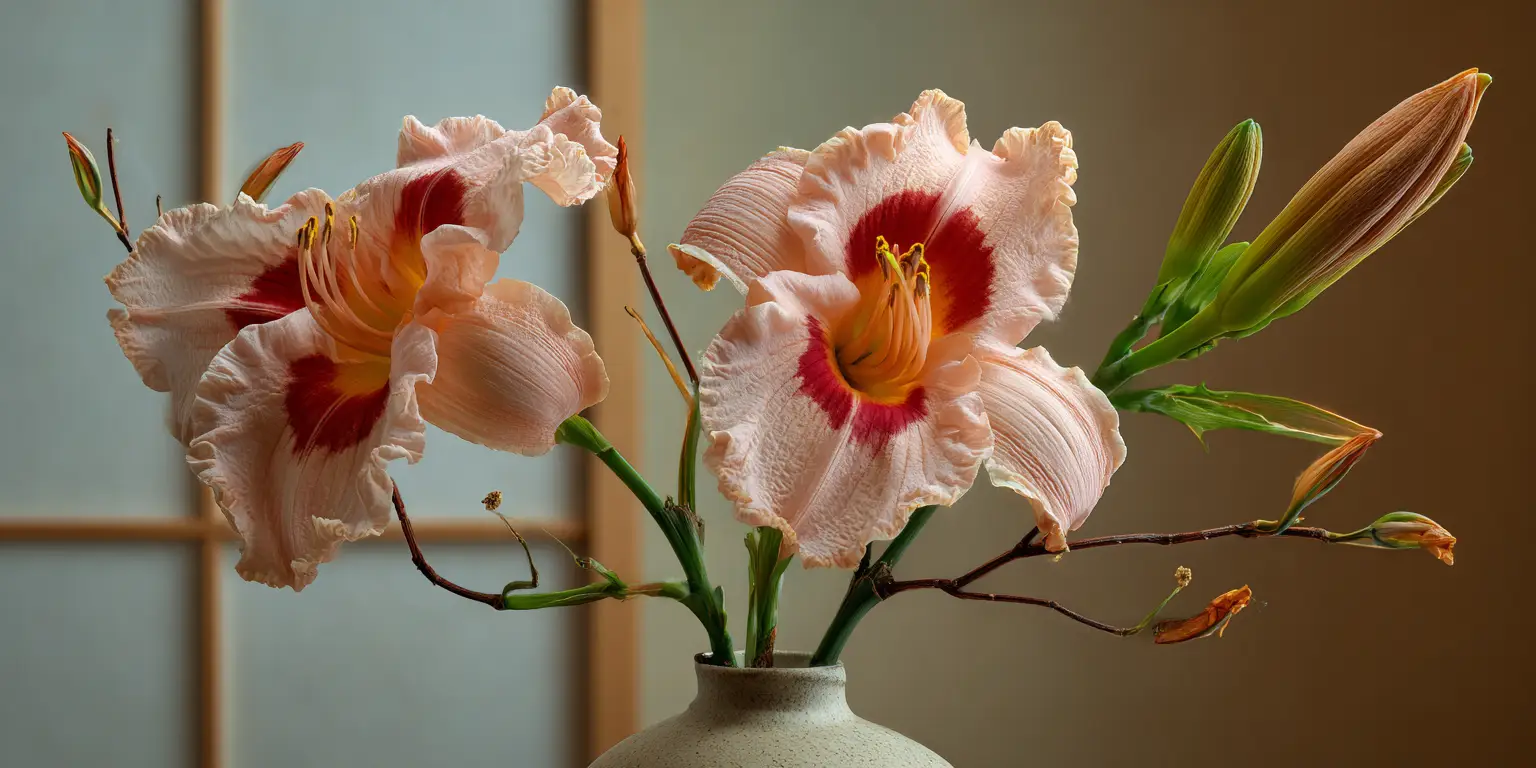
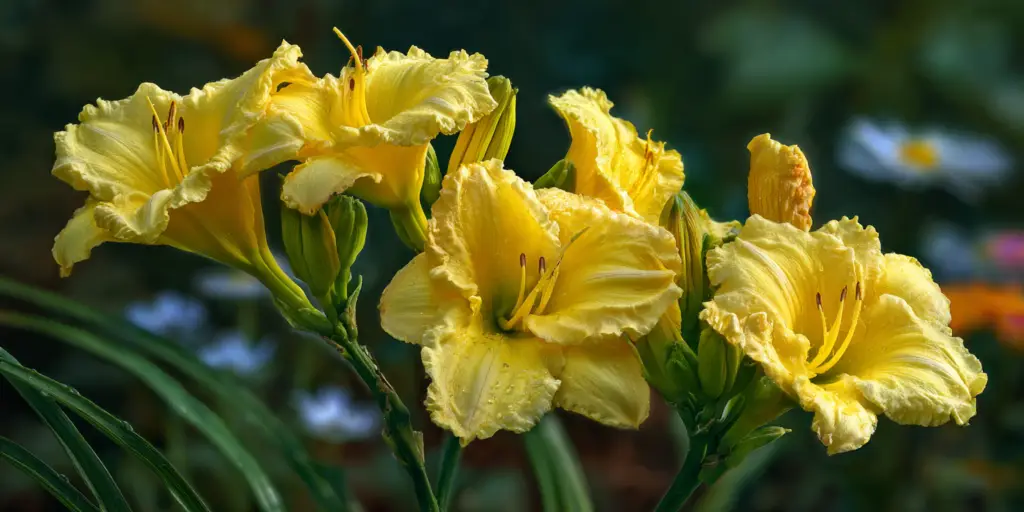
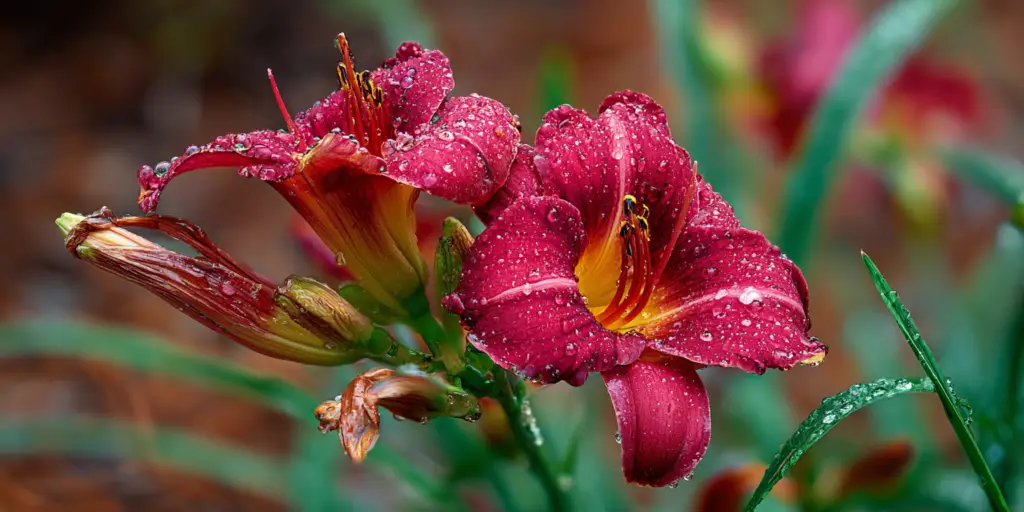
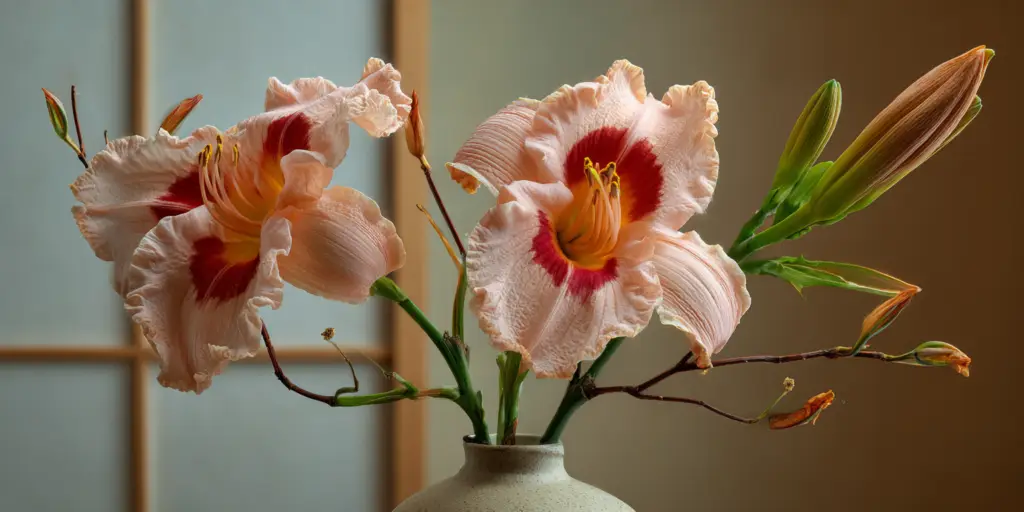
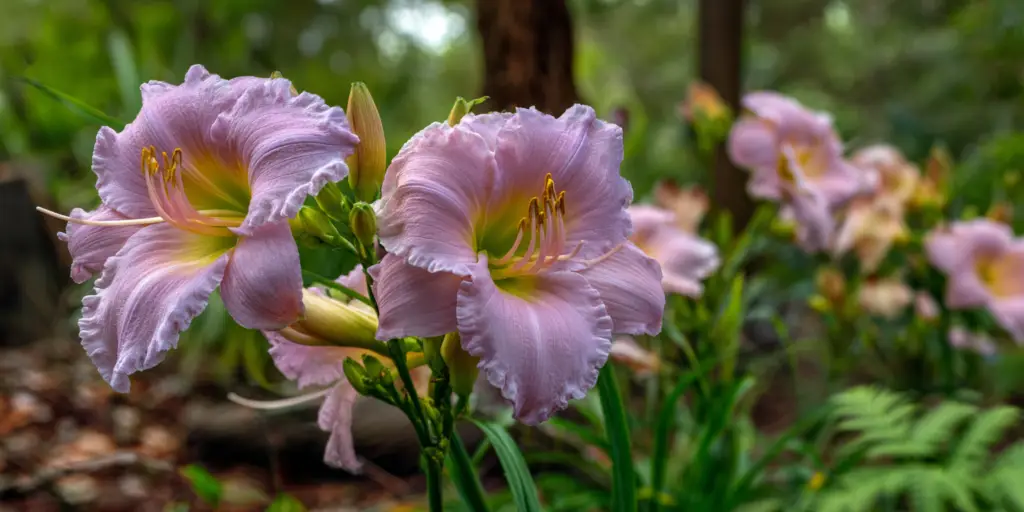
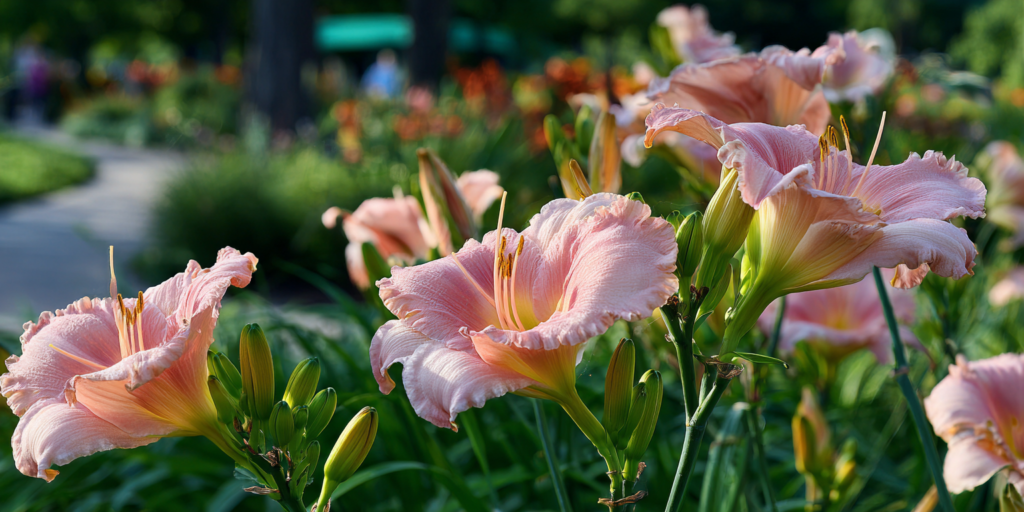
‘Strawberry Candy’ is a clump‑forming daylily with pale pink flowers and a deep pink eye. It blooms from early to midsummer and often extends its display. It grows best in full sun and well‑drained soil. It suits many North American regions. It is semi‑evergreen in mild areas. It offers strong color contrast in mixed borders.
At‑a‑glance
Group/Class: Reblooming daylily
Height × spread: to 26 in (65 cm) × 12-20 in (30-50 cm)
Bloom window: early to mid summer; extended
Color & flower form: Pale pink with deep pink eye and yellow throat; ruffled
Fragrance: unknown / varies by climate
USDA hardiness: zones 3-9 (general daylily guidance)
Breeder / Year / Origin: Stamile, 1989, USA
Awards/registration: Stout Silver Medal (1998)
Cut‑flower notes: Each bloom lasts 1 day; budded scapes can open sequentially in water
Pet safety: avoid: toxic to cats; generally non‑toxic to dogs
How it differs
Distinct eye‑zone pattern and ruffled form
Semi‑evergreen foliage in mild climates
Extended flowering compared with many cultivars
Medium height that suits mid‑border placements
Strengths
Award‑recognized garden performance
Adaptable to a range of soils
Reliable color impact in full sun
Low routine maintenance
Care in one minute
Site: full sun for best color and bud set
Soil: well‑drained, moderately fertile
Water: about 1 in per week; increase during hot, dry spells
Feeding: light spring fertilizer or compost
Grooming: remove spent flowers and scapes; clean foliage in fall
Divide every 3-4 years as needed
Watch‑outs
Color intensity can fade in deep shade
Rust and leaf streak may occur in humid or wet seasons
May be less hardy in far‑northern sites with little snow cover
Best uses (tags)
borders; massing; color accent; pollinators; heat‑tolerant
Provenance note
Registered by Patrick Stamile in 1989. Winner of the American Daylily Society Stout Silver Medal in 1998.
Written by: Your Flowers Guide editorial team We are a small independent group of flower lovers who research and review each guide using trusted horticultural and educational sources. Learn more about us