The garden year typically begins when the frost starts to retreat and the earth finally softens under the pale sunlight. The air smells of wet bark and thawing mud, signaling the time to prepare the ground for the autumn gentian. Gentiana sino-ornata demands a specific environment to thrive, requiring rich, moisture-retentive, acidic soil. I spend these early spring days working generous amounts of composted pine needles and aged leaf mold into the designated planting pockets. The native soil in my garden leans alkaline, so creating an isolated acidic haven is the only way to succeed with these particular mountain natives. When the red-winged blackbirds return to the marsh down the road, the soil is usually workable enough to settle the new bare-root thongs into the ground. I press the fleshy roots gently into the dark earth, leaving the small green growing tips just exposed to the weak morning light.
The gentians do not rush their early development. While the rest of the spring garden erupts in a frenzy of green shoots and early blossoms, the newly planted gentians seem to sit perfectly still. They spend these cool weeks establishing their deep root systems in the acidic soil mix. Only when the soil warms significantly do the fine, grass-like leaves begin to elongate and spread outward from the central crown.
Tending the creeping mats through summer
By the time the summer solstice passes and the days grow hot, the autumn gentian has formed a dense, creeping mat of foliage. The slender leaves interlock to create a bright green carpet that hugs the ground tightly. During these long, sweltering afternoons, the primary task is managing soil moisture. Gentiana sino-ornata resents drying out just as much as it dislikes standing water in heavy clay. I check the soil by hand daily, pushing past the surface mulch to feel the dampness near the root zone. Watering must be done carefully, preferably with rainwater collected in barrels, to avoid introducing the calcium found in municipal tap water. The cicadas begin their steady drone in the trees above, and the gentian quietly gathers energy under the dappled shade of deciduous shrubs.
August brings a noticeable shift in the garden’s atmosphere as the evenings slowly begin to cool. The tips of the gentian stems start to swell, forming tight, pointed green buds that give no hint of the color to come. The plant seems to pause its outward expansion to focus entirely on these developing floral tubes. I clear away any fallen leaves or encroaching weeds that might block the changing autumn sunlight from reaching the swelling buds.
The arrival of electric blue
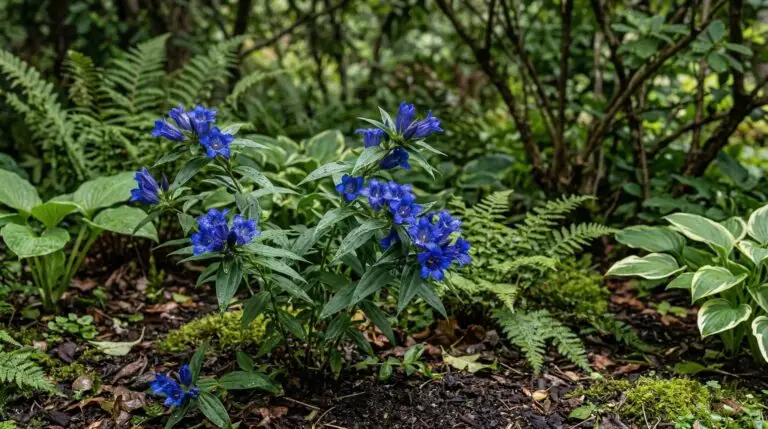
The true spectacle begins just as the rest of the garden starts to fade and retreat. In late September, when the morning air bites with a sharp chill and the dew lays heavy on the grass, the autumn gentian opens its first flowers. The color is an intense, piercing blue that seems to pull light directly from the autumn sky. Each trumpet-shaped blossom has intricate stripes of green and white along the outside of the tube, creating a striking contrast when the flowers close tightly on cloudy days. They open fully only when the autumn sun strikes them directly, revealing throats speckled with pale green and dark blue dots. The sheer volume of flowers completely obscures the grassy foliage beneath them. I often sit on the damp grass just to study the intensity of the pigment, which looks almost artificial against the earthy browns and muted yellows of the decaying garden.
This late-season performance requires careful companion planting to maximize the visual impact. I like to plant the bulbs of autumn crocus directly through the gentian mats during their dormant period in late summer. When the gentians finally bloom, the pale lilac and white goblets of the crocus push up through the blue carpet, creating a scene that feels like a second spring. The electric blue of the fall gentian also provides a necessary cooling effect near the warm tones of a late-season aster border. It offers a low-growing counterpoint to the towering, rust-colored mounds of a hardy chrysanthemum blooming nearby. The late-season bumblebees, desperate for final nectar sources before the deep cold sets in, crawl deep into the blue trumpets. They emerge minutes later, dusted lightly with pale pollen, before moving clumsily to the next open flower.
Fading light and the return to dormancy
The display lasts for several weeks, continuing boldly through the first light frosts of October. Eventually, the nights grow too cold, and the soil temperature drops below the threshold of active growth. The brilliant blue trumpets begin to shrivel, turning a papery brown at the edges before collapsing entirely. The grassy green foliage darkens, taking on a purplish-bronze tint as it prepares for the long freeze. I do not cut away the dying stems, because they provide a natural layer of insulation for the shallow resting buds at the center of the crown. The garden goes quiet, the last migratory birds pass overhead, and the earth hardens under the first true winter freeze. Down in the acidic soil, the roots of the autumn gentian sit dormant, holding onto the energy they will need to start the long climb toward next year’s blue harvest.