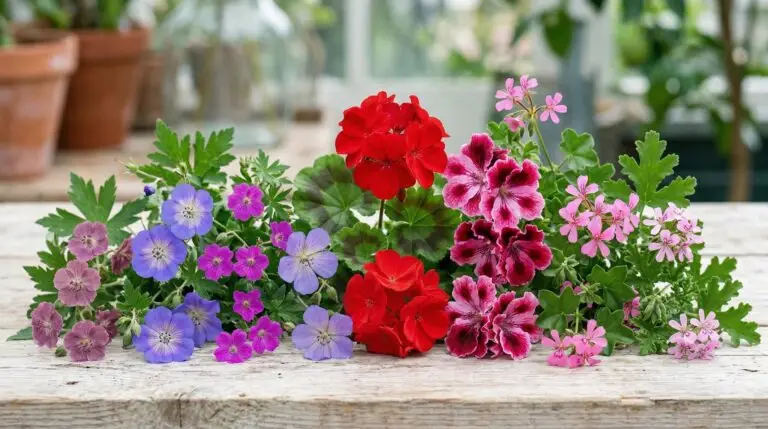
Hardy geraniums function as the essential connective tissue in any well-planned border. These versatile perennials act as natural weavers, spilling softly around the base of stiffer, more upright plants and smoothing the transitions between different garden zones. When you think about geranium garden design, you should view these plants as the unifying ground layer rather than the main focal point. Their mounding habit creates a solid visual anchor that grounds taller architectural specimens and softens hard paving edges along pathways. The finely cut, lobed leaves provide a medium texture that bridges the gap between bold, oversized foliage and fine, airy grasses. Because they spread gently without becoming invasive, they fill the empty spaces where weeds might otherwise take hold. Understanding what to plant with geraniums requires looking at your garden beds as a multi-layered composition where every plant supports its neighbors.
Classic pairings for sunlit borders
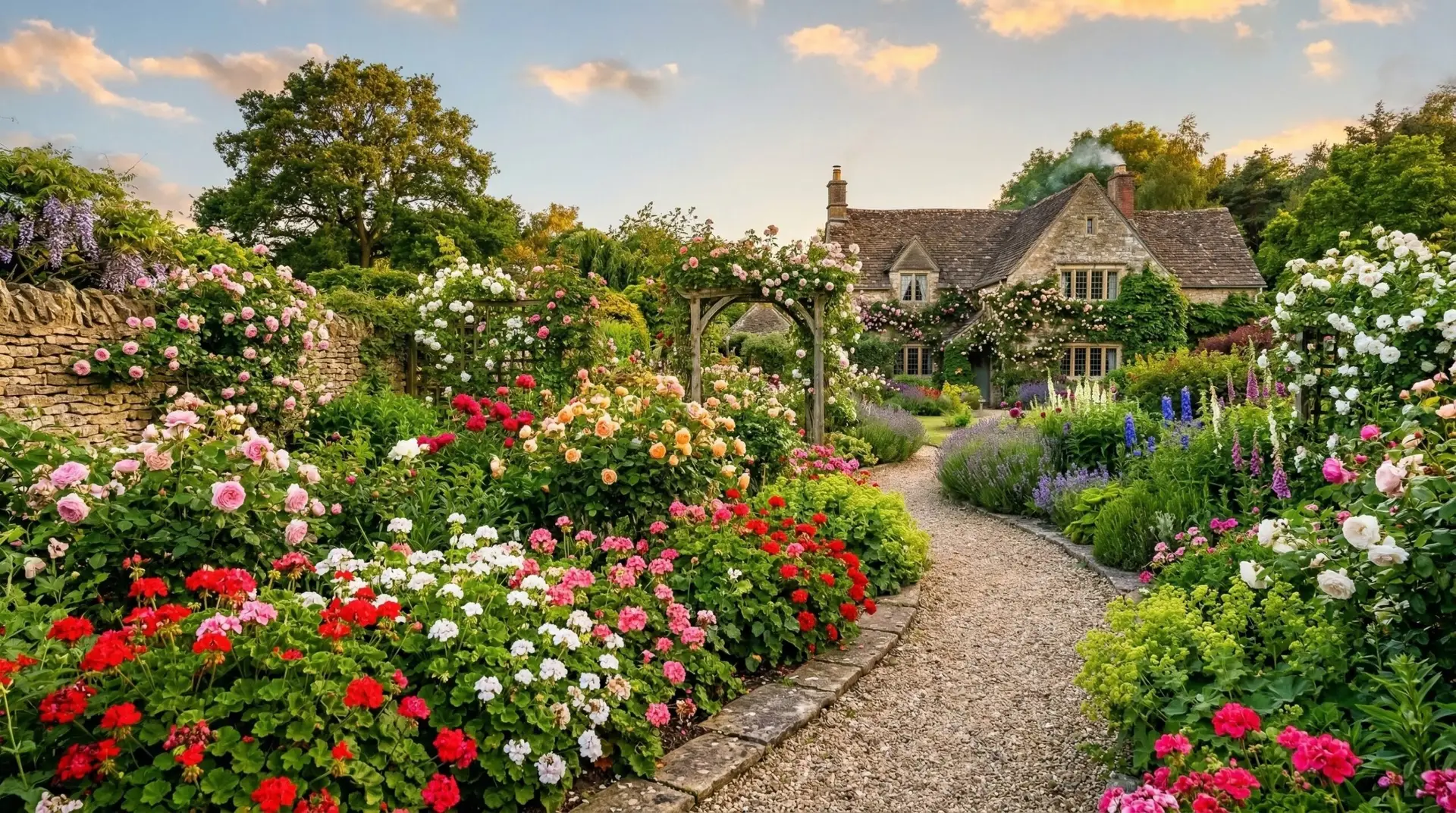
In traditional cottage garden beds, hardy geraniums form a classic triad with structural shrubs and aromatic herbs. The most time-tested application is planting them at the base of a rose, where the geranium acts as a living mulch to cool the soil and hide the bare, woody lower stems of the shrub. The color relationship here is highly effective, as the cool violet, blue, or soft pink tones of the geranium flowers create a harmonious contrast with warm apricot, crimson, or pale yellow rose blooms. You can extend this sun-loving composition by introducing catmint, which shares a similar mounding profile but offers a much finer, gray-green leaf texture. Placing these two together creates a voluminous, billowing edge along a walkway that feels relaxed and intentional. Adding upright spikes of lavender behind the geraniums introduces a strong vertical form that breaks up the continuous mounds of foliage. The silver needles of the herbs contrast sharply with the broad, green geranium leaves, ensuring the grouping looks interesting even when nothing is currently in bloom.
Designing with texture in the dappled shade
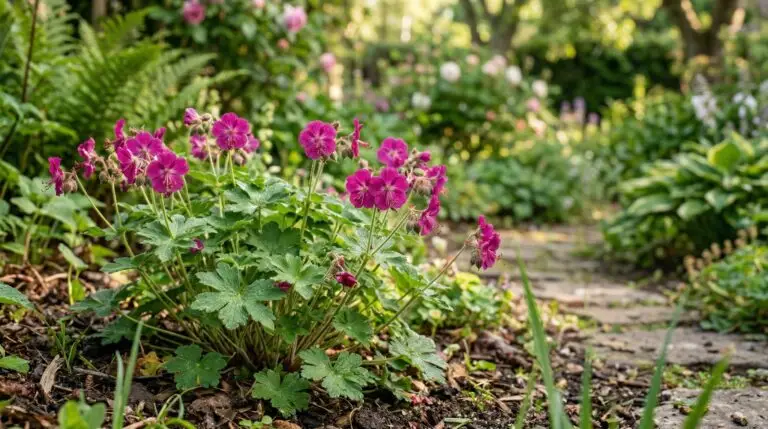
Moving out of the full sun, woodland geranium varieties take on a different role as reliable shade groundcovers that rely heavily on textural contrast. In a low-light border, you want to position the deeply cut, palmate leaves of the geranium against the solid, broad faces of large hostas. This juxtaposition makes both plants look more distinct, preventing the shade garden from turning into an undefined mass of green. You can build on this textural relationship by adding the delicate, feathery fronds of lady ferns or Japanese painted ferns, which will arch gracefully over the geranium foliage. A particularly effective strategy involves pairing them with a hellebore, as the two plants operate on complementary seasonal schedules. The hellebores provide early spring flowers and thick, leathery evergreen leaves, while the geraniums emerge later to offer fresh summer color and fill the gaps left by dormant spring ephemerals. This specific combination ensures the ground plane remains visually active and fully covered from the first thaw through the late autumn months.
Building color echoes and contrasts
Selecting geranium companion plants gives you precise control over the color temperature and mood of your garden beds. If you want a high-energy, contrasting scheme, place deep magenta geraniums next to the bright chartreuse foliage of lady’s mantle or golden creeping Jenny. The yellow-green leaves make the purple-red tones of the geranium flowers appear much brighter and more intense to the eye. For a more subdued, harmonious approach, you can create a monochromatic drift using pale pink geraniums planted alongside silver-leaved companions like lamb’s ear or dusty miller. The soft gray foliage absorbs light and gives the pastel pink blooms a luminous quality in the early evening. Blue-flowering geraniums, particularly those with white centers, look exceptionally good when woven through pale yellow coreopsis or soft orange geum. The warm tones of the yellow and orange flowers push the cool blue geraniums visually into the background, creating a sense of depth in shallow planting beds.
Planning for structural transitions
A well-designed border must account for how plants behave when they finish flowering, and hardy geraniums offer excellent late-season value. Many varieties possess foliage that shifts into rich shades of crimson, bronze, and burnt orange as the nighttime temperatures drop in autumn. You can maximize this late-season display by positioning them near ornamental grasses like switchgrass or little bluestem, which echo those warm autumnal tones while providing a strong vertical counterpoint to the flat geranium mounds. Earlier in the year, geraniums serve a highly practical purpose by masking the declining foliage of spring bulbs like daffodils and tulips. You simply plant the bulbs directly beneath the geranium crowns in the fall. When the bulbs finish blooming in spring, the expanding geranium leaves grow right over the yellowing bulb foliage, hiding it entirely from view. The distinct, beak-like seed heads that give the plant its common name of cranesbill also add a subtle, structural element to the late summer garden, catching the frost beautifully if left unpruned.
The most effective way to use hardy geraniums is to treat them as the foundation of a matrix planting scheme rather than as individual specimens. When you lay out a new bed, plant your geraniums in large, sweeping drifts of five or seven plants, spacing them close enough that their edges will merge into a single continuous carpet. Once you establish this low, unifying base layer, you can plug taller, more architectural plants directly into the middle of the drift. The geraniums will physically support the stems of these taller plants, shade the soil to retain moisture, and provide a calm, uniform background that makes the unique forms of your accent plants highly legible. This layering technique reduces your weeding chores significantly while giving the entire garden a mature, cohesive appearance that looks professionally designed.