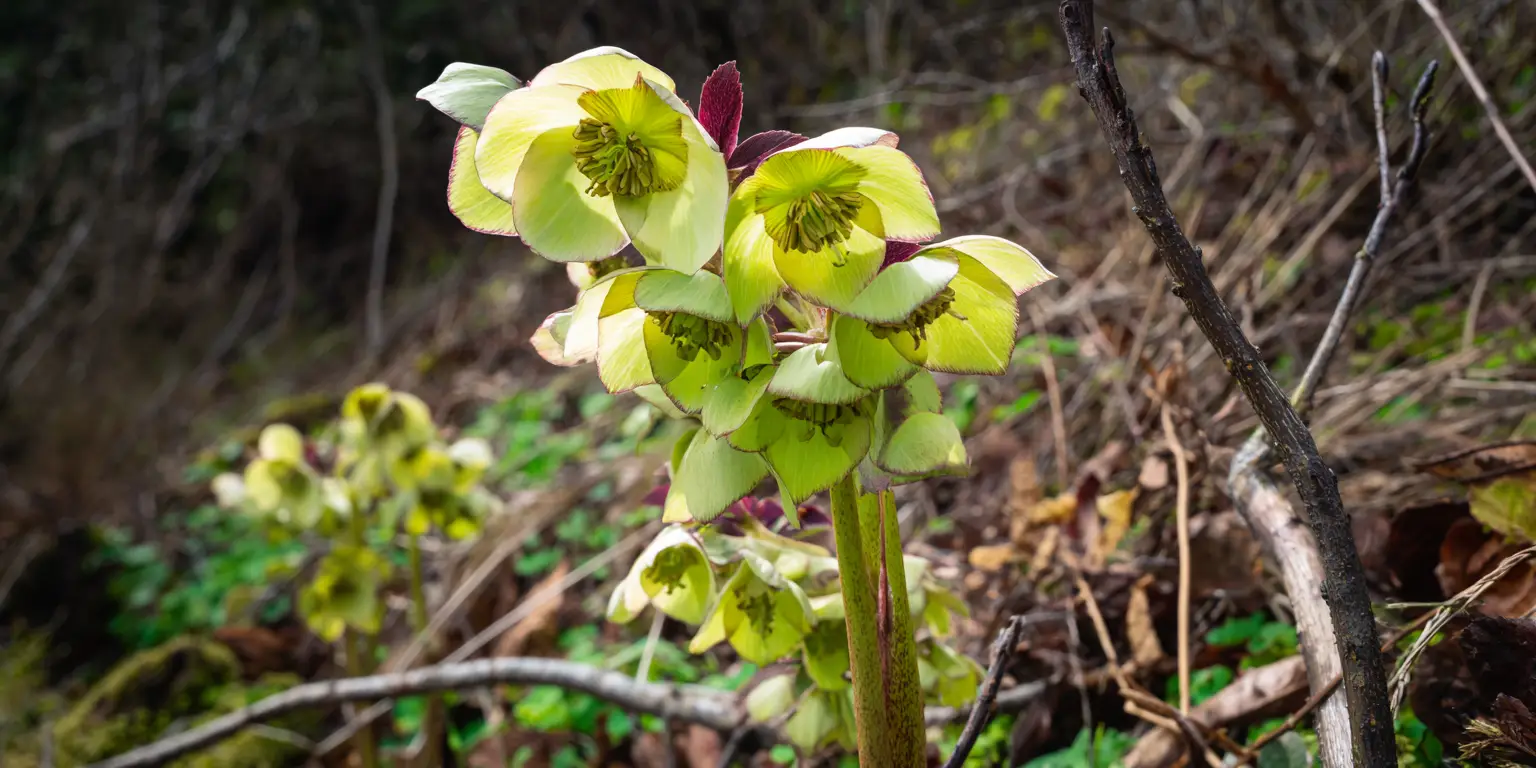
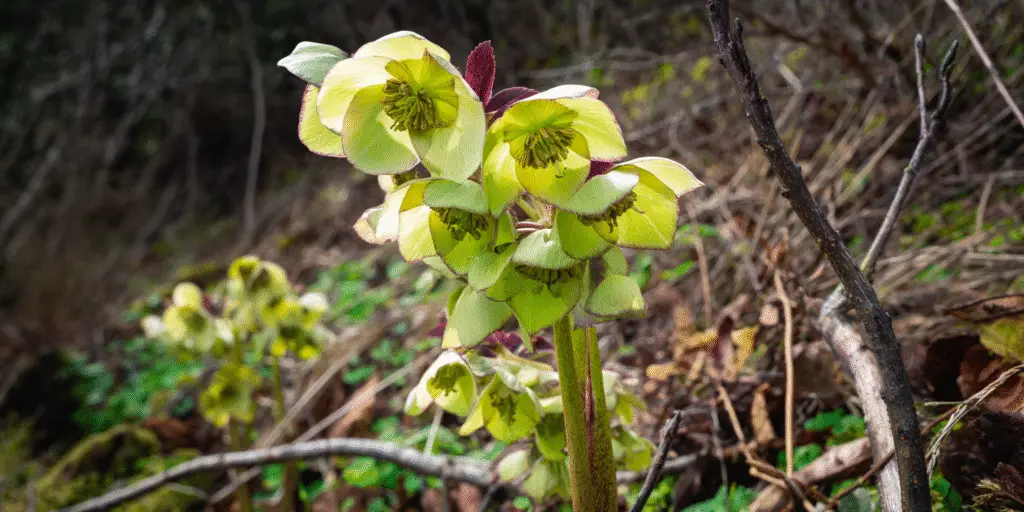
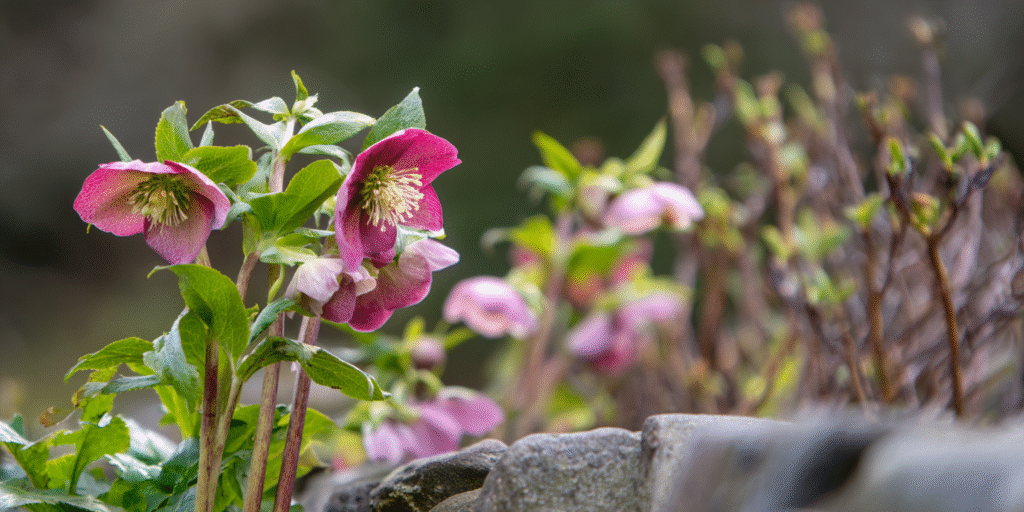
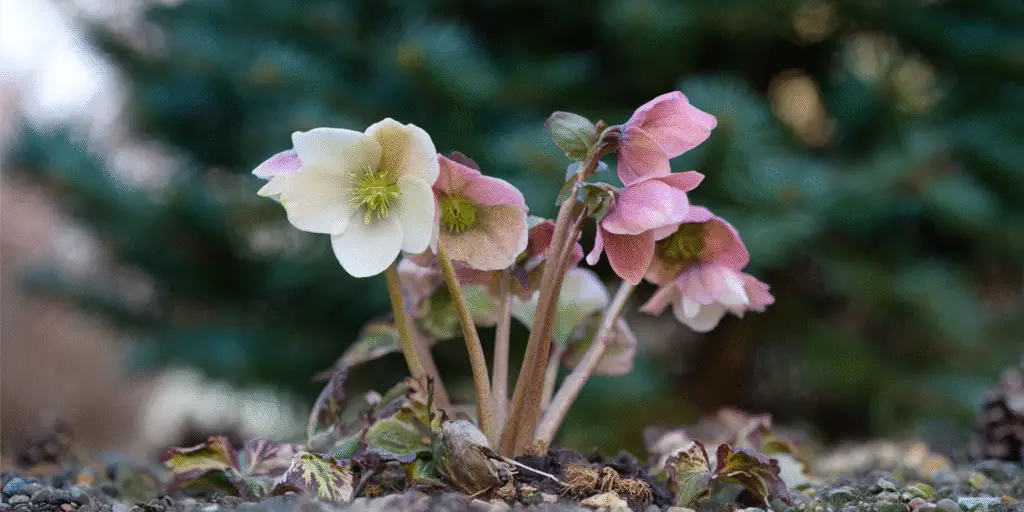
This species is the stinking hellebore with finely divided evergreen leaves. It carries many small bell like flowers in late winter to spring. Flowers are greenish with red edged bracts on showy stems. It performs best in partial shade and free draining soil. It suits sites with leaner soils once established. The foliage can smell unpleasant when bruised.
At‑a‑glance
Group/Class: Species
Height × spread: 18 to 24 in (45 to 60 cm) × 12 to 18 in (30 to 45 cm)
Bloom window: February to April
Color & flower form: Drooping green cups with pale margins and showy bracts
Fragrance: 1 trace
USDA hardiness: zones 5 to 9
Breeder / Year / Origin: unknown
Awards/registration: RHS Award of Garden Merit
Pet safety: avoid
How it differs
Airier stems and finer leaf texture than the typical hybrid Lenten rose.
Tolerates leaner, drier soils better than many hellebores.
Flower clusters are smaller but more numerous than large hybrid blooms.
Strengths
Evergreen structure through winter.
Early nectar source and widely noted for pollinator value.
Deer browsing is uncommon.
Care in one minute
Grow in partial shade with protection from harsh winter wind.
Provide well drained, humus enriched soil; avoid waterlogging.
Water to establish then sparingly except in drought.
Remove spent flowering stems to refresh foliage.
Leave clumps undisturbed; divide only if needed.
Watch‑outs
Not reliably hardy in colder parts of zone 5.
Old stems can look tatty after bloom and benefit from removal.
Written by: Your Flowers Guide editorial team We are a small independent group of flower lovers who research and review each guide using trusted horticultural and educational sources. Learn more about us