returns in
184
days
Bloom calendar
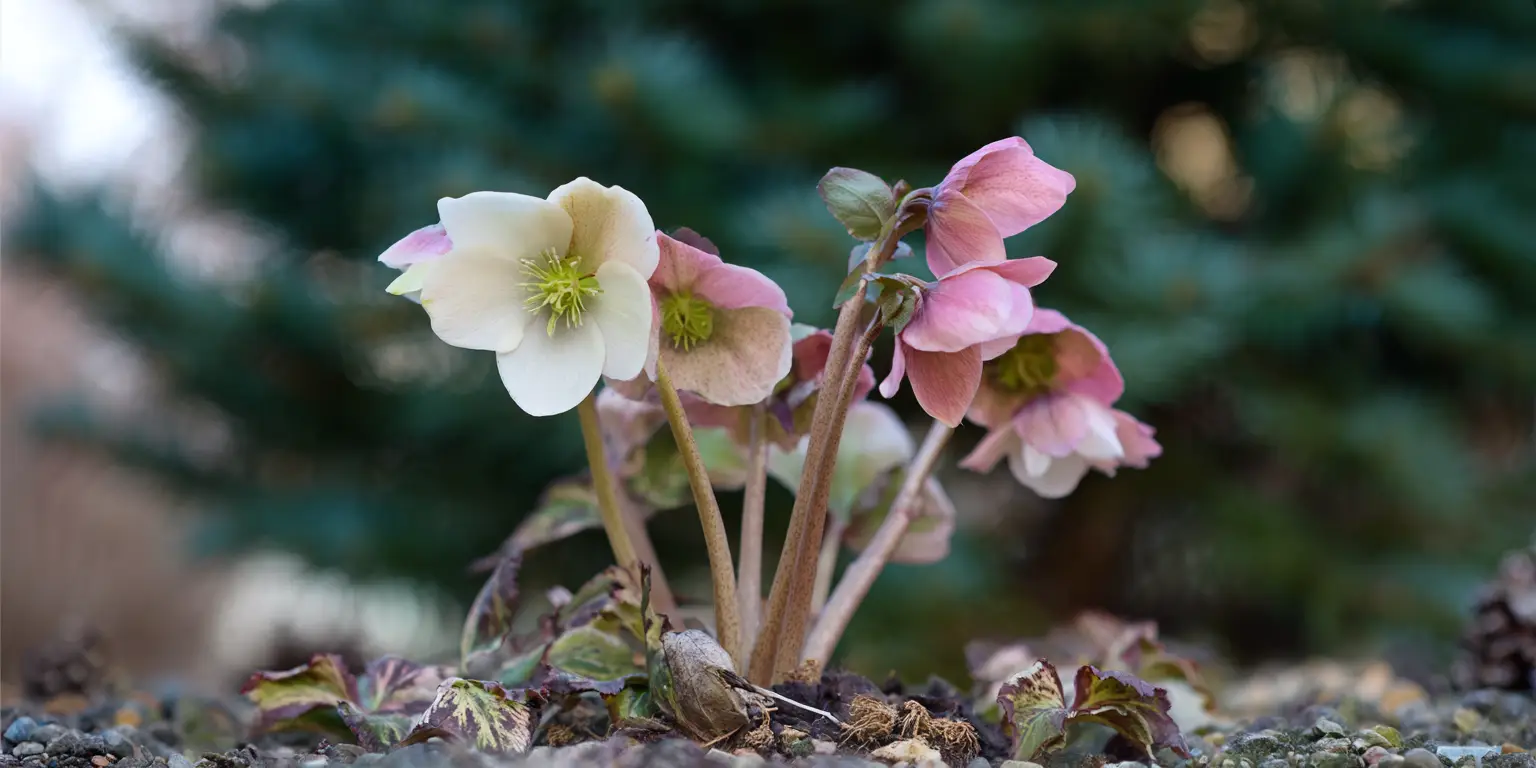
Helleborus × ericsmithii
Hybrid hellebore · Eric Smith, 1960s, United Kingdom
At‑a‑glance
- Group/Class: Hybrid hellebore
- Height × spread: 12 to 18 in (30 to 45 cm) × 12 to 18 in (30 to 45 cm)
- Bloom window: January to April
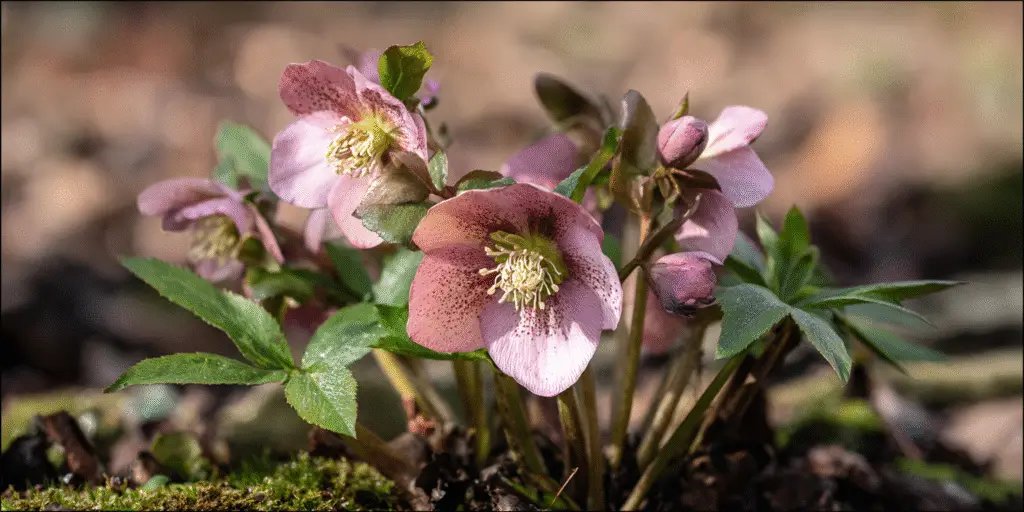
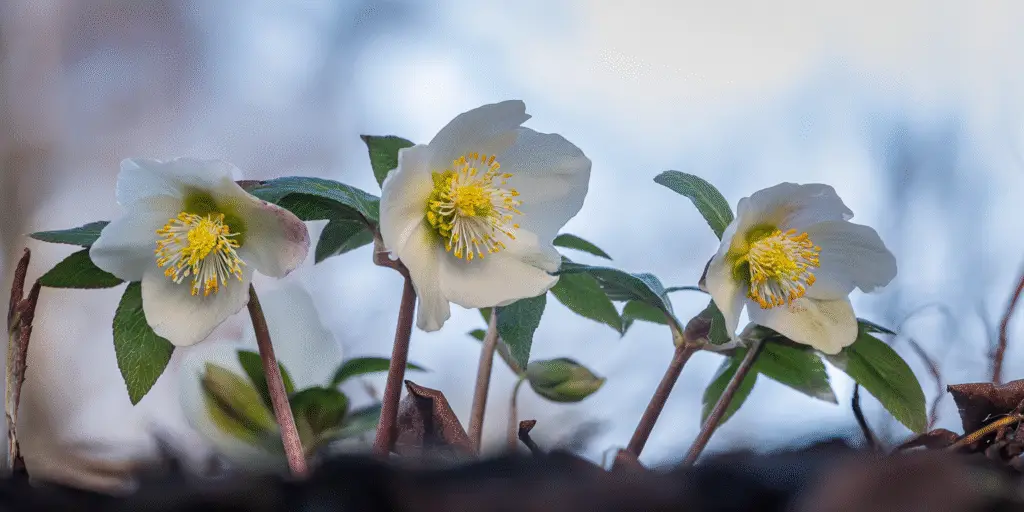
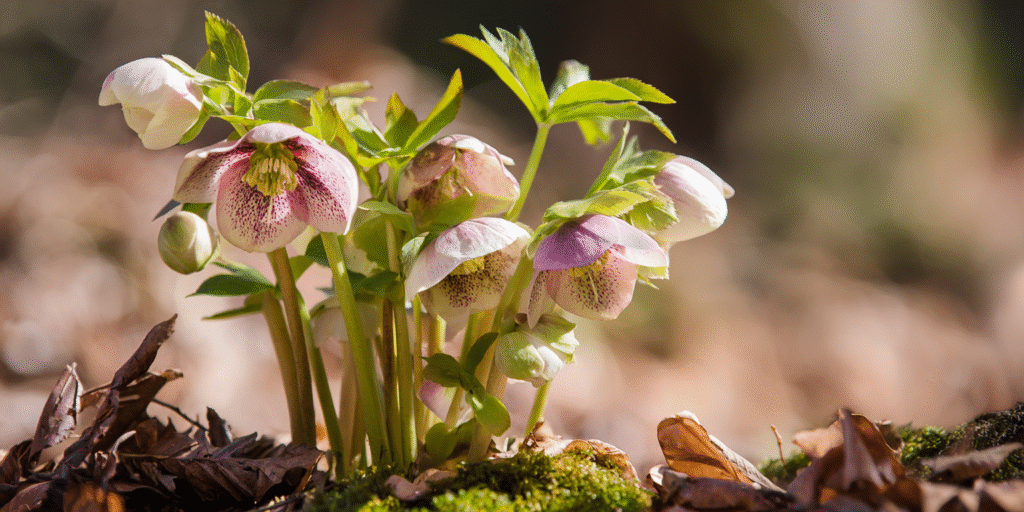
- Color & flower form: Outward facing white to pink cups with persistent sepals
- Fragrance: 0 none
- USDA hardiness: zones 5 to 8
- Breeder / Year / Origin: Eric Smith, 1960s, United Kingdom
- Awards/registration: RHS Award of Garden Merit on several selections
- Cut‑flower notes: Often used for cutting in late winter; cut when flowers are mature for better life
- Pet safety: avoid
How it differs
- More outward facing flowers than many nodding hellebore species.
- Compact habit that fits containers and small borders.
- Earlier blooming than many H. orientalis forms in cold regions.
Strengths
- Evergreen foliage with attractive marbling in some cultivars.
- Deer browsing is uncommon.
- Suitable for containers and small spaces.
Care in one minute
Place in partial shade with shelter from winter wind.
Use a well drained, humus rich potting mix for containers or similar garden soil.
Water evenly; avoid waterlogged roots in winter.
Remove old leaves before bloom for a tidy display.
Leave clumps undisturbed for best vigor.
Watch‑outs
- Hardiness varies by selection and site; protect in colder winters.
- Requires sharp drainage to avoid crown problems.
- Can develop hellebore leaf spot in wet springs.
Best uses (tags)
Provenance note
Bred by Eric Smith by crossing H. niger with H. × sternii. Selections such as ‘Walhelivor’ are widely grown.
References
- Royal Horticultural Society plant profile: Helleborus × ericsmithii
- RHS advice: Hellebore leaf spot
Similar Flowers
Enjoying our flower guides? Add YourFlowersGuide as a preferred source on Google. It helps more readers find us.
Add to Preferred Sources