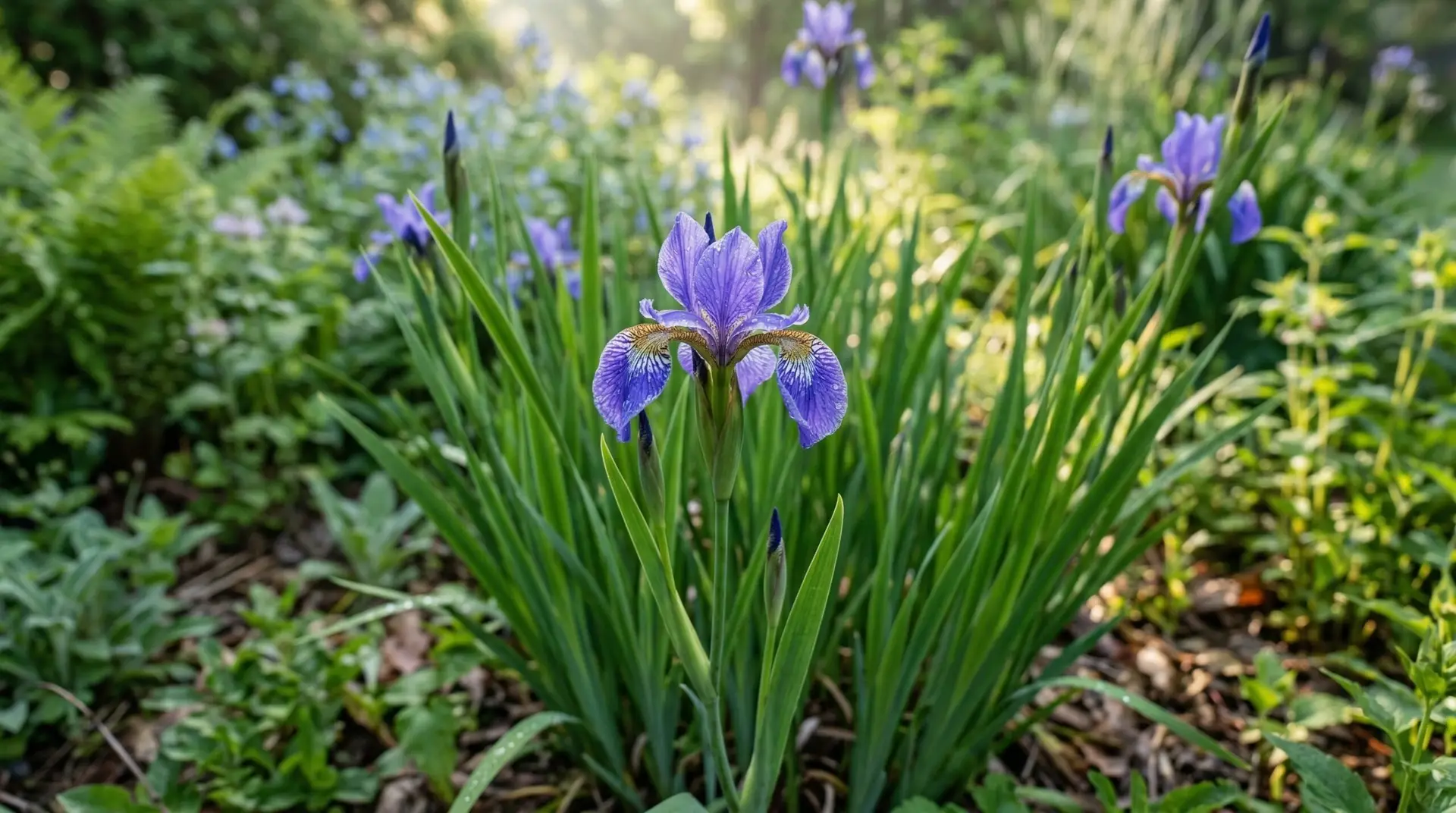
Growing conditions dictate success in the garden long before a shovel ever breaks the soil. Gardeners moving from the cool, dry climates of the Mountain West or the crisp springs of the Northeast often try to bring their favorite plants with them to the humid South. They quickly discover that the classic bearded iris that thrived in their previous gardens simply rots in the sweltering heat and heavy rainfall of the Gulf Coast. The high humidity, lack of winter chill, and frequent summer deluges create a hostile environment for plants adapted to arid summers and cold winters. Understanding your local context is the absolute foundation of success, which means choosing plants that evolved to handle your specific regional pressures. The Louisiana iris offers a reliable solution for southern gardeners who want the classic flower shape but need a plant that thrives in exactly the conditions that kill other varieties.
This group of native American species and their hybrids evolved in the swamps, bayous, and coastal plains of the lower United States. They perform exceptionally well in Zones 6 through 10, bringing a vibrant color range to regions where traditional spring bulbs often fail. In the deep South, specifically Zones 8 through 10, these plants grow vigorously through the mild winter and bloom in early to mid-spring before the truly oppressive summer heat arrives. Gardeners in Zone 6 and 7 can also grow them successfully, though the plants will go completely dormant in winter and emerge later in the spring. The key difference is that while Northern gardeners must protect the rhizomes from freezing solid, Southern gardeners can leave them entirely to the elements.
Contents 3 sections
Adapting to regional soil chemistry and water patterns
In the humid Southeast, the Louisiana iris faces entirely different soil conditions than it would in the arid Southwest. Southeastern soils are typically acidic clay or sandy loam that receives abundant rainfall throughout the year. This is the natural home of the Louisiana iris, and the plants will thrive in the naturally low pH of 5.5 to 6.5 found across the Carolinas, Georgia, and the Gulf Coast. They actively appreciate the heavy, water-retentive clay that suffocates most other garden plants. If you live in a region with frequent heavy rainstorms, you can plant these irises in the lowest parts of your yard where water naturally collects and stands for several days.
Gardeners in the Southwest and Southern California face a different set of challenges when attempting to grow these moisture-loving plants. The alkaline soils common across Texas, Arizona, and California will cause the foliage to turn yellow and stunt the plant’s growth. To succeed in these regions, you must add elemental sulfur or acidic organic matter like pine needles to lower the soil pH into the preferred acidic range. Water is the primary limiting factor in these dry climates. Because these plants lack the drought tolerance of a daylily, western gardeners must provide consistent, deep irrigation and use heavy organic mulches to prevent the soil from drying out completely during the long, rainless summers.
Managing heat, humidity, and sun exposure
Sun exposure rules change drastically depending on your specific latitude and local summer temperatures. In coastal regions with high humidity and frequent afternoon cloud cover, a Louisiana iris can easily handle full, direct sun all day long. The moisture in the air and the frequent coastal showers keep the foliage from scorching even in July and August. If you garden in the inland South or the desert Southwest, the intense, dry afternoon sun will burn the leaves and stress the rhizomes. In these extreme heat zones, you should position the plants where they receive morning sun but are protected by high canopy shade during the hottest part of the afternoon.
Winter conditions also dictate how you manage this plant in your specific climate zone. In Zone 9 and 10 Florida or South Texas, the Louisiana iris acts as an evergreen perennial, putting on active vegetative growth during the cool, mild winter months. These southern gardeners must apply fertilizer in the fall to support this winter growth phase, which directly fuels the spring bloom. Conversely, gardeners in Zone 6 or 7 must treat the plant differently, as the winter cold forces the iris into complete dormancy. In these colder regions, fall fertilization is a mistake that pushes tender new growth right before a freeze, so feeding must wait until the soil warms in early spring.
Using microclimates to your advantage
Every garden contains microclimates that you can manipulate to support plants that might otherwise struggle in your general region. The Louisiana iris is uniquely suited for the wet, poorly drained microclimates that plague many residential properties. You can plant them directly in the shallow margins of garden ponds, in rain gardens designed to catch runoff from your roof, or at the bottom of a sloping yard. While plants like the canna lily also tolerate damp soil, the Louisiana iris can actually grow in standing water up to six inches deep year-round. This makes it an invaluable tool for turning a problematic, muddy depression in your lawn into a deliberate and beautiful garden feature.
If your region has extremely sandy, fast-draining soil that cannot hold moisture, you can create an artificial microclimate to support these plants. Building raised beds lined with heavy plastic before adding soil helps retain the constant moisture these irises require in dry regions. You can also grow them in large, sealed containers without drainage holes, creating a miniature bog garden on a hot patio. By controlling the soil mix and water level within a container, gardeners in the driest, most alkaline regions can perfectly replicate the acidic, swampy conditions of the Gulf Coast.
The success of the Louisiana iris in southern gardens demonstrates a fundamental truth about horticulture. You will always achieve better results when you select plants that are naturally adapted to your specific regional conditions rather than trying to alter your climate to suit a specific plant. When you stop fighting your local heavy clay, intense heat, and torrential rainfall, you can build a garden that thrives on the very elements that make your region unique. By matching the right plant to the right environment, you reduce your labor, eliminate the need for constant chemical interventions, and create a garden that is genuinely at home in its surroundings.
More About Irises
Iris problems from borers to rot and keeping your iris collection healthy
How to grow irises for elegant sword-leaved plants and flowers in every color of the rainbow
Dividing and transplanting irises at the right time for healthy plants and more blooms
Iris flower meaning and why the rainbow goddess gave this flower its name
Iris companion plants: what to grow and what to avoid
Dutch iris bulbs for spring cutting gardens and the easiest iris to grow in bouquets
Miniature and dwarf iris for rock gardens and early spring color at ground level
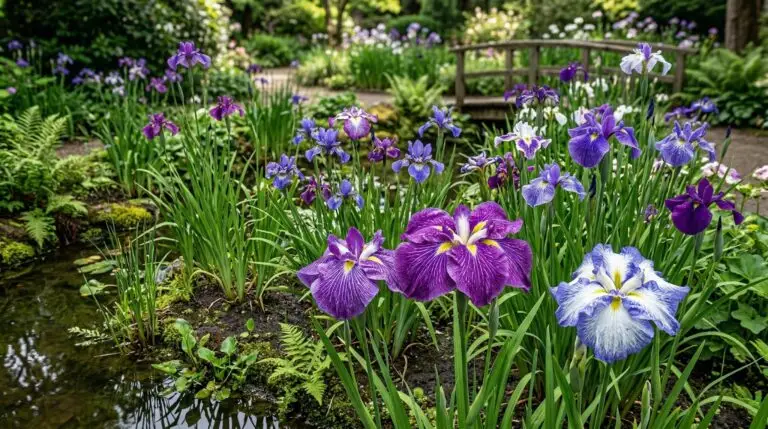
Japanese iris for dramatic waterside blooms with the largest flowers in the iris world
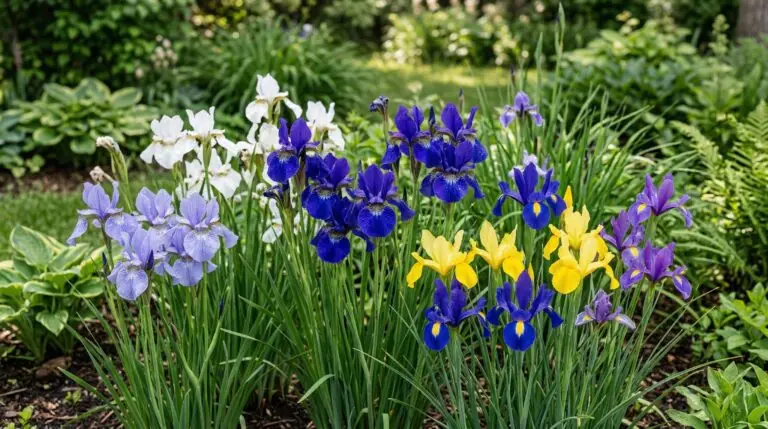
Siberian iris as the easiest and most elegant iris for modern garden borders
Enjoying our flower guides? Add YourFlowersGuide as a preferred source on Google. It helps more readers find us.
Add to Preferred Sources