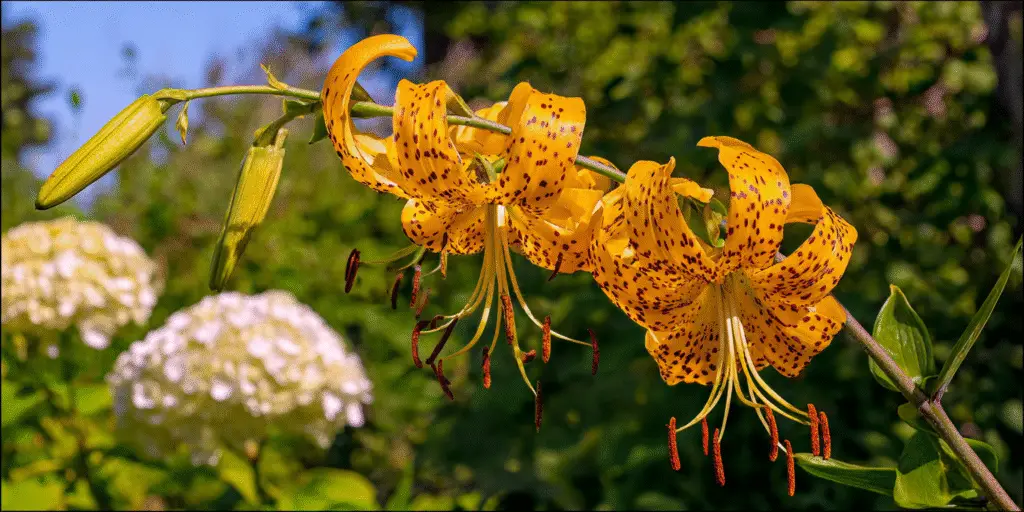
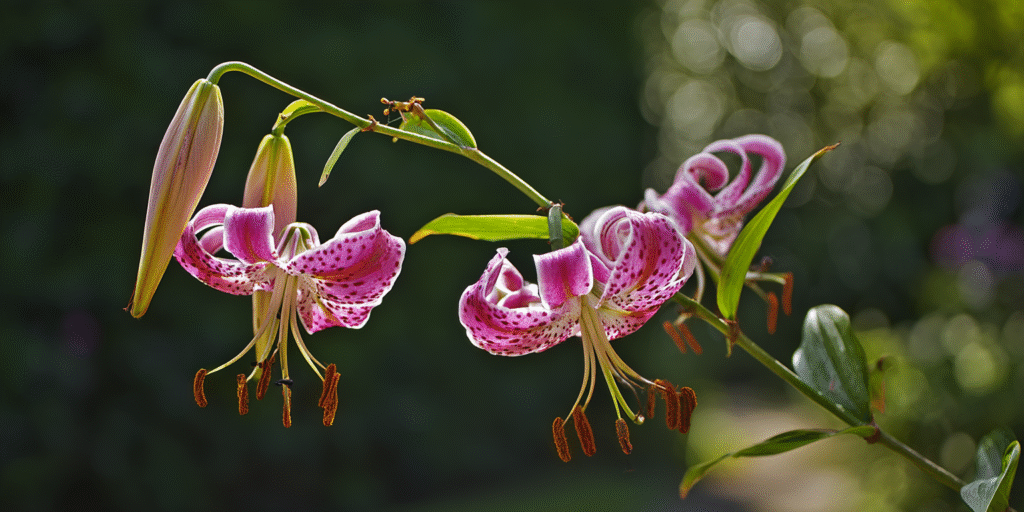
Tiger lily is a vigorous, easy species with pendant orange blooms densely spotted in black. It thrives in full sun and moist, well‑drained acidic soil and multiplies by bulbils on the stem. Stems are strong and flower in mid to late summer, but flowers have little to no fragrance. Use where spreading from bulbils is acceptable or easy to manage.
At‑a‑glance
Group/Class: Species; Asiatic group
Height × spread: 36–72 in (0.9–1.8 m) × 12–24 in (30–60 cm)
Bloom window: July to August
Color & flower form: Orange, heavily spotted, nodding turk’s‑cap
Fragrance: 0 none
USDA hardiness: zones 5 to 8
Breeder / Year / Origin: unknown, native to East Asia
Pet safety: avoid
How it differs
Produces abundant bulbils on stems and spreads vegetatively
Sterile triploid in many regions; rarely sets seed
Non‑fragrant compared with many lilies
Strengths
Reliable performer in full sun
Multiplies readily from bulbils
Tolerates varied soils if drainage is good
Care in one minute
Full sun; light shade reduces bloom
Moist, well‑drained, acidic soil
Even moisture during growth
Remove bulbils to limit spread; deadhead after bloom
Written by: Your Flowers Guide editorial team We are a small independent group of flower lovers who research and review each guide using trusted horticultural and educational sources. Learn more about us