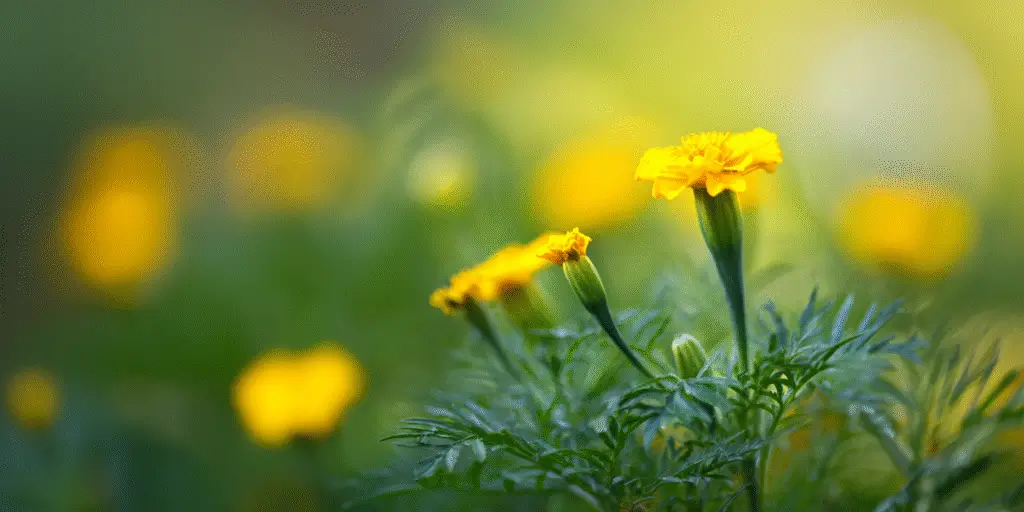
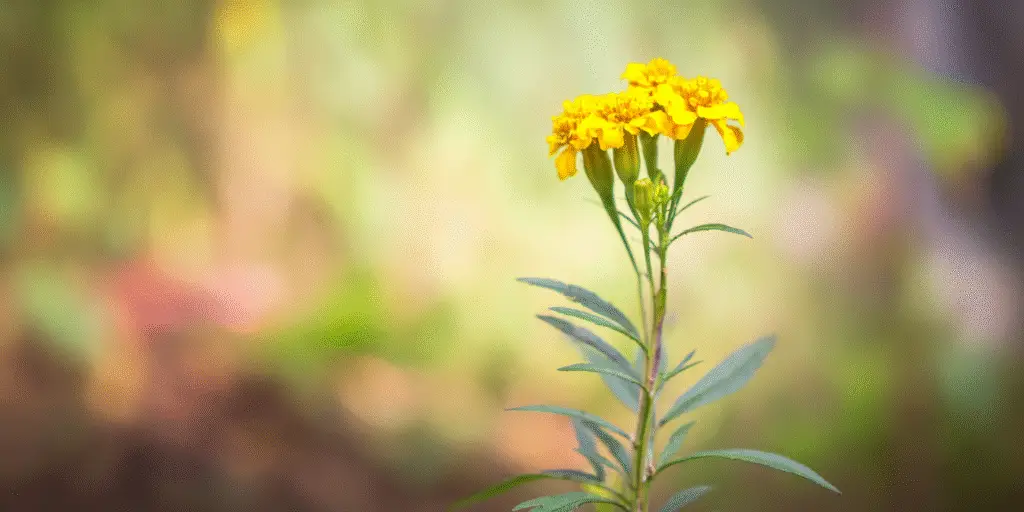
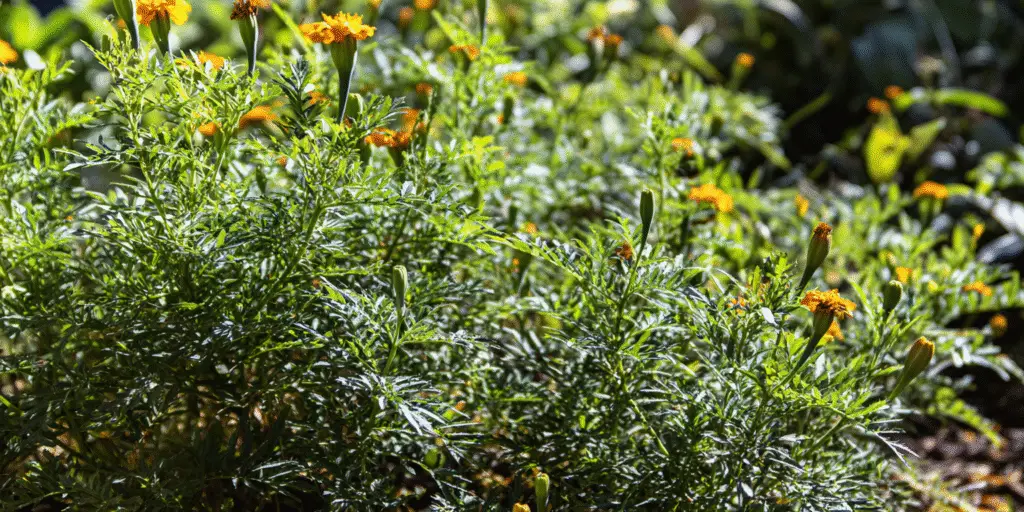
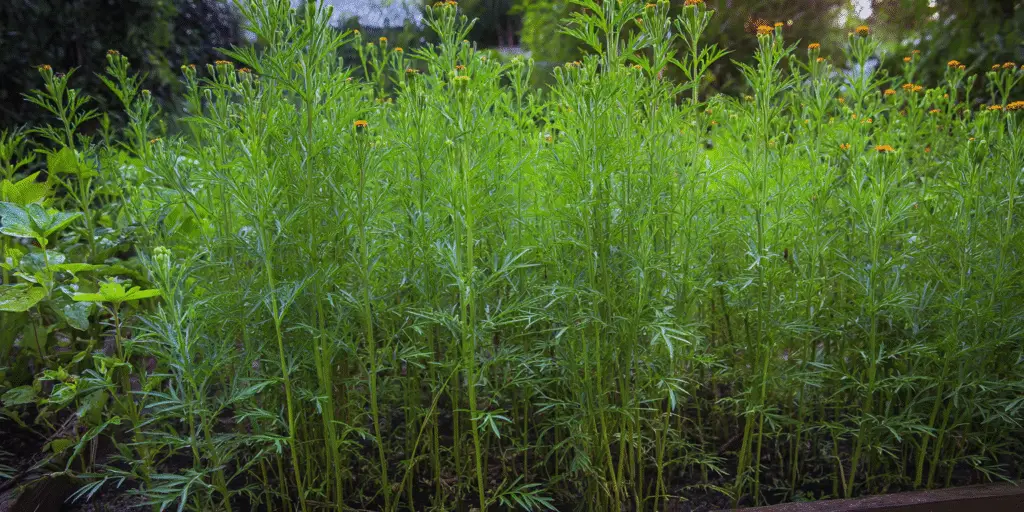
Tagetes lemmonii is Lemmon’s marigold, also called Copper Canyon daisy, a shrubby marigold for mild‑winter regions. It is notable for pungently aromatic, finely cut foliage and a long short‑day bloom from late fall into winter. In USDA zones 8 and 9 it grows as a perennial subshrub; farther north hard frosts kill top growth. Plants reach about 3 to 4 feet tall and 4 to 6 feet wide in full sun with good drainage. Once established it tolerates heat, drought, and alkaline soils. Cut back in late winter to refresh dense growth.
At‑a‑glance
Group/Class: Shrub marigold (species)
Height × spread: 3-4 ft × 4-6 ft (0.9-1.2 m × 1.2-1.8 m)
Bloom window: late fall to winter; into spring in frost‑free zones
Color & flower form: Golden yellow; small single daisies about 2 in
Fragrance: 3 strong
USDA hardiness: zones 8-9; grown as annual or die‑back perennial elsewhere
Breeder / Year / Origin: A. Gray, 1883, southern Arizona and northern Mexico
Pet safety: avoid
How it differs
Woody, shrubby habit rather than an herbaceous annual.
Blooms in the short‑day season instead of midsummer.
Tolerates poor, alkaline soils and prolonged heat.
Foliage fragrance is stronger than most marigolds.
Strengths
Long bloom in mild winters extends garden color.
Very heat and drought tolerant after establishment.
Often deer resistant.
Recovers quickly after light frost.
Care in one minute
Full sun and very well‑drained soil; avoid overwatering.
Water to establish; then infrequent deep irrigation.
Do not overfertilize; excessive nitrogen reduces bloom.
Shear or hard prune in late winter to shape and renew.
Mulch lightly in zones 8-9 after frost.
Watch‑outs
Tender to hard frost; top growth may die below about 25°F.
Can sprawl without periodic pruning.
Scent is intense and may overwhelm tight spaces.
Best uses (tags)
late season, borders, hedges, xeriscape, pollinators
Provenance note
Named by Asa Gray in 1883 from material collected in Arizona; native to the Sonoran region of the U.S. and Mexico.
Written by: Your Flowers Guide editorial team We are a small independent group of flower lovers who research and review each guide using trusted horticultural and educational sources. Learn more about us