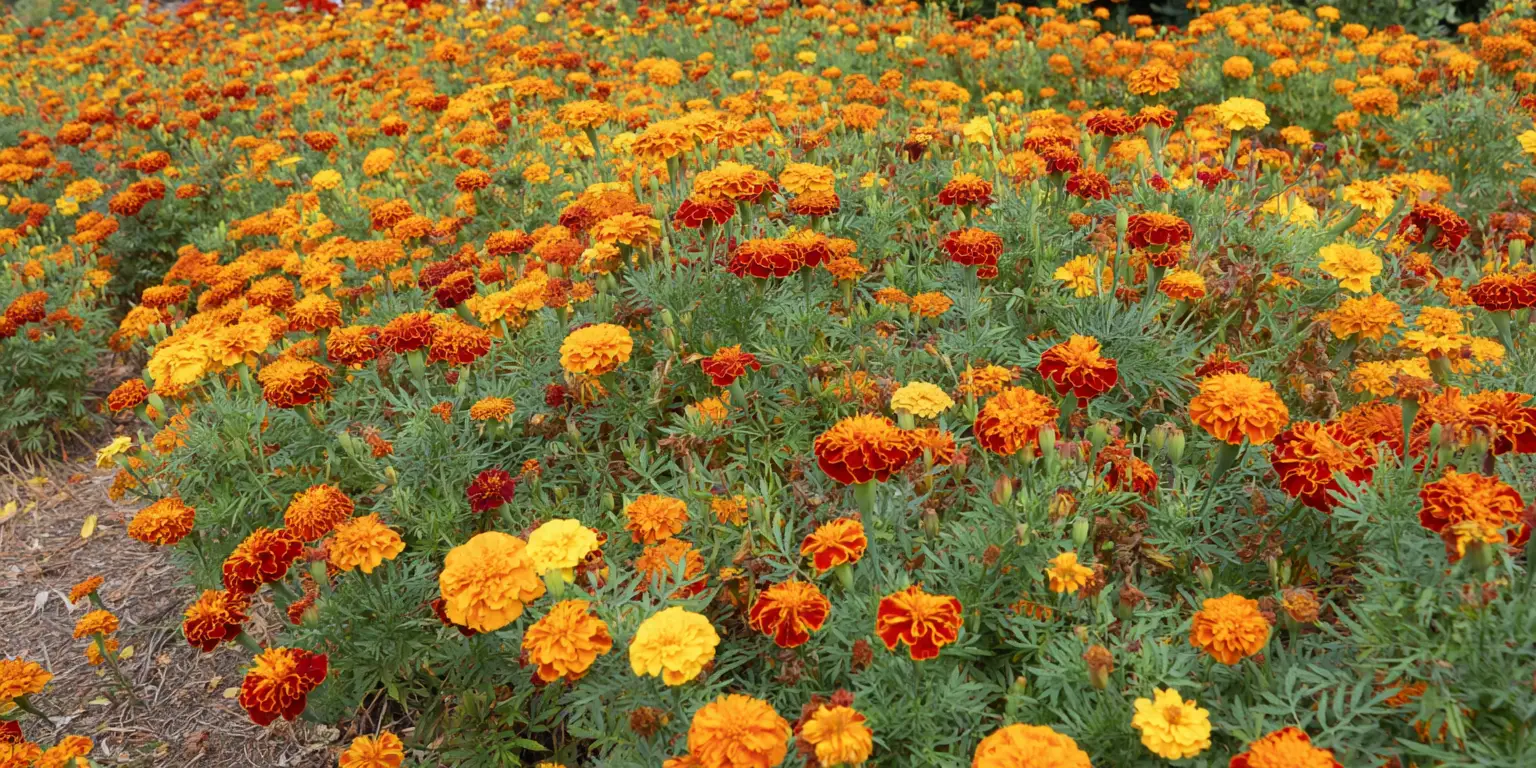
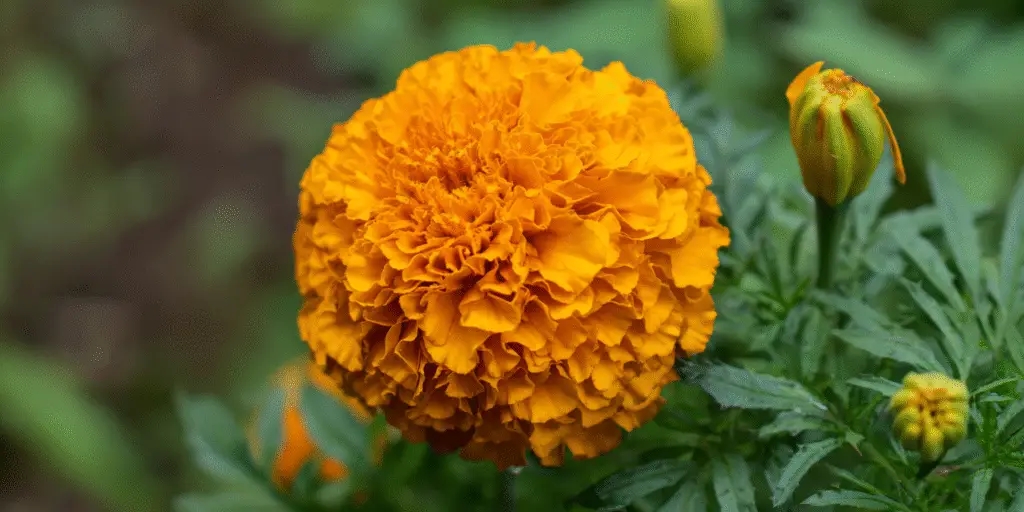
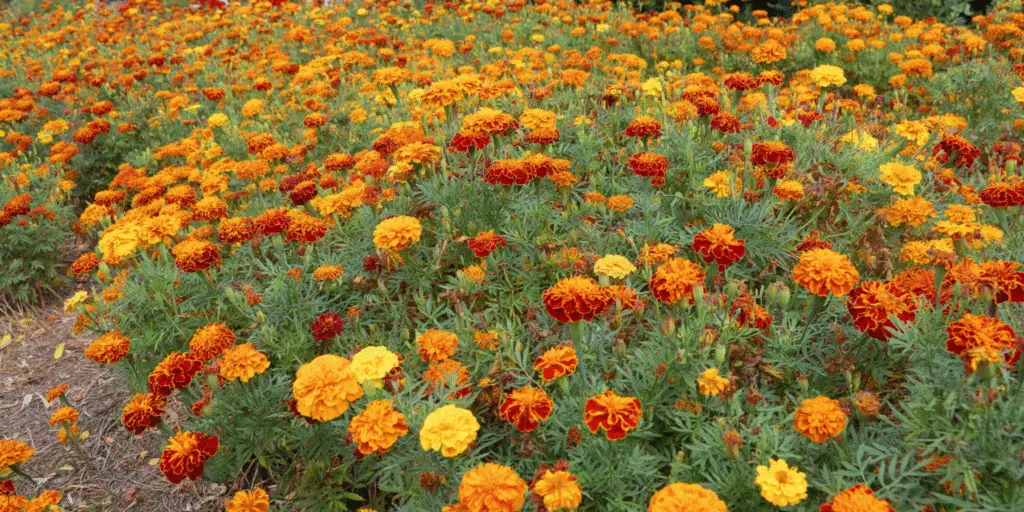
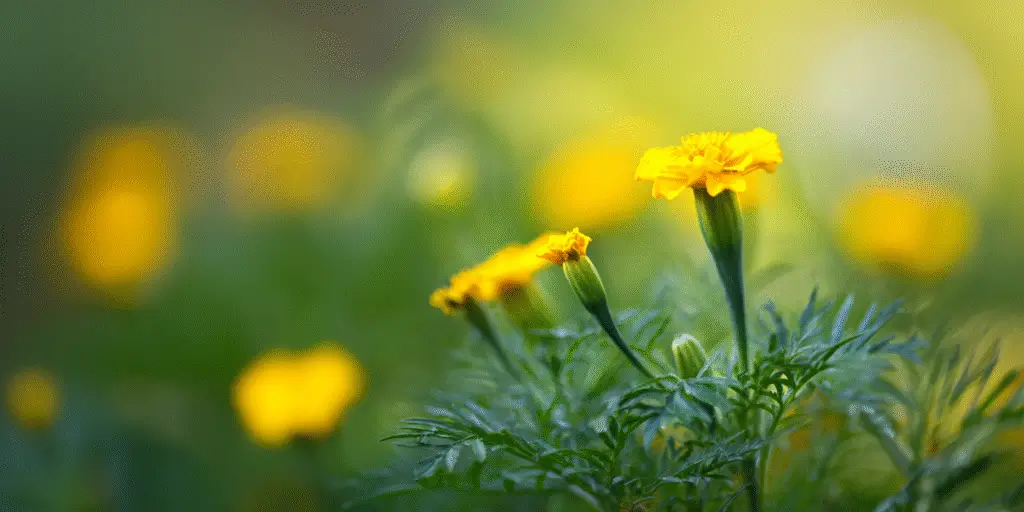
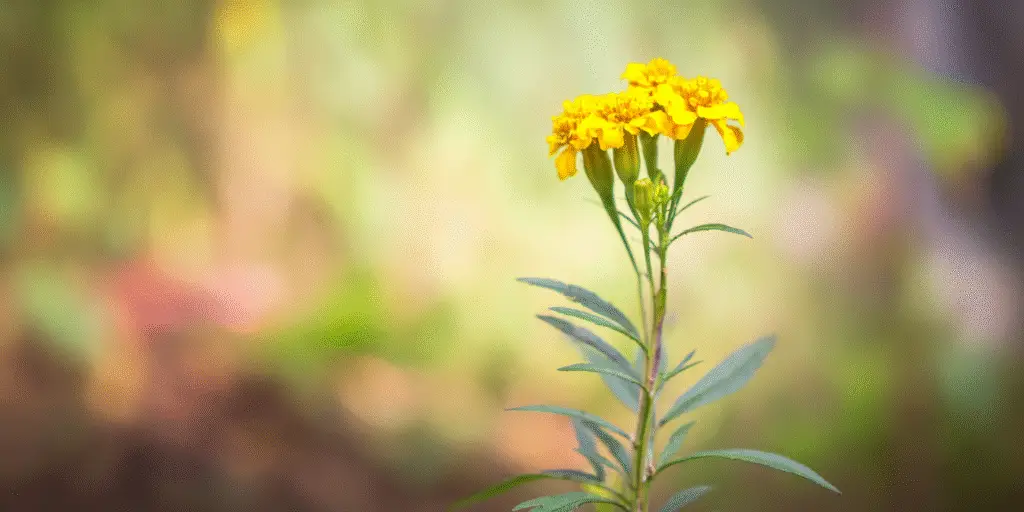
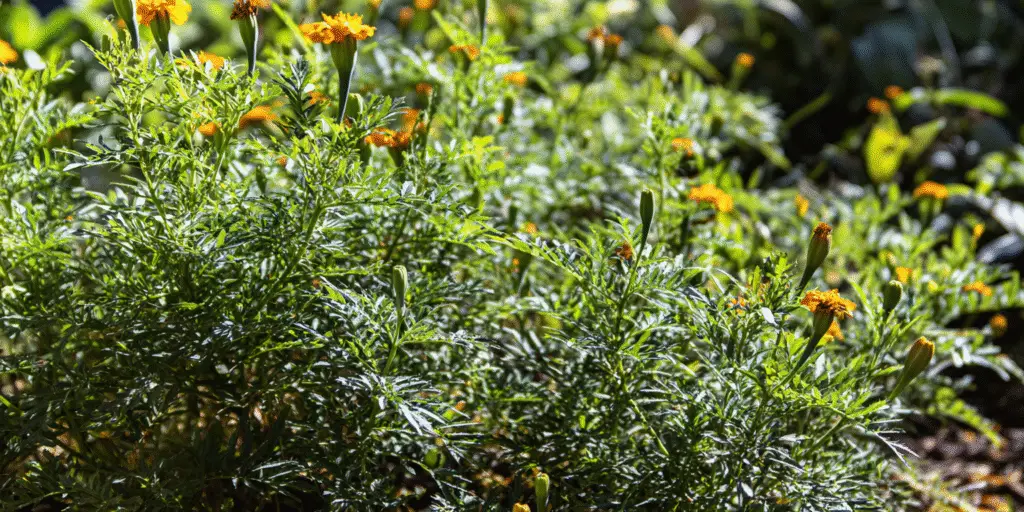
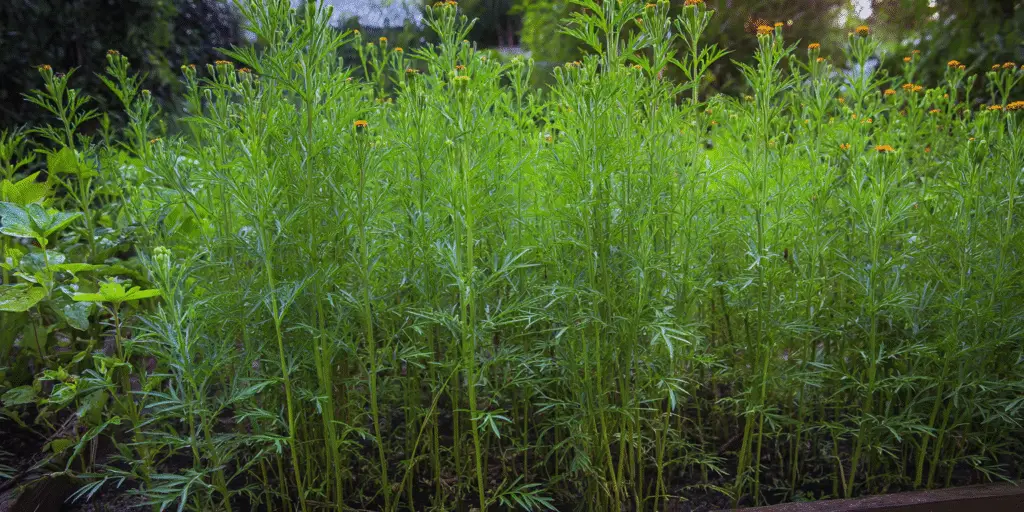
Tagetes patula is the French marigold, a compact annual native to Mexico and Guatemala. It is valued for a bushy habit and abundant single to double blooms in yellow, orange, red, and bicolors. Plants grow best in full sun and evenly moist, well‑drained soil. Flowering runs from early summer to frost with deadheading. Bloom may slow during the hottest weeks, then resume as nights cool. Across North America it is treated as a warm‑season annual. Short, sturdy stems can be cut for small bouquets.
At‑a‑glance
Group/Class: French marigold (species)
Height × spread: 6-12 in × 6-9 in (15-30 cm × 15-23 cm)
Bloom window: June to frost
Color & flower form: Yellow, orange, red, and bicolor; single to double 1-2 in
Fragrance: 2 noticeable
USDA hardiness: grown as annual in most of North America
Breeder / Year / Origin: Linnaeus, 1753, Mexico and Guatemala
Cut‑flower notes: Short stems; arrange as posies; vase life about 5-10 days
Pet safety: avoid
How it differs
More compact, mounded habit than African marigold.
Broader color range and bicolors.
Earlier and more continuous bedding color in small spaces.
Suited to edging and container culture.
Strengths
Reliable season‑long color with minimal care.
Performs well in containers and along edges.
Deer tend to avoid foliage.
Uniform growth for mass planting.
Care in one minute
Full sun; average, well‑drained soil.
Water regularly in dry spells; avoid soggy soil.
Light fertilizer at transplant; avoid excess nitrogen.
Pinch once to encourage branching; deadhead to keep blooms coming.
No overwintering outdoors in cold zones.
Watch‑outs
Flowering can pause in peak summer heat.
Powdery mildew or Botrytis may develop in wet, humid periods.
Spider mites and thrips can appear in hot, dry weather.
Best uses (tags)
containers, edging, borders, pollinators, bedding
Provenance note
: Described by Linnaeus in 1753; native to Mexico and Guatemala; widely bred for bedding performance.
Written by: Your Flowers Guide editorial team We are a small independent group of flower lovers who research and review each guide using trusted horticultural and educational sources. Learn more about us