Contents
Oncidium Orchid
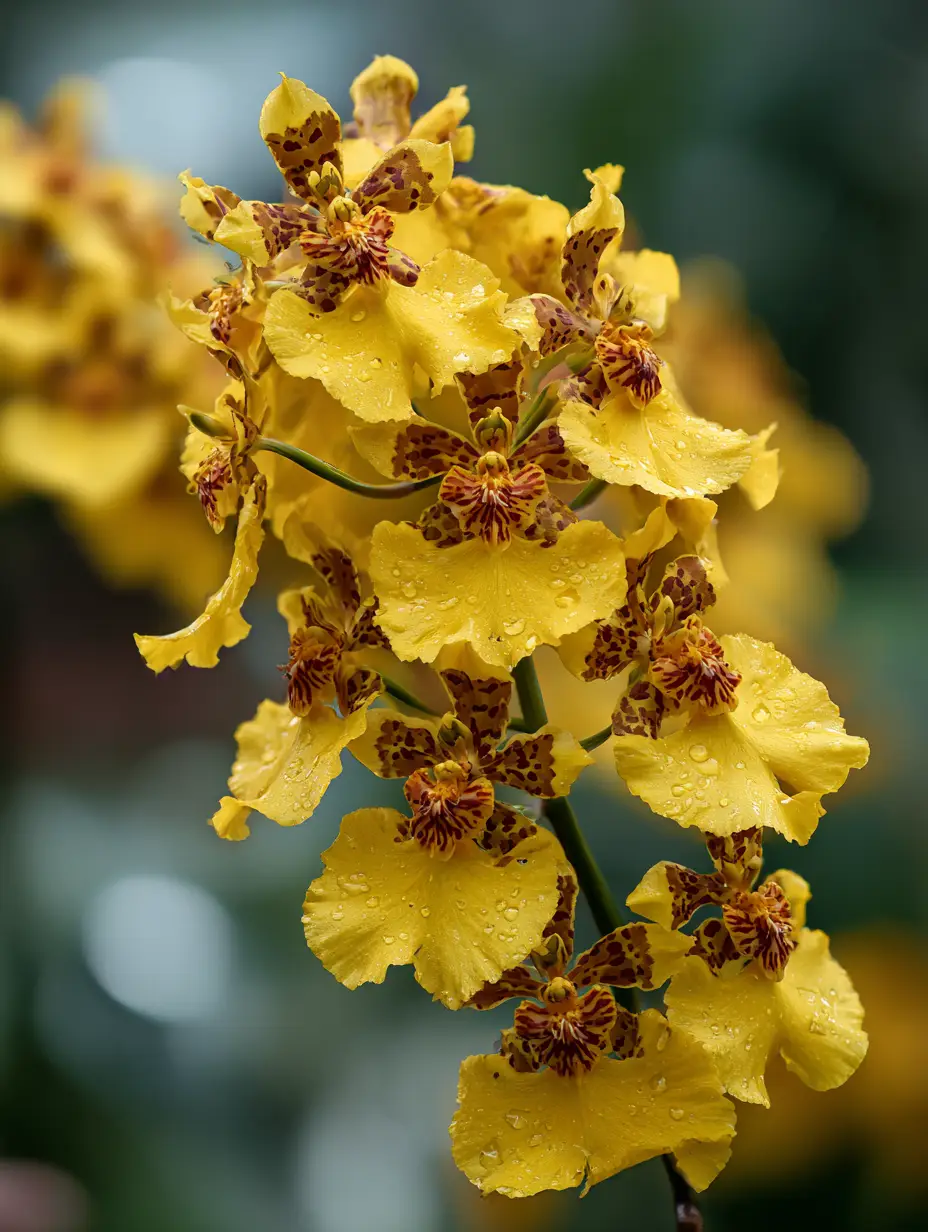
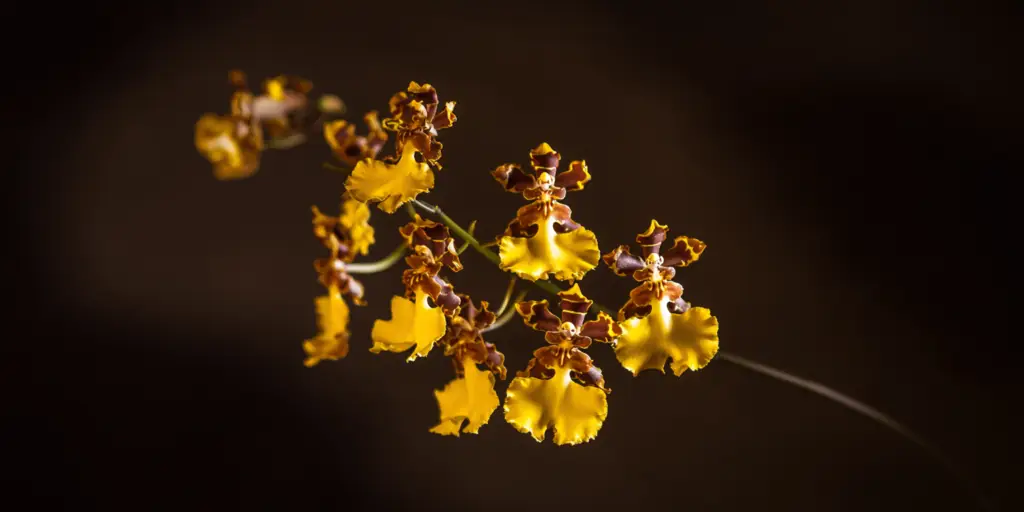
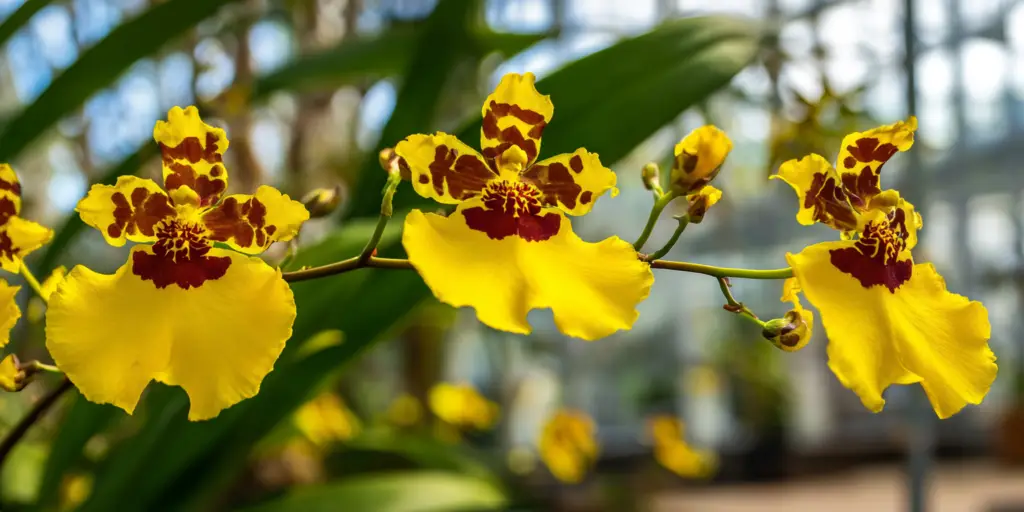
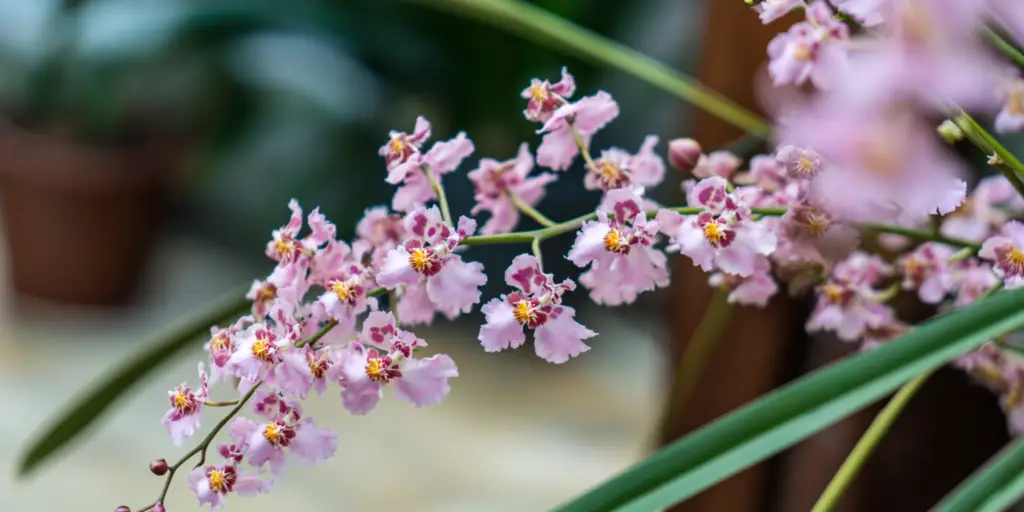
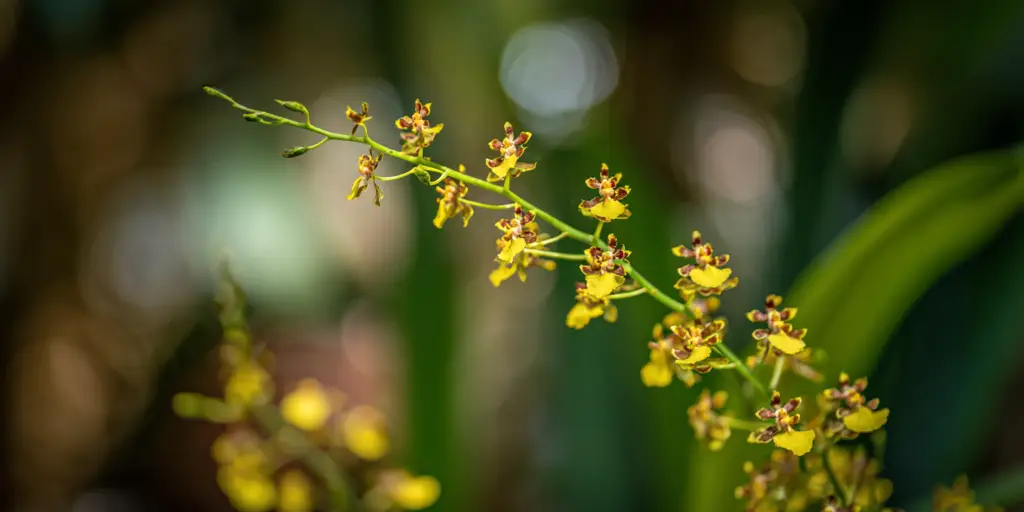
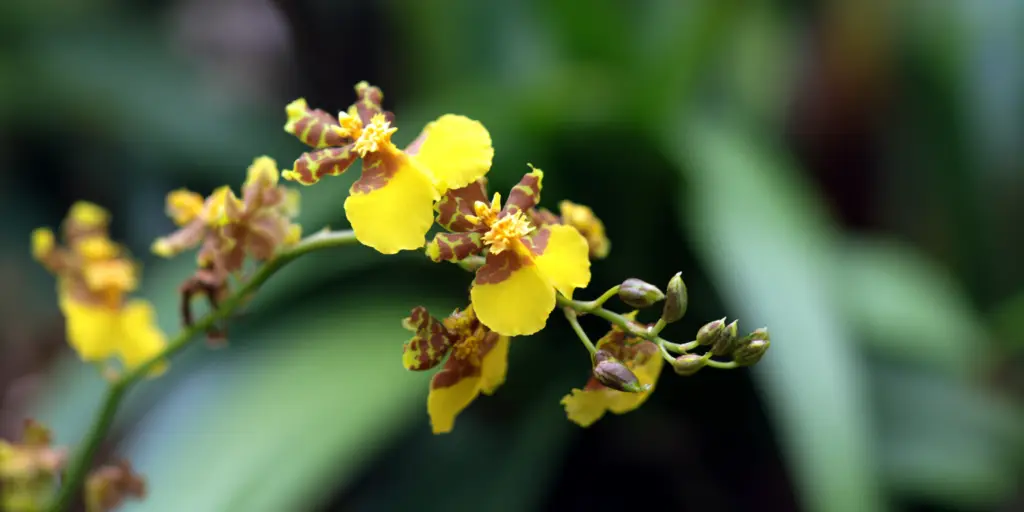
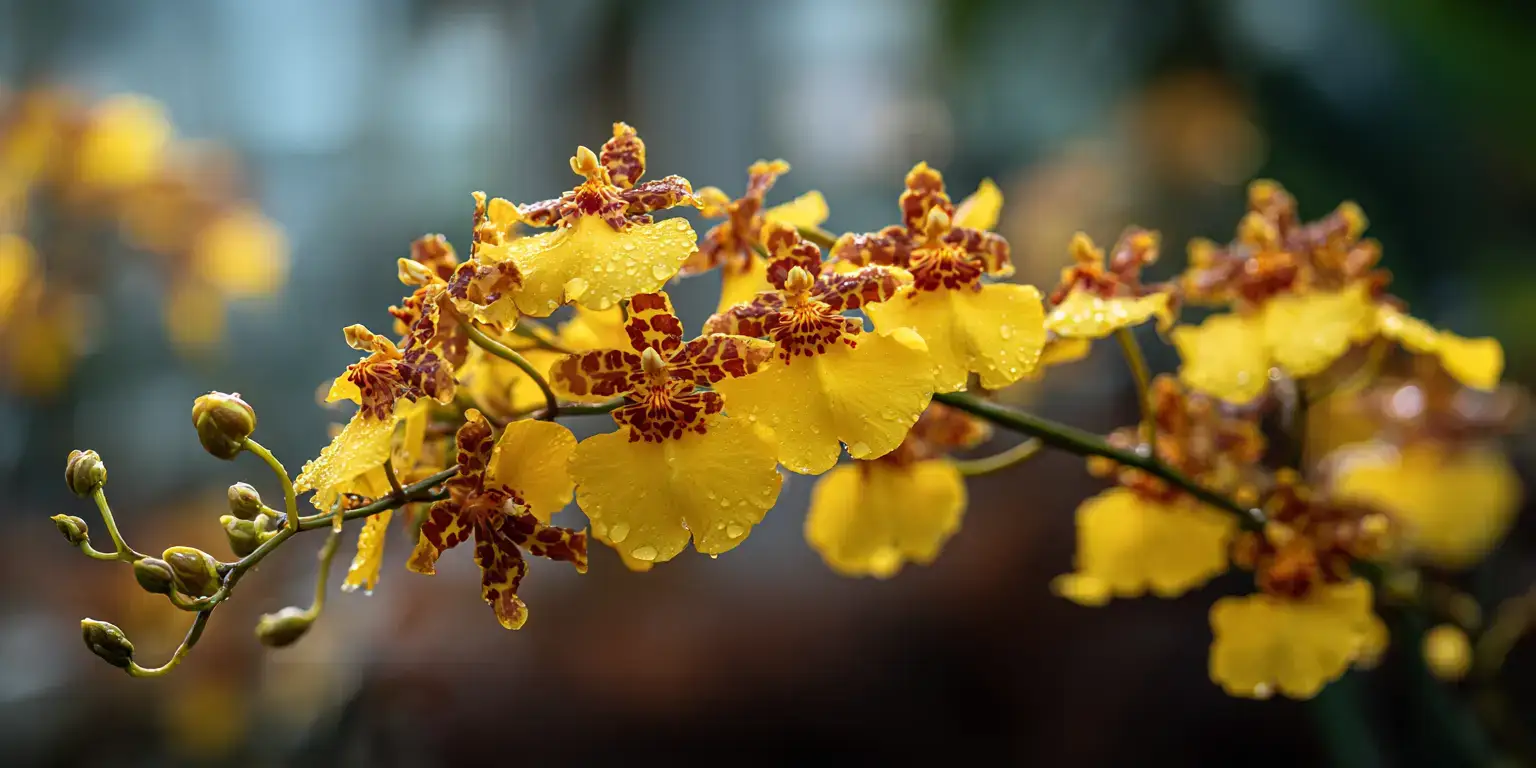
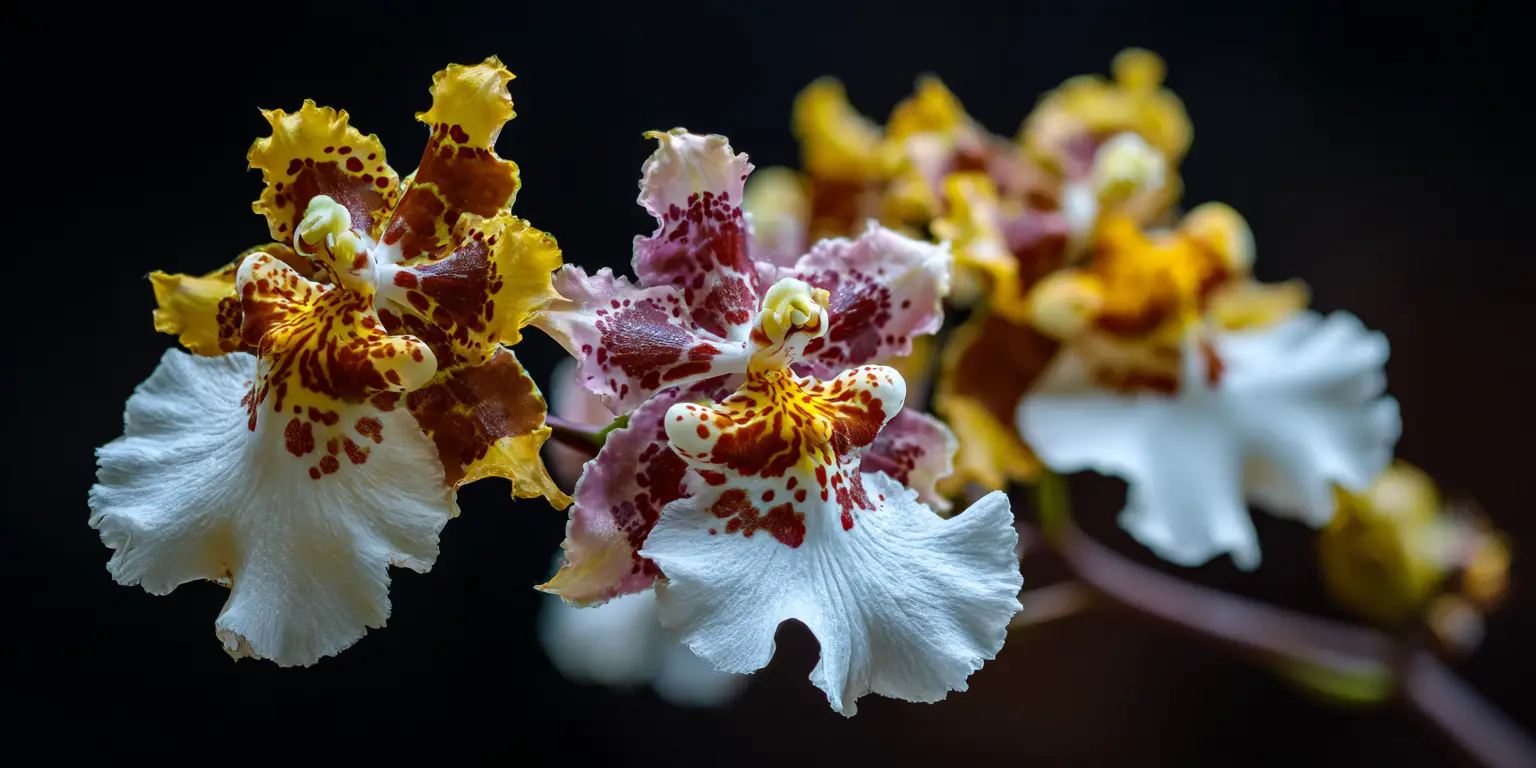
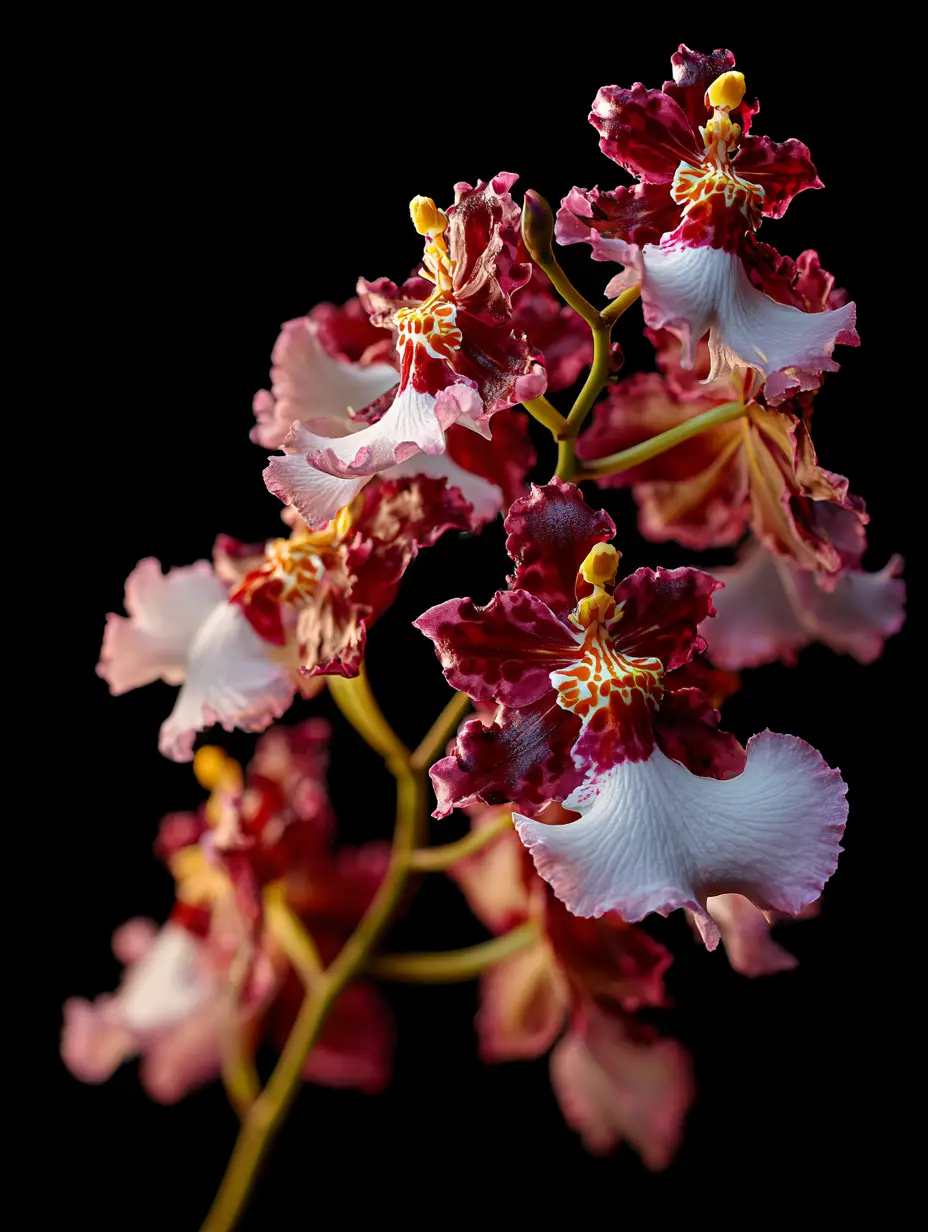
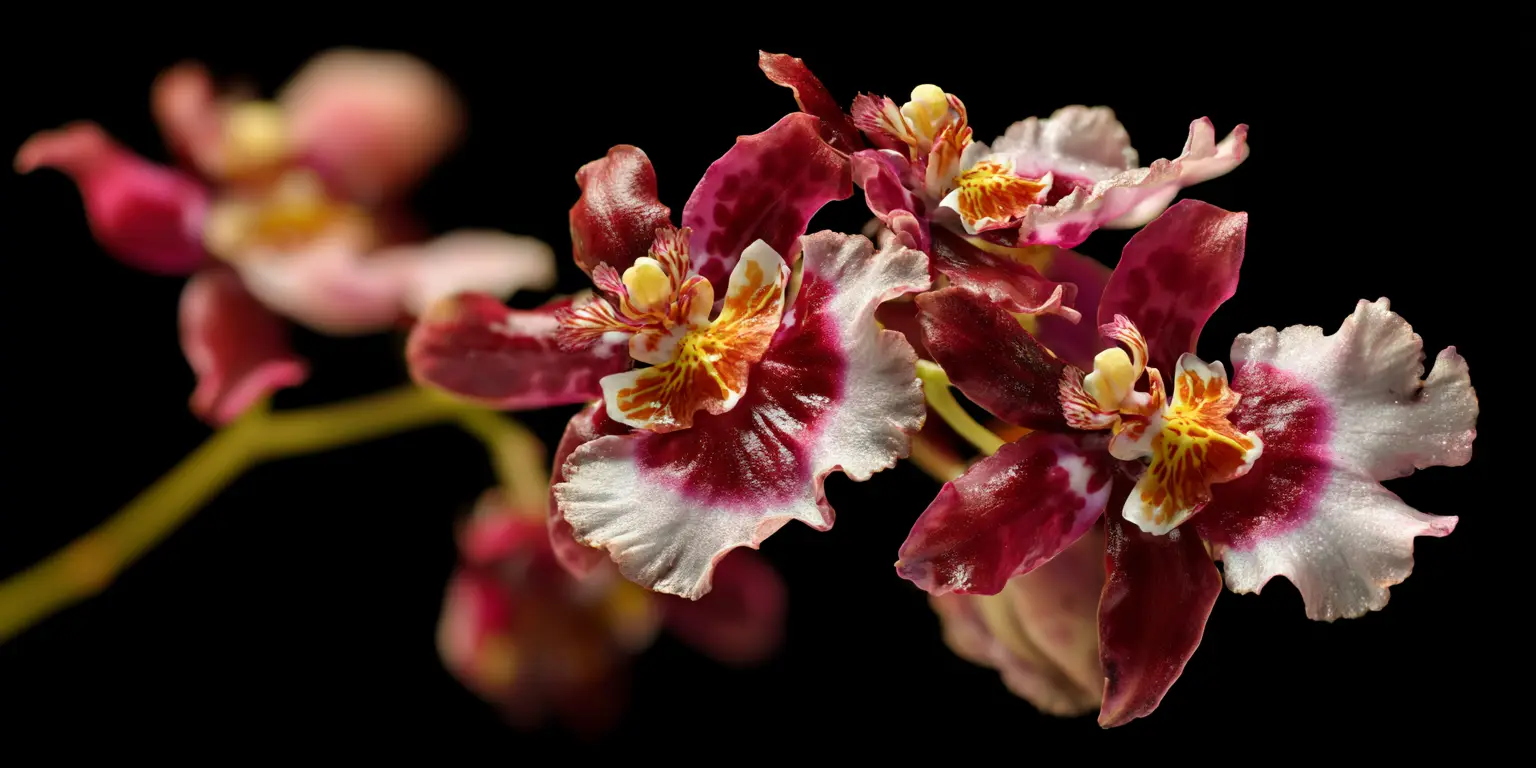
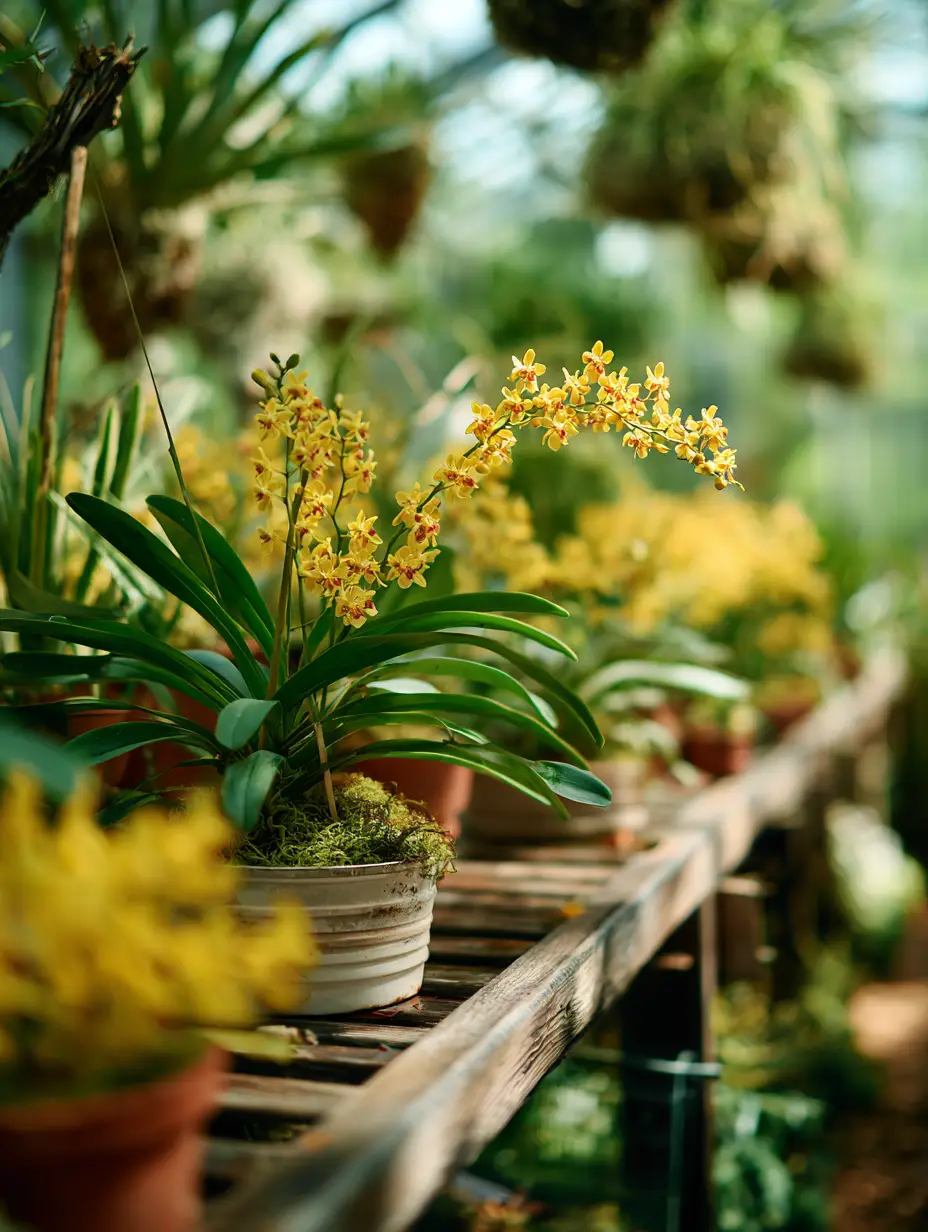
The Oncidium Orchid is a striking tropical orchid known by the charming nickname “dancing lady orchid.” This name comes from its frilly, skirt-like blooms that dance in the breeze, often in brilliant shades of yellow and brown. Oncidiums are epiphytic orchids (air plants) native to Central and South America, where they grow on tree branches in warm, humid forests. With hundreds of species and countless hybrids, Oncidiums offer a dazzling variety of colors and patterns – from the classic yellow flowers with brown speckles to white, red, pink, and even purple flowers in some modern hybrids. They produce multiple blooms on arching or branching spikes, creating a cloud of delicate flowers that can last for weeks.
In cultivation, Oncidium orchids are cherished for their abundant blooms and occasional sweet fragrance. They are commonly grown as indoor plants or greenhouse specimens in cooler climates, and outdoors in tropical regions. While not the very easiest orchid for absolute beginners, they are still quite manageable with some basic orchid care knowledge. This profile provides an impersonal yet comprehensive look at the Oncidium orchid’s traits and care needs, from its taxonomy and origin to practical tips on light, water, soil, and more. Whether you are an orchid enthusiast or a curious gardener, understanding the needs of this beautiful plant will help you enjoy its dancing floral display to the fullest.


A clear, step-by-step guide to soil, planting, watering, feeding, pruning, and winter care. Includes zone timing, container tips, companions, and quick fixes for common problems.

Bouquet Ideas
Explore simple, beautiful bouquet ideas for the home, gifts, and special occasions from romantic mixes to clean, minimal styles. Each idea includes suggested flower combinations, color palettes, and sizes, with photos for quick inspiration.
🌱 Taxonomy and origin
Oncidium is a genus in the orchid family (Orchidaceae) that comprises roughly 300-340 species. It falls within the Oncidiinae subtribe, a group often referred to as the Oncidium Alliance. This alliance includes many related orchid genera (such as Odontoglossum, Brassia, Miltonia, Psychopsis, and Tolumnia) which share similarities and can even interbreed. The genus was first described in 1800 by Swedish botanist Olof Swartz. The name “Oncidium” is derived from the Greek word onkos, meaning “swelling,” a reference to a small callus bump on the flower’s lip. Common names for Oncidium orchids include dancing lady orchid, tiger orchid, and spray orchid – the latter used by florists because of the plants’ multi-flowered spray-like inflorescences.
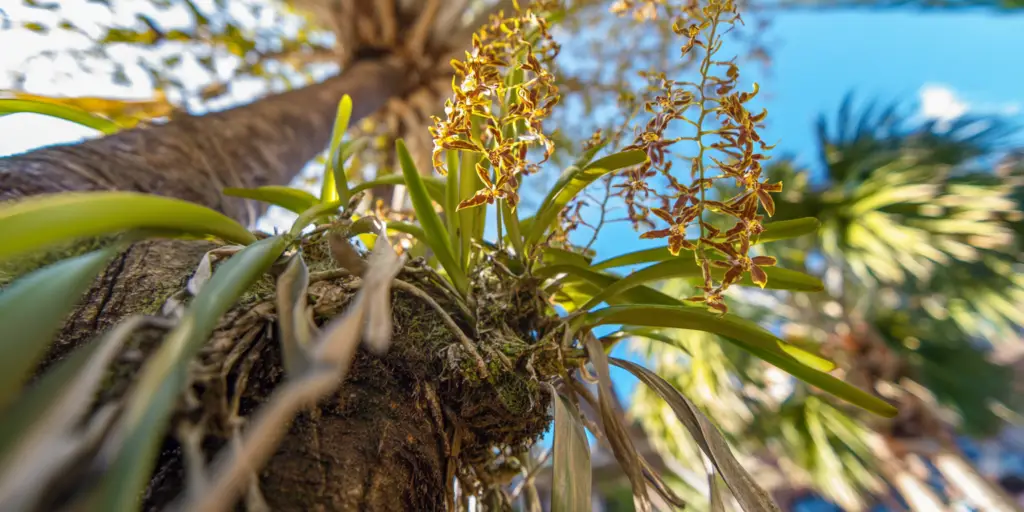
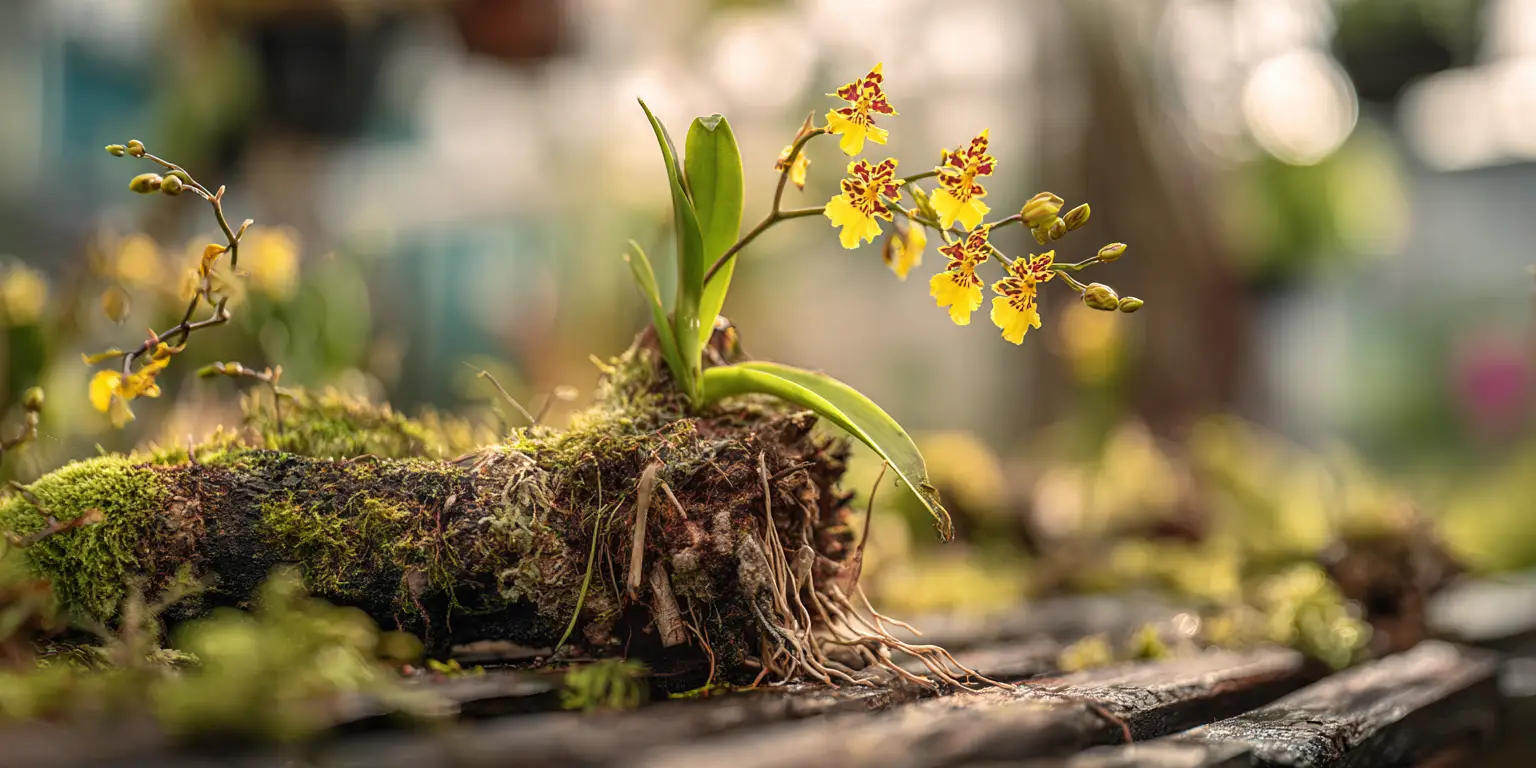
In the wild, Oncidium Orchids are native to tropical and subtropical regions of the Americas. Their natural range extends from Mexico and the Caribbean, through Central America, and down into South America as far as Argentina. One species even reaches southern Florida. These orchids typically inhabit seasonally dry forests, mountainous cloud forests, and jungle environments up to elevations of around 8,000 feet. Most Oncidiums are epiphytes, meaning they grow on trees or sometimes on rocks (lithophytes), anchoring their thick roots to bark or stone. They are not parasitic; instead, they gather moisture and nutrients from rain, debris, and the humid air. A few species are semi-terrestrial, found on forest floors. This wide geographic distribution has led to a diversity of forms and adaptability in the genus.
Taxonomically, Oncidiums have undergone reclassification in recent years. Some species formerly in Oncidium have been moved to other genera (for example, many Brazilian Oncidiums were reclassified as Gomesa, and the famous “butterfly orchid” group is now in Psychopsis). Despite these changes, horticulturists and hobbyists still broadly refer to these orchids and their hybrids as Oncidiums. The Oncidium Orchid remains a staple of orchid collections worldwide, admired for its dancing blooms and rich botanical history.
🌸 Bloom time
The bloom season for Oncidium Orchids can vary by species and hybrid, but many tend to flower once per year after completing a growth cycle. A large number of Oncidium species initiate blooming in the autumn months, making them notable fall flowers in the orchid collection. These orchids often produce their flower spikes in late summer to fall, with blossoms opening in autumn and lasting into winter. In fact, it’s common for Oncidiums to brighten up autumn and winter with their plentiful yellow and bronze blossoms when many other plants have finished blooming.
Some Oncidium types and hybrids will bloom at other times of year as well. Certain varieties are known to flower in spring, qualifying as spring flowers that bring color early in the growing season. With careful culture, mature plants can sometimes bloom twice in a year – for example, a robust hybrid might flower in fall and again in spring. Generally, each new pseudobulb (the bulbous growth at the base of the leaves) will produce one flower spike when it’s mature. After a pseudobulb has bloomed, it will not bloom again, but the plant will channel energy into the next new growth. Flower longevity is another highlight: once open, Oncidium blooms can stay fresh on the plant for several weeks, often 4 to 6 weeks or more, providing a long display. By timing your care (such as slightly cooler nights or a short drier rest after growth) you can encourage a reluctant Oncidium to set its flower spike. When an Oncidium Orchid does come into bloom, it’s a spectacular sight – dozens of dancing little flowers all opening at once and swaying on airy stems.
📏 Height and spread
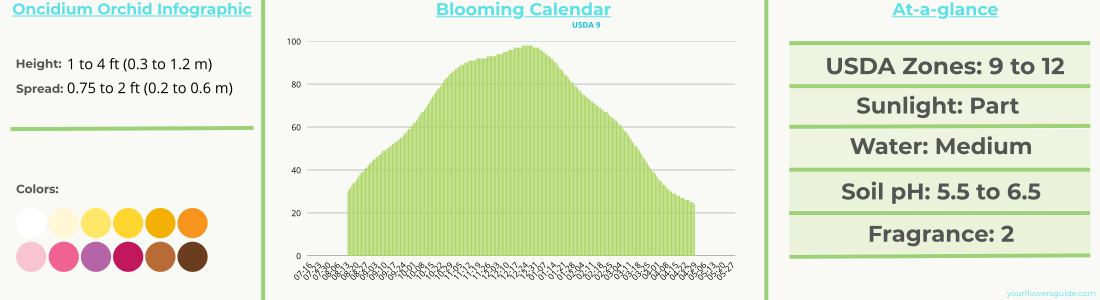
Oncidium orchids exhibit a wide range of sizes, from miniatures to sizable specimens. In general, the plant itself (excluding the flower spike) consists of a clump of pseudobulbs with strap-like leaves that can be anywhere from a few inches to over two feet long, depending on the type. Many common Oncidium hybrids grown as houseplants have leaves around 8-18 inches in length and form clumps about 6-12 inches tall (not counting the inflorescences). The Oncidium Orchid grows in a sympodial fashion – it produces new growths (pseudobulbs with leaves) along a creeping rhizome, gradually expanding its width over time. A healthy, mature plant might be 1 to 2 feet wide after several years if not divided, with multiple pseudobulbs side by side.
The most impressive dimension of an Oncidium is often its flower spike height. Flower spikes can vary from short upright racemes just 6-12 inches tall in smaller varieties, to dramatically long, arching sprays. Many standard Oncidiums produce spikes 2-4 feet tall. Some species are famous for gigantic flower spikes: for instance, Oncidium altissimum and O. baueri can send up flower stems that reach 8-10 feet or more in height, bearing hundreds of blooms. These extremes are typically seen in specialized collections or in the wild, but they illustrate the potential of the genus. In practical home growing, expect your Oncidium’s spike to reach a few feet high at most. Stake the spike for support if it’s thin and carries many blooms. The overall spread of the plant remains moderate – a pot diameter of 4 to 8 inches can often accommodate an Oncidium for a couple of years before it needs more room. Remember that each new growth will sprout next to the previous one, so the plant gradually fans out. By dividing a large clump when repotting, you can manage its size and also propagate new plants.
☀️ Light
Providing the right light is crucial for Oncidium Orchid health and blooming. Oncidiums generally prefer bright light levels, more so than the low-light tolerance of some beginner orchids like Phalaenopsis Orchids. In their natural habitat, many Oncidiums grow high in tree canopies, receiving filtered sun and bright conditions. Indoors, an east-facing or west-facing window that gets gentle morning or late afternoon sun is ideal. A south-facing window can also work if the light is filtered with a sheer curtain or if the plant is set a bit back from the direct sun. The light should be bright indirect – enough to cast a shadow but not so intense as to burn the leaves. Outdoors (in suitable climates), place Oncidiums in dappled shade or under 30-50% shade cloth.
A useful guideline is to observe the foliage color. Healthy Oncidium leaves are typically a light or medium green. If the leaves are very dark lush green, the orchid may not be getting enough light to bloom – gradually move it to a brighter spot. Conversely, reddish or yellowish tints on the leaves or blackened patches could indicate too much light or sunburn, so provide a bit more shade if that occurs. Some Oncidium varieties have thicker, fleshier leaves and can tolerate a bit more sun, whereas those with thin, delicate leaves prefer shadier conditions. As a rule, avoid intense midday sun which can overheat and scorch the plant. When moving an Oncidium Orchid to higher light, do so incrementally to let it acclimate. With ample bright light (around 2000-3000 foot-candles if you measure it), your Oncidium will photosynthesize well and be more likely to produce those beautiful flower spikes.
💧 Water
Watering an Oncidium orchid properly is a balancing act that mimics the plant’s natural environment. In the wild, Oncidiums often experience a wet season followed by a drier period, and they are adapted to have their roots dry out periodically. In cultivation, the general rule is to water thoroughly but infrequently. Allow the potting medium to dry out slightly between waterings. For most potted Oncidium Orchids, watering once a week is a good starting point. This can vary with conditions: in hot summer weather or in a dry home, you may need to water a bit more frequently (every 4-5 days), whereas in cool or cloudy periods you might extend to 10 days between waterings. Always check the medium by touch – it should feel just barely damp or approaching dryness at the roots before you water again.
When watering, drench the roots and medium thoroughly. It’s best to water in the morning using room-temperature water. Pour water through the potting mix until it runs out the drainage holes, ensuring the roots get a good soak. Oncidium Orchid roots need plenty of air, so they should not sit in waterlogged media. Good drainage is essential; never let the pot stand in a saucer of water. After watering, empty any excess water from trays to prevent root rot. Oncidiums also appreciate humidity in the air – aim for around 50% relative humidity or higher if possible. You can place the pot on a humidity tray (a shallow tray of pebbles and water) or use a room humidifier to raise humidity. Just avoid misting the leaves too late in the day, as water sitting in the leaf joints overnight could encourage rot.
Watch the pseudobulbs (the bulbous stems) as an indicator of the plant’s hydration. Plump, smooth pseudobulbs mean the orchid is well-watered; if you notice pseudobulbs starting to wrinkle, that’s a sign the plant is getting too dry and needs more water or humidity. However, take care not to overcompensate – consistently soggy conditions will lead to rotted roots and possibly black rot on the pseudobulbs. Striking the right balance may take a little experimentation. In winter months or after a growth has matured, many Oncidiums benefit from a slight reduction in water (not completely dry, just less frequent) to encourage flower spike initiation. Overall, a regimen of regular, thorough watering followed by adequate drying will keep your Oncidium Orchid happy and hydrated.
🌍 Soil and pH
Oncidium orchids do not grow in conventional soil. In a pot, they require a special orchid growing medium that replicates the airy, bark-filled niches they enjoy in nature. The ideal “soil” for an Oncidium Orchid is a coarse, well-draining orchid mix. This typically consists of ingredients like medium-grade fir bark or shredded wood, combined with perlite, charcoal, or other additives to promote drainage and airflow. Some growers also include a small amount of sphagnum moss or coconut husk in the mix to help retain moisture, but it should be a minor component to prevent the mix from staying too wet. The key is that the roots should have plenty of air around them and the medium should dry out relatively quickly after watering. Tightly packed or water-retentive soil will suffocate the roots and cause rot, so never use regular potting soil for orchids.
As for pH, orchid mixes are generally slightly acidic to neutral. A typical bark-based medium will have a pH in the range of about 5.5 to 6.5, which is suitable for Oncidiums. This slight acidity helps with nutrient availability for the orchid. Most of the time you won’t need to worry about exact pH unless you are mixing your own potting blend or using tap water with extreme pH. If using tap water high in mineral content (hard water), over time it can raise the medium’s pH and leave mineral deposits on roots – to avoid this, you might flush the pot with distilled water occasionally or use collected rainwater. When potting or repotting your Oncidium Orchid, position the plant so that the rhizome (the horizontal stem connecting pseudobulbs) is just at or slightly above the surface of the medium. Do not bury the pseudobulbs; they should sit on top of the mix or only be half-covered, as burying them can lead to rot. A loose, chunky medium and a pot with good drainage (lots of holes or a slatted orchid basket) will create the perfect root environment. Fresh bark mix should be replaced every 2 years or so, as it breaks down and becomes too moisture-retentive. By sticking to a proper orchid potting mix and maintaining a suitable slight acidity, you’ll provide the foundation for healthy root growth and overall vigor.
❄️ USDA hardiness
In terms of outdoor growing, Oncidium orchids are suited only to warm climates. They thrive in tropical and subtropical conditions and are typically hardy year-round in approximately USDA Hardiness Zones 10 through 12. In these frost-free zones – for example, southern Florida, Hawaii, or parts of southern California – Oncidiums can be grown outdoors on trees or shade structures year-round. They enjoy daytime temperatures in the 70-85°F range (21-29°C) with warm nights in the 60s°F (15-21°C) or higher. Some species from higher elevations can tolerate slightly cooler nights, but as a rule Oncidium Orchids are not cold-hardy. Zone 9 growers might get away with keeping them outside most of the year, but would need to provide protection or bring them in during any cold snaps, as these orchids must be protected from temperatures below about 50°F (10°C).
For the majority of gardeners living in temperate regions (zones 9 and colder), Oncidiums are grown as indoor or greenhouse plants. During the warm season, you can move potted Oncidiums outdoors to a shaded patio or hang them under a tree, even in zones 7-8, but they should be brought back inside well before the first frost. Exposure to even a light frost or near-freezing temperatures can severely damage or kill an Oncidium. If you do summer your orchid outdoors, remember to transition it gradually to outdoor light conditions (to prevent sunburn), and likewise acclimate it when bringing it back inside. In summary, unless you live in a truly mild climate year-round, treat the Oncidium Orchid as a tender tropical houseplant that needs a cozy spot indoors when the weather turns chilly.
🌼 Propagation and longevity
Propagating an Oncidium Orchid is most commonly done by division of the plant, and with good reason – it’s straightforward and reliably successful. Because Oncidiums grow in clumps of pseudobulbs, you can divide a large healthy plant into two or more smaller plants. The best time to do this is during repotting, usually right after the orchid has finished flowering and as it enters a phase of new growth. To propagate by division, carefully remove the orchid from its pot and gently separate the root mass. You may need to cut through the connecting rhizome with a sterile knife or pruning shears. Ensure each division has at least 3 pseudobulbs (backbulbs) with leaves and some healthy roots attached. This ensures the division has enough stored energy and growth points to recover and continue blooming. Plant each division in fresh orchid mix, water sparingly until new growth and roots take hold, and you’ve effectively created new Oncidium plants. Given the right conditions, they will re-establish and resume the growth/bloom cycle.
Another propagation method, used mainly by specialist growers, is growing from seed. However, orchid seeds are extremely small and require a sterile, nutrient-rich agar medium and sometimes symbiotic fungi to germinate – a process usually done in laboratory-like conditions (flasking). This is beyond the scope of typical home gardening. Oncidium Orchids do not usually produce offshoots or keikis (baby plantlets) on their flower spikes as some other orchids do, so division remains the go-to method for hobbyists. Occasionally, an old back pseudobulb (one with no leaves) can be coaxed into producing a new shoot if kept in humid conditions, giving you another plant, but this is not guaranteed.
When it comes to longevity, Oncidium orchids can be very long-lived. These perennials do not have a set lifespan like annual plants. As long as they are cared for, they can keep growing new pseudobulbs and living indefinitely. It’s not uncommon for an Oncidium to be passed from one owner to another or kept in a collection for decades. Over time, individual pseudobulbs will age – older backbulbs may eventually dry up or lose their leaves – but new growths continually replace the old. You can trim away completely desiccated pseudobulbs when you repot, but even leafless older bulbs often still store water and nutrients, so many growers leave them attached until they shrivel. With each passing year, a well-tended Oncidium Orchid can grow larger and produce more flower spikes, provided it’s periodically divided or moved to a bigger pot to refresh its vigor. In summary, through propagation by division and consistent care, your Oncidium can effectively live and bloom for a lifetime.
👃 Fragrance
One delightful aspect of some Oncidium Orchids is their fragrance. While not all Oncidiums are scented, a number of popular species and hybrids produce a noticeable and often pleasing aroma when in bloom. The fragrance can range from sweet floral or vanilla-like to fruity or spicy, depending on the variety. A famous example is the Oncidium Sharry Baby hybrid, treasured by orchid enthusiasts for its chocolate-like fragrance – when this orchid blooms, it fills the air with a scent reminiscent of rich chocolate or vanilla. Another fragrant type is Oncidium ornithorhynchum (also known as Oncidium Twinkle in hybrid form), which carries a sweet, sugary perfume. Many yellow Oncidiums have a light honey or floral scent that can attract pollinators like bees in the wild.
Typically, any fragrance is most pronounced during the day, especially in the morning or warm afternoons, since that’s when the flowers would naturally be trying to lure in pollinators. The intensity can also depend on environmental conditions: warmth and a slight breeze can help disperse the scent. If fragrance is important to you, seek out named varieties known for their smell (your local orchid nursery or society can recommend ones). Keep in mind, some Oncidium blooms are not fragrant at all – lack of scent doesn’t mean anything is wrong, it might just not be a trait of that particular hybrid. Overall, a blooming Oncidium Orchid can not only be a treat for the eyes but also for the nose, adding a subtle perfume to your home or garden.
⚠️ Toxicity and pet safety
For pet owners and parents, it’s reassuring to know that Oncidium Orchids are considered non-toxic. Orchids, in general, are one of the safer groups of houseplants around curious cats and dogs. According to the ASPCA and other plant safety sources, Oncidium (dancing lady) orchids are not poisonous to cats, dogs, or horses. This means if your dog or cat takes a curious nibble of a leaf or flower, it should not cause serious harm or toxicity. However, that doesn’t mean you want your pets treating your orchid as a snack. Ingesting any plant material can still cause mild stomach upset or vomiting in some animals simply because plants can be hard to digest. The fibrous leaves of an orchid might irritate a pet’s tummy if eaten.
Therefore, while you don’t need to panic if Fluffy or Fido mouths an orchid blossom, it’s best to discourage pets from chewing on your plants in general. You can place valuable orchids out of reach of enthusiastic chewers or use pet deterrent sprays if needed. Another safety aspect: Oncidiums, being epiphytes, often have aerial roots or may be mounted on bark pieces – these could look like toys to a cat. Ensure your orchid’s placement is pet-safe so it doesn’t get pulled down and broken. In summary, Oncidium Orchid plants pose no poison risk and are considered pet-friendly houseplants. Enjoy growing them with peace of mind, even if you have furry friends in the home.
🌿 Vase life
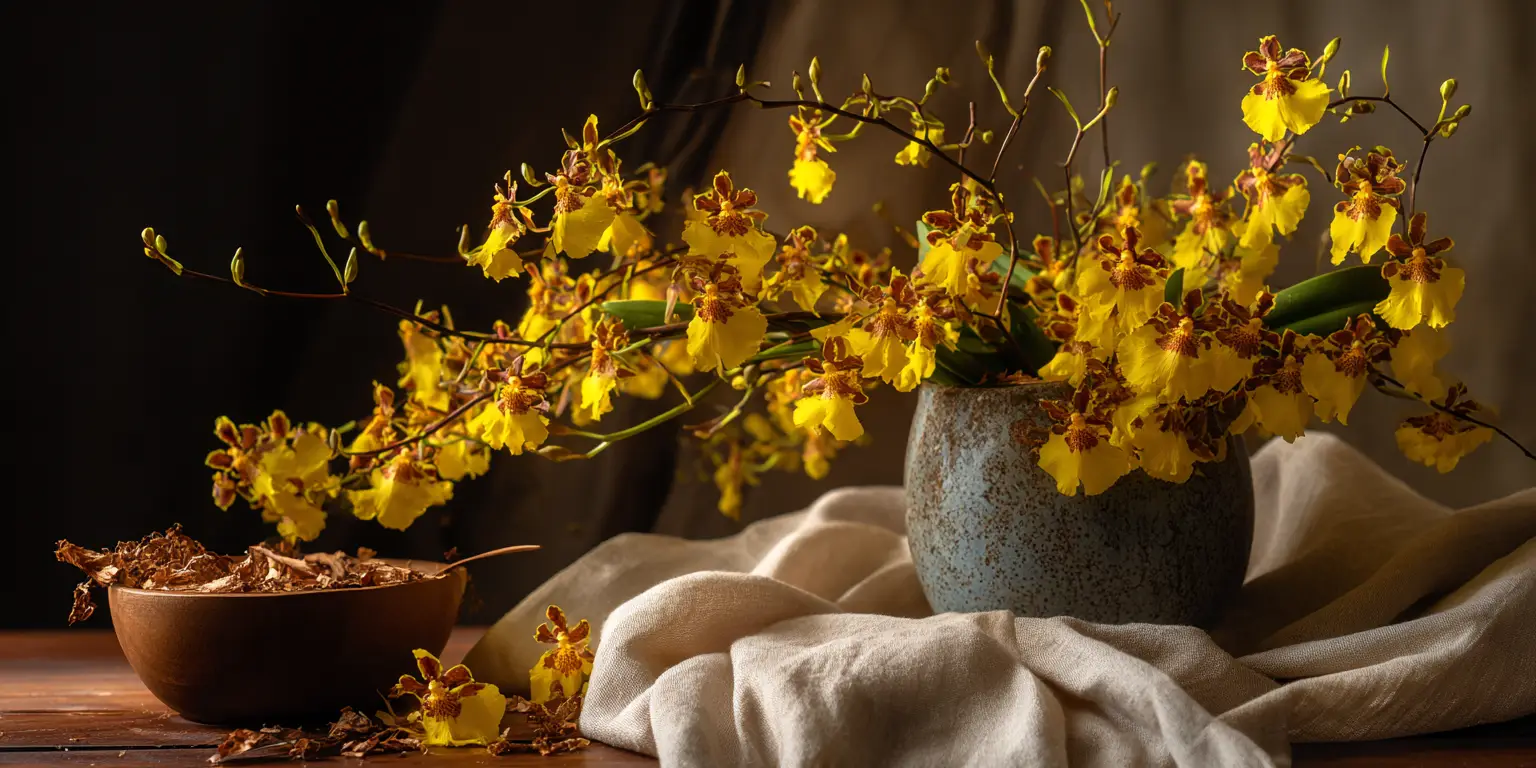
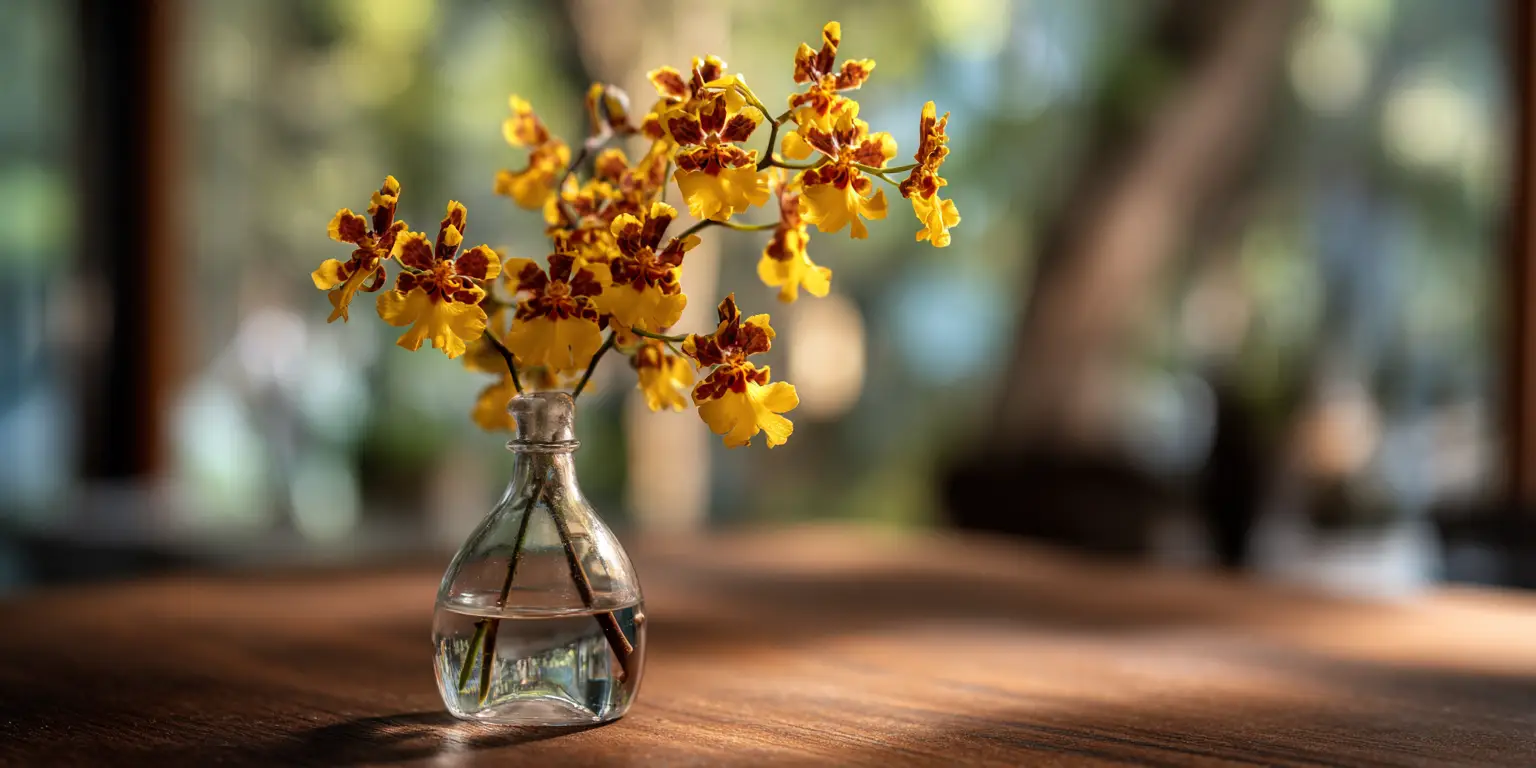
Oncidium orchids aren’t just delightful as potted plants – they also make excellent cut flowers for arrangements. In the floral trade, you’ll often find sprays of Oncidium blooms (especially the bright golden yellow flowers varieties) used in bouquets, corsages, and centerpieces. Florists prize them for their exotic look and long vase life. If you cut an Oncidium flower spike at its peak (when most buds have opened), you can expect the spray to last around 1 to 2 weeks in a vase with proper care. Generally, 10 days is a good average vase life for Oncidium blossoms, though some might remain attractive for up to 14 days.
To maximize the vase life, handle the cut stem similarly to other cut flowers. Use sharp, clean shears to cut the spike at an angle. Immediately place the cut end in water. Remove any flowers or buds on the very bottom of the stem that would sit below the water line in your vase to prevent bacterial growth. Change the water every couple of days to keep it fresh, and trim a small piece off the stem base periodically to help it take up water. Keep the arrangement in a cool location away from direct sunlight and ripening fruit (fruit emits ethylene gas which can age flowers faster). Oncidium blooms are somewhat sensitive to cold, so don’t refrigerate them below about 50-55°F. If you received an arrangement with Oncidium Orchids, simply enjoy their blossoms and replenish water as needed; they should outlast many other flowers in the bouquet. As an added benefit, the many little “dancing lady” flowers won’t all wilt at once – even as a few blossoms drop, others on the spray will continue to look lovely. In summary, Oncidium orchid cut stems have a respectable vase life, allowing you to showcase their beauty in floral designs for a week or two, which is why they are often highlighted in any wedding flowers guide or event décor plan that calls for long-lasting, showy blooms.
🐛 Pests and diseases
Like all orchids, Oncidiums can be subject to a few pest and disease issues, especially when grown indoors or in greenhouses. Healthy Oncidium Orchids with good airflow and proper care are less likely to have problems, but it’s wise to be vigilant. Here are the common pests and diseases and how to manage them:
Pests: The main insect pests to watch for are mealybugs, scale insects, spider mites, and thrips. Mealybugs are small white cottony pests that often hide at leaf joints or on new growth, sucking sap and causing stunted growth. They can be treated by dabbing with alcohol on a cotton swab or using insecticidal soap; isolate the plant and repeat treatments weekly until gone. Scale insects appear as small brown or tan bumps on leaves and pseudobulbs; they also suck plant juices. You can scrape off scale or use a cotton swab with alcohol or an horticultural oil spray, being sure to target the juvenile “crawler” stage. Spider mites are tiny mites (not insects but arachnids) that thrive in dry conditions and cause a fine pale stippling on leaves, sometimes with faint webbing. If you suspect spider mites (you can test by tapping a leaf over white paper and looking for specks), increase humidity and wash the foliage with water. Miticide sprays or insecticidal soap can help if infestations are severe, but improving humidity usually deters them. Thrips are very small, slender insects that often attack flowers and new leaves, causing distorted or spotty blooms. They are harder to spot but if your flowers are browning prematurely or developing streaks, thrips could be the culprit. Treat thrips by removing affected flowers and using insecticidal soap or neem oil; as with others, isolating the plant is important to prevent spread. Additionally, keep an eye out for slugs or snails if your Oncidium is outdoors or in a humid greenhouse – these nocturnal pests will chew holes in leaves and flowers. Setting out slug bait or manually removing slugs at night will protect your orchid.
Diseases: The most common diseases in Oncidiums involve rot caused by fungi or bacteria, often related to overwatering or poor ventilation. Root rot can occur if the medium stays too wet; roots will turn brown/black and mushy. Prevent this by using a well-draining mix and proper watering. If root rot happens, trim away rotten roots, apply a fungicide or hydrogen peroxide soak, and repot into fresh dry mix. Black rot is a serious fungal infection (often caused by Phytophthora) that can attack pseudobulbs and leaves, creating black, spreading lesions. It usually enters through water on the plant. To combat black rot, immediately remove and discard any infected plant parts with sterile tools (cut well into healthy tissue to be sure), treat the plant with a systemic fungicide, and keep it drier and with good airflow. Petal blight (Botrytis fungus) might affect the flowers in cool, damp conditions – you’ll see small brown spots on the petals. Remove any spotted or fallen flowers and increase air circulation; avoid misting flowers. Bacterial soft rot is another issue that can make pseudobulbs or leaves slimy and foul-smelling; similarly, one must cut out affected areas and treat with a bactericide or Physan, and improve cultural conditions. Another category to mention is orchid viruses – Oncidiums, like other orchids, can contract viruses (like ORSV or CymMV) that cause color streaks or reduced vigor. There is no cure for viruses; the best practice is prevention: always sterilize cutting tools between plants and avoid mixing sap. If an orchid is virus-tested positive or shows suspicious mosaic patterns on leaves or flowers, isolation is necessary to protect the rest of your collection.
In general, good hygiene and attentive care are the best defenses. Quarantine new plants for a few weeks to observe any hitchhiking pests or disease symptoms. Keep your growing area clean of fallen leaves and old flower debris. Provide ample air movement with a fan to reduce fungal issues. If you notice something off, act quickly – a minor mealybug outbreak or a small spot of rot can be managed if caught early, but can become a major problem if ignored. By staying diligent, you can usually keep your Oncidium Orchid healthy and pest-free, allowing it to thrive and bloom beautifully.
FAQ
How often should I water an Oncidium Orchid?
Water about once a week on average, but adjust based on your conditions. Let the orchid’s potting mix dry out slightly between thorough waterings. In a warm, dry environment you might water every 5 days, whereas in a cool or humid setting you might extend to 7-10 days. Always ensure good drainage and never let the roots sit in water. The pseudobulbs will start to wrinkle if the plant is too dry, which is a sign it’s time to water a bit more frequently.
Why won't my Oncidium Orchid bloom?
If your Oncidium Orchid is healthy but not flowering, the most common issue is insufficient light. Oncidiums need fairly bright light to trigger blooming, so try moving your plant to a brighter location (e.g. an east or west window with plenty of light). Another factor is the growth cycle – an Oncidium usually blooms from mature new growth, so if the plant is young or just produced a new pseudobulb, it may need time (and possibly a slight rest period with cooler nights) before it sets a spike. Over-fertilizing with high-nitrogen fertilizer can also discourage blooming in favor of leafy growth, so use a balanced orchid fertilizer and cut back in between growth spurts. Lastly, check that the plant isn’t stressed by pests or root problems, as a healthy, well-lit plant is the most likely to flower annually.
What is the best potting mix for Oncidium orchids?
The best potting mix for an Oncidium is a chunky, well-draining orchid mix. A typical mix includes medium-grade fir bark as the base, often with perlite and charcoal added to improve aeration. Some mixes include a little sphagnum moss or coconut husk to hold moisture, which can be beneficial in very dry climates, but the mix should remain airy. The goal is to mimic the conditions of an orchid clinging to a tree – lots of airflow around the roots and quick drainage. Avoid regular potting soil; it’s too dense and will suffocate the orchid’s roots. When repotting, also choose a pot with drainage holes (plastic orchid pots with side slits or mesh baskets are great). Refresh the medium every 2 years or so, since bark breaks down over time.
When should I repot my Oncidium Orchid, and how?
Repot your Oncidium orchid every 2 to 3 years, or whenever the potting medium has broken down and stays soggy, or when the plant has outgrown its container (pseudobulbs creeping over the pot’s edge). The ideal time to repot is just after flowering, when you see new growth starting (new roots will establish faster then). To repot, gently remove the orchid from its pot and shake or rinse off the old mix. Trim away any dead or rotted roots with sterile scissors. Place the plant in a slightly larger pot (or you can even use the same pot if you divided it) with fresh orchid bark mix. Position the newest growth and emerging shoots towards the center, and older backbulbs nearer the pot edge. Fill in with bark mix around the roots, tapping the pot to settle it. Keep the pseudobulbs at the surface, not buried. After repotting, wait a few days before the first watering to allow any root injuries to heal and to avoid rot. Repotting is also a good opportunity to divide the plant if it’s gotten very large (ensure each division has at least 3 healthy bulbs).
Are Oncidium Orchids easy to care for?
Oncidiums are moderately easy orchids – not the very easiest, but certainly not the most difficult. They do require bright light and higher humidity than, say, a basic houseplant, so they need a bit more attention to environment. Many people consider Phalaenopsis Orchids (moth orchids) to be the easiest for beginners, whereas Oncidiums are the next step once you’re comfortable with orchid basics. With an understanding of the watering rhythm (keep roots slightly dry between waterings) and a bright spot to grow, an Oncidium can thrive even for relative newcomers. They are more forgiving of an occasional missed watering (thanks to their water-storing pseudobulbs) than some orchids, but they can be sensitive to overwatering. Overall, if you can maintain the right balance of light, water, and humidity, Oncidiums are quite rewarding and will provide spectacular bloom displays.
Do Oncidium Orchids have a fragrance?
Some do, yes! Many Oncidium orchids are known for their wonderful fragrances. For example, the popular hybrid Oncidium Sharry Baby produces a scent like chocolate or vanilla, which can fill a room when it’s in full bloom. Other types may have a sweet, floral or honey-like fragrance. Not every Oncidium is scented – some have little to no smell – but a good number of the modern hybrids were bred with fragrance in mind. If yours isn’t fragrant, it could just be the particular variety. If a pleasant scent is a priority for you, seek out named fragrant varieties or ask an orchid grower for recommendations.
Can I grow an Oncidium Orchid outdoors?
Yes, but only if your climate is suitable or for part of the year in other areas. Oncidiums can be grown outdoors year-round in tropical and subtropical regions (roughly USDA zones 10-12) where temperatures stay warm and there’s no frost. In such climates, you can mount them on trees or keep them in pots in a shaded patio or orchid house. They will enjoy the fresh air and natural humidity. If you live in a cooler zone, you can still move your potted Oncidium Orchid outdoors in late spring and summer when nights are consistently above ~55°F. Give it a shady spot protected from harsh midday sun. Many growers find their orchids put on lots of growth outdoors in the summer. However, be vigilant about bringing the plant back inside when temperatures start to drop in autumn – well before any threat of frost. Also, outdoor plants can be exposed to more pests (like snails or weevils), so inspect and possibly treat your orchid before moving it back indoors to avoid bringing pests inside.
Are Oncidium Orchids toxic to pets or children?
No, Oncidium orchids are considered non-toxic and pet-friendly. You don’t have to worry about poisonous effects if a cat or dog chews on a leaf or if a child touches the plant. Orchids in general are not on the list of toxic houseplants. That said, ingesting any plant material can cause minor tummy upset or irritation, so it’s still wise to discourage pets from munching on your plants and to keep orchids out of reach of very young children who might grab them. But overall, you can enjoy your Oncidium Orchid knowing it’s a safe choice for a home with pets and kids.
How long do Oncidium Orchid flowers last on the plant?
The blooms of an Oncidium orchid typically last quite a while on the plant – usually around 3 to 6 weeks, depending on the variety and conditions. Oncidium flowers are naturally long-lasting. During that period, individual blooms might drop off one by one, but a well-flowered spike will still have many blossoms open. To maximize how long the flowers stay fresh, keep the plant in a stable environment: avoid extreme heat or cold drafts, provide good humidity, and don’t spray water directly on the delicate flowers. Once all the blooms on a spike have finally faded, you can trim that spent spike off near the base. With good care, your Oncidium should produce new spikes from future growths, allowing you to enjoy its dance of flowers year after year.
Interesting tips
- arrangements. These exotic tropical flowers add volume and a pop of color to bouquets, and they last a long time, which is why they frequently appear in professional designs and any comprehensive wedding flowers guide for brides looking for something unique.
- Chocolate Scented Blooms: One famous Oncidium hybrid, Oncidium Sharry Baby ‘Sweet Fragrance’, smells like chocolate! Many orchid lovers grow this plant just for the novelty of having an orchid that emits a delicious chocolate/vanilla aroma when in bloom. It’s a delightful surprise for anyone encountering an Oncidium in bloom – a feast for the nose as well as the eyes.
- Grow Mounted on Trees: You can cultivate Oncidium orchids mounted on a piece of bark or even directly on the trunk of a tree in warm climates. Because they are epiphytes, they naturally grow by clinging to tree branches. Mounting an Oncidium on bark with a bit of moss around its roots can create a stunning display and is closer to how they grow in the wild. Just be prepared to water more frequently, since mounted orchids dry out faster than potted ones.
- Leaf Color Clues: Pay attention to the color of the leaves. On an Oncidium Orchid, medium green leaves indicate the plant is getting the right amount of light. If the leaves are very dark green, it’s a sign the orchid needs more light to potentially bloom. If they turn yellowish or reddish (or develop black sunburn spots), the light is too intense. Using leaf color as a guide, you can fine-tune the placement of your orchid for optimal lighting.
- Spectacular Bloom Spikes: Some Oncidiums produce extraordinarily tall flower spikes. For instance, a mature specimen of Oncidium altissimum can grow flower spikes over 10 feet long, carrying hundreds of dancing blooms! While your houseplant likely won’t reach such heights, it’s not unusual for a happy Oncidium to have spikes 3-4 feet long. Be sure to stake tall spikes early to support them, and enjoy the show – a large Oncidium in full bloom is a real conversation starter.
- Pseudobulb Care: The plump pseudobulbs of your Oncidium serve as water storage organs. If you see them starting to shrivel, it’s a practical cue that the plant is thirsty or the humidity is too low. However, never cut off old pseudobulbs just because they’ve finished blooming. Those “back bulbs” may not bloom again, but they continue to store water and nutrients, which help sustain new growth. Only remove a pseudobulb if it’s completely dried, since otherwise it’s still contributing to the health of the orchid.
- Pollinator Attractant: Oncidium blooms aren’t just pretty – in the garden they can attract pollinators. Their bright colors and sometimes sweet scent draw in butterflies, and in tropical habitats even hummingbirds have been known to investigate the flowers. While indoor growers won’t likely have hummingbirds visiting their orchids, an outdoor-grown Oncidium might just become a mini pollinator haven when it’s blooming.
Related Guides & Flowers
- Moth Orchid Phalaenopsis
Elegant indoor orchid with broad flat leaves and long graceful flower spikes that bloom for months and pairs well with Oncidium in mixed orchid displays. - Phalaenopsis amabilis Moth Orchid
Classic white moth orchid species with arching stems and large round flowers often grown as an easy houseplant companion to more demanding Oncidium types. - Phalaenopsis schilleriana Moth Orchid
Soft pink moth orchid with cascading spikes and mottled foliage that offers a romantic contrast to the bright dancing sprays of Oncidium. - Phalaenopsis stuartiana Moth Orchid
Spotted creamy white flowers with speckled lips and attractive patterned leaves that suit the same warm bright indoor conditions as Oncidium orchids. - Anthurium
Tropical flowering plant with glossy heart shaped spathes and upright stems often grown indoors under similar filtered light and humidity as Oncidium orchids. - Bird of Paradise
Striking architectural flower with vivid orange and blue blooms that gives the same exotic tropical feeling as an Oncidium display in modern interiors.
References
- Oncidium Culture Sheet American Orchid Society
Concise culture sheet that covers light range temperature humidity watering schedule and fertilizer needs for Oncidium orchids. - Oncidium Orchid Care Smithsonian Gardens
Care overview for Oncidium orchids including preferred light levels indoor temperature range and general guidance on watering and humidity. - Oncidium Butterfly Orchids North Carolina State Extension Plant Toolbox
University profile describing Oncidium growth habit recommended potting media watering frequency drainage needs and light preferences. - Growing Orchids in the Home University of Tennessee Extension
Extension bulletin on home orchid culture with sections on Oncidium that explain temperature requirements watering practices and general care indoors. - Dancing Doll Orchid Toxicity ASPCA
ASPCA listing for Dancing Doll Orchid Oncidium flexuosum which confirms it is non toxic to dogs cats and horses and supports your toxicity section.
Written by: Your Flowers Guide editorial team
We are a small independent group of flower lovers who research and review each guide using trusted horticultural and educational sources. Learn more about us