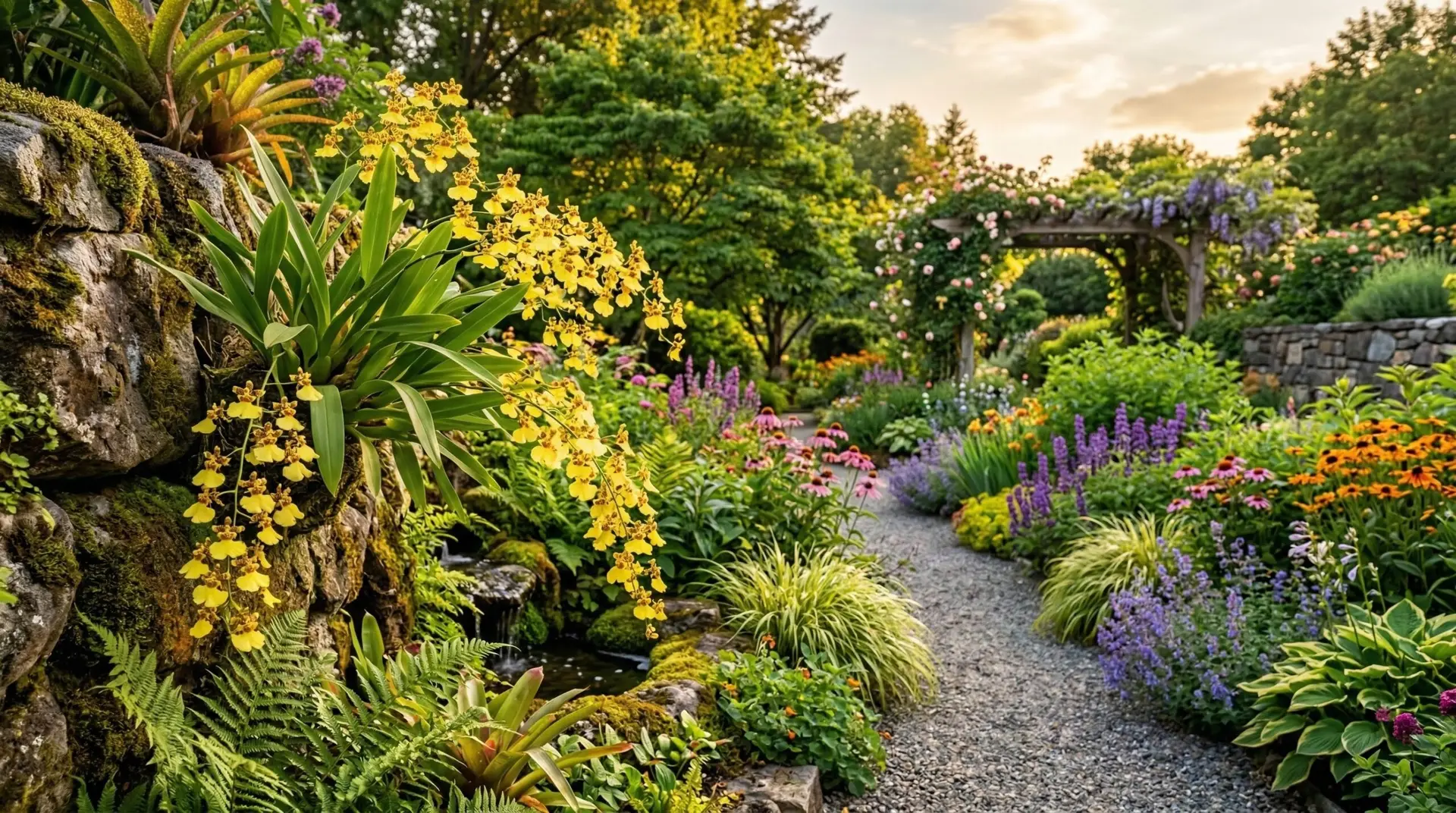
General orchid advice often fails because it ignores the reality of geography. Telling a gardener to give an oncidium orchid bright light and a temperature drop means completely different things depending on where they live. In the humid Southeast, this plant faces challenges with persistent nighttime heat that gardeners in the dry Mountain West never encounter. Understanding your local climate context is the absolute foundation of success when you are trying to figure out the oncidium bloom trigger. What works effortlessly in a mild coastal California garden will require deliberate engineering in a Zone 4 Minnesota home. Recognizing how your specific latitude, seasonal humidity, and natural temperature swings interact with the plant is the only reliable way to produce those cascading sprays of flowers.
The basic biological requirement for an oncidium flowering cycle involves maturing a new pseudobulb, exposing it to high light, and providing a noticeable drop in nighttime temperatures. Translating that biology into practice requires looking closely at your regional weather patterns and indoor environments, similar to the basic needs of a moth orchid but with higher intensity demands. A grower in Seattle might struggle for months to provide enough light for the pseudobulb to mature, while a grower in Phoenix might accidentally scorch the leaves trying to achieve the same goal. You have to evaluate your local day length, the intensity of your sun, and the ambient humidity of your region to manipulate these triggers effectively. If you have an oncidium not blooming, the solution lies in adjusting your care routine to compensate for what your specific climate lacks. The triggers remain the same, but the methods of achieving them change across state lines.
Contents 4 sections
Managing bright light requirements across different latitudes
Light intensity varies drastically across different regions, and oncidiums demand significantly more light than a standard moth orchid to initiate a flower spike. In the Pacific Northwest and the Northeast, the weak winter sun and frequent cloud cover often fail to provide the energy required for the plant to produce a robust pseudobulb. Gardeners in these northern zones usually need to place their plants directly in unobstructed south-facing windows or supplement with full-spectrum grow lights from October through March. The foliage should ideally be a light, slightly yellow-green color, which indicates the plant is receiving maximum tolerable light without burning. If the leaves are a deep, dark green in a northern climate, the plant is simply surviving rather than building the energy reserves needed for a bloom cycle.
Conversely, gardeners in the high desert of the Southwest or the intense sun of the Deep South must approach light management with extreme caution. The UV index and sheer intensity of the sun in Zone 9 Texas or Arizona can quickly turn an oncidium leaf to crisp paper in a matter of hours. In these regions, an east-facing window or a heavily filtered south-facing window with sheer curtains provides the right balance of brightness and protection. Outdoor growers in these hot climates must utilize heavy shade cloth or the dappled canopy of mature trees to prevent thermal damage while still delivering the necessary light levels. You have to read the plant’s response to your specific regional light rather than following a generic light meter reading, adjusting the exposure as the seasons shift and the sun changes its angle in your sky.
Engineering the cool night drop in warm and cold climates
The most critical oncidium bloom trigger is a distinct drop in nighttime temperatures just as the new pseudobulb reaches its maximum plumpness. In Northern and Midwestern climates, nature provides this trigger effortlessly during the early autumn months. Gardeners in Zones 4 through 7 can leave their orchids outdoors on a shaded patio as August turns into September, allowing the natural fifteen-degree drop between day and night to signal the plant that it is time to flower. You just have to monitor the local weather reports and bring the plants indoors before the nighttime lows dip below fifty degrees. This brief period of natural outdoor autumn chill is highly effective and usually results in visible flower spikes within a few weeks of moving the plant back inside for the winter.
Achieving this temperature differential is much more complicated for growers in the humid Southeast or tropical zones where summer and early autumn nights remain stubbornly warm and muggy. In places like Florida or the Gulf Coast, leaving the plant outside in September might mean nights that never drop below seventy-five degrees, completely bypassing the necessary thermal trigger. Unlike the more forgiving temperature range of a standard moth orchid, the oncidium demands a sharper contrast to initiate its blooming phase. Southern gardeners often have to bring their plants indoors to an air-conditioned environment to artificially create that cooler night cycle. Placing the orchid near a drafty window or in a cooler room where the air conditioning drops the temperature significantly at night can replicate the autumn chill the plant expects. You can also wait until the actual winter months in these warm zones to utilize the natural cool fronts that occasionally sweep through the region.
Adapting the growth and rest cycle to local seasons
Water and fertilizer requirements for oncidiums are tightly linked to their growth cycle, but local humidity dictates exactly how you apply them. In the arid Mountain West, the extremely low ambient humidity means potting media dries out incredibly fast, especially during the active summer growing season. Gardeners in these dry climates often need to water their plants multiple times a week and use a slightly more moisture-retentive potting mix containing sphagnum moss to keep the fine roots from desiccating. You have to feed the plant heavily with a balanced fertilizer during this rapid growth phase to ensure the pseudobulb grows large enough to support a massive inflorescence. Without sufficient water and nutrients in a dry climate, the pseudobulbs will shrivel, and the plant will abandon any attempt at an oncidium flowering cycle.
In stark contrast, growers in regions with high summer humidity must be highly vigilant about overwatering and root rot. In the muggy conditions of the Mid-Atlantic or the South, a dense potting mix will stay wet for days, suffocating the roots and halting the growth cycle entirely. Gardeners in these areas should use a very coarse bark mix and rely on the heavy ambient moisture in the air to do much of the hydration work. Once the new pseudobulb is fully mature and the flower spike begins to form, you must taper off the fertilizer and reduce watering slightly, entering a brief rest period. This rest period is much easier to manage in a climate with distinct seasonal shifts, but tropical growers must manually enforce this dry-down phase by withholding water to mimic the dry season the plant would experience in the wild.
Creating indoor microclimates for consistent blooming
When winter arrives, almost all oncidium growers become indoor gardeners, and the battle shifts to managing the indoor microclimate. In cold northern zones, central heating systems strip all the moisture from the air, creating a hostile environment for a plant that is trying to develop delicate flower buds. This severe lack of humidity can cause the developing flower spikes to stall or the accordion-pleated leaves to stick together, a condition known as crinkling. Northern growers must actively build humid microclimates using large pebble trays filled with water, grouping plants together, or running dedicated room humidifiers to keep the relative humidity above fifty percent. Just like a moth orchid, an oncidium needs this ambient moisture to successfully open its buds and maintain the flowers for several weeks.
You can take advantage of specific rooms in your house to provide the exact conditions your local climate makes difficult to achieve outdoors. A poorly insulated sunroom or a glass-enclosed porch can be an absolute asset for an orchid grower in a temperate climate, offering the perfect combination of bright indirect light and naturally fluctuating temperatures. Even a drafty bathroom window can serve as a highly effective microclimate, providing both the necessary humidity from showers and the cool night drop required to initiate spikes. Success with these plants requires looking at your home and your region not as a series of limitations, but as a collection of environments you can harness. The ultimate rule of regional gardening is that you must observe how a plant responds to your specific local conditions and adjust your care to bridge the gap between its native biology and your geographic reality.
More About Oncidium Orchid
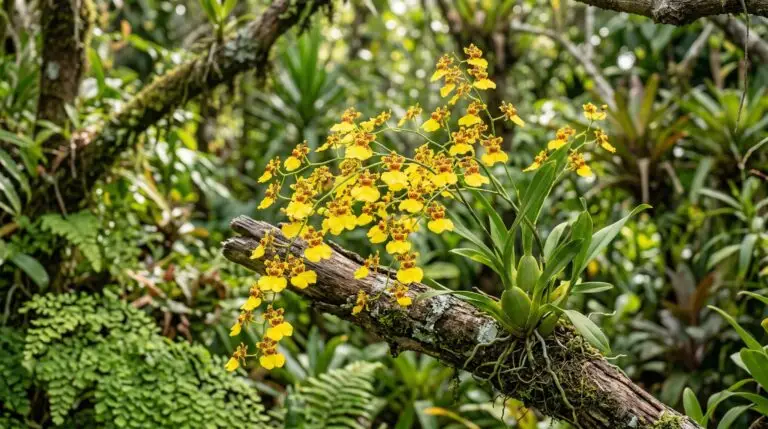
How to grow oncidium orchids for cascading sprays of tiny dancing flowers
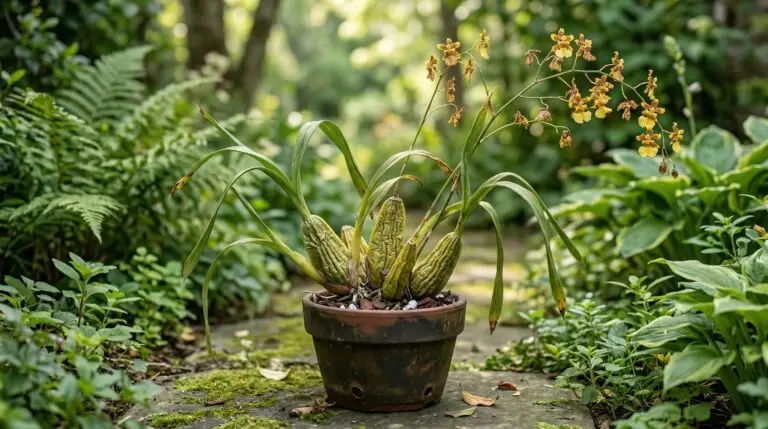
Why oncidium orchid leaves are wrinkled and the watering balance these orchids need
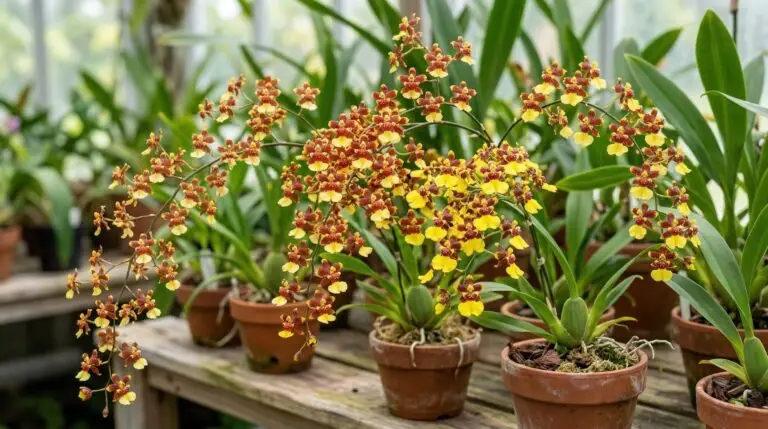
Best oncidium orchid varieties from yellow Twinkle to dramatic Wildcat
Oncidium orchid meaning and why the dancing lady brings joy and positive energy
Repotting oncidium orchids when pseudobulbs crawl over the pot edge
Oncidium Sharry Baby the chocolate-scented orchid that fills rooms with cocoa fragrance
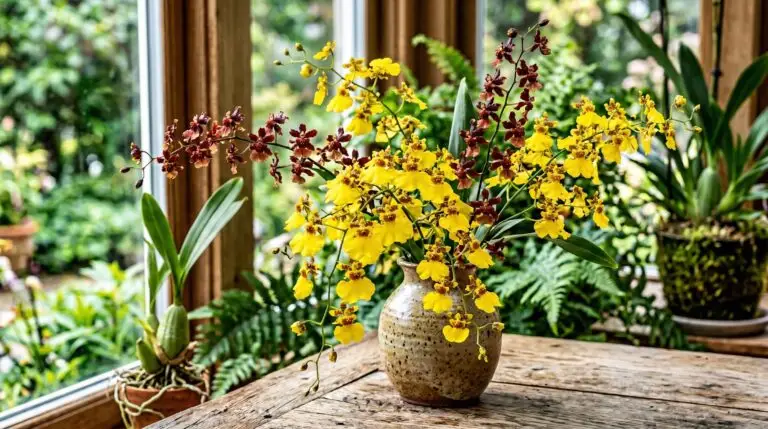
Oncidium orchids as long-lasting cut flowers for exotic spray arrangements
Tolumnia orchids the miniature oncidium relatives perfect for small spaces
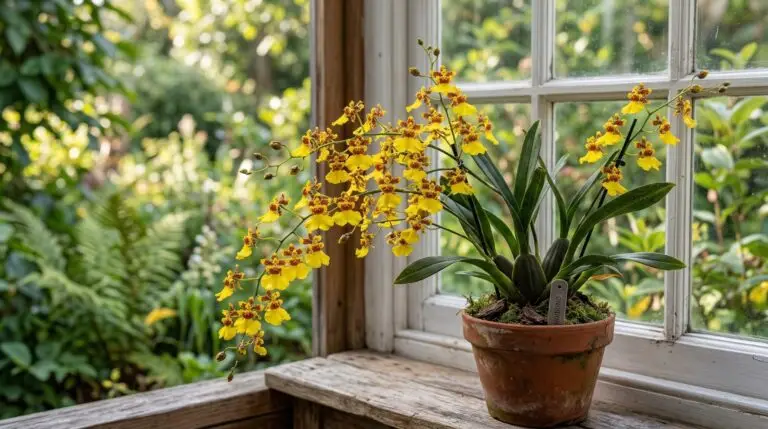
Growing oncidium orchids on windowsills and the light they need to bloom indoors
Enjoying our flower guides? Add YourFlowersGuide as a preferred source on Google. It helps more readers find us.
Add to Preferred Sources