
How to Grow and Care for Snapdragon
Contents
Snapdragon is the common name for Antirrhinum majus, a cool season flowering plant grown across the United States for its upright spikes and long bloom window. You may also see it called garden snapdragon or common snapdragon. Botanically it is a short‑lived perennial that behaves like an annual where summers are hot, so most gardeners treat it as a plant for spring and fall color. In regions with mild winters it can bloom through winter and into spring. Give snapdragon full sun in cool to mild weather and light afternoon shade where summers turn hot. If you match its preference for cool nights and well drained soil, snapdragon care is straightforward: start with healthy transplants or well timed seed, space for airflow, water deeply but not often, and keep spent spikes cut to encourage constant bloom.
Soil & Bed Preparation
Snapdragon roots appreciate aerated, crumbly soil that drains quickly after irrigation but still holds moisture between waterings. A loam or sandy loam amended with finished compost works well in most gardens. Avoid tight clay that stays wet for long periods. If your native soil is heavy, loosen the top 10 to 12 inches with a digging fork, then incorporate one to two inches of mature compost. Good drainage limits crown and root rot and helps prevent foliar diseases that thrive when canopies stay wet. A slightly acidic to near neutral pH is a practical target for home beds. Many mixed ornamental borders perform well around 6.0 to 7.0. If you garden in the Southeast on naturally acidic soils, lime may be needed to raise pH. If you garden on alkaline soils in arid regions, sulfur or acidifying nitrogen sources can nudge pH downward. Always base adjustments on a current soil test, and retest every two to three years to verify that your changes are holding. Raised beds warm earlier in spring, drain more reliably after heavy rain, and are easy to amend uniformly. In‑ground beds are fine as long as you avoid low spots where water lingers. For containers and raised beds, use a high quality, peat or bark based potting mix rather than garden soil. Snapdragon is not a bulb, tuber, rhizome, or corm, so it does not require special planting media beyond good organic matter and drainage. Dig a hole 12 inches deep and 12 inches wide, fill with water, let it drain, then fill again. If the second fill drains in under four hours your drainage is adequate. If water stands longer than six hours, plant in raised beds or amend heavily with coarse compost and consider adding grit in very clayey soils. For pH, collect a composite sample from the top six inches across the planting area, submit to a Cooperative Extension lab, and follow their recommendations. For most mixed borders, aim for 6.0 to 7.0. In sandy coastal soils where micronutrient availability drops as pH climbs, staying near the lower end of that range can support steady growth.
Planting Calendar by USDA Zone
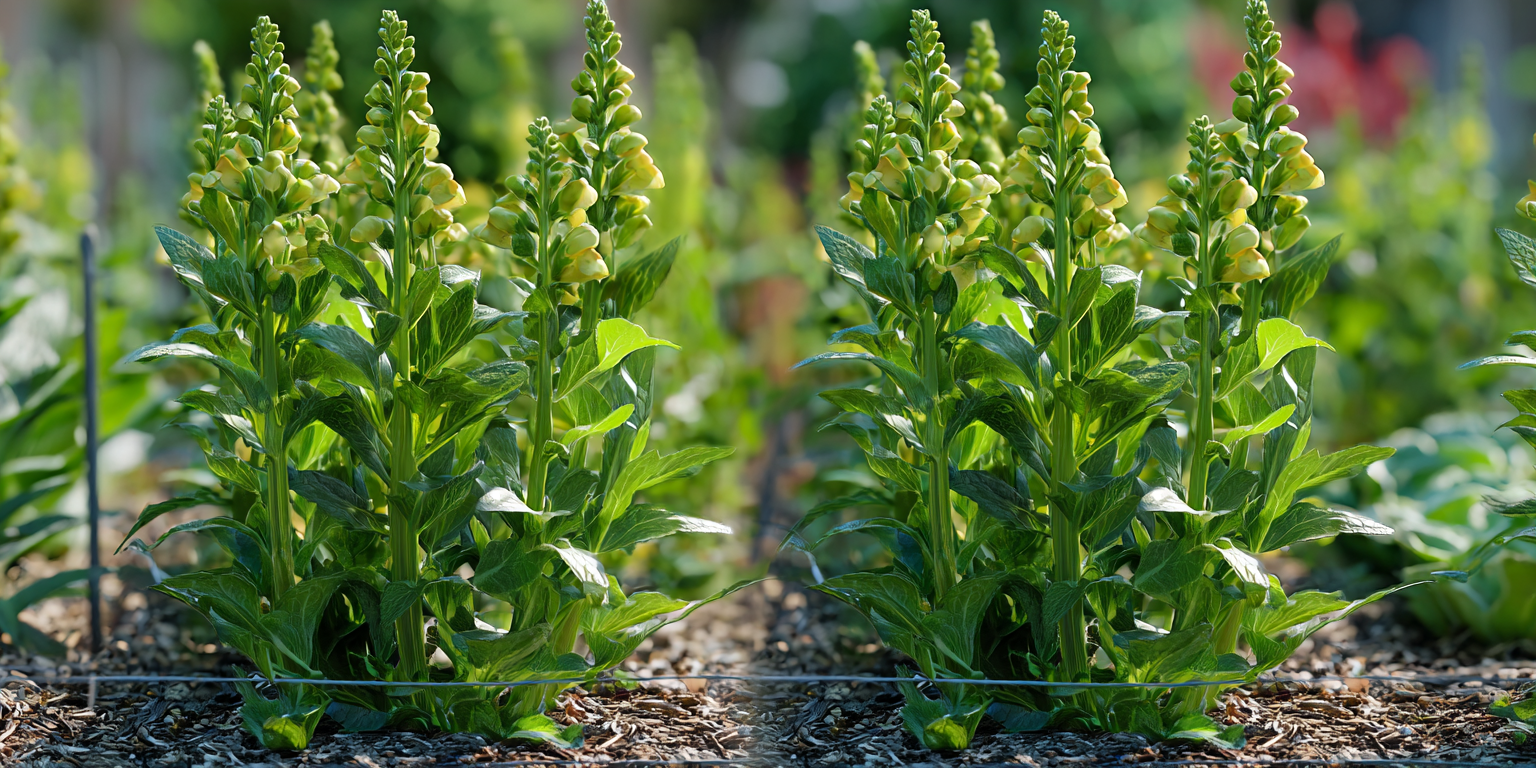
Zones 3 to 5. Treat snapdragon as a cool season annual. Start seed indoors 8 to 10 weeks before your average last spring frost. Harden off when nights stabilize above 40°F (4°C). Transplant outdoors 1 to 2 weeks before the last frost if soil is workable and well drained. For a fall show, start seed in mid to late summer and set out plants in late August to early September so they establish before the first hard frost. In short summers at elevation, prioritize spring plantings and choose faster series or dwarf types that bloom quickly.
Zones 6 to 7. Start seed 6 to 8 weeks before the last frost and set out 1 to 2 weeks before that date. In areas with long warm autumns, a late summer sowing can provide a fall flush. Where winters are relatively steady rather than freeze–thaw, fall planting can overwinter with mulch and reward you with very early spring spikes. In the Mid‑Atlantic and interior South, snapdragon often rests in midsummer heat, then resumes flowering as nights cool.
Zones 8 to 10. Plant as a fall to winter annual. Set transplants outdoors from late fall to mid winter for peak bloom in winter and spring. Where cold snaps drop below the mid 20s°F, throw frost cloth over young plants at night and remove it in the morning. In very warm areas, avoid late spring plantings because heat shuts down flowering and invites disease pressure.
Planting: Depth & Spacing
Snapdragon seed is tiny and needs light for best germination. Surface‑sow on moistened seed starting mix and press gently so each seed contacts the medium. A dusting of fine vermiculite helps maintain humidity without excluding light. Keep at 65 to 70°F (18 to 21°C) and evenly moist. Expect germination in 7 to 14 days. Grow on under bright light and good airflow. Begin gentle brushing by hand or a fan to strengthen stems. Thin or transplant to cell packs once the first true leaves appear. Plant at the same depth as in the cell pack. Do not bury the crown. Firm gently to remove air pockets, then water to settle soil around roots. Spacing depends on mature height. Dwarf bedding types can sit 6 to 8 inches apart. Medium garden series do well at 9 to 12 inches. Tall cutting types need 12 to 15 inches and benefit from grid netting or slender stakes. Allow 18 to 24 inches between rows in beds where you plan to walk for deadheading or cutting. Snapdragon is not typically sold bare‑root and is not divided like clumping perennials. If you lift plants to relocate them, move a moist root ball on a cool, overcast day, keep the crown at the same soil line, and water immediately after replanting. Harden off seedlings for 7 to 10 days by gradually increasing outdoor exposure. Transplant on a cool morning. Water cells thoroughly an hour before planting. After setting plants, water again at the base and apply a light organic mulch to shade soil and moderate swings in moisture. Delay fertilizing for one week while roots anchor, unless your soil test indicated a specific deficiency that must be corrected at planting.
Watering & Mulching
During the first two to three weeks, water every two to three days as needed to keep the root zone evenly moist but never saturated. Aim to deliver about one inch of total water per week from rainfall and irrigation. In sandy soils you may split that into two half‑inch soakings. Water at the base in the morning to dry foliage early in the day and limit foliar diseases. Once roots reach down, shift to a deep soaking when the top inch of soil dries. In loams this often means one thorough irrigation each week in spring and fall. In summer heat, plants may pause flowering. Keep them alive with steady moisture, then flowering resumes when nights cool. Overhead watering encourages rust and leaf spots, so favor drip lines, soaker hoses, or a watering can directed at the root zone. A two inch layer of shredded leaves, pine straw, or fine bark moderates soil temperature and reduces weed pressure. Keep mulch pulled back one to two inches from stems to avoid a damp collar at the crown. In heavy clay, use a looser mulch such as pine bark mini‑nuggets that does not mat down. In hot spells above the mid eighties°F, provide afternoon shade and switch to morning irrigations so plants face the day hydrated. If you irrigate with hard or saline water, leach containers periodically by watering until 10 to 20 percent drains from the pot to flush salts. In beds, an occasional longer irrigation helps push salts below the primary root zone. Yellowing between veins can signal iron lockout in high pH or salty conditions; correct the soil pH and improve leaching rather than overfeeding.
Feeding
Base feeding on a recent soil test. In average garden soils for flowering annuals, a light application of a balanced or slightly phosphorus‑forward fertilizer at planting supports roots and early buds. Ratios near 1 to 2 to 1 or 1 to 2 to 2 are appropriate for transplants. For gardeners who prefer traditional granulars, products in the 5‑10‑10 to 10‑10‑10 range are common. Work the product into the top few inches before planting at the label rate for flowers, then water in. Side dress midway through the bloom season if growth slows or leaves pale. Where soils already test medium to high, skip fertilizer and rely on compost. Slow‑release products provide steady nutrition in cool months when frequent liquid feeding is impractical. Organic sources such as compost and fish hydrolysate support soil biology and can be used as light, periodic supplements. In cooler growing conditions, avoid heavy use of ammonium‑heavy formulations which can accumulate and stress roots. In containers, a half‑strength complete fertilizer applied every two to three weeks during active growth maintains color without forcing soft, disease‑prone foliage. Maintain two to three percent organic matter in sandy soils and three to five percent in loams by topdressing beds with one inch of compost each year after the season ends. Retest soil every two to three years. Adjust pH gradually, since over‑corrections can lock out micronutrients even when major nutrients are abundant.
Pruning & Support
When young plants reach four to six inches tall with several true leaves, pinch out the growing tip. This encourages lateral shoots and yields a fuller, longer‑blooming plant. If you are growing for cutting and want tall, straight stems, you can skip the pinch on some plants for earliest long stems and pinch others for later, branching stems. Snapdragons bloom from the bottom of each spike upward. Once the lower florets have faded and only the top third is in good color, cut the entire spike back to a strong leaf node or a side shoot. Do not leave a stub. Removing whole spikes speeds rebloom and keeps the plant tidy. If bloom slows in midsummer, shear plants back by one third, water, feed lightly, and mulch. Fresh foliage and new spikes follow when nights cool. Tall series and plants in windy sites benefit from discreet support. In beds, run a single layer of horizontal flower netting about 18 to 24 inches above the soil and thread stems through openings as they elongate. In small plantings, use slender stakes and soft ties to keep spikes upright without crowding. Between plants, wipe pruners with a rag dampened with 70 percent alcohol to reduce disease spread. Clean and oil blades after each work session. Remove any diseased foliage promptly and discard with household trash rather than composting.
Overwintering
In regions where snapdragon can overwinter, wait until soil is cold and plants have slowed, then add two to three inches of loose mulch such as pine straw around the crowns. The goal is insulation that moderates freeze to thaw cycles, not warmth that triggers soft growth in midwinter. Pull mulch back gradually in late winter as growth resumes. In climates with wild swings around freezing, crowns can heave. After a deep cold night, check for lifted plants and gently firm them back in place when the soil thaws. A light watering helps settle soil around loosened roots. Where voles are active, avoid thick, matted mulches that provide cover. Use a loose, airy mulch and keep grass trimmed short around beds. Traps outside the planting area are more effective than repellents. In zones where snapdragon dies back, treat it as a seasonal annual and replant for spring and fall color. If you want to carry potted plants through winter in zones 7 to 8, move containers to an unheated garage or cold frame where temperatures stay mostly above 25°F minus four°C, water sparingly to keep media barely moist, and return outside in late winter. In zones 9 to 10, leave pots outdoors, protect during rare hard freezes with frost cloth, and resume feeding as active growth returns.
Growing Environments
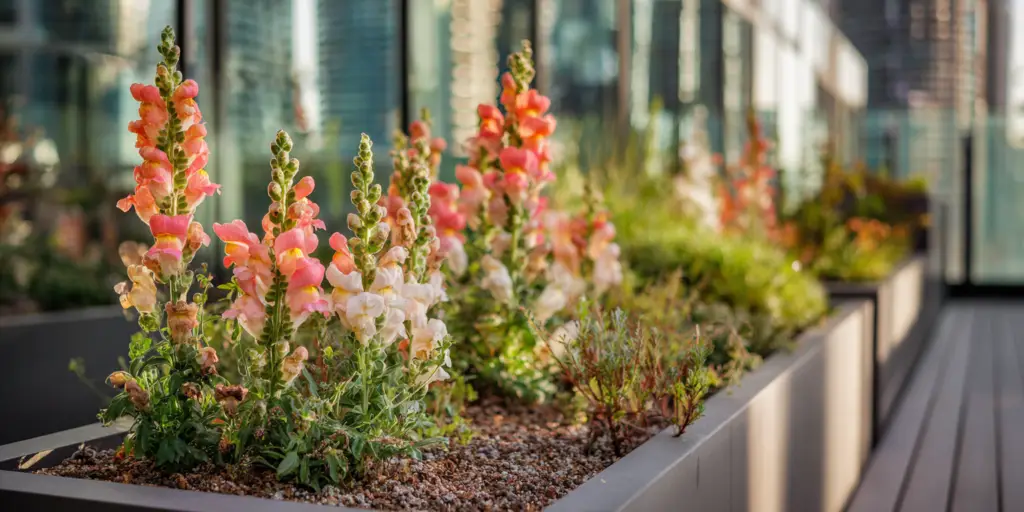
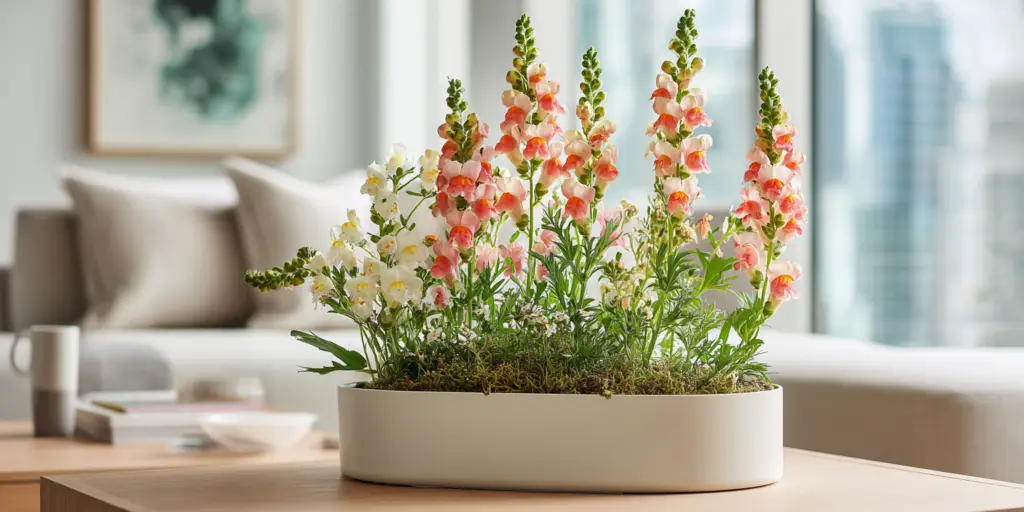
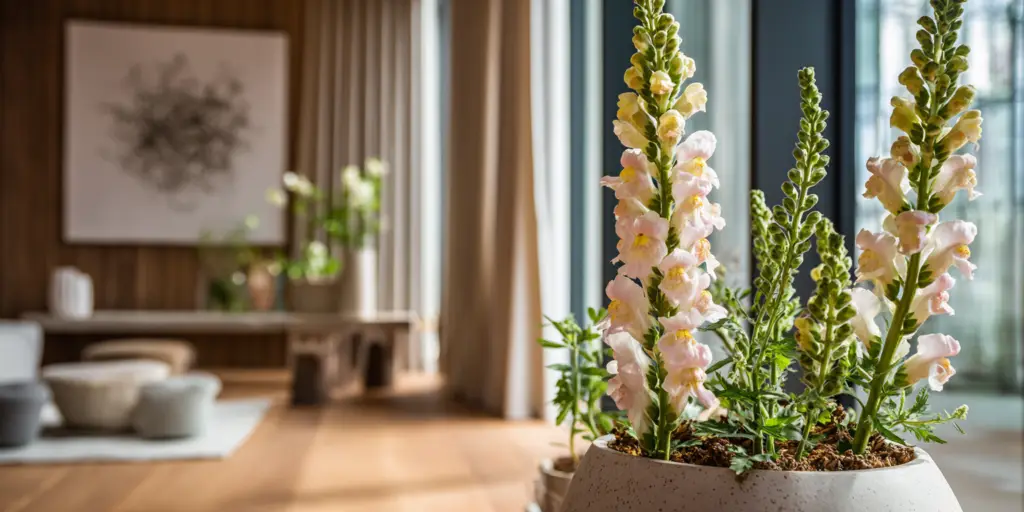
Dwarf and medium snapdragons do well in pots that are at least 10 to 12 inches wide and deep. Larger series appreciate 14 inches or more. Choose a peat or bark based potting mix with perlite for drainage. Ensure there are ample drain holes. Water containers more frequently than beds because potting mixes dry faster, especially in wind. Refresh the top inch of mix with compost between seasons, and replace the mix entirely after two to three cycles to avoid salt buildup and disease carryover. A well aerated potting mix keeps roots healthy. If you tend to overwater, blend in extra perlite for faster drainage. Avoid saucers that hold standing water. In regions with hard water, flush pots occasionally to leach salts. Keep mulch in containers thin so the surface can dry between irrigations. Use the garden’s microclimates to your advantage. A bright eastern exposure provides morning sun and afternoon protection in hot summers. A south wall reflects heat and is better reserved for cool seasons. Breezy sites reduce disease but may topple tall spikes, so combine airflow with light staking. In coastal gardens where fog lingers, plant with generous spacing and favor morning sun to dry leaves early.
Companion Planting & Design
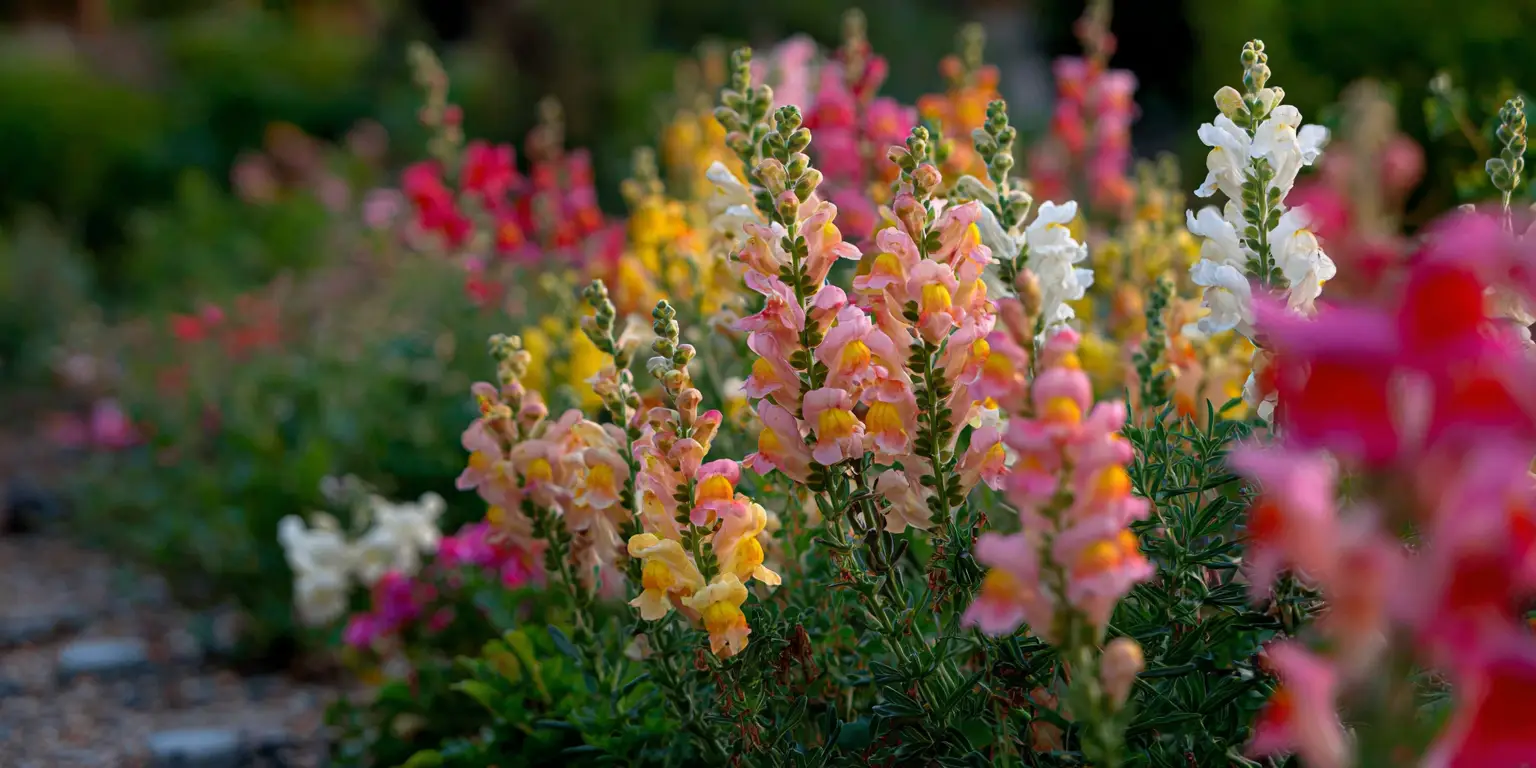
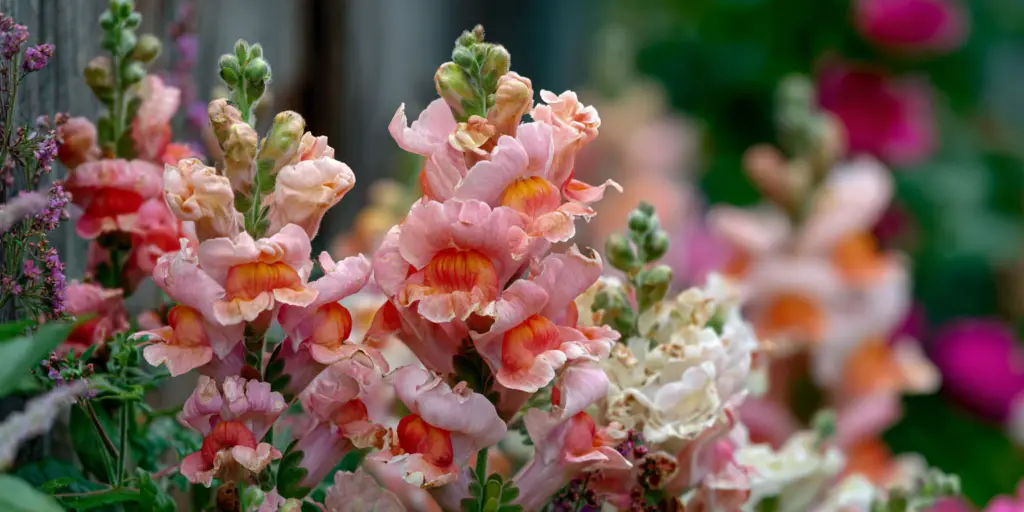
Pair snapdragons with other cool season performers such as pansies, violas, sweet alyssum, and calendula for a long shoulder season. As weather warms, let salvias, coneflowers, and zinnias take over the show while snapdragons rest. To hide temporary cutbacks after a summer shear, weave in low mounds of dusty miller or tidy foliage plants. Bumblebees are strong enough to open the hinged flowers, and tall varieties draw hummingbirds in many gardens. Include nectar companions that bridge bloom gaps so beneficials stick around. Spacing for airflow matters as much for pollinators as for plant health; open canopies dry quickly after dew, which reduces disease pressure and leaves nectar accessible. Snapdragons come in clear whites, soft pastels, and vivid brights. Use them to test and tune your palette. For design inspiration across the site, explore types of flowers and seasonal color ideas like yellow flowers, pink flowers, white flowers, and purple flowers. If you are planning event displays, the wedding flowers guide on the site is a helpful planning hub. To coordinate with shrubs and perennials already in your beds, consider how spikes will play against mounded classics such as lavender, daffodils, tulips, lilacs, hydrangea macrophylla, and summer staples like sunflower. Bold verticals from snapdragon make these familiar profiles look crisper and more intentional.
References
- ASPCA Animal Poison Control Center. Common Snapdragon: Antirrhinum majus.
- Missouri Botanical Garden. Antirrhinum majus Plant Finder.
- NC State Extension. Antirrhinum majus plant profile.
- UF IFAS Extension. Planting and Propagation of Snapdragons in Florida.
- USU Extension. Snapdragon Cut Flower Production in Utah.
- UConn Soil Nutrient Analysis Laboratory. Plant pH Preferences and Fertilizer Guidance.
- Penn State Extension. Snapdragon (Antirrhinum) Diseases.
Written by: Your Flowers Guide editorial team
We are a small independent group of flower lovers who research and review each guide using trusted horticultural and educational sources. Learn more about us