How to Grow and Care: Gardenia
Contents
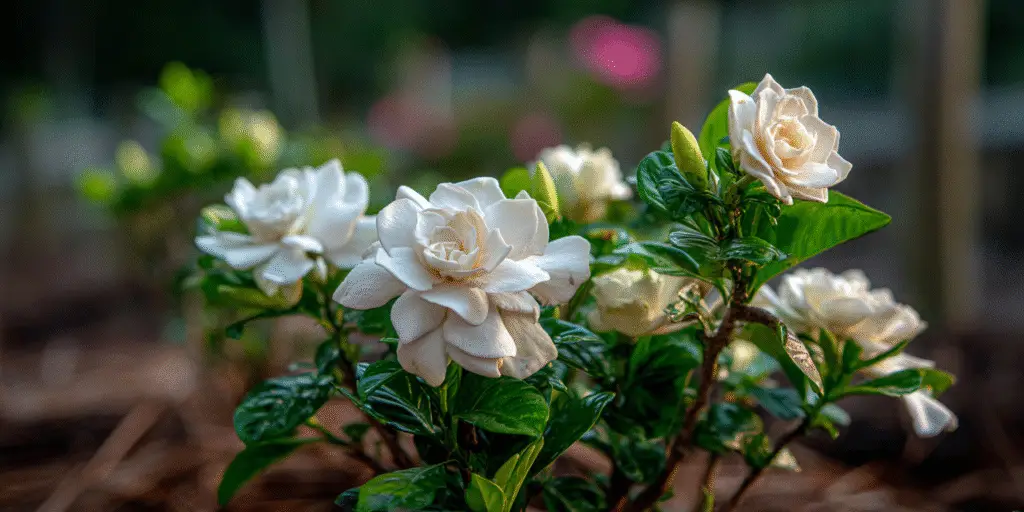
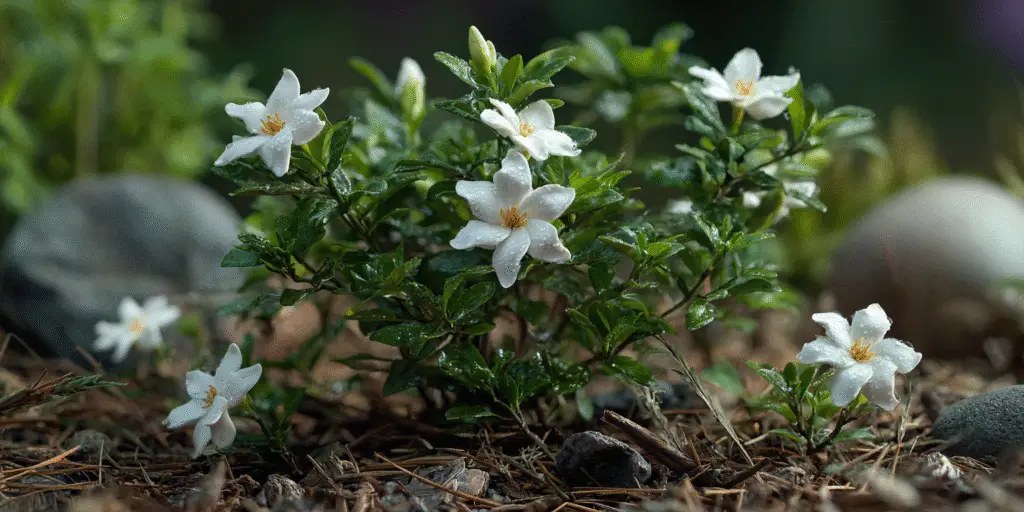
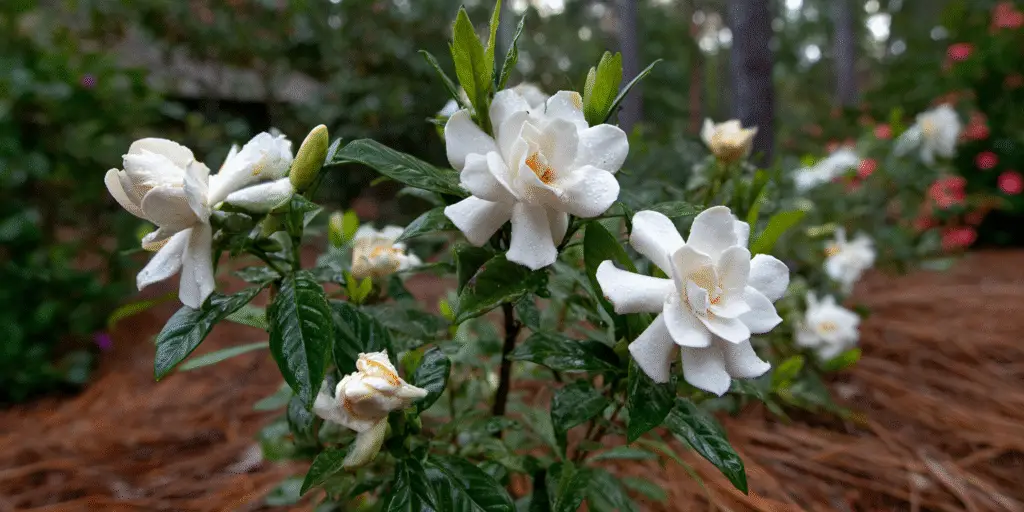
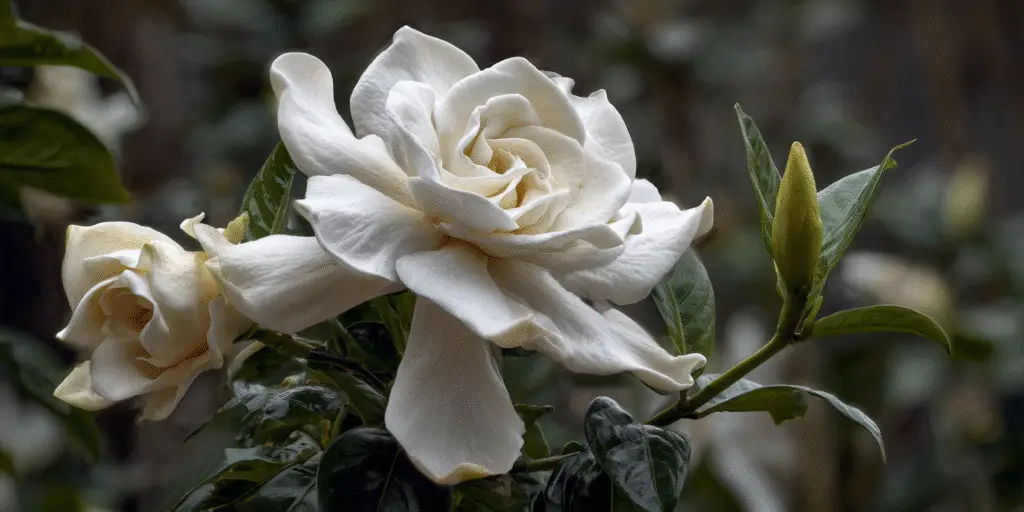
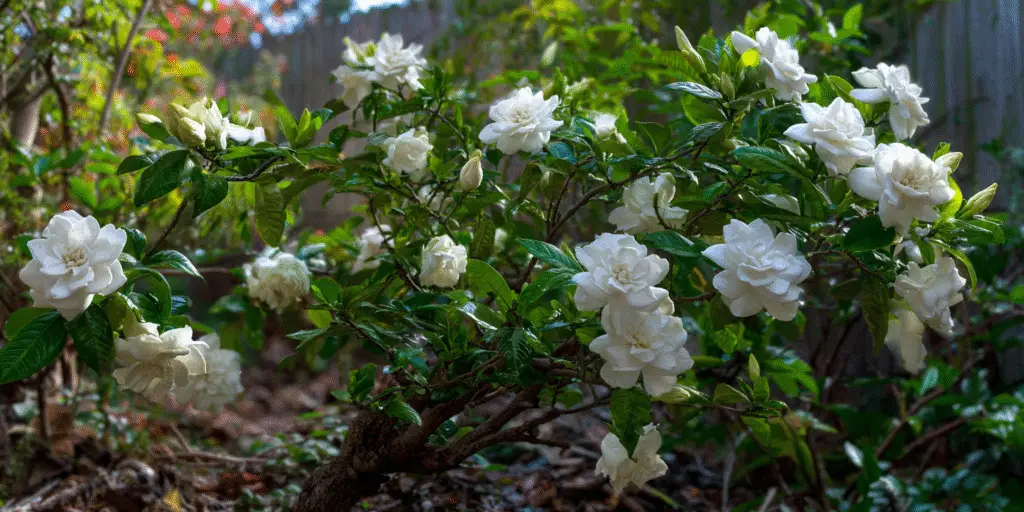
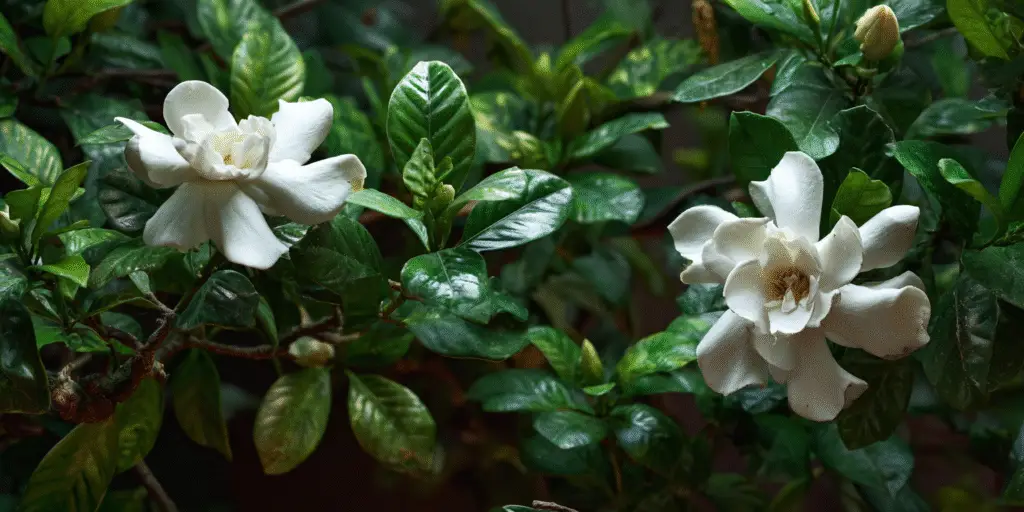
Gardenia (botanical name Gardenia jasminoides) is a broadleaf evergreen shrub prized for creamy white blooms and a rich perfume that carries on warm evenings. It is often called cape jasmine, a common synonym you may see in catalogs and older garden books. Native to warm regions of Asia, Gardenia thrives in parts of the southern and coastal United States where summers are long and nights stay mild. If you picture a low to medium shrub with glossy dark leaves and porcelain flowers, you are seeing the classic Gardenia used near porches and entry walks. In many types of flowers roundups, Gardenia stands out for fragrance and the pure effect of elegant white flowers in late spring and early summer.
Outdoors in the ground, Gardenia performs best in USDA Zones 8 to 11. In Zone 7 it can be grown in protected spots or as a container plant that winters indoors. The ideal light is morning sun with bright afternoon shade, especially where summers are hot and humid. In milder coastal zones, Gardenia can take more sun if roots never dry out. A simple snapshot for success is this: give the shrub acid soil, steady moisture without waterlogging, gentle morning sun, and a wind sheltered site near the house where night temperatures stay a touch warmer. Build organic matter into the planting area, mulch well, and avoid crowding. With that foundation, Gardenia care becomes straightforward and dependable.
Soil & Bed Preparation
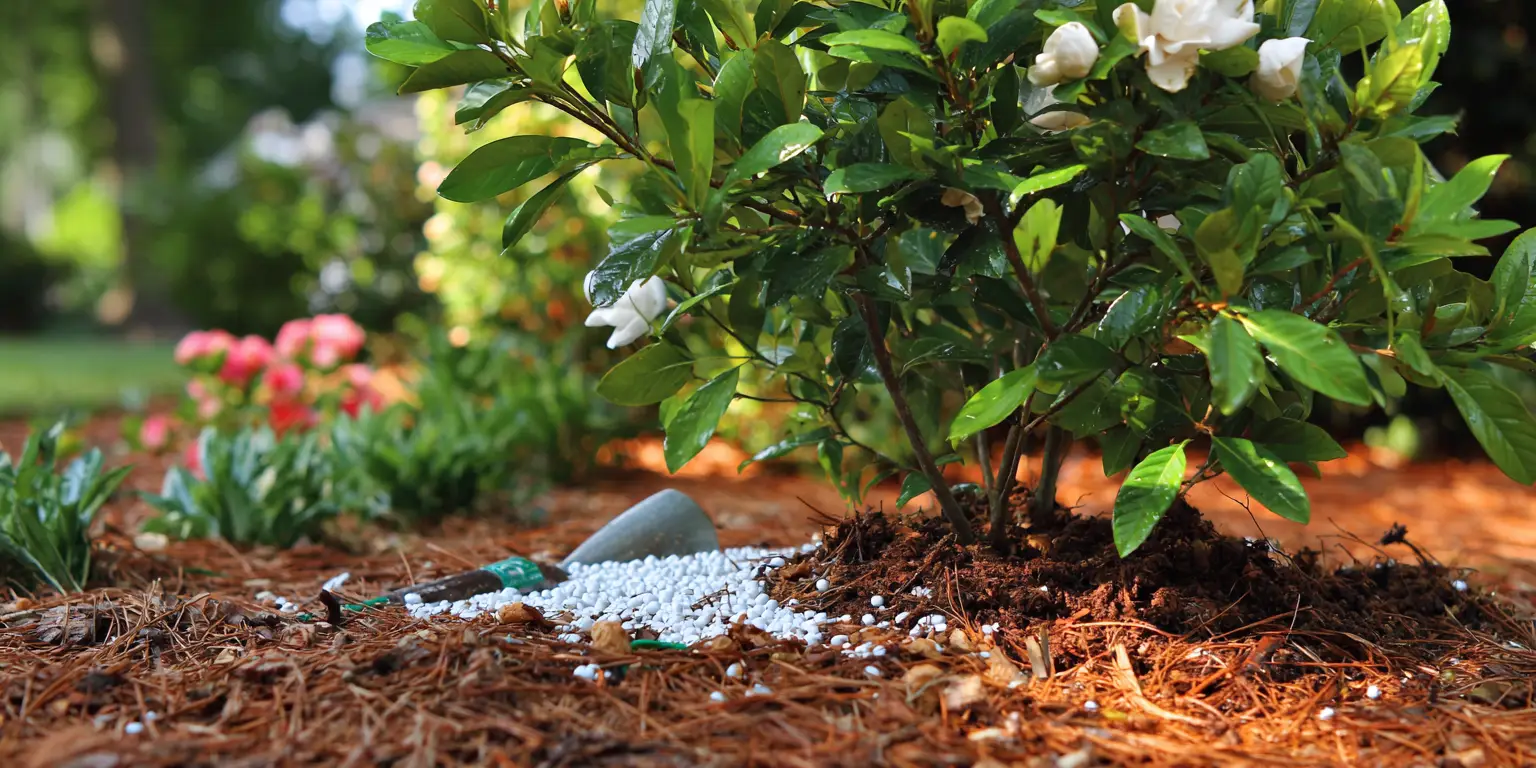
Gardenia roots demand air as well as moisture. A soil that is loamy, enriched, and freely draining is ideal. Heavy clay that stays wet after rain suffocates roots and invites rot, while very sandy soil dries too fast and starves plants. Improve either extreme by working in generous amounts of composted pine bark, leaf mold, or well matured compost throughout the top 8 to 12 inches of soil (20 to 30 cm). In low, wet sites, build a raised bed 6 to 12 inches high (15 to 30 cm) so water can move off and oxygen can move in. Keep the planting area at least two to three times wider than the nursery pot so new roots can explore soil that matches the root ball in texture and moisture. Gardenia is an acid loving shrub. The target pH is modestly acidic, in the neighborhood of 5.0 to 6.0. If your soil tests neutral or alkaline, plan to correct it before planting and then maintain it with acid forming practices. Elemental sulfur is the usual tool for lowering pH in native soil. Apply it only at rates advised by a soil test. Pine bark fines and pine straw mulch help hold an acidic reaction over time. If leaves turn yellow with green veins in summer, check pH first, since high pH often blocks iron. In containers, use a bark based, peat enriched potting mix labeled for acid loving plants and water with a source that is not highly alkaline. Rainwater is often helpful where tap water is hard. Use raised beds where natural soil puddles after storms or where a high water table lingers. A well built raised bed filled with a coarse, bark enriched mix gives Gardenia roots room to breathe and can be the difference between a plant that struggles and one that flowers freely. In ground planting is perfect where native soil already drains but still holds moisture. Either way, keep the future size of the shrub in mind. Gardenias resent being crammed into a narrow border between a wall and a walk. Give the root zone real estate that allows even watering, a steady mulch blanket, and airflow around the canopy. To check drainage, dig a test hole 12 inches deep and about 12 inches wide (30 by 30 cm). Fill it with water and allow it to drain. Refill it once more and observe. The water should drop steadily rather than stand still. If the hole still holds water well into the next day, treat the site as poorly drained and switch to a raised bed or a container. For pH, use a lab based soil test or a reliable home kit. Aim for a reading around 5.0 to 6.0. Make adjustments with elemental sulfur only as directed by test results. Recheck pH in the same season and again the following year to confirm that changes held.
Planting Calendar by USDA Zone
Zones 9 to 11 warm winter regions
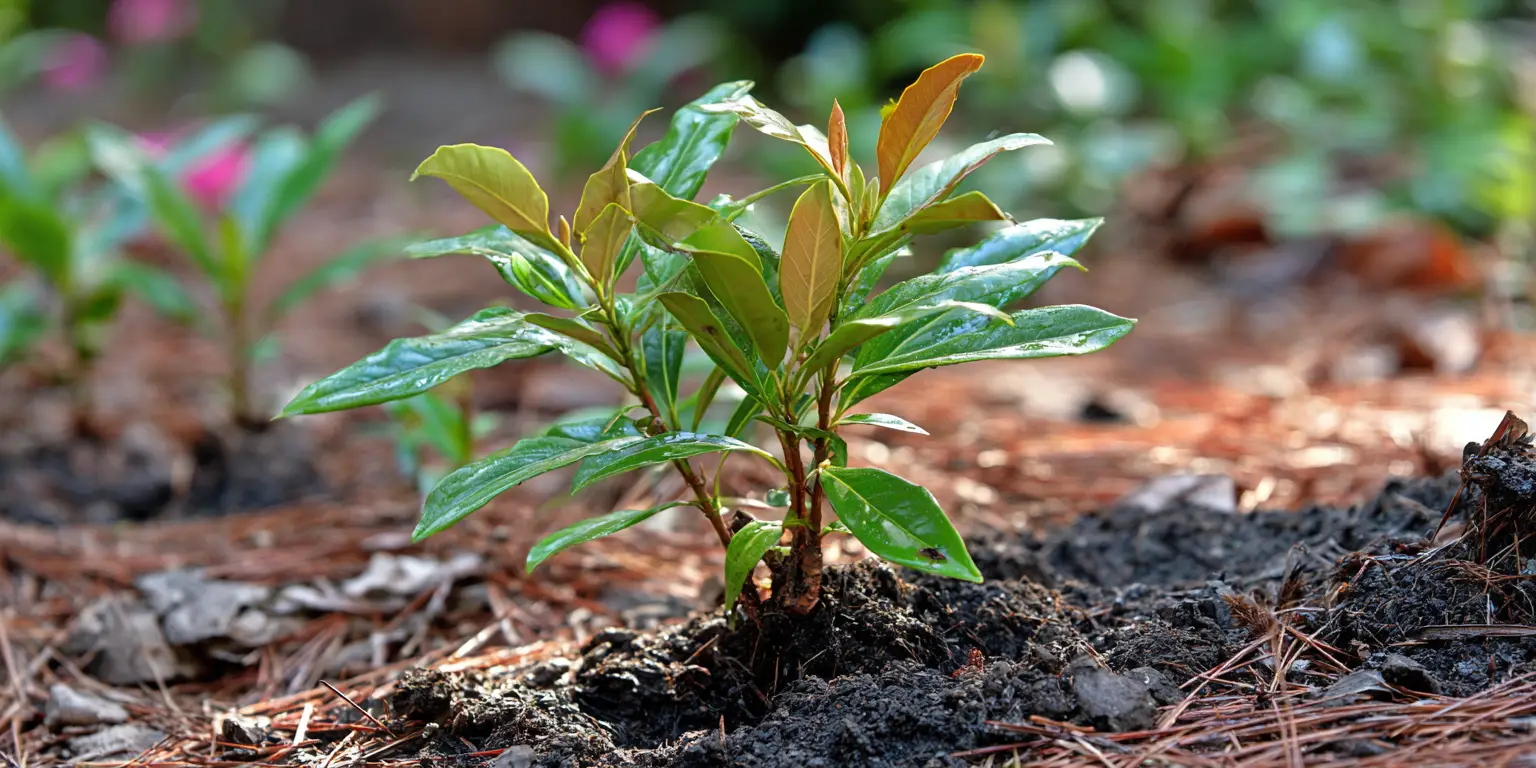
In frost free or nearly frost free areas, early fall is a prime planting window. Plant from late September to early November so roots establish while air is cool and soil is warm. Spring planting also works well once nights are consistently above 55°F (13°C). In these zones, give Gardenia morning sun with high bright shade later in the day. Avoid reflected heat from south or west facing walls that can scorch leaves in the hottest weeks. Coastal gardeners should shield shrubs from strong salt laden winds since Gardenia tolerates some wind but not direct salt spray.
Zone 8 and mild pockets of 7
Where winter lows dip below freezing, plant after the last spring frost once soil has warmed, or plant in early fall at least six to eight weeks before the first hard freeze. Spring planting is often the safer choice in colder pockets, since young roots have a full season to settle in. In Zone 7, Gardenia is best treated as a container or patio shrub that can be moved under cover when extended cold snaps arrive. If you do attempt in ground planting in a sheltered microclimate, choose a protected southern exposure, mulch well, and be prepared to cover plants during the coldest nights.
Arid, high elevation, and humid Gulf conditions
In arid inland climates, use a spring planting window and commit to drip or soaker irrigation that wets the root zone deeply. Provide filtered light in the afternoon to reduce leaf stress. At higher elevations, cool nights slow growth, so prefer late spring planting and a heat reflective mulch like fine bark that warms the soil without baking it. In hot humid Gulf Coast conditions, fall planting is excellent. The key in all three situations is matching planting time to the strongest root growth period and tailoring shade and moisture so the plant never swings from soggy to parched.
Planting: Depth & Spacing
Most Gardenias are sold in containers. Water the plant well before you begin. Slide it from the pot, then gently loosen circling roots. Trim only the most stubborn coils so roots can grow outward. Set the shrub so the top of the root ball sits about 1 inch above the final soil grade (2.5 cm). Backfill with the improved native soil you prepared, not straight potting mix, and firm gently to remove air pockets. Water thoroughly to settle the soil. Add a 2 to 3 inch mulch layer (5 to 7.5 cm), keeping mulch a couple of inches off the main stems. A light application of a starter fertilizer is optional if a soil test shows low fertility. If you can find field grown Gardenia from a local nursery, handle the root ball with care to prevent cracking. Position the plant with the same rule as above, with the top of the ball slightly above the surrounding grade. Cut away strings and wire, and fold back burlap from the top third of the ball so roots can grow freely. Water to settle, then mulch. Baby the plant through the first summer with regular deep watering, since field grown roots need time to adapt to a garden irrigation pattern. Spacing depends on the cultivar. Compact types that mature around 2 to 3 feet wide should be planted 2.5 to 3 feet apart center to center (0.75 to 0.9 m). Full size shrubs that reach 5 to 6 feet should be spaced 5 to 6 feet apart (1.5 to 1.8 m). For a hedge, plant at roughly two thirds of the expected mature width so canopies knit without smothering each other. Reduce transplant shock by planting on a calm, overcast day, watering with the same source the plant knew at the nursery if possible, and shading the shrub with a temporary fabric for a week in high heat. Do not plant deeper than the original soil mark on the stem.
Watering & Mulching
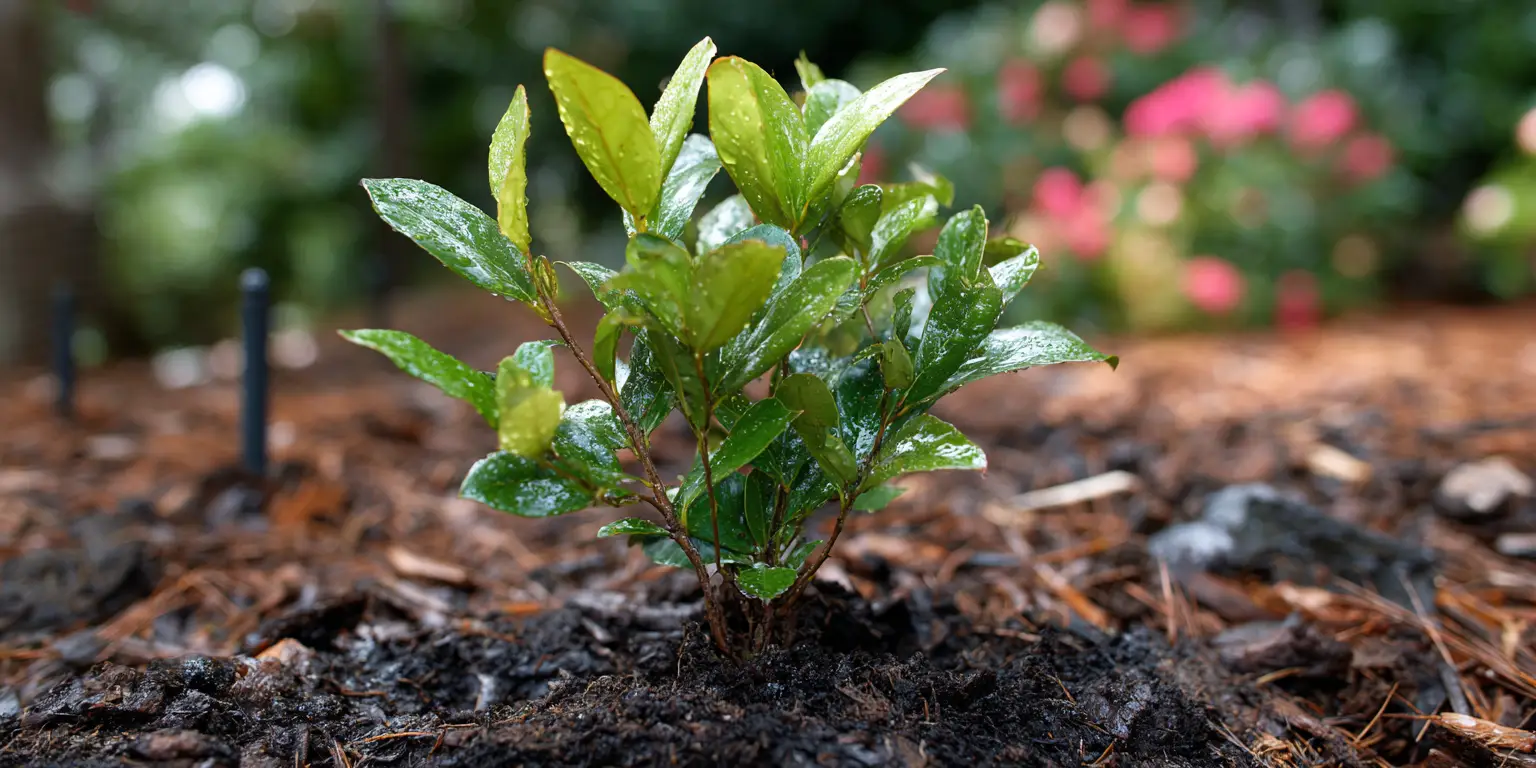
A newly planted Gardenia needs steady moisture while roots spread. During the first growing season, water deeply whenever the top 2 inches of soil feel dry. In practical terms, that often means two deep soakings per week in warm weather, adjusted for rain and soil type. Deep watering means wetting the soil to a depth of 8 to 10 inches (20 to 25 cm) so roots follow moisture downward. A mature shrub with a wide root system will usually need less frequent irrigation, but the same depth. Check the soil with a trowel rather than guessing at the surface. Consistency is the aim, not a schedule set by the calendar. Mulch is essential for Gardenia care. A 2 to 3 inch blanket of pine straw, shredded bark, or partially composted pine fines conserves water, buffers summer heat, and supports the acidic soil reaction Gardenia prefers. Keep mulch pulled back a couple of inches from the stems to prevent a damp collar that can invite canker. Refresh the mulch each spring after the soil warms. In very hot summers, consider widening the mulched ring as the plant grows so the whole root zone is protected from heat and drying winds. Mulch also suppresses weeds, which compete for the moisture a shallow rooted Gardenia needs. When temperatures jump above 95°F (35°C) for extended periods, shade cloth or a temporary umbrella during the hottest hours can prevent leaf scorch on young plants. In prolonged drought, shift to fewer but deeper irrigations that reach the full root depth. If your tap water is hard and alkaline, long term use can push soil pH upward and cause leaf yellowing. Collect rainwater where possible, or alternate between rainwater and tap water. If you notice salt crusting on soil surfaces in arid regions, leach the root zone by applying extra water occasionally to flush salts beyond rooting depth, provided drainage is good.
Feeding
Feed Gardenia lightly and at the right moments. In most U.S. regions, the first application goes on in spring after the main flush of bloom or as buds begin to set, then a second light feeding in mid to late summer if growth has been steady. Skip feeding in late fall and winter. Feeding too late can push soft growth that is easily nipped by cold. In warm frost free zones, a light feeding in early spring and another in midsummer is often enough. Always adjust to the plant’s look. A well colored plant with firm new leaves may not need fertilizer at that time. Choose an acid forming fertilizer formulated for shrubs like azaleas and camellias. A balanced to slightly nitrogen forward analysis in the neighborhood of 3 to 1 to 2 works well for steady growth, applied at label rates. Slow release organic blends with similar proportions are gentler on roots and reduce the risk of salt buildup. If a soil test shows high phosphorus, switch to a product with lower P to avoid nutrient tie up. Iron supplements can green leaves in the short term, but they are a temporary fix if soil pH is too high. Correct pH first, then fine tune with micronutrients only when signs persist. Healthy Gardenia roots partner with a living soil. Aim to maintain organic matter by top dressing each spring with a half inch of compost under the mulch. Disturb the surface as little as possible. Retest soil every two to three years for pH and basic nutrients so you are feeding to numbers rather than habit. In containers, feed sparingly with a diluted liquid or controlled release product and flush the mix with clear water a few times a season to prevent salt buildup. If growth stalls despite feeding, resist the urge to add more. Revisit drainage, pH, and root health first.
Pruning & Support
Prune right after the main bloom to preserve next year’s flower buds, which begin forming on new growth that season. Start by removing any dead or crossing wood at the base. Shorten unruly shoots by a third to shape the shrub. Avoid hard cuts in fall, which can reduce bloom and invite winter damage. Deadhead by snipping spent flowers back to the first or second set of leaves. This tidies the plant and can encourage a lighter rebloom on some cultivars later in summer. Gardenia wood is dense and holds its shape, so routine light pruning keeps the outline full and neat. Disinfect pruners between plants and after cutting any suspect tissue. A simple alcohol wipe protects the next shrub from potential disease. Gardenias are self supporting and do not need stakes or trellises under normal conditions. If you are training a Gardenia as an espalier on a warm wall, attach shoots loosely and clip ties as stems thicken. For hedge plantings, maintain a slightly narrower top than base so light reaches the lower leaves. This prevents a thinned out skirt and keeps the hedge dense from top to bottom.
Overwintering
In Zones 8 and 9, a winter mulch helps Gardenia ride out cold snaps. After the first frost, replenish mulch to a depth of 3 inches (7.5 cm) and widen the ring to cover the full root spread. During sudden arctic fronts, cover the shrub with a breathable frost cloth and anchor it to the ground so wind cannot lift it. Remove cover when the air warms. The goal is to prevent cycle thawing and refreezing at the crown. Do not wrap stems in plastic. Plastic traps moisture and can cause more damage than cold.
Container plants and indoor protection
In Zone 7 and colder regions, bring container Gardenias indoors before nights regularly drop below 45°F (7°C). Set them in bright light, away from heating vents and drafts. A room that stays around 60 to 65°F at night (16 to 18°C) works well. Water when the top inch of the potting mix is dry, and keep humidity moderate by grouping plants on a tray of pebbles and water. Do not fertilize in winter. In late winter, pinch the tips to encourage a compact habit, then move containers back outside when nights stay above 50°F (10°C) and acclimate them to brighter light over a week.
Growing Environments
Gardenia takes happily to pots when you match container size to the plant. Start with a pot 12 to 16 inches wide (30 to 40 cm) for compact varieties and size up as roots fill the mix. Full size shrubs need tubs in the 18 to 24 inch range (45 to 60 cm). Choose a sturdy container with large drainage holes and use a bark based, peat enriched mix that drains freely yet holds consistent moisture. Slip the pot onto plant caddies so you can roll it to shelter before storms or heat waves. Refresh the top few inches of mix each spring and repot fully every two to three years.
Microclimates for shade, wind, and reflected heat
Gardenia likes air movement but not harsh wind. Tuck shrubs where buildings or hedges break gusts, and where radiant heat from walls is filtered by overhanging eaves or a trellis. Morning sun with bright shade after noon is dependable across most U.S. regions. In cooler coastal pockets, allow more sun. In desert edge neighborhoods, provide filtered light under high branching trees or a pergola. Keep irrigation emitters out near the drip line of the canopy so roots spread into evenly moist soil. Space plants well so leaves dry after rain and airflow keeps fungal issues in check.
Companion Planting & Design
Gardenia pairs perfectly with other acid loving shrubs and perennials that like even moisture and a touch of shade. Hydrangeas, especially hydrangea macrophylla, echo the glossy leaves and offer summer color that follows Gardenia bloom. Roses bring repeat flowers and height near a sunnier edge where the two can overlap. For lower companions, mix ferns, hellebores, and shade tolerant groundcovers that will not tangle the root zone. For fragrance that bridges seasons, weave in lavender in the brightest spots and let its silvery leaves play against Gardenia’s dark gloss.
Ideas for yards, entries, and special events
Use Gardenia near doors, patios, and paths where scent can be enjoyed at human height. Place a pair in large containers to frame an entry or anchor a porch. In a white and green scheme built for evening, knit Gardenia with moonlight toned companions featured in our wedding flowers guide and seasonal accents pulled from lilacs in spring or cut sprays of tulips for pots at the front step. Leave elbow room between shrubs so air moves and bloom shows off from all sides. In every layout, resist the urge to crowd. Space for airflow and mulch maintenance is part of Gardenia care that keeps shrubs healthy for years.
References
- Clemson University Cooperative Extension. Gardenia.
- North Carolina State Extension Plant Toolbox. Gardenia jasminoides.
- University of Florida IFAS Gardening Solutions. Gardenias.
Written by: Your Flowers Guide editorial team
We are a small independent group of flower lovers who research and review each guide using trusted horticultural and educational sources. Learn more about us