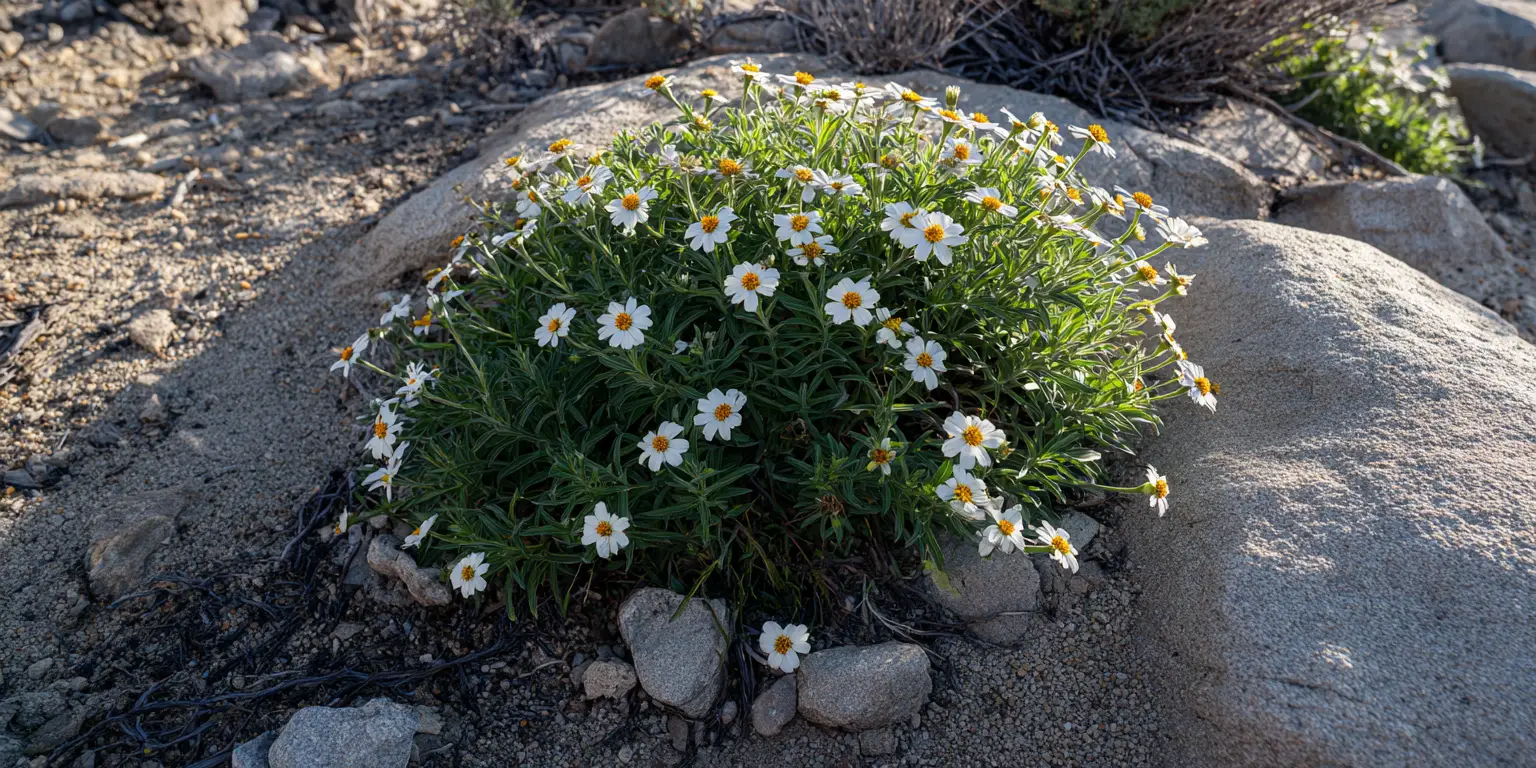
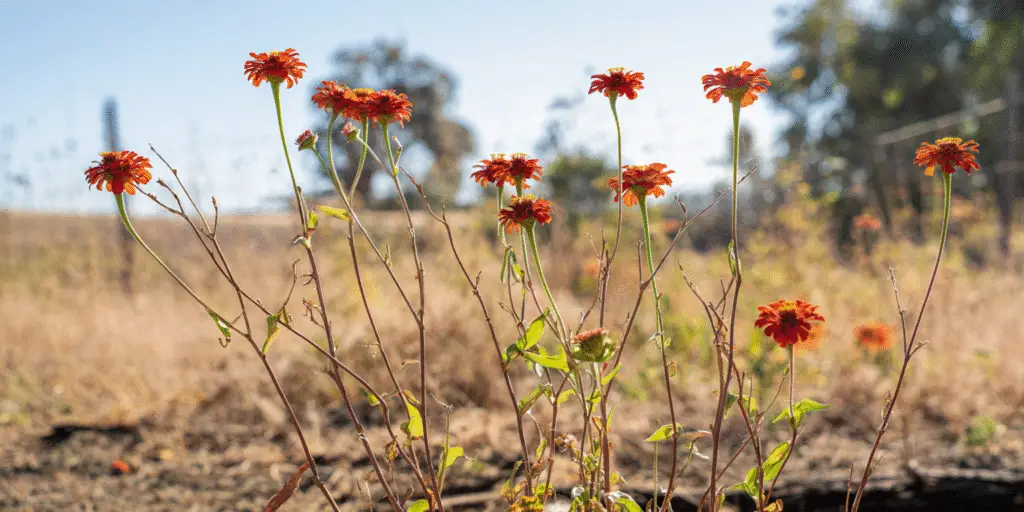
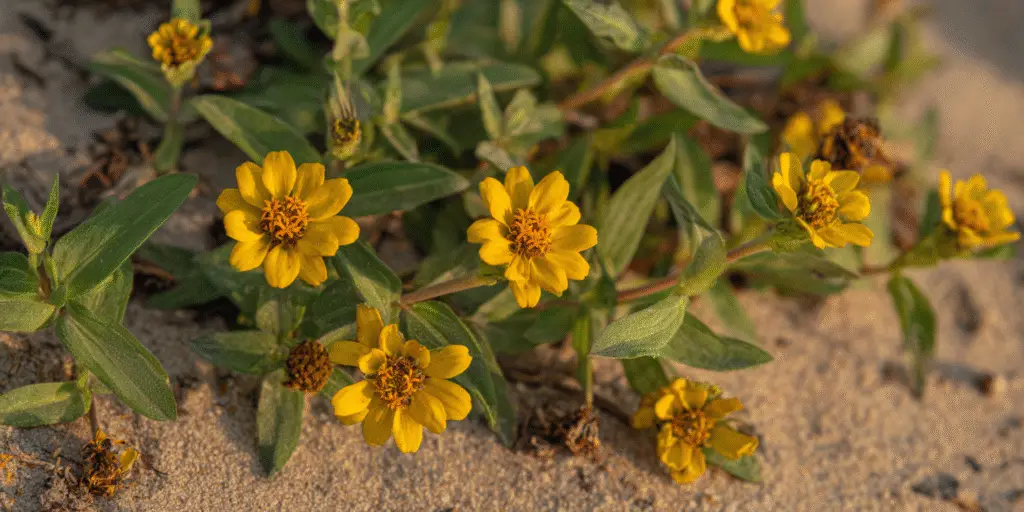
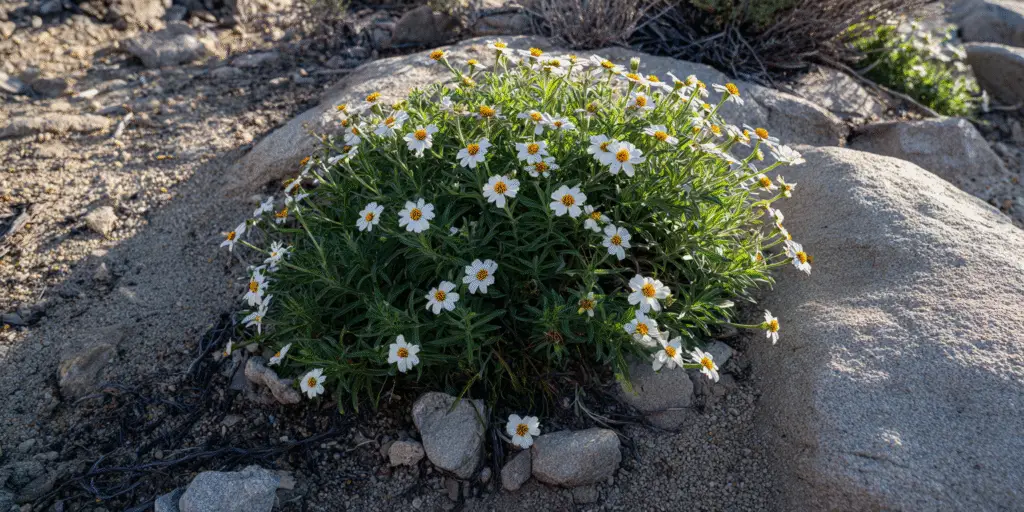
This species is the desert zinnia, a low perennial subshrub. It stands out for white daisies above tight gray‑green mounds. Plants excel in full sun with very sharp drainage and minimal water. Bloom peaks in summer. It is native to the desert Southwest and northern Mexico.
At‑a‑glance
Group/Class: perennial species
Height × spread: 4 to 10 in (10 to 25 cm) × 12 to 18 in (30 to 45 cm)
Bloom window: June to August
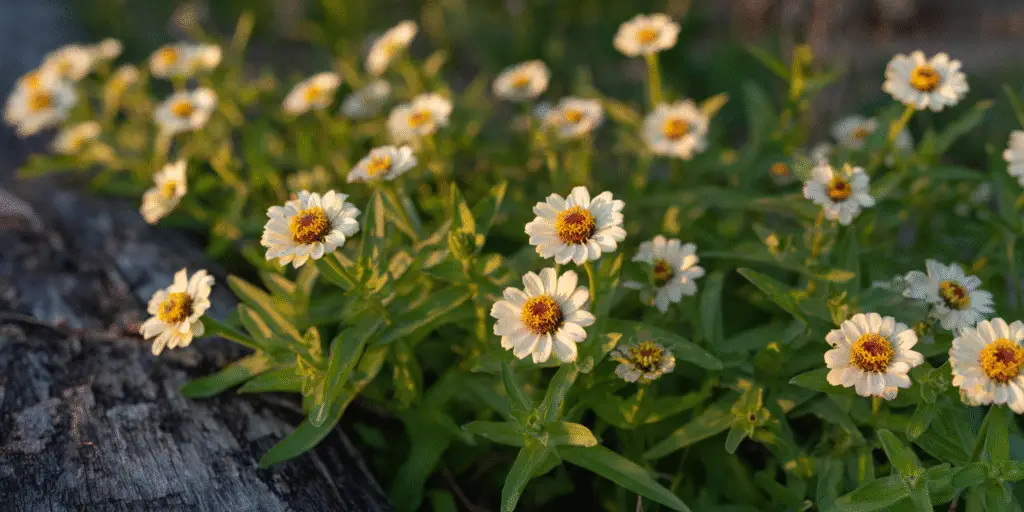
Color & flower form: white to off‑white single daisies
Fragrance: 0 none
USDA hardiness: zones 6 to 10
Breeder / Year / Origin: unknown
Pet safety: safe
How it differs
Lowest, most xeric species in the genus used ornamentally
Woody base and evergreen look in mild winters
White rays rather than bright yellows common in Z. grandiflora
Excellent for water‑wise, low‑maintenance plantings
Strengths
Exceptional drought tolerance
Heat and sun tolerant
Stays compact without pruning
Pollinator friendly
Care in one minute
Plant in full sun with fast drainage.
Soil: sandy or rocky; pH flexible.
Irrigate lightly the first season; then sparingly.
No fertilizer needed in lean soils.
Shear lightly after bloom if desired.
Hardy where winters are dry and soils drain fast.
Watch‑outs
Declines in heavy or soggy soils
Shorter bloom in cool, rainy summers
Best uses (tags)
xeric groundcover, rock gardens, slopes, habitat plantings
Provenance note
Native to the deserts of the southwestern U.S. and northern Mexico.
Written by: Your Flowers Guide editorial team We are a small independent group of flower lovers who research and review each guide using trusted horticultural and educational sources. Learn more about us