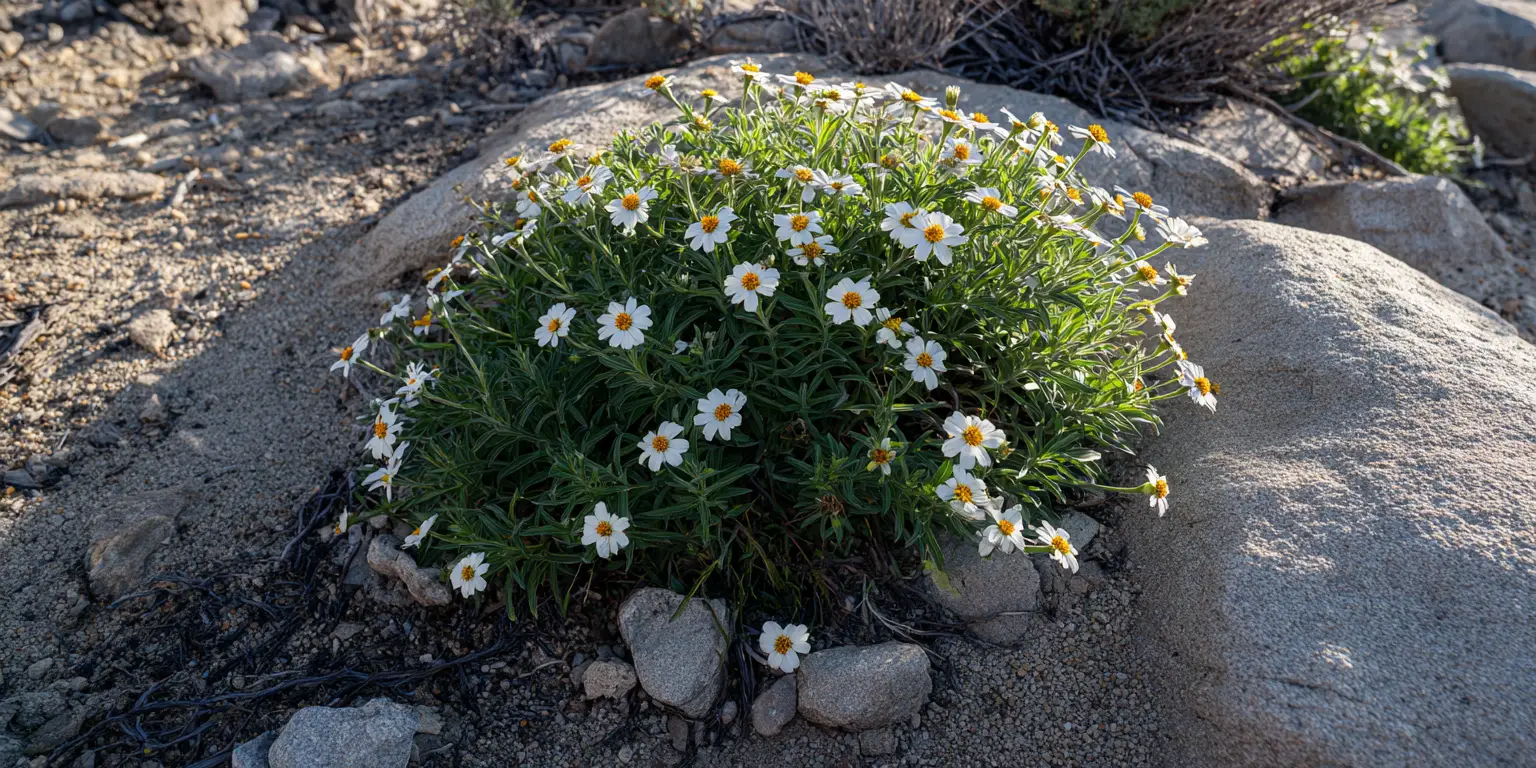
in bloom
now
through Oct
Bloom calendar
Zinnia acerosa
perennial species
At‑a‑glance
- Group/Class: perennial species
- Height × spread: 4 to 10 in (10 to 25 cm) × 12 to 18 in (30 to 45 cm)
- Bloom window: June to August
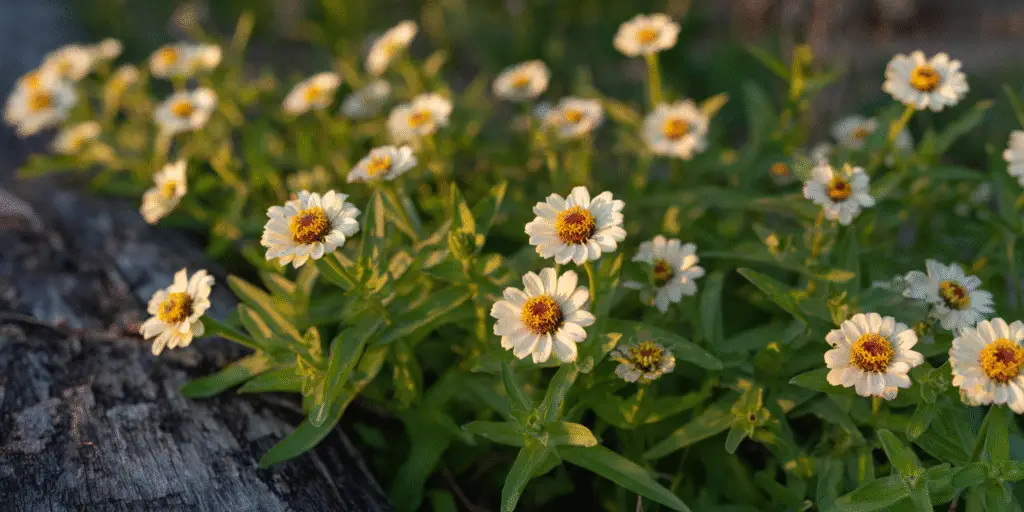
- Color & flower form: white to off‑white single daisies
- Fragrance: 0 none
- USDA hardiness: zones 6 to 10
- Breeder / Year / Origin: unknown
- Pet safety: safe
How it differs
- Lowest, most xeric species in the genus used ornamentally
- Woody base and evergreen look in mild winters
- White rays rather than bright yellows common in Z. grandiflora
- Excellent for water‑wise, low‑maintenance plantings
Strengths
- Exceptional drought tolerance
- Heat and sun tolerant
- Stays compact without pruning
- Pollinator friendly
Care in one minute
Plant in full sun with fast drainage.
Soil: sandy or rocky; pH flexible.
Irrigate lightly the first season; then sparingly.
No fertilizer needed in lean soils.
Shear lightly after bloom if desired.
Hardy where winters are dry and soils drain fast.
Watch‑outs
- Declines in heavy or soggy soils
- Shorter bloom in cool, rainy summers
Best uses (tags)
Provenance note
Native to the deserts of the southwestern U.S. and northern Mexico.
References
- NC State Extension Plant Toolbox – Zinnia acerosa
- USDA NRCS Plant Guide – Desert zinnia (Z. acerosa)
- USDA PLANTS – Zinnia acerosa
- ASPCA – Zinnia (non‑toxic to pets)
Similar Flowers
Enjoying our flower guides? Add YourFlowersGuide as a preferred source on Google. It helps more readers find us.
Add to Preferred Sources