in bloom
now
through Oct
Bloom calendar
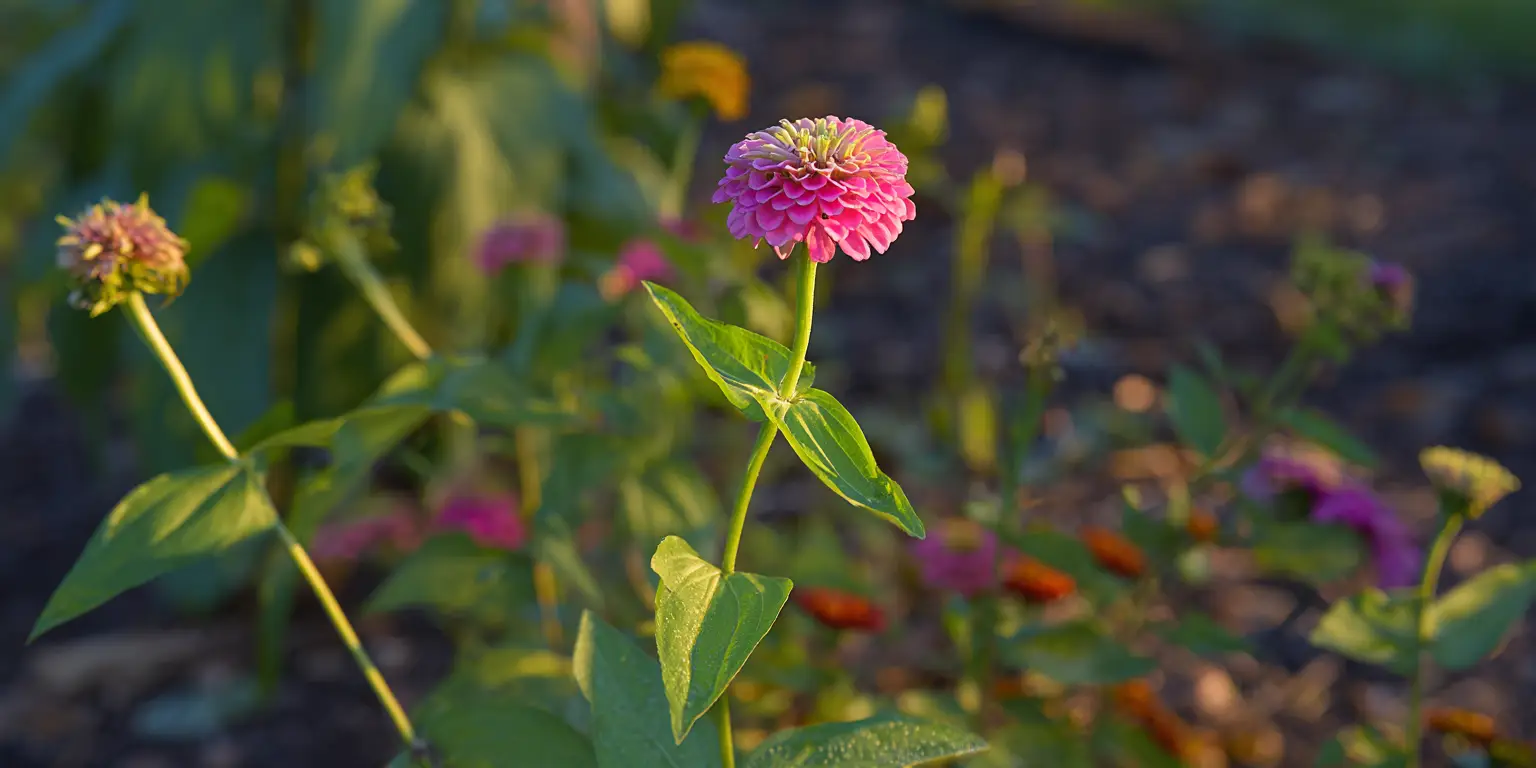
Zinnia elegans
annual species
At‑a‑glance
- Group/Class: annual species
- Height × spread: 12 to 48 in (30 to 120 cm) × 9 to 12 in (23 to 30 cm)
- Bloom window: June to frost
- Color & flower form: wide range; single, semi‑double, double
- Fragrance: 0 none
- USDA hardiness: grown as annual in all zones
- Breeder / Year / Origin: unknown
- Cut‑flower notes: upright stems; typical vase life about 7 to 10 days
- Pet safety: safe
How it differs
- Taller and showier than most other species in the genus
- Many fully double forms uncommon in perennial species
- More prone to powdery mildew in humid summers
- Strong stems for cutting compared with lower, mounding species
Strengths
- Long summer to frost bloom with deadheading
- Easy from direct seed
- Excellent cut flower potential
- Wide color and form choices
Care in one minute
Site in full sun with open airflow.
Soil: well‑drained, moderately fertile; neutral to slightly acidic.
Water consistently at the base; avoid wet foliage.
Feed lightly at planting; overfeeding reduces stem strength.
Pinch once at 8 to 10 in to branch; deadhead to extend bloom.
Frost kills plants; re‑sow each spring after last frost.
Watch‑outs
- Powdery mildew and leaf spots without spacing and airflow
- Can slow or stall in extreme heat with high humidity
- Japanese beetles may feed on foliage and blooms
Best uses (tags)
Provenance note
Native to Mexico; the genus honors Johann Gottfried Zinn.
References
- Missouri Botanical Garden Plant Finder – Zinnia elegans
- NC State Extension Plant Toolbox – Zinnia elegans
- Clemson HGIC – Zinnia insect pests and diseases
- MSU Extension – Growing zinnias in your flower garden
- ASPCA – Zinnia (non‑toxic to pets)
Similar Flowers
Enjoying our flower guides? Add YourFlowersGuide as a preferred source on Google. It helps more readers find us.
Add to Preferred Sources