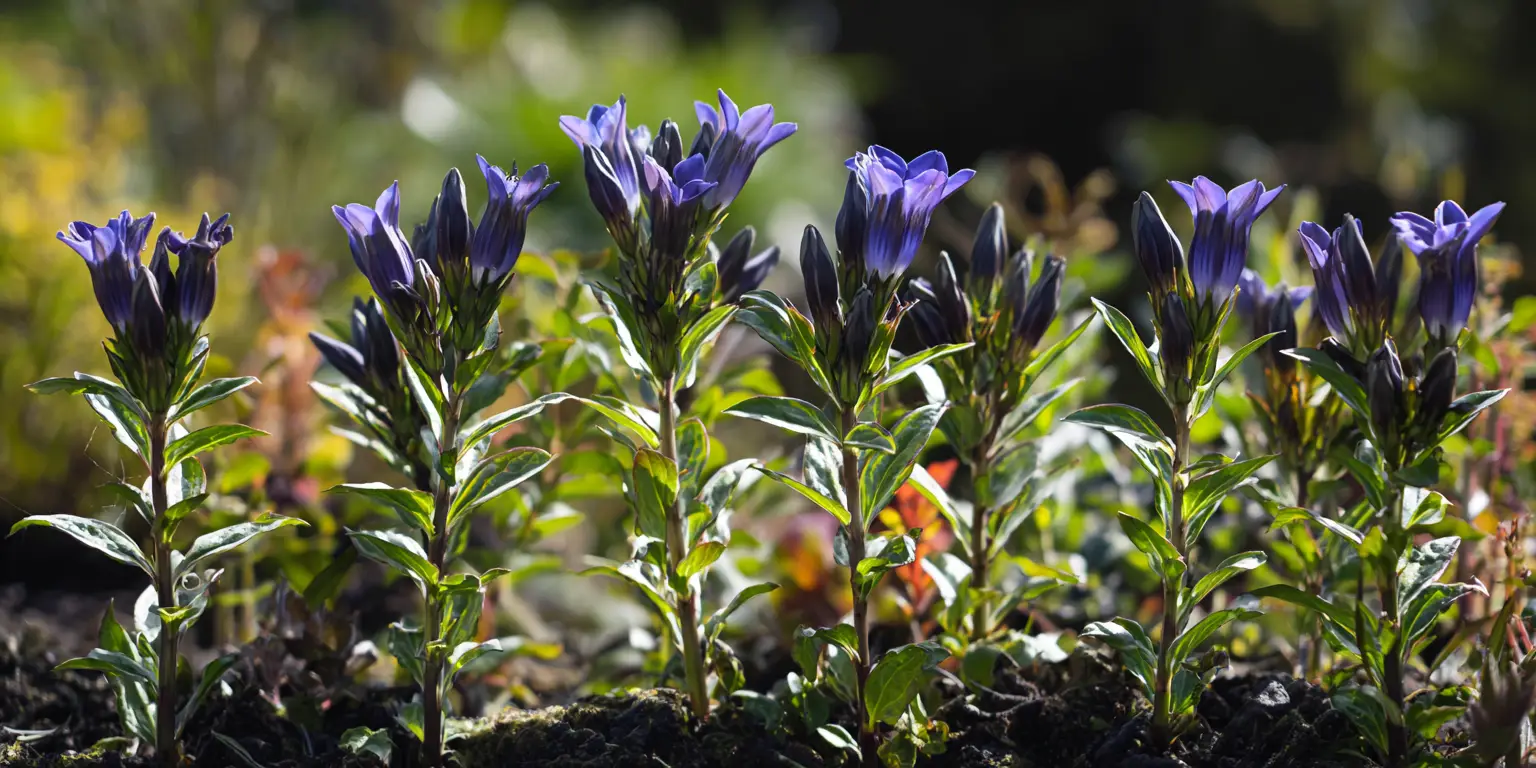
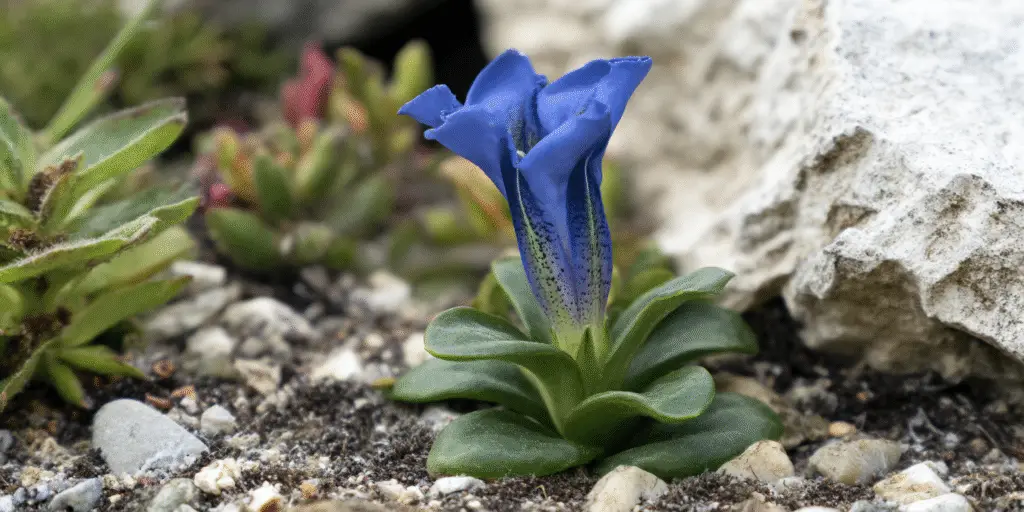
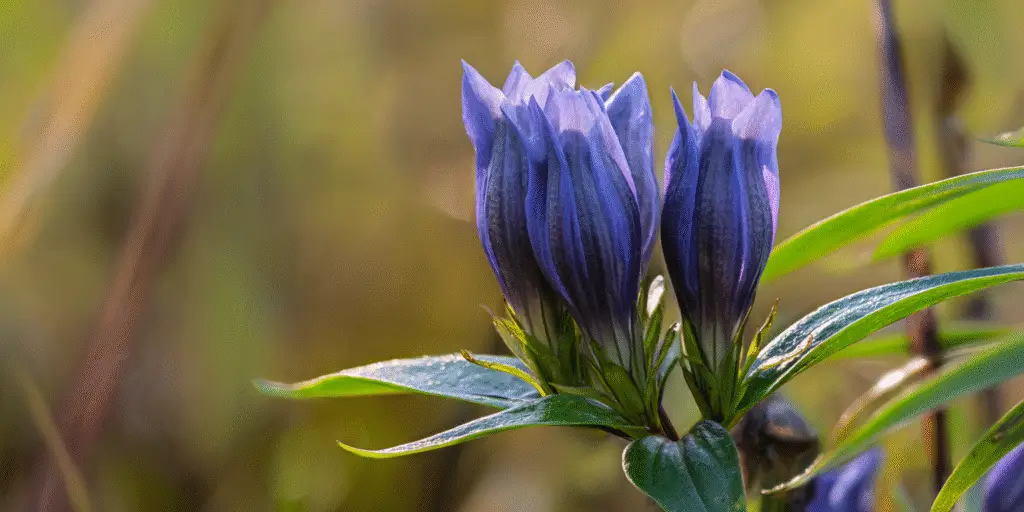
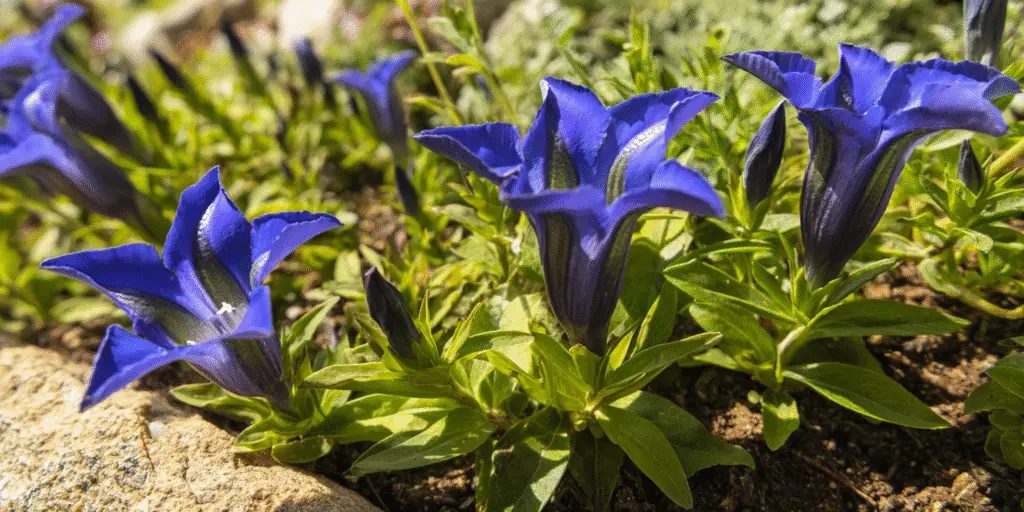
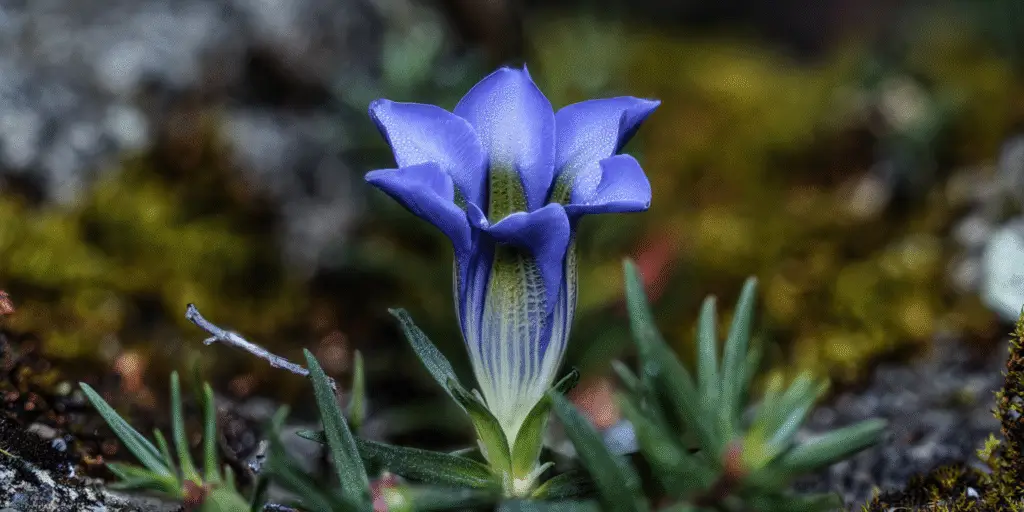
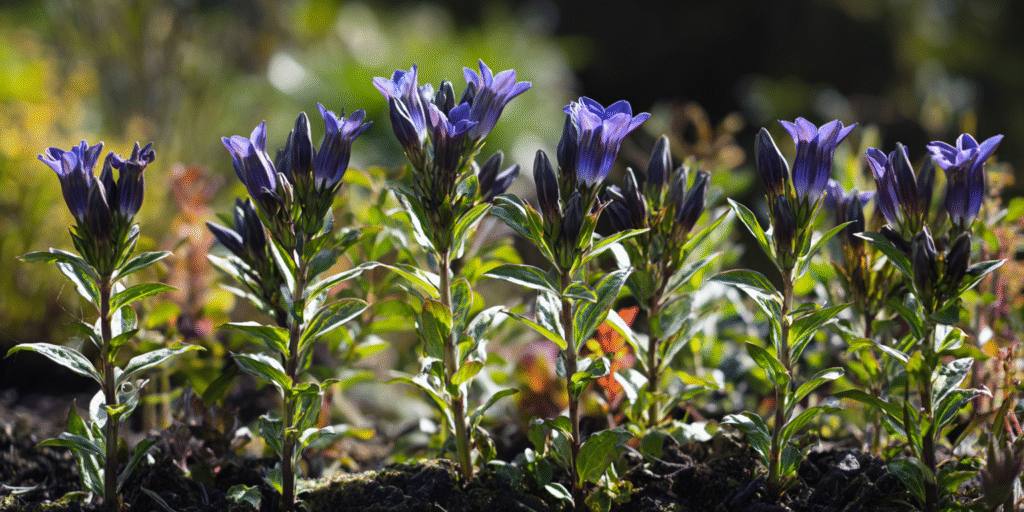
A Japanese and East Asian species that forms upright clumps and flowers from late summer into fall. Narrow bell to funnel‑shaped blooms are usually violet to deep blue and may show paler throats. Plants prefer evenly moist, fertile, well‑drained soil and sun to light shade in cool regions. This species and its hybrids are widely used in Japan as cut flowers.
At‑a‑glance
Group/Class: Japanese gentian
Height × spread: 12-24 in (30-60 cm) × 12-18 in (30-45 cm)
Bloom window: late summer to fall
Color & flower form: violet to blue, bell to funnel flowers, often with pale throat
Fragrance: 0 none
USDA hardiness: zones 5-7
Breeder / Year / Origin: Bunge, 1835, East Asia
Cut‑flower notes: Commonly grown for cut flowers in Japan; sturdy stems and market use reported in research literature.
Pet safety: unknown
How it differs
Upright clumping habit rather than mat‑forming.
Better heat tolerance than alpine trumpet types when soil stays moist.
Open flowers compared with the closed bottle flowers of native North American species.
Strong stems suitable for cutting and arranging.
Strengths
Late‑season color on compact plants.
Performs in fertile garden soils with steady moisture.
Established clumps offer good stem strength.
Care in one minute
Plant in sun to light shade; give afternoon shade where hot.
Provide fertile, well‑drained soil that stays evenly moist.
Irrigate in dry spells to maintain bud development.
Feed lightly in spring; avoid heavy nitrogen.
Deadhead spent stems to tidy; divide as needed in spring.
Watch‑outs
Avoid drought and heat stress that halt flowering.
Requires drainage to prevent root problems.
May need afternoon shade in hot summers.
Best uses (tags)
borders, cutting, containers, late season
Provenance note
Native across East Asia and described by A. Bunge in the 1830s; widely bred in Japan for the cut‑flower trade.
Written by: Your Flowers Guide editorial team We are a small independent group of flower lovers who research and review each guide using trusted horticultural and educational sources. Learn more about us