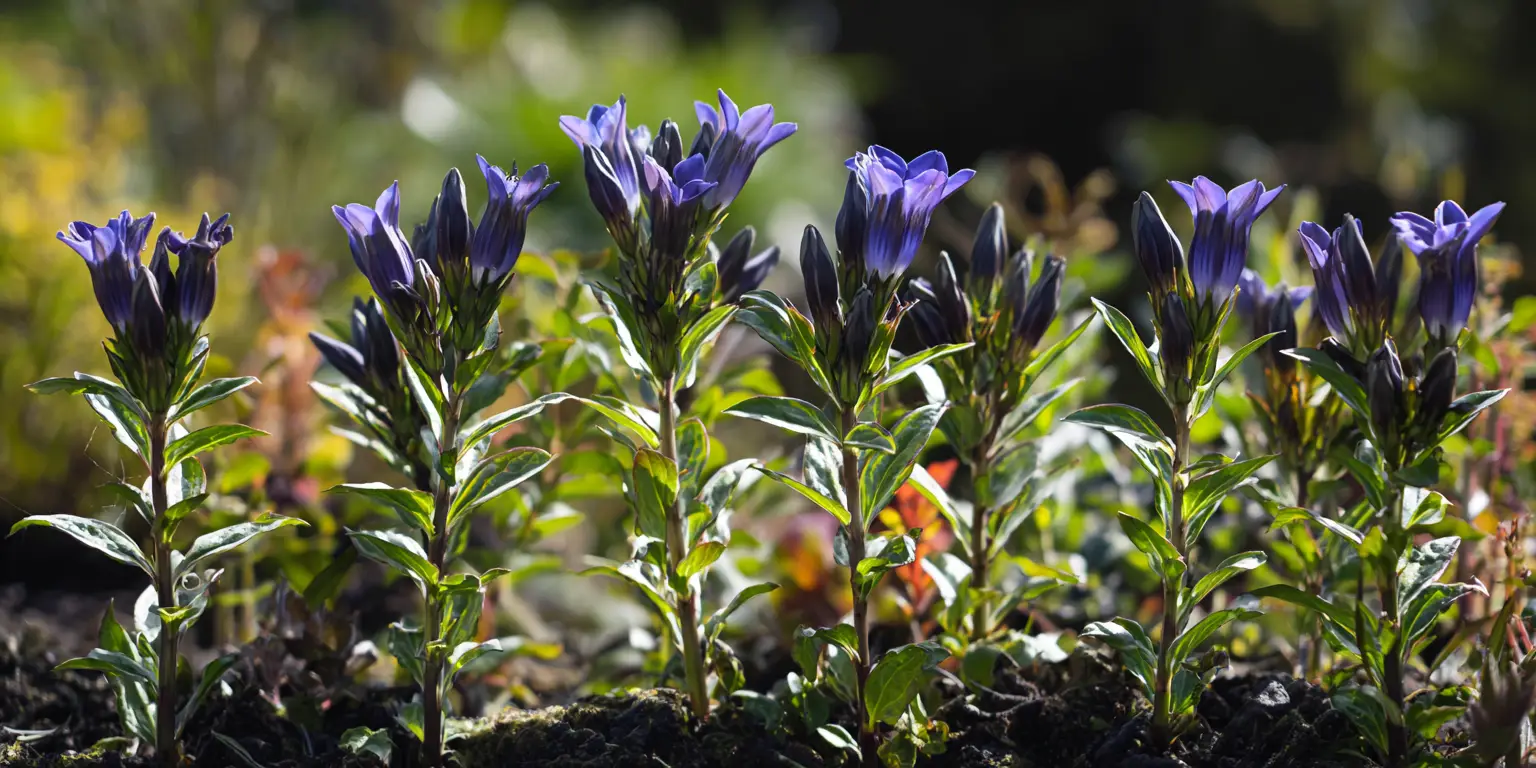
in bloom
now
through Oct
Bloom calendar
Gentiana scabra
Japanese gentian · Bunge, 1835, East Asia
At‑a‑glance
- Group/Class: Japanese gentian
- Height × spread: 12-24 in (30-60 cm) × 12-18 in (30-45 cm)
- Bloom window: late summer to fall
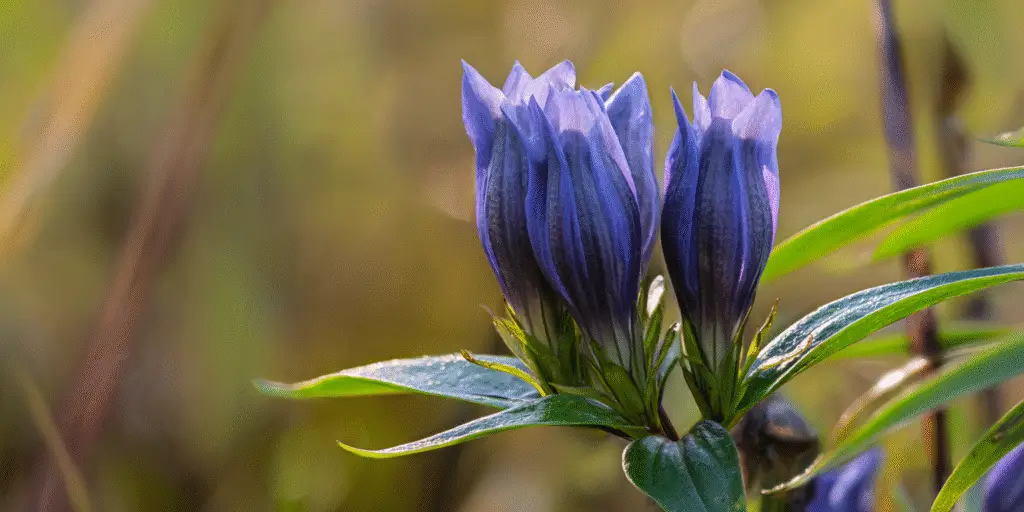
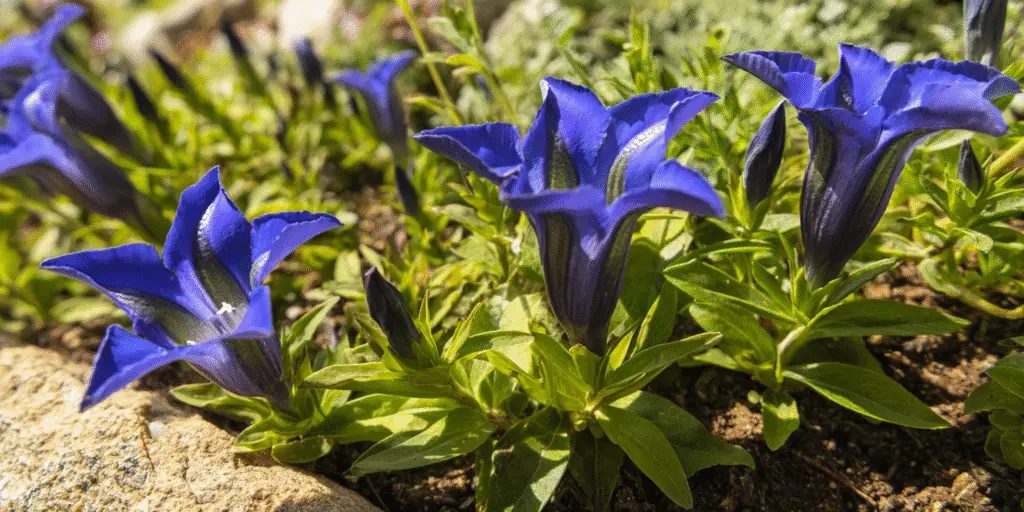
- Color & flower form: violet to blue, bell to funnel flowers, often with pale throat
- Fragrance: 0 none
- USDA hardiness: zones 5-7
- Breeder / Year / Origin: Bunge, 1835, East Asia
- Cut‑flower notes: Commonly grown for cut flowers in Japan; sturdy stems and market use reported in research literature.
- Pet safety: unknown
How it differs
- Upright clumping habit rather than mat‑forming.
- Better heat tolerance than alpine trumpet types when soil stays moist.
- Open flowers compared with the closed bottle flowers of native North American species.
- Strong stems suitable for cutting and arranging.
Strengths
- Late‑season color on compact plants.
- Performs in fertile garden soils with steady moisture.
- Established clumps offer good stem strength.
Care in one minute
Plant in sun to light shade; give afternoon shade where hot.
Provide fertile, well‑drained soil that stays evenly moist.
Irrigate in dry spells to maintain bud development.
Feed lightly in spring; avoid heavy nitrogen.
Deadhead spent stems to tidy; divide as needed in spring.
Watch‑outs
- Avoid drought and heat stress that halt flowering.
- Requires drainage to prevent root problems.
- May need afternoon shade in hot summers.
Best uses (tags)
Provenance note
Native across East Asia and described by A. Bunge in the 1830s; widely bred in Japan for the cut‑flower trade.
References
- RHS – Gentiana scabra profile
- Nishihara et al. 2023 – Japanese cultivated gentians used as cut flowers
Similar Flowers

Enjoying our flower guides? Add YourFlowersGuide as a preferred source on Google. It helps more readers find us.
Add to Preferred Sources