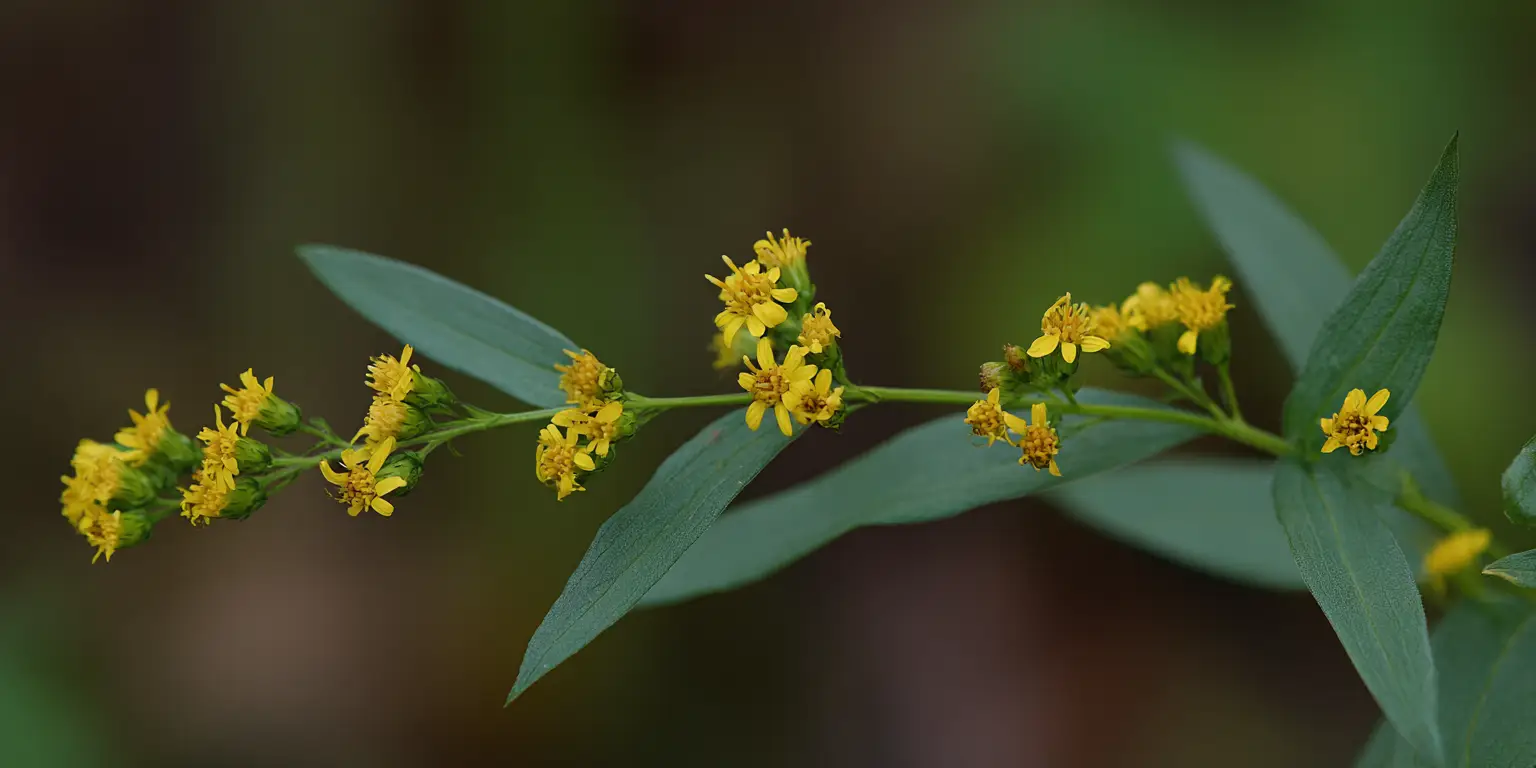
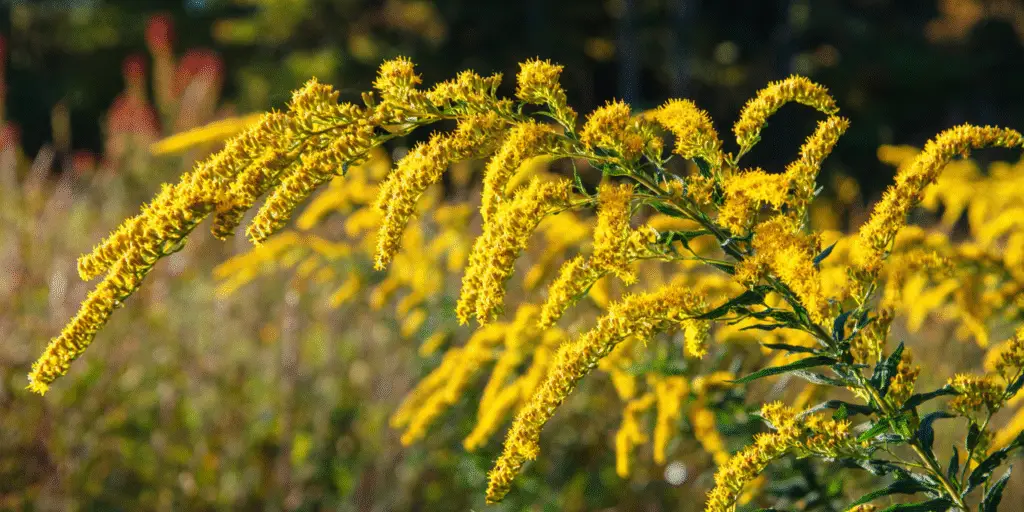
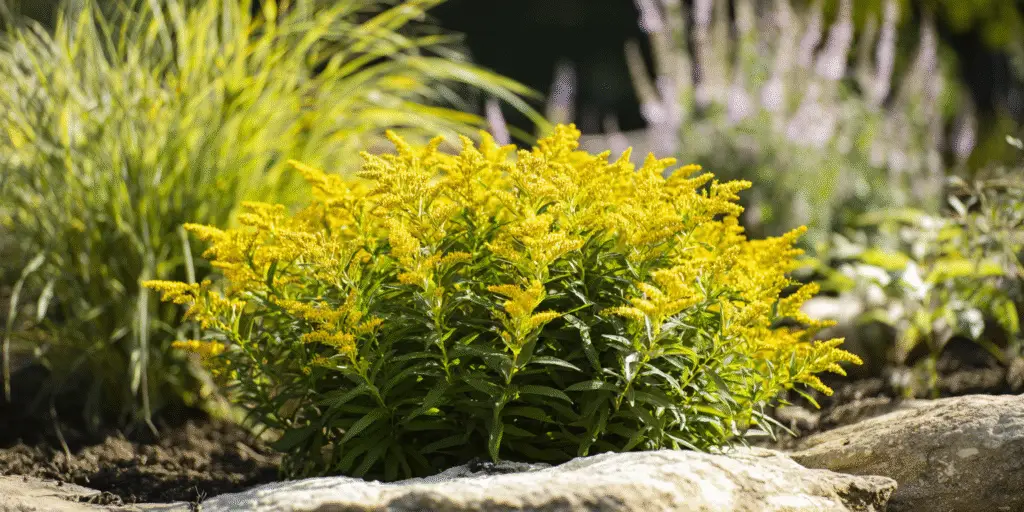
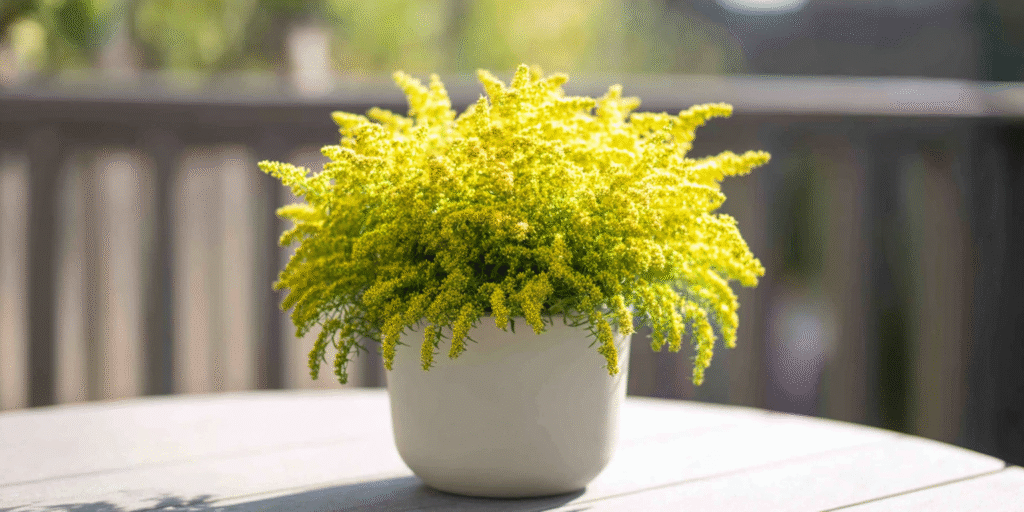
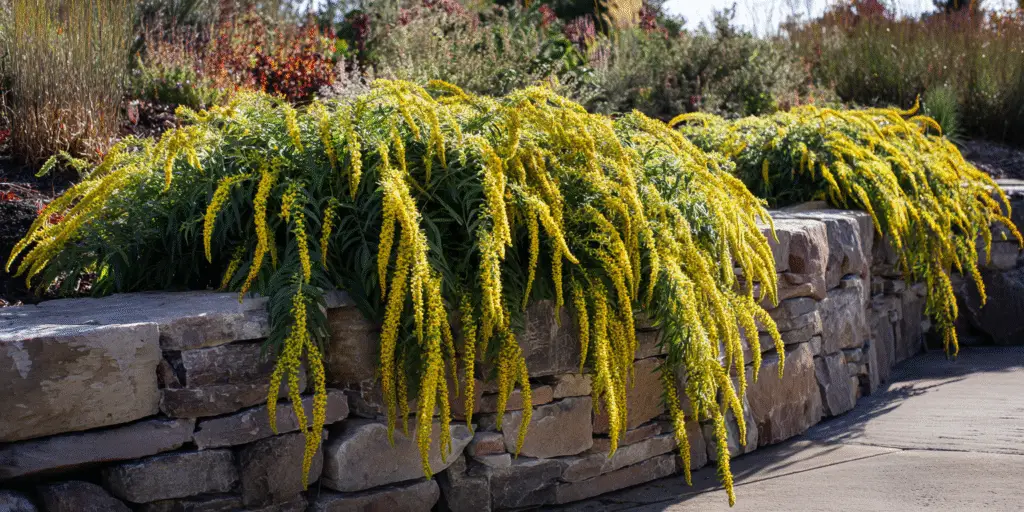
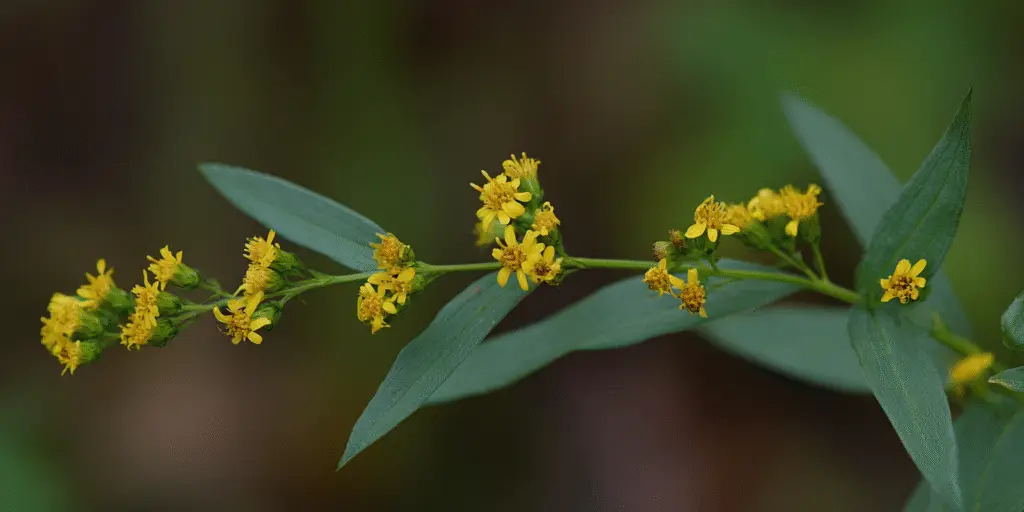
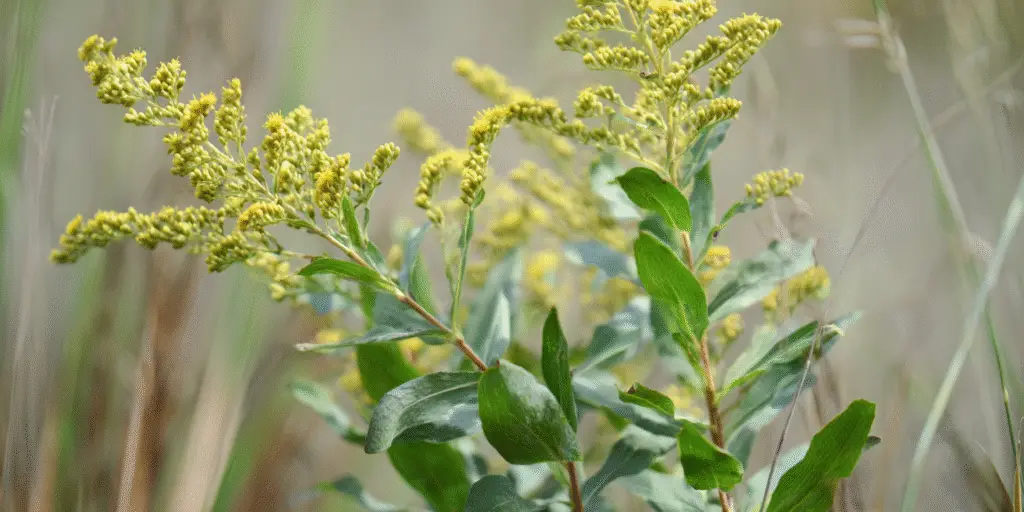
A woodland goldenrod recognized by its blue‑purple stems and small clusters of yellow flowers set in the leaf axils. It thrives in part shade and well-drained, average to dry soils and is more clump‑forming than many prairie goldenrods. Plants stay modest in size and add late‑season color in shadier beds where other goldenrods struggle. A reliable nectar source for fall pollinators.
At‑a‑glance
Group/Class: Species
Height × spread: 18-36 in (46-91 cm) × 18-36 in (46-91 cm)
Bloom window: August to September
Color & flower form: Yellow heads in axillary clusters along arching, purplish stems
Fragrance: 0 none
USDA hardiness: zones 4-8
Breeder / Year / Origin: unknown
Pet safety: safe
How it differs
Tolerates shade better than most goldenrods
Axillary “wreath” flowering rather than large terminal panicles
Clump‑forming habit with restrained spread
Strengths
Performs in part shade
Tolerates dry, poor soils once established
Attractive to bees and butterflies
Care in one minute
Site in part shade to full sun with well-drained soil
Water to establish; then occasional deep watering in drought
Mulch lightly; avoid burying crowns
No staking needed; cut back in late winter
Divide clumps if they expand beyond their space
Watch‑outs
Rust may occur
May reseed in open soils; remove spent stems if unwanted
Pet safety note: Solidago species are generally not listed as toxic to cats and dogs; do not confuse with rayless goldenrod (Isocoma), which is toxic to horses.
Best uses (tags)
shade-tolerant, borders, woodlands, pollinators, late season
Provenance note
Native to central and eastern North America; frequently found in open woods and along bluffs.
Written by: Your Flowers Guide editorial team We are a small independent group of flower lovers who research and review each guide using trusted horticultural and educational sources. Learn more about us