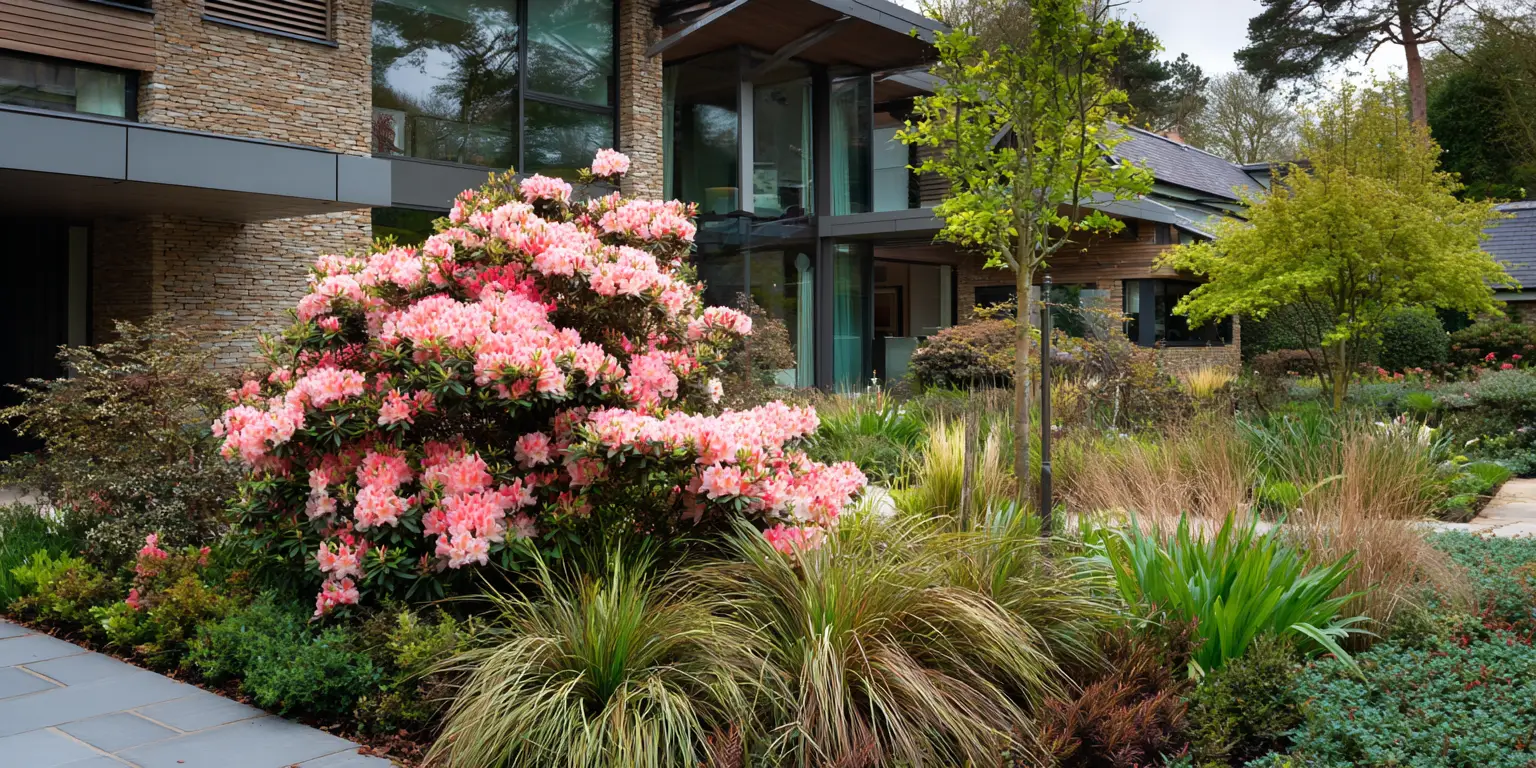
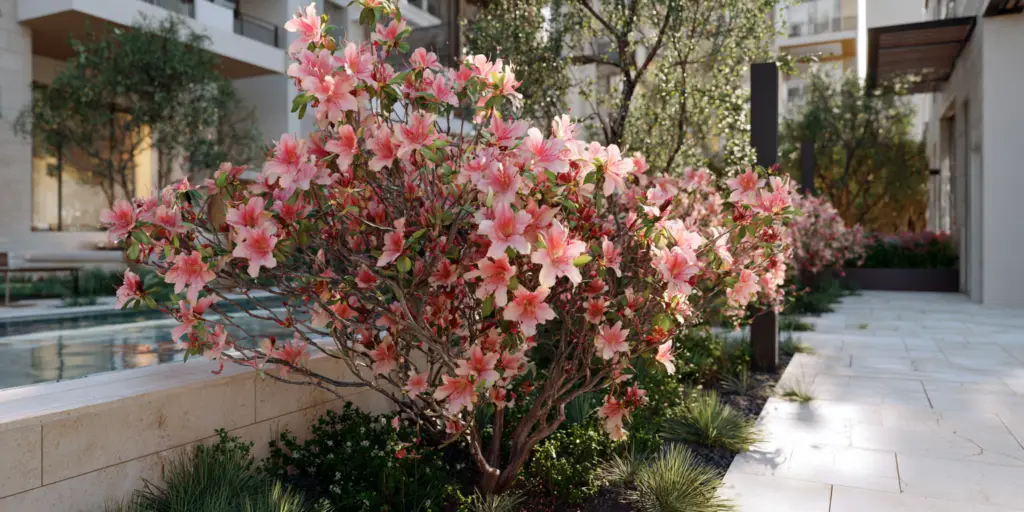
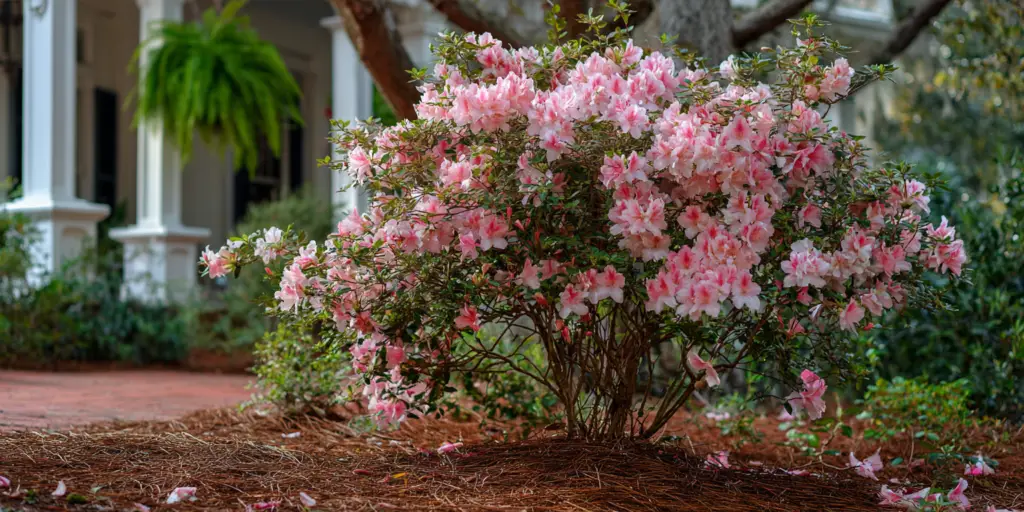
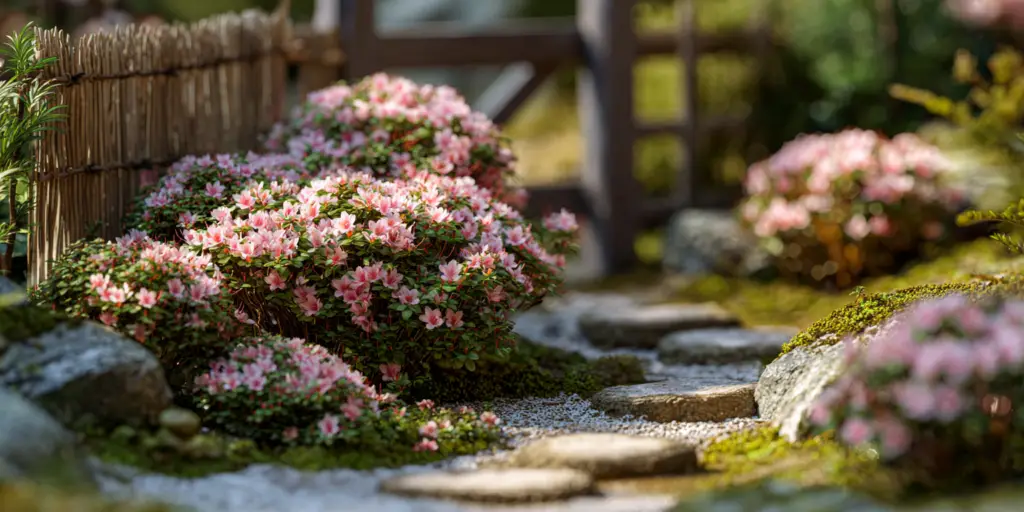
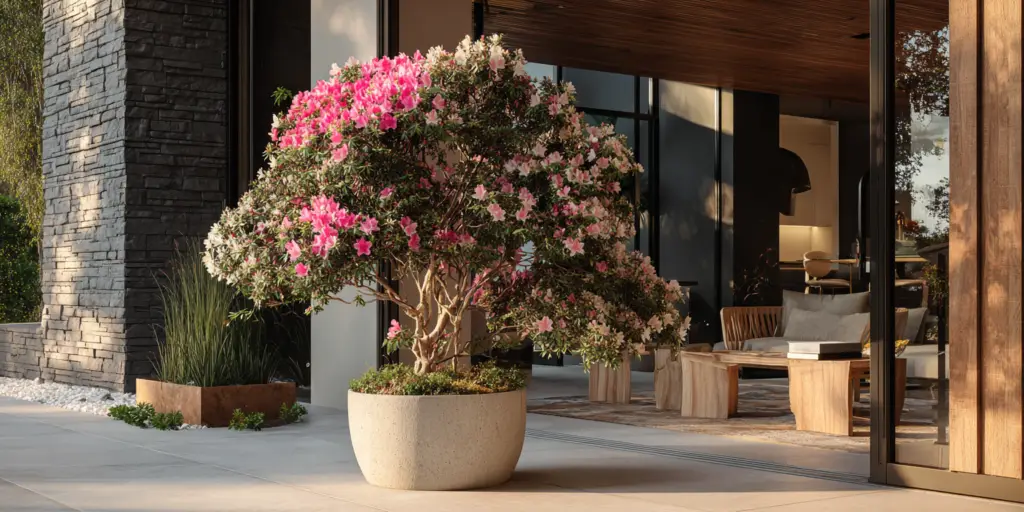
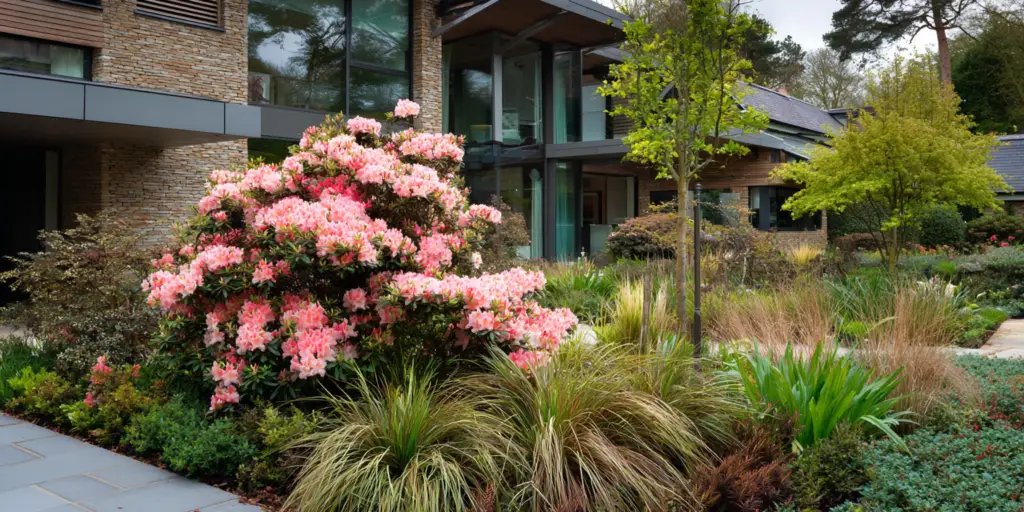
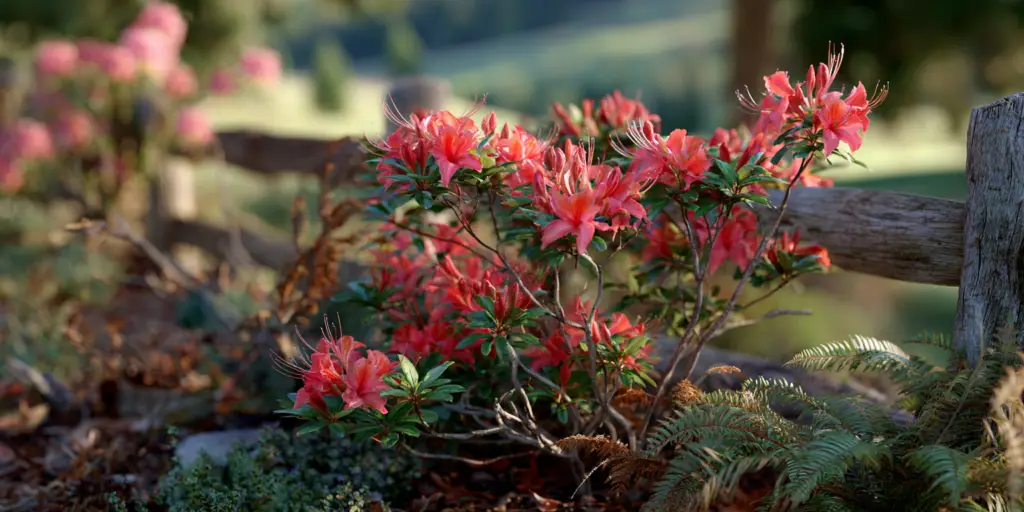
Exbury azaleas are deciduous hybrids in the Knap Hill-Exbury strain known for large spring trusses and vivid colors. Plants are cold hardy and suited to Zones 5 to 8 in much of North America. They prefer sun in cool climates and bright shade in warmer regions. Flowers are often scented, and foliage turns shades of yellow to orange in fall. Exbury types can be less heat tolerant in the Deep South, so placement and irrigation matter. Use them as specimens or in mixed woodland borders where soil is acidic and well drained.
Height × spread: 4-8 ft × 4-8 ft (1.2-2.4 m × 1.2-2.4 m) depending on cultivar
Bloom window: mid to late spring
Color & flower form: large trusses; yellow, orange, red, pink; mostly single
Fragrance: 2 noticeable; varies by cultivar
USDA hardiness: USDA zones 5 to 8
Breeder / Year / Origin: Lionel de Rothschild, 1920s-1930s, UK
Pet safety: avoid
How it differs
Deciduous habit with reliable fall color.
Often fragrant compared with many evergreen groups.
Large flower trusses and bold colors.
Less heat tolerant than some evergreen azaleas.
Strengths
Cold hardiness suitable for Zones 5 to 8.
Showy spring display and attractive fall foliage.
Works as a specimen in woodland borders.
Good pollinator interest during bloom.
Care in one minute
Plant in sun to light shade depending on summer heat; give afternoon shade in warm regions.
Soil: acidic, high in organic matter, and well drained; mulch to keep roots cool and moist.
Water during dry spells; shallow roots resent drought and standing water.
Fertilize lightly after bloom if needed; avoid overfeeding.
Prune only right after flowering; next year’s buds set by mid to late summer.
Watch‑outs
Heat stress and reduced bloom in hot, droughty sites in the Deep South.
Leaves may scorch in full afternoon sun without moisture.
Requires acidic, well‑drained soils to avoid root problems.
Best uses (tags)
specimen, woodland border, pollinators, cold‑tolerant, spring interest, fall color
Provenance note
The Exbury strain was developed at Exbury Gardens, Hampshire, by Lionel de Rothschild using Knap Hill material and other parents, with many cultivars introduced in the 1920s and 1930s.
Written by: Your Flowers Guide editorial team We are a small independent group of flower lovers who research and review each guide using trusted horticultural and educational sources. Learn more about us