returns in
212
days
Bloom calendar
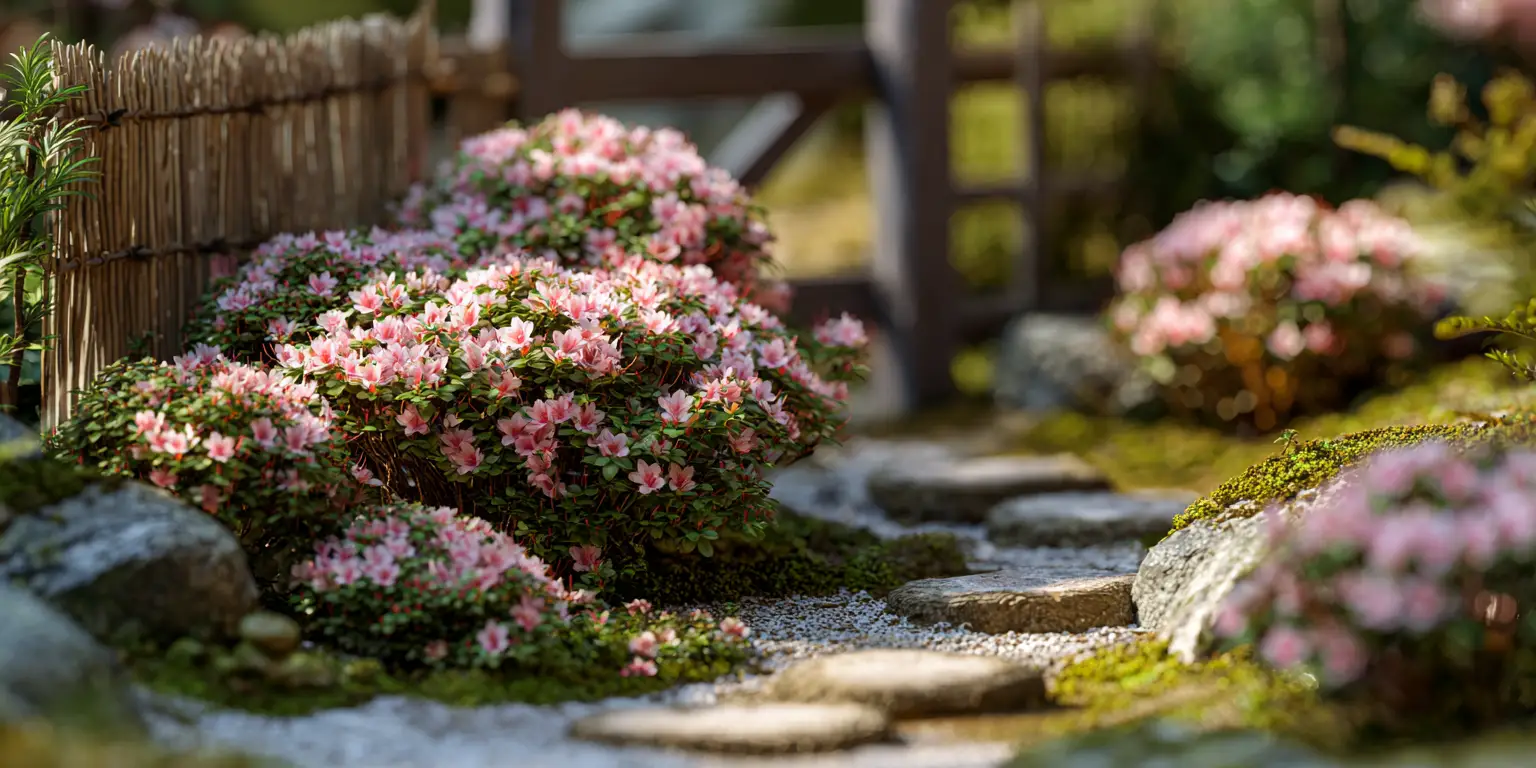
Kurume Azalea
Kurume Hybrids (evergreen) · various; imported 1919 by E. H. Wilson; Japan to USA
At‑a‑glance
- Group/Class: Kurume Hybrids (evergreen)
- Height × spread: 2-6 ft × 2-5 ft (0.6-1.8 m × 0.6-1.5 m) depending on selection
- Bloom window: late March to mid April (varies by climate)
- Color & flower form: small, abundant flowers; red, pink, white; mostly single
- Fragrance: 0 to 1; varies by cultivar
- USDA hardiness: USDA zones 6 to 9
- Breeder / Year / Origin: various; imported 1919 by E. H. Wilson; Japan to USA
- Pet safety: avoid
How it differs
- Lower, denser habit with fine leaves and twiggy branching.
- Among the earliest evergreen azaleas to flower.
- More cold hardy than many evergreen groups.
- Flowers are smaller but produced in great numbers.
Strengths
- Reliable bloom in cool springs.
- Compact size for low hedges and foundations.
- Cold tolerance suitable for many Zone 6 sites.
- Good structure even out of flower.
Care in one minute
Plant in light shade or morning sun with afternoon shade.
Soil: acidic 4.5-6.0, high in organic matter; plant slightly high and mulch.
Water to keep soil evenly moist; avoid waterlogging.
Feed lightly after bloom; excessive fertilizer reduces flowering.
Shear or shape immediately after flowering if a tight hedge is desired.
Watch‑outs
- Lace bug and leafminer can blemish foliage in sun.
- Root rot on sites without sharp drainage.
- Flowers can be brief in sudden heat.
Best uses (tags)
Provenance note
Kurume selections were assembled over centuries around Kurume, Kyushu, Japan; E. H. Wilson introduced the famous “Wilson Fifty” to the Arnold Arboretum in 1919 for U.S. distribution.
References
- Clemson HGIC – Azalea Planting (Kurume notes)
- UGA Extension – Selecting and Growing Azaleas (Kurume)
- Arnold Arboretum – 1917-1919 Expedition (Wilson’s Kurume introductions)
- ASPCA – Azalea (Rhododendron spp.) toxicity
Similar Flowers



Enjoying our flower guides? Add YourFlowersGuide as a preferred source on Google. It helps more readers find us.
Add to Preferred Sources